

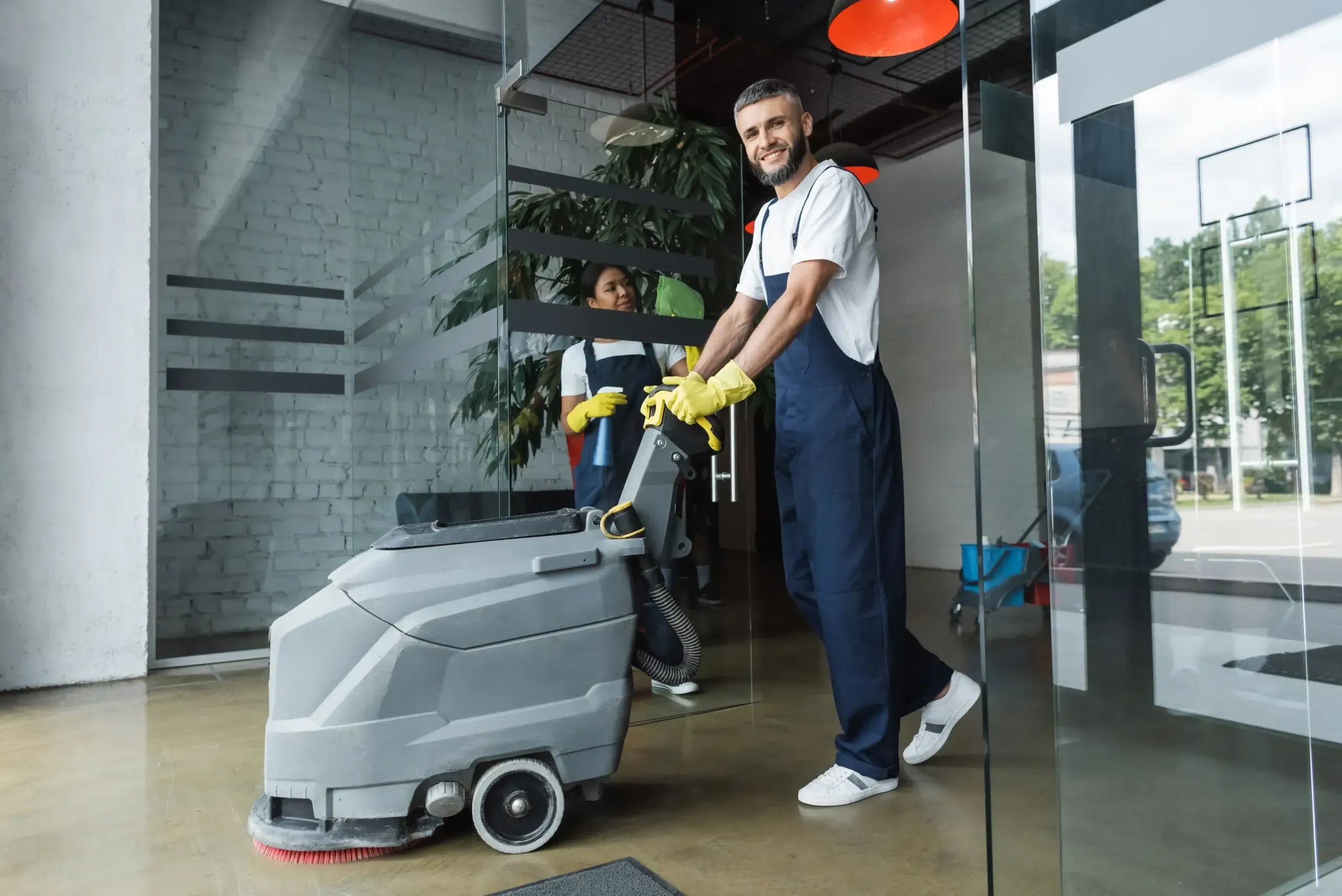
Commercial cleaning vs janitorial services is not just a wording difference. For a facility manager, the distinction affects staffing, cleaning frequency, budget, scope of work, compliance risk, and the condition of floors, restrooms, offices, and specialty spaces. Janitorial service usually covers routine daily or nightly upkeep. Commercial cleaning is the broader category that can include janitorial work, deep cleaning, floor care, post-construction cleaning, disinfection, and specialty cleaning for complex facilities.
Need help deciding what your building needs? Request a custom commercial cleaning plan from Foreman Pro Cleaning.
If you manage an office, school, medical office, retail space, government building, or mixed-use facility, choosing the wrong service model can create gaps. A janitorial crew may keep trash emptied and restrooms stocked but may not be equipped for carpet extraction, hard floor restoration, or detailed post-construction cleanup. A one-time deep cleaning project may improve conditions for a week but will not replace daily restroom, breakroom, and high-touch surface maintenance. The right answer is often a planned combination of both.
Quick Answer: What Is the Difference Between Commercial Cleaning and Janitorial Services?
Janitorial services are recurring maintenance services that keep a building clean, orderly, and ready for daily use. Commercial cleaning is a wider service category for business facilities. It can include janitorial services plus deeper, more technical, or less frequent cleaning tasks.
| Category | Janitorial Services | Commercial Cleaning Services |
|---|---|---|
| Primary purpose | Daily or routine building upkeep | Broader facility cleaning, including routine and specialty work |
| Common frequency | Daily, nightly, several times per week, or during business hours | Daily, weekly, monthly, quarterly, seasonal, or project-based |
| Typical tasks | Trash removal, vacuuming, restroom cleaning, dusting, restocking supplies, spot cleaning | Janitorial work, deep cleaning, floor care, carpet cleaning, post-construction cleaning, disinfection, specialty cleaning |
| Equipment level | Standard cleaning carts, vacuums, mops, microfiber tools, disinfectants | May include extractors, floor machines, HEPA vacuums, specialty chemicals, static-safe tools, or lift equipment |
| Best fit | Buildings that need consistent daily appearance and hygiene control | Facilities that need a complete program, deep cleaning, technical cleaning, or several service types from one provider |
In practice, many providers use the terms differently. Some companies call all business cleaning “commercial cleaning.” Others separate janitorial from project-based cleaning. That is why facility managers should compare the actual scope of work, not just the label on a proposal.
What Janitorial Services Usually Include
Janitorial services focus on the recurring tasks that keep a workplace clean and functional. These services are the backbone of a clean building because they address the messes created by normal daily use.
Common janitorial duties include:
- Emptying trash and recycling containers
- Replacing liners
- Cleaning and disinfecting restrooms
- Restocking paper products, soap, and other supplies
- Vacuuming carpeted areas
- Sweeping and damp mopping hard floors
- Dusting desks, ledges, furniture, and common surfaces
- Cleaning breakrooms and kitchenettes
- Spot cleaning glass, doors, walls, and partitions
- Disinfecting high-touch surfaces such as handles, switches, railings, and shared equipment
Janitorial work is usually scheduled around building operations. Some facilities prefer after-hours service, especially offices and professional spaces. Others need daytime help, especially schools, healthcare offices, fitness centers, and high-traffic buildings where restrooms, lobbies, and common areas cannot wait until evening.
What Commercial Cleaning Usually Includes
Commercial cleaning services cover cleaning needs for business and institutional facilities. That can include the daily janitorial tasks above, but it often extends into scheduled deep cleaning, specialty cleaning, and project work.
Commercial cleaning may include:
- Routine janitorial service
- Deep cleaning services
- Commercial carpet cleaning
- Hard floor stripping, waxing, buffing, or scrubbing
- Tile and grout cleaning
- Post-construction cleaning
- Move-in or move-out cleaning
- Disinfection and sanitization programs
- Medical office cleaning
- School and campus cleaning
- Retail cleaning
- Critical environment cleaning for sensitive technical spaces
A commercial cleaning provider should be able to translate facility requirements into a clear plan. That means defining tasks, zones, products, equipment, inspection standards, and frequency. For example, a professional office may need nightly janitorial service, quarterly carpet cleaning, annual hard floor restoration, and a special deep cleaning before tenant visits. A medical office may need more detailed disinfection protocols, documented procedures, and technicians trained around cross-contamination risk.
Why the Difference Matters for Facility Managers
Facility managers are judged on outcomes, not terminology. Employees and visitors notice restrooms, entrances, trash, dust, odors, and floors. Leadership notices budgets, complaints, safety risks, and whether the facility supports the work happening inside it. Understanding the difference between commercial cleaning and janitorial services helps you buy the right result.
Scope gaps cause service complaints
Many cleaning complaints start because the facility expected one type of work and the contract described another. If a proposal only includes routine janitorial tasks, it may not include carpet extraction, machine scrubbing, high dusting, upholstery cleaning, or detailed baseboard work. If those tasks are not written into the scope, they may be treated as separate projects.
Frequency affects cleanliness and cost
A restroom cleaned once each night may be acceptable for a small office. The same schedule may fail in a school, gym, medical office, or busy public-facing building. Janitorial service frequency should match traffic, risk, and expectations. Commercial cleaning projects should be scheduled before visible wear becomes expensive damage.
Technical spaces require trained teams
Some environments need more than a standard cleaning crew. Data centers, server rooms, laboratories, healthcare spaces, and post-construction sites require extra planning, tools, and training. Foreman Pro Cleaning’s background in commercial cleaning and critical environment cleaning is useful for facilities that have both ordinary occupied areas and sensitive spaces under one roof.
When Janitorial Services Are the Right Fit
Janitorial services are usually the right starting point when the main need is reliable daily or weekly upkeep. If your facility is generally in good condition but needs consistent maintenance, a janitorial plan can keep standards steady.
Choose janitorial services when you need:
- Nightly office cleaning
- Daily restroom cleaning and restocking
- Regular trash removal
- Common area touch-up cleaning
- Breakroom cleaning
- Basic floor maintenance such as vacuuming and mopping
- High-touch disinfection as part of the regular routine
- Consistent cleaning staff following a recurring checklist
Janitorial services are also useful when you need accountability. A clear checklist, site supervision, communication process, and inspection routine help reduce missed tasks. The service should not depend on vague instructions like “keep the building clean.” It should define what gets cleaned, how often, by whom, and to what standard.
When You Need Broader Commercial Cleaning
Commercial cleaning becomes the better fit when your needs go beyond basic daily upkeep. The more complex the facility, the more likely you need a broader plan that combines routine cleaning with periodic or specialty services.
Look for commercial cleaning when you need:
- One provider to manage routine service and deep cleaning
- Specialty floor care
- Commercial carpet cleaning
- Post-construction or renovation cleanup
- Cleaning for medical, education, retail, or government environments
- Seasonal cleaning projects
- Higher documentation or inspection standards
- Cleaning around sensitive equipment or critical operations
For example, a property manager may need weekly janitorial service for tenant spaces, monthly common-area deep cleaning, quarterly carpet extraction, and periodic hard floor restoration. A school may need daily custodial support, break cleaning, summer deep cleaning, and gym floor care. A data center may need standard office cleaning in administrative areas plus critical environment cleaning for controlled spaces.
Planning a facility-wide cleaning program? Talk with Foreman Pro Cleaning about a custom scope for your building, schedule, and risk level.
Day Porters: The Middle Ground Between Janitorial and Commercial Cleaning
Day porter service deserves its own category because it solves a different operational problem. A night janitorial crew can reset a building after hours. A day porter handles visible issues while the building is occupied.
Day porters can help with:
- Restroom checks during peak traffic
- Lobby and entryway touch-ups
- Spill response
- Trash and recycling overflow
- Conference room resets
- Supply restocking
- Common area straightening
- Support before or after meetings and events
For high-traffic buildings, day porter service can reduce complaints because it addresses issues before they sit for hours. It also gives facility managers another set of eyes on the building during the workday. For many properties, the ideal model is day porter coverage during business hours plus janitorial cleaning after close.
How to Choose the Right Cleaning Scope
A good cleaning scope starts with the building, not a generic package. Facility managers should define the physical spaces, traffic patterns, risk areas, and outcomes before comparing proposals.
1. Map your facility by zone
Separate the building into zones such as lobbies, restrooms, offices, conference rooms, breakrooms, classrooms, treatment areas, storage rooms, labs, server rooms, and exterior entrances. Each zone has different cleaning needs and different tolerance for missed tasks.
2. Match frequency to use
High-use spaces need more frequent attention. Restrooms, entrances, kitchens, gyms, waiting rooms, and shared work areas often need more than a basic weekly plan. Low-use offices or storage areas may need less frequent detail work.
3. Identify specialty tasks
List anything that goes beyond routine janitorial work. This may include carpet extraction, floor care, high dusting, window cleaning, pressure washing, post-construction cleanup, appliance cleaning, or disinfection projects. Put these items into the annual plan so they are not forgotten until conditions become visible.
4. Define quality control
Ask how the provider inspects work, handles complaints, trains staff, documents tasks, and communicates with your team. Cleaning quality depends on process. A low bid without supervision can become expensive if your team has to manage missed work every week.
5. Confirm products, equipment, and training
Do not assume every provider has the same tools. Medical offices, schools, gyms, and technical environments may need specific products, HEPA-filtered equipment, cross-contamination controls, or staff training. Ask direct questions before work begins.
Commercial Cleaning vs Janitorial Services by Facility Type
Different facilities need different combinations of routine and specialty cleaning. These examples can help you think through the right mix.
| Facility type | Likely janitorial needs | Likely commercial cleaning needs |
|---|---|---|
| Office building | Nightly trash, vacuuming, restrooms, breakrooms, dusting, touchpoints | Carpet cleaning, hard floor care, high dusting, move-in or move-out cleaning |
| Medical office | Daily restroom, waiting room, treatment room, and high-touch cleaning | Healthcare-focused disinfection, detailed protocols, specialty floor care |
| School or campus | Daily classroom, restroom, cafeteria, and common area cleaning | Break cleaning, gym floor care, floor stripping and waxing, project cleaning |
| Retail space | Sales floor, fitting room, restroom, and entrance upkeep | Floor care, glass cleaning, seasonal deep cleaning, post-renovation cleaning |
| Data center or server room | Office and support area cleaning | Static-safe critical environment cleaning, HEPA vacuuming, raised floor cleaning |
| Post-construction site | Usually not enough by itself | Debris removal, dust control, detail cleaning, final presentation cleaning |
The more your building combines different space types, the more important it is to work with a provider that can build a custom scope. A single facility may need office cleaning, restroom maintenance, floor care, and specialty cleaning on different schedules.
Proposal Questions Facility Managers Should Ask
Before choosing a cleaning provider, ask questions that reveal whether the company understands your facility. A strong provider should be able to explain how the work will be performed and how quality will be managed.
- What tasks are included in the recurring janitorial scope?
- Which services are considered separate commercial cleaning projects?
- How often will restrooms, breakrooms, and high-touch surfaces be cleaned?
- Who supplies paper products, liners, soap, and consumables?
- What floor care is included, and what is separate?
- What products and disinfectants will be used?
- How are staff trained for my facility type?
- How are complaints, missed tasks, and special requests handled?
- Will there be inspections, checklists, or site supervision?
- Can the provider support after-hours cleaning, day porter service, and project work?
These questions prevent confusion after the contract starts. They also make proposals easier to compare. If one provider includes quarterly floor care and another does not, the lower monthly price may not be the better value.
Common Mistakes When Comparing Cleaning Services
Most service problems can be traced to a few avoidable mistakes during the selection process.
Choosing only by price
Cleaning is labor-driven. If a bid is far below the others, ask how many labor hours are included and which tasks were excluded. A scope that cannot be completed in the allotted time will usually lead to skipped details.
Using a generic checklist
A checklist is useful, but it must reflect the actual building. A medical office, school, retail space, and standard office do not need the same plan. Generic checklists miss important site-specific details.
Ignoring periodic cleaning
Daily janitorial work does not replace periodic deep cleaning. Carpets, hard floors, baseboards, vents, corners, and high surfaces need scheduled attention. If periodic work is not planned, dirt and wear build up slowly until the facility looks neglected.
Forgetting sensitive spaces
Server rooms, labs, treatment areas, and equipment rooms should not be cleaned casually. These spaces may need controlled tools, limited moisture, specific procedures, and technicians who understand the operational risk.
How Foreman Pro Cleaning Builds the Right Plan
Foreman Pro Cleaning serves commercial and critical environments across Maryland, Washington D.C., and Virginia. The company works with offices, medical facilities, schools, retail spaces, government buildings, data centers, laboratories, and other business environments that need more than a one-size-fits-all checklist.
The planning process is built around the facility. Instead of publishing fixed pricing for generic packages, Foreman Pro Cleaning uses a custom quote model. That allows the team to account for square footage, traffic, facility type, risk areas, cleaning frequency, specialty services, and the condition of the building. This is especially important when a site needs both routine janitorial service and periodic commercial cleaning projects.
Foreman Pro Cleaning can support:
- Recurring janitorial cleaning
- Office cleaning
- Medical office cleaning
- School and campus cleaning
- Retail cleaning
- Day porter support
- Commercial carpet cleaning
- Hard floor care
- Deep cleaning
- Post-construction cleaning
- Critical environment cleaning
The main advantage for facility managers is coordination. When the same provider understands the daily routine, periodic needs, and specialty requirements, the cleaning program is easier to manage and less likely to leave gaps.
Frequently Asked Questions
Is janitorial service the same as commercial cleaning?
No. Janitorial service usually refers to recurring daily or weekly maintenance tasks, while commercial cleaning is a broader category for cleaning business facilities. Commercial cleaning can include janitorial service, deep cleaning, floor care, disinfection, and specialty projects.
Does my facility need janitorial service or commercial cleaning?
If you need routine upkeep such as trash removal, restroom cleaning, vacuuming, and restocking supplies, start with janitorial service. If you also need deep cleaning, carpet care, floor restoration, post-construction cleanup, or technical cleaning, you need a broader commercial cleaning plan.
How often should a commercial facility be cleaned?
Frequency depends on traffic, facility type, risk, and expectations. Many offices need nightly or several-times-per-week janitorial service. High-traffic buildings, medical offices, schools, gyms, and public-facing spaces may need daily service, day porter support, or more frequent restroom and touchpoint cleaning.
Are deep cleaning and janitorial cleaning different?
Yes. Janitorial cleaning handles routine maintenance. Deep cleaning addresses heavier soil, overlooked areas, buildup, and detailed tasks that are not usually completed every day. Deep cleaning is often scheduled monthly, quarterly, seasonally, or before important events.
Can one company provide both janitorial and commercial cleaning?
Yes. In many cases, one qualified provider can handle both. That can make scheduling, communication, quality control, and accountability easier for facility managers, especially when the building has several types of spaces.
Choose the Service Model That Matches the Building
The best cleaning plan is the one that matches how your facility is used. Janitorial services keep the building clean day to day. Commercial cleaning covers the wider set of services needed to protect appearance, hygiene, floors, specialty areas, and long-term facility condition. For many buildings, the right solution is not one or the other. It is a custom plan that combines routine maintenance with scheduled project work.
If your current scope is unclear or complaints keep coming back, request a free estimate from Foreman Pro Cleaning. The team can help define the right mix of janitorial service, commercial cleaning, and specialty support for your facility.
