
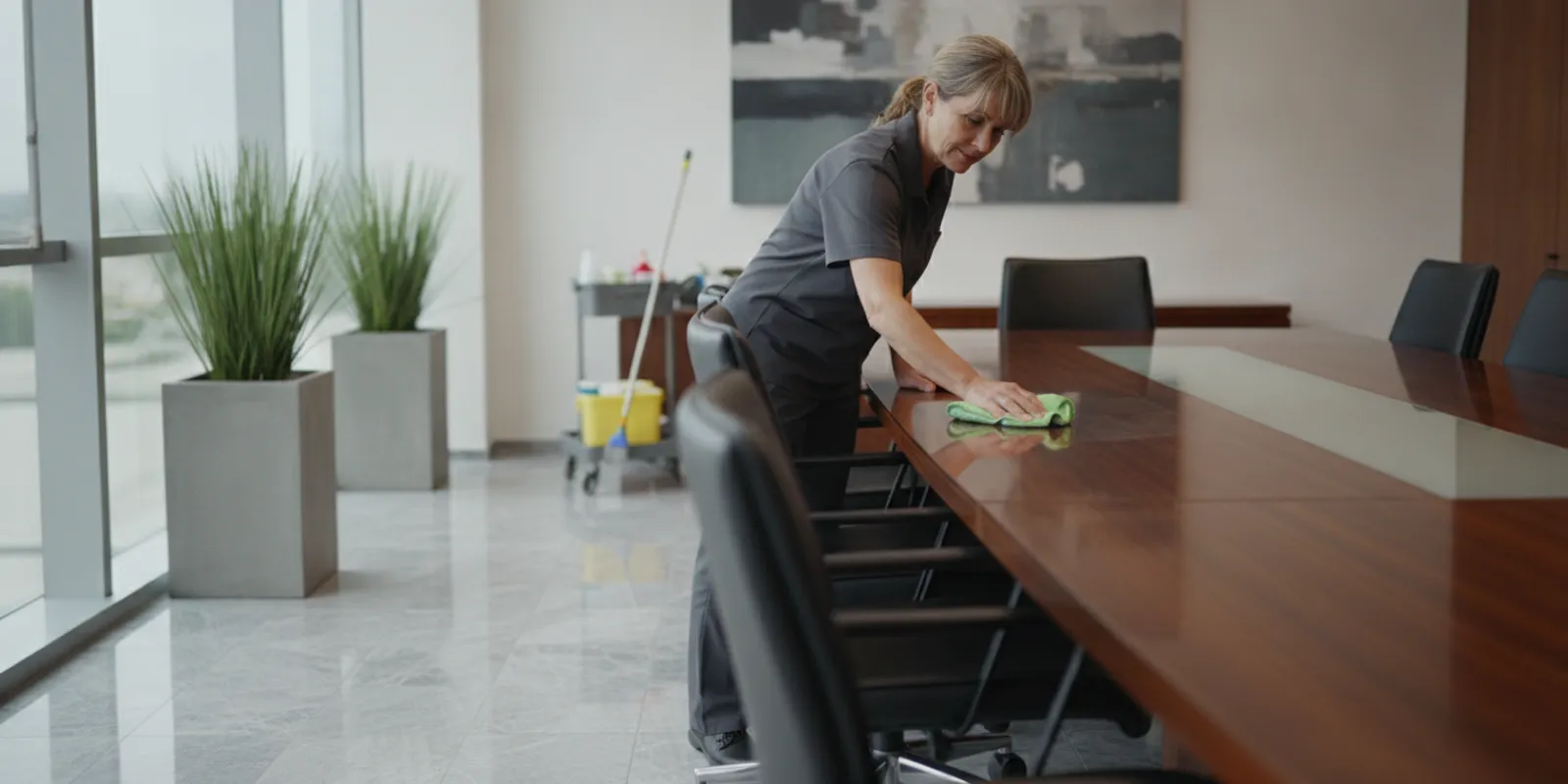
Luxury office cleaning prices are not set by a single industry rate. They depend on what the space contains, how often it needs service, which tasks belong in the plan, and the access or quality controls the building requires. For office managers, property teams, and business owners, the fairest way to compare a quote is to match the scope to the actual workplace rather than pay for an undefined idea of premium service.
Request a cleaning consultation
What do luxury office cleaning prices actually cover?
“Luxury” is a buyer’s description, not a universal cleaning specification. One organization may use it to mean a polished reception area and consistent restroom care. Another may expect detailed attention to executive suites, delicate finishes, conference rooms, and discreet service outside business hours. The label alone does not tell you what a provider will do.
Start by translating expectations into tasks and outcomes. A well-defined office cleaning plan can specify which rooms are included, how often each task is performed, which surfaces need particular handling, and how the client will review completed work. The scope may combine routine janitorial services with periodic floor or carpet maintenance, but those activities should be listed separately when their timing or methods differ.
A quote should also make clear what is excluded. For example, routine office service may not include interior glass, appliance interiors, high-level dusting, furniture moves, supply replenishment, or project cleaning unless these tasks are expressly included. Asking for inclusions and exclusions in writing reduces the risk of comparing one provider’s recurring service with another’s broader package.
It helps to define what “finished” means in the spaces that shape a visitor’s impression. A reception plan might specify attention to the entry floor, accessible counter surfaces, seating area, and visible glass. A conference-room plan might distinguish the table and floor from presentation equipment, personal items, and cables that staff should not move. This level of description gives the cleaning team clear boundaries while helping the buyer assess whether the proposal reflects the expected result.
Which factors shape luxury office cleaning prices?
Several practical variables drive the work required to maintain an office. Some relate to the building itself; others reflect the service standard, schedule, and operational constraints requested by the client.
- Usable area and layout: Total square footage is only a starting point. A compact suite with many private rooms, meeting spaces, and restrooms can take a different effort than a broad open-plan floor of similar size. Room count, furniture density, circulation routes, and floor transitions affect the task plan.
- Occupancy and activity: Visitor volume, staff presence, meeting schedules, and food use influence how quickly shared areas need attention. A lightly used executive suite and a busy client-facing reception area may need different frequencies even within the same address.
- Service frequency and timing: Nightly, several-times-weekly, weekly, and daytime support are not interchangeable. A schedule may also need to avoid meetings, protect confidential work, or fit building access windows. More frequent visits can distribute tasks across the week, but the price depends on both visit frequency and work per visit.
- Task depth and detail: A routine service checklist differs from periodic detailed work such as interior glass, upholstery attention, edge detailing, or intensive floor care. Specify whether a task is routine, rotational, or requested only when needed.
- Materials and finishes: Natural stone, specialty wood, glass partitions, delicate fixtures, and mixed flooring may need surface-specific methods and more careful handling. Identify manufacturer instructions or known restrictions before a provider proposes products or procedures.
- Restrooms, kitchens, and waste points: The number and usage of these spaces affects time and replenishment needs. State who supplies consumables, which items are included, and whether restocking is part of every visit.
- Security and access: Badges, escort requirements, restricted rooms, alarm procedures, key control, and after-hours entry affect mobilization and work sequencing. Sensitive offices may also require confidentiality expectations and documented access rules.
- Quality checks and reporting: A client may request scheduled inspections, issue reporting, service logs, or a named point of contact. State how often reviews occur and how concerns are recorded and followed up.
These factors interact. A high-touch office with a straightforward layout may need a different plan from a smaller suite with valuable finishes, controlled access, and narrow service windows. For a useful quote, describe the workplace in enough detail for a provider to assess the actual work rather than extrapolate from square footage alone.
Consider two hypothetical offices with the same measured area. Office A is mostly open workstations, has one kitchen, and permits evening access. Office B has multiple conference rooms, private offices, specialty flooring, and an access escort requirement. A square-foot comparison by itself hides meaningful differences in setup, room sequence, and task detail. Ask each bidder to state which assumptions it used so you can see why the proposed scopes differ.
How can you compare luxury office cleaning prices by scope?
Compare like with like. The following matrix is a planning aid, not a published rate card or promise that every provider uses the same package names. Ask each bidder to map its proposed tasks to your rooms, frequency, and required outcomes.
| Scope element | Routine office plan | More detailed office plan | What to confirm in the quote |
|---|---|---|---|
| Shared spaces | Scheduled attention to entrances, corridors, and common areas | Greater task detail or more frequent service in prominent spaces | Rooms included, visit frequency, and task checklist |
| Workstations and private offices | Defined accessible surfaces and floors | Room-specific instructions and additional detail where authorized | What staff must clear, and which items are not to be moved |
| Restrooms and kitchen areas | Listed routine cleaning tasks | Tasks and visit timing adjusted to use, plus agreed replenishment | Fixture count, supply responsibility, and reporting of shortages |
| Floors and specialty finishes | Routine surface care within the recurring scope | Separate periodic carpet, hard-floor, or finish-specific work | Methods, frequency, access needs, and whether project work is extra |
| Quality assurance | Agreed communication path for service issues | Defined inspection schedule, records, and follow-up process | Who reviews quality, how often, and how corrections are tracked |
Look for a clear division between recurring work and periodic projects. If a proposal includes floor maintenance, ask which areas and intervals are covered and whether the work requires a separate visit. Foreman Pro Cleaning offers commercial floor care; matching the floor plan and maintenance needs to the requested office scope helps keep the proposal understandable.
Use the matrix to identify gaps, not to assume that one column is always preferable. If your reception receives frequent visitors but private offices are rarely used, request an area-specific schedule rather than applying the same frequency to every room. If the office has a high-visibility hard floor, confirm whether routine upkeep is in the recurring proposal and ask how any periodic maintenance is scoped. A plan with distinct frequencies can be more closely aligned with actual use than a single broad label.
How do schedule and staffing requirements change the quote?
Scheduling affects both access and production. Evening service may suit an office that needs quiet during business hours, while a daytime presence can be useful when facility teams want ongoing attention to common spaces. Neither choice is automatically better. The right option depends on occupancy, security rules, building operations, and which tasks cannot happen while employees are working.
Ask the provider to describe the planned service window and how the schedule relates to the task list. If only a short after-hours window is available, clarify how the work will be prioritized. If your office hosts frequent events, identify the expected setup and post-event needs rather than assuming they are part of every routine visit.
Staffing details should explain who supervises the work, how a concern is reported, and what happens when a requested task cannot be completed because a room is occupied or locked. Foreman Pro Cleaning is family-owned and owner-operated, licensed, bonded, and fully insured, with background in IT operations and facilities management. You can review the company’s team and company background as part of evaluating operational fit.
For general workplace safety context, consult the Occupational Safety and Health Administration. A client and service provider should still discuss the specific site, applicable procedures, and responsibilities directly; a general resource does not replace facility-specific requirements.
A practical way to test whether the proposed schedule will work is to walk through a typical service night on paper. Note when employees leave, when the alarm is set, which rooms are reserved late, and when building staff can provide access. Then ask the provider to explain the order of work and the fallback for a locked room. If your building has special sign-in or key procedures, document who authorizes entry and where exceptions are reported rather than relying on informal handoffs.
Discuss a schedule for your office
What should a premium office cleaning proposal document?
A polished presentation is not a substitute for a usable scope. Review the proposal for enough detail to answer these questions before approving recurring service:
- What locations are covered? List floors, rooms, restrooms, kitchens, reception areas, and any excluded or restricted spaces.
- What happens at each visit? Separate routine tasks from weekly, monthly, seasonal, or other periodic work.
- How often is each task performed? Frequency should be stated by task or area where needs vary, rather than hidden behind a general service label.
- What supplies are included? Clarify who purchases, stores, and replenishes paper goods, hand soap, liners, and any agreed cleaning materials.
- How are sensitive finishes handled? Identify surfaces needing approval, product restrictions, or a sample test before broader use.
- How is quality reviewed? Ask about inspections, documentation, escalation contacts, and response to a missed or incomplete task.
- What is outside the recurring price? Identify event support, consumables, special projects, deep cleaning, and floor-care work that may require separate authorization.
- How are changes managed? Confirm how added rooms, occupancy changes, schedule adjustments, or revised service expectations affect the scope and quote.
Requesting a walkthrough can help resolve uncertainties about room use, access, finishes, and task priorities. Share a floor plan if available, but verify that it reflects current use. A quote built on an outdated layout may omit newly used rooms or include spaces that do not need regular service.
Ask the provider to attach or reference a task schedule that both sides can use after service begins. For example, the document can separate each visit’s core checklist from a monthly detail rotation, then note which rooms are excluded or require staff authorization. If a task is conditional—such as cleaning a room only when it is unoccupied—write down how the team should handle an unavailable room and how the issue will be communicated. Clear exceptions help distinguish a missed task from a planned access limitation.
How can you compare proposals without choosing on price alone?
First, put each proposal into the same comparison format. Record the recurring tasks, frequency, included rooms, staffing window, supplies, quality controls, and exclusions. Then note any service elements that one provider includes and another lists as optional. This makes the difference between a lower initial quote and a narrower scope visible.
Second, judge the plan against the office’s priorities. If presentation matters most in the reception and conference rooms, make those spaces explicit. If discretion and protected access matter most, compare how each proposal addresses entry, room authorization, and communication. If floor appearance is a priority, ask whether recurring care is enough or whether scheduled specialty work should be quoted separately.
Third, ask how the provider will learn and adjust. A new service plan may need practical coordination as staff routines, occupancy, or events become clearer. Ask who reviews the arrangement with you and what information is needed to evaluate a requested scope change. Avoid relying on a vague promise of “premium” results without a written list of responsibilities.
Finally, compare how each bidder handles exceptions. A proposal should give you a route for reporting an incomplete task, documenting a restricted area, and confirming that a changed request has been approved. This is especially useful when several people manage the facility. Choose a contact process that makes it clear who can authorize additions and how updates reach the service team. Do not treat a verbal request as a permanent scope change unless both sides agree on its effect on frequency and price.
For businesses seeking a tailored cleaning arrangement, Foreman Pro Cleaning’s commercial cleaning services cover offices and other commercial facilities. Service needs vary by site, so use a discussion and walkthrough to define the tasks rather than assuming a standard package fits every office.
Which details should you prepare before requesting luxury office cleaning prices?
A concise request for proposal can save time and lead to clearer comparisons. Gather the following information before contacting providers:
- Basic facility profile: Address, approximate cleanable area, number of floors, general room count, operating hours, and whether the space is occupied during service.
- Current task priorities: Identify the areas that matter most, current pain points, and any tasks that should not be performed without approval.
- Desired schedule: State the preferred days and time window, along with any blackout periods, meeting patterns, or event needs.
- Surface and access notes: Flag specialty finishes, secured rooms, alarm procedures, building sign-in requirements, and restricted areas.
- Supply expectations: List the consumables you expect the provider to replenish and the items your organization will furnish.
- Service review preferences: Explain whether you need inspection records, a recurring review meeting, or a particular route for reporting service issues.
- Quote assumptions: Ask each provider to state the area measured, the tasks priced, the frequency assumed, and any conditions that could change the proposal.
These details support a grounded discussion rather than a guessed estimate. Foreman Pro Cleaning serves organizations in Maryland, Virginia, and Washington, D.C. If your office falls within the service area, you can review regional service locations and share your requirements for a site-specific conversation.
Before sending a request, consider adding a simple room-by-room worksheet. Use columns for room name, approximate size or count, normal occupancy, requested frequency, included tasks, and access notes. Mark any rooms that need approval before entry, and identify surfaces with care instructions. Even an approximate inventory is more useful than a total-area figure alone because it gives providers a common starting point for their walkthrough and lets you spot different assumptions in returned proposals.
Discuss your office cleaning requirements
What questions do buyers ask about luxury office cleaning prices?
Is there a standard price for luxury office cleaning?
No single price applies to every office. The scope, schedule, layout, finishes, access conditions, and requested quality checks all affect the work. A useful quote is based on the facility and a defined task list.
Does a larger office always cost more to clean?
Area matters, but it does not explain the entire scope. Room count, occupancy, restrooms, meeting spaces, floor types, and service frequency can change the effort required. Two offices with similar floor area may need different plans.
Should floor care be included in the recurring office quote?
Ask the provider to specify what routine floor attention includes and whether periodic carpet or hard-floor maintenance is separate. A distinct schedule and price for project work can make the recurring service easier to compare.
How often should a premium office be cleaned?
There is no universal schedule. Consider how employees and visitors use each area, how quickly shared spaces need attention, and when service can take place. The frequency should follow the facility’s needs and be stated clearly in the proposal.
What is the best way to compare two quotes?
Compare the same rooms, tasks, visit frequency, supplies, timing, quality checks, and exclusions. Ask each provider to explain assumptions and identify optional work so you can judge both the price and the service being offered.
Request a site-specific office cleaning quote
Luxury office cleaning prices make the most sense when each proposal clearly connects the requested service level to the facility’s rooms, schedule, finishes, and review process. Use those details to build a plan that fits how your workplace operates.
