
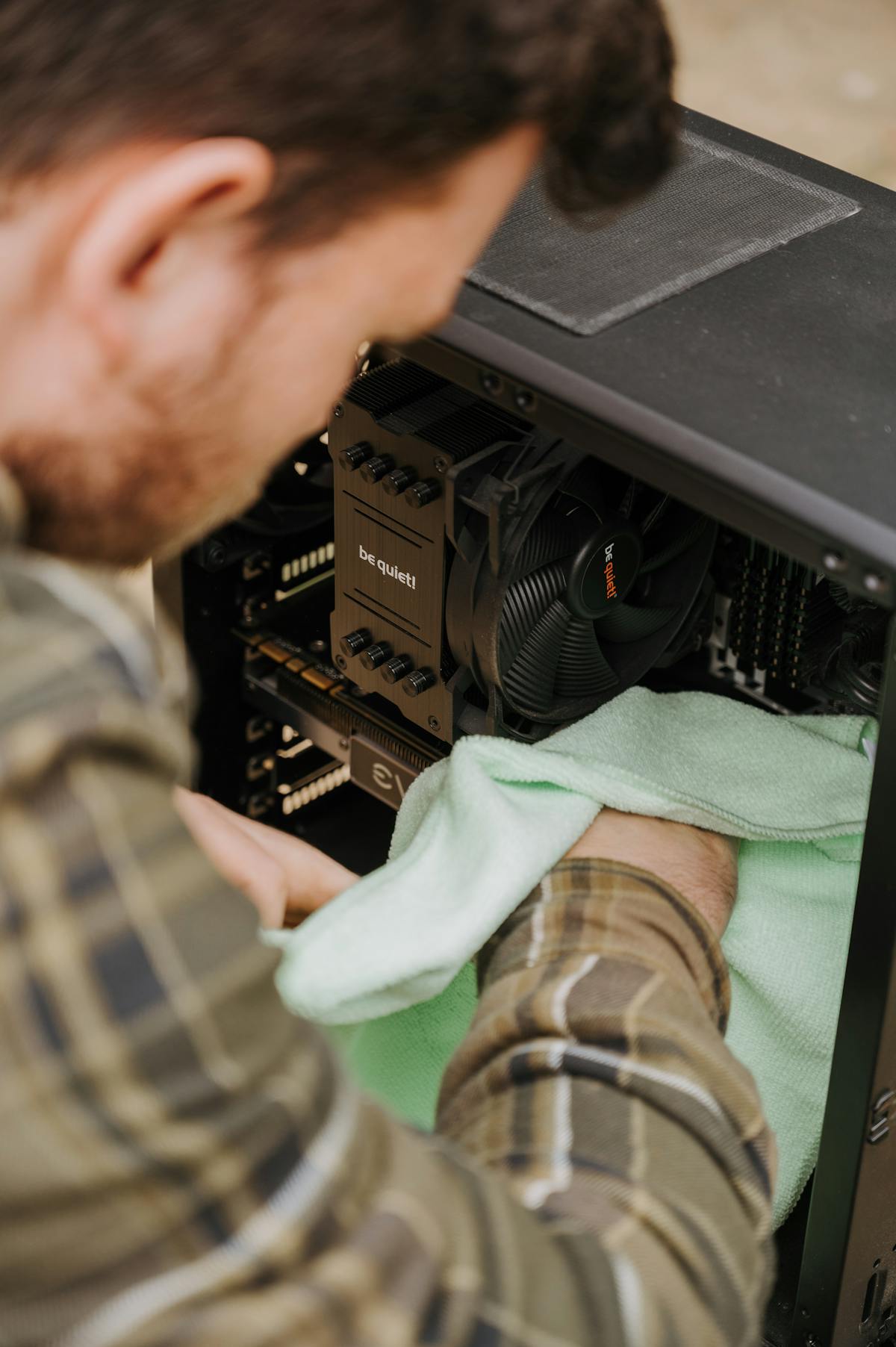
One disturbed raised floor tile can release conductive filaments into critical cooling airflow. In a data center, invisible metal contamination can become an uptime risk.
Request a mitigation-aware data center cleaning consultation from Foreman Pro Cleaning.
Zinc whiskers in data centers are microscopic, conductive zinc filaments that can grow from electroplated steel on raised-floor tile undersides, pedestals, stringers, and hardware. When a source is bumped or handled during maintenance, loose whiskers can enter cooling airflow and travel toward energized equipment through server intakes. NASA reports that whiskers can be freed during floor-bumping work and enter cooling airflow, putting electronics far from source tiles at risk. Foreman Pro Cleaning uses mitigation-aware cleaning to help control loose conductive particles without needless disturbance in sensitive plenum spaces; cleaning does not remove the source or promise prevention. Facility teams should combine contamination control with inspection and a source-management plan for zinc-plated components and staged remediation decisions.
The key question is how a facility can control this contamination hazard without spreading loose conductive material during maintenance or cleaning. Before any cleaning plan is judged, start with the source of the risk.
What zinc whiskers in data centers are
A conductive metal filament
Zinc whiskers in data centers are fine, conductive filaments that grow from zinc-electroplated steel surfaces. They are metal growths, not dust or lint. NASA describes them as tiny conductive filaments of zinc. They are usually only a few millimeters long and hard to see without proper light or magnification.
A zinc whisker may look like a thin, bright hair rising from a plated metal face. Its size makes a quick visual inspection unreliable. For facility and IT leaders, a clean-looking room does not rule out this source of conductive material. The first question is whether zinc-plated components are present near cooling airflow or sensitive equipment.
Why zinc electroplating matters
The whisker begins in a zinc coating placed over steel. Stress within that coating can drive zinc outward as a narrow filament. The process is not tied to visible dirt, corrosion, or poor housekeeping. A plated component may remain in place for a long period before a filament is noticed.
Growth is hard to predict. NASA reports an incubation period lasting months or years before continued growth may occur. This is why original construction details and replacement records matter. A room refresh may remove some plated parts while leaving other source surfaces in the underfloor space.
The risk changes when a filament breaks free. Maintenance activity can release whiskers from a source surface. Cooling airflow can then move them toward electronic equipment. Because zinc conducts electricity, a loose whisker may bridge close conductors and cause a short circuit.
Common source areas
The most reported data center source is the underside of zinc-plated raised access floor tiles. This placement matters because the tile underside can face the underfloor air path. A source review often fits within planned critical environment cleaning protocols. The team can document materials and handling risks before work begins.
Other locations may include pedestals and zinc-electroplated structural components within a raised-floor assembly. These surfaces can be out of sight during day-to-day operations. Their location also places them close to cable work, floor access, and routine facility activity.
- Undersides of zinc-plated raised access floor tiles
- Raised-floor pedestals and related plated supports
- Other zinc-electroplated steel components in the underfloor area
Identification should start with source mapping, not casual disturbance. A review should record suspected plated surfaces, nearby airflow routes, and exposed IT equipment. That baseline helps a facility team plan inspection and cleaning work without treating conductive filaments like ordinary dust.
Why conductive contamination matters for uptime
A small particle with an electrical path
Most dust is a housekeeping concern. Zinc whiskers in data centers require a different view because the particles are metal and conductive. NASA describes them as tiny zinc filaments that grow from zinc-electroplated steel surfaces. They can be difficult to spot during a routine visual check.
The concern is not the look of a floor panel or pedestal. It is the path from a plated surface to powered equipment. NASA documents that released whiskers can enter cooling airflow and deposit in distant electronic equipment. A loose filament can then create a short circuit.
Why faults can be hard to read
A visible buildup may prompt a planned cleanup. A small conductive particle may instead appear as an equipment fault with no clear source nearby. That uncertainty matters in a live data center. Teams may spend time checking power, cards, or network paths while the contamination source remains underfloor.
This does not mean each unexpected fault points to zinc whiskers. It means conductive contamination belongs in a calm root-cause review when zinc-plated raised flooring or related components are present. NASA reports that the underside of zinc-plated raised floor tiles is the most often reported source for whiskers in computer rooms.
Airflow makes the source relevant to equipment
Cooling air is essential, but it can also move released particles beyond their source. Normal work near a raised floor can disturb loose material. The useful response is controlled assessment, not alarm. Teams should consider surfaces, floor work history, airflow paths, and affected equipment before selecting a cleaning or replacement plan.
- Inspect likely plated surfaces with suitable light and magnification.
- Limit activities that may disturb suspect panels until risk is assessed.
- Coordinate facilities, IT, and cleaning work around live equipment.
- Document findings so later faults can be reviewed against known conditions.
Routine cleaning aimed only at visible dust may not address conductive particles safely. A raised access floor maintenance plan should account for underfloor sources and equipment-safe methods. This is where risk control supports uptime: detect possible sources, avoid unnecessary dispersal, and manage removal in a planned way.
For teams deciding how to respond, the key distinction is simple. Conductive contamination can affect electronics, even when it begins far from a rack. NASA notes that whiskers may break free during construction or maintenance and travel in cooling air. That finding supports measured controls and specialized data center cleaning services when an assessment shows a need.
Where do zinc whiskers form in data centers?
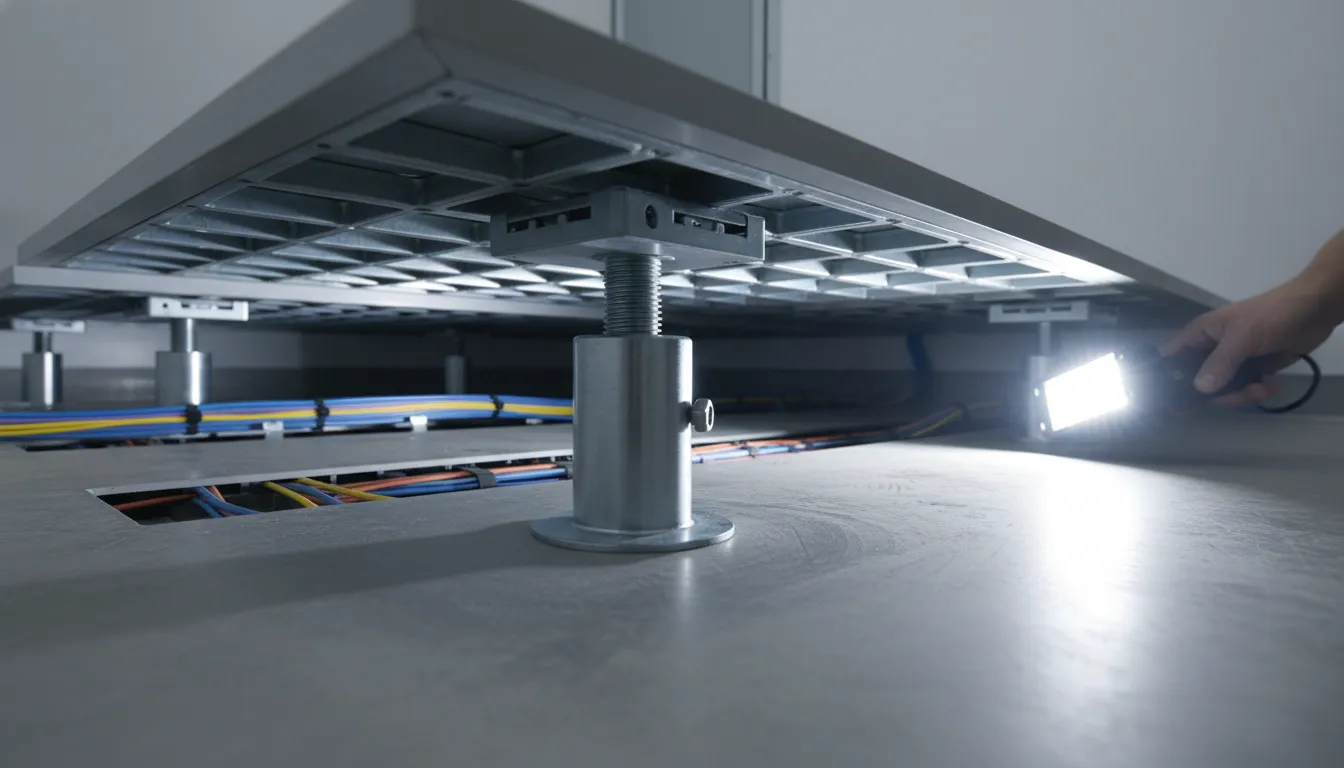
Zinc whiskers in data centers form on zinc-electroplated steel parts. The underside of raised access floor tiles is the most often reported source. This location matters because it is hidden during normal room checks. A tile may look clean above while the coated underside still needs review.
NASA zinc whisker guidance points to zinc-plated raised floor tile bottoms as a common reported source. In a raised-floor room, the first inspection area is often below selected tiles, not just around visible racks.
Raised-floor source areas
The floor system includes more than removable panels. Pedestals and stringers may also contain zinc-plated steel, so they belong in the source survey. Inspect joints, supports, corners, and areas handled during service work. These spots can collect loose debris and are easy to miss from aisle level.
Cable trays, brackets, fasteners, and rack-related hardware can also be candidates when their finish is zinc plated. A coating check helps the team separate a possible growth surface from ordinary dust. That mapping should be part of raised access floor maintenance, especially before tiles are lifted or moved.
Movement paths from floor to equipment
Source location is only part of the risk picture. Whiskers can break free when tiles are bumped during construction or maintenance. They may then travel in cooling airflow and settle in electronic equipment. NASA guidance describes this path, so an inspection must include underfloor air routes.
Inspection planning should trace each likely path from plated surface to air intake. Useful review points include:
- Tile lift zones, service corridors, and areas with recent underfloor work.
- Underfloor supply-air paths leading toward rack inlets or floor grilles.
- Trays, supports, and plated hardware above or beside active equipment.
- Dust or debris collection points where loose filaments may settle.
Cleaning plans built around the source
Cleaning should start with a source map, not broad disturbance of the plenum. The plan can note coated parts, airflow direction, tile handling needs, and nearby equipment exposure. This supports critical environment cleaning team that account for conductive particle risk in sensitive rooms.
A team can then schedule controlled access to likely source areas and limit activity near operating hardware. Inspection findings guide which sections need careful particle removal and which parts need closer review. This sequence helps prevent routine cleaning work from creating a new movement path for loose contamination.
What role does cleaning play in reducing zinc whisker risk?
Cleaning as containment, not a cure
Cleaning is a risk control measure, not a cure for zinc whiskers in data centers. It can capture loose conductive debris before it reaches sensitive equipment. It does not remove the source metal or prove that new whiskers will not form. Source review and a facility mitigation plan still matter.
The main hazard starts when whiskers detach from zinc-plated surfaces. NASA reports that floor movement can break whiskers free, then cooling airflow can carry them toward electronic equipment. That finding makes disturbance control central to cleaning. Crews should limit needless tile handling. They should avoid methods that push debris into moving air.
Controlled capture in raised-floor spaces
A mitigation-aware cleaning plan focuses on capturing loose particles with as little disruption as possible. HEPA-filtered vacuuming helps contain recovered debris instead of recirculating it through the room. Anti-static tools and cleaning agents are selected for sensitive equipment areas. Procedures should also set work zones, tool controls, and careful movement rules.
Raised access floors need special attention because tile undersides and nearby supports may be possible source areas. Cleaning the walking surface alone does not address debris below the floor. A planned facility consultation program can include tile-lift controls, underfloor inspection points, and safe particle capture.
- Use HEPA-filtered vacuuming for loose particle capture in approved work areas.
- Use anti-static methods suited to equipment rooms and controlled spaces.
- Coordinate tile handling so work does not scatter possible conductive debris.
- Clean raised floors and subfloor plenums under a documented access procedure.
The subfloor plenum and operating process
The subfloor plenum deserves the same control as the visible room. It often carries cooling air and may hold particles released during maintenance or floor access. A cleaning crew should coordinate with facility and IT teams before opening tiles. Work near airflow paths needs the same care. This planning reduces avoidable disturbance during the service window.
Foreman Pro treats this work as critical-environment cleaning, not general janitorial work. Its process combines HEPA-filtered vacuuming, anti-static methods, controlled raised-floor access, and subfloor plenum cleaning. The goal is to reduce loose contamination while respecting uptime, equipment safety, and site procedures. This approach supports specialized data center cleaning services for sensitive facilities.
Cleaning also has a clear limit. It can reduce material that has already become loose. It cannot confirm each zinc-plated source or stop future growth. Teams may still need source assessment, sampling, and decisions about affected flooring or hardware. Cleaning is the controlled risk-reduction step within that wider mitigation plan.
Standard cleaning vs. mitigation-aware cleaning
Routine janitorial work keeps common spaces neat, but a live data center needs a different plan. The concern is not only visible dust. Zinc whiskers in data centers can break loose from zinc-plated surfaces and move with cooling air.
NASA reports that whiskers from floor tile undersides can be freed during floor movement or maintenance. Once loose, they can enter cooling airflow and reach electronic equipment. This airborne zinc whisker risk changes how a raised-floor room should be cleaned.
Two different cleaning goals
Standard cleaning targets soil removal and room appearance. In an office, quick vacuuming and routine surface wiping often fit that goal. In a server room, brisk movement near raised tiles may disturb conductive debris before it is controlled.
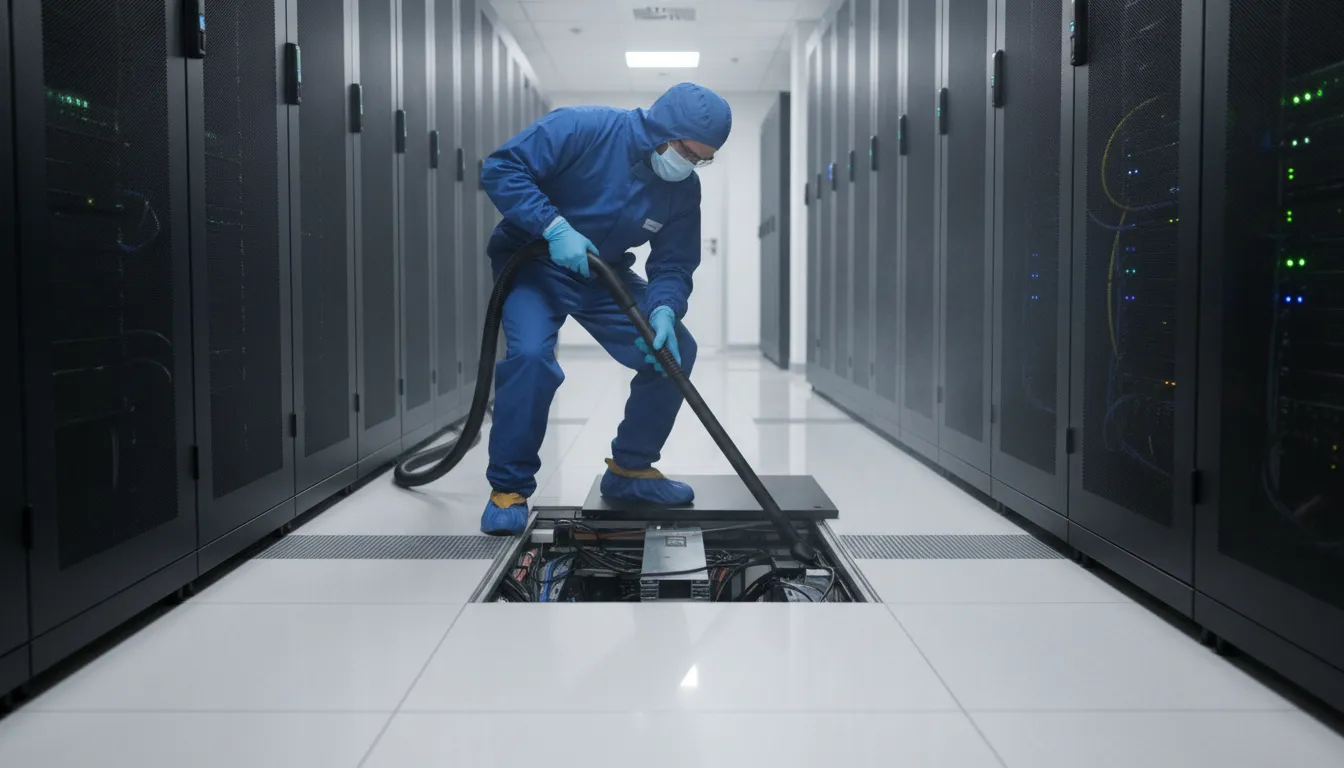
Mitigation-aware cleaning starts with particle control. It uses HEPA-filtered vacuuming, ESD-safe tools, and planned work zones. The aim is to capture loose material while limiting movement near sources, equipment intakes, and airflow paths.
| Point. | Standard cleaning. | Mitigation-aware cleaning. |
|---|---|---|
| Filtration. | General dust pickup. | HEPA-filtered collection. |
| Tools. | Common commercial tools. | ESD-safe tools. |
| Airflow. | Appearance focused. | Cooling paths considered. |
| Raised floors. | Routine tile handling. | Controlled plenum protocol. |
| Records. | Basic completion log. | Findings documented. |
| Training. | General facility procedures. | Critical-room technicians. |
Raised-floor work and airflow control
The underside of raised access flooring is a key point of concern. NASA identifies zinc-plated raised floor tiles as the most reported source of zinc whiskers. Tile disturbance must be planned with the room’s cooling airflow in mind.
A mitigation-aware team maps the work area and limits needless tile handling. It captures debris at the point of work. Foreman Pro’s guide to raised access floor maintenance adds useful context for planning this work.
Documentation and technician readiness
Cleaning in a critical environment should leave a clear record. Notes can list areas serviced, raised-floor access, equipment-safe methods, and concerns for follow-up. This record helps facilities and IT teams plan later checks or repairs.
Technician training also separates the two approaches. A mitigation-aware technician understands server-room needs, ESD control, plenum access, and ways to avoid spreading particles. That skill set supports choices built around risk control, not appearance alone.
When should you inspect, clean, or remediate?
A report of zinc whiskers in data centers calls for a planned response, not rushed floor work. Start by confirming what is present, where it came from, and which work could release loose material.
Initial inspection and source checks
Visual review alone may miss a concern. NASA notes that zinc whiskers can be hard to see without magnification or proper lighting in its zinc whisker assessment guidance. Inspection should focus on suspected zinc-plated surfaces, including raised floor components and their hidden sides.
- Review the room without disturbing surfaces Note affected aisles, tiles, pedestals, cable pathways, airflow paths, and any recent maintenance activity.
- Confirm the suspected source with suitable light and magnification Record which zinc-plated items show growth or loose material before lifting or moving parts.
- Plan work around operations and contamination control Define access limits, equipment protection, change approvals, and safe handling for flooring or other source materials.
- Clean loose material with a controlled method Use HEPA-filtered vacuuming and equipment-safe, anti-static procedures that limit particle spread and avoid unnecessary disturbance.
- Document the action and findings Keep inspection images, cleaned zones, removed materials, work controls, and follow-up checks in the maintenance record.
- Decide on longer-term correction when a source remains Evaluate source replacement or an appropriate coating approach with facility and IT stakeholders.
Cleaning without spreading the hazard
Cleaning addresses loose contamination, but it does not remove every source. NASA reports that whiskers can break free during floor movement and enter cooling airflow. That risk makes ordinary sweeping, uncontrolled tile handling, and broad disturbance poor choices during maintenance.
Teams planning work beneath raised flooring can use raised access floor maintenance guidance to support controlled scheduling and cleaning. The work plan should state what is cleaned, what is left in place, and what will be checked again.
When remediation becomes the next step
Inspection is appropriate when the source is uncertain or the extent is unknown. Controlled cleaning is appropriate when loose material needs removal under a defined work plan. Remediation should be assessed when affected source materials remain in service or keep adding risk.
A remediation decision is not just a cleaning decision. It may require replacement planning, coating review, downtime coordination, and a record of new material choices. This approach helps facilities and IT teams manage the source while protecting operating equipment.
How ForemanPro supports critical environments
An operations-led approach
ForemanPro serves critical environments across Maryland, Virginia, and Washington D.C. Its cleaning approach is shaped by experience in IT operations and facilities work. In a data center, the plan must account for equipment, airflow, controlled access, and service schedules.
Zinc whiskers in data centers require this careful mindset. NASA describes zinc whiskers as tiny conductive zinc filaments that can form on zinc-electroplated steel. If a loose filament moves into equipment, it may create an electrical risk. Cleaning must control particles without spreading them through the room.
Cleaning near sensitive equipment
ForemanPro uses trained technicians for server rooms, raised floor plenums, and equipment-safe cleaning. The work can include raised floor and subfloor HEPA vacuuming, cabinet and rack cleaning, and anti-static floor care. Each step is planned around the sensitive environment. It is not treated as standard office cleaning.
Raised floor areas need steady, careful work. Dust and loose debris can move with activity near airflow paths. Facility teams can review raised access floor maintenance when building a cleaning plan for access floors and the spaces beneath them.
- HEPA vacuuming helps collect loose debris from floor and subfloor areas.
- Cabinet and rack cleaning targets surfaces close to active equipment.
- Anti-static floor care supports a controlled approach in technical spaces.
A documentation mindset
Critical environment work should be planned, scoped, and recorded. ForemanPro brings a documentation mindset to cleaning routes, work areas, methods, and site needs. That record helps facility and IT leads know what was addressed during scheduled service.
This approach helps when a team tracks conductive contamination concerns, including zinc whiskers. It also supports dust and particle control in spaces where uptime matters. ForemanPro’s specialized data center cleaning services address mission-critical facilities in Maryland, Virginia, and Washington D.C.
Frequently Asked Questions
How do zinc whiskers cause electrical shorts?
Zinc whiskers are conductive metal filaments that can break from plated surfaces and move through cooling airflow. If a loose filament bridges nearby electrical conductors inside sensitive equipment, it can create a short circuit. NASA’s zinc whisker awareness paper describes this release and deposition path from raised-floor sources into electronic equipment.
Are zinc whiskers common in all data centers?
No. Risk is greatest where zinc-electroplated surfaces are present, especially in raised-floor environments. The underside of zinc-plated access floor tiles is the most often reported source in computer rooms, according to NASA. A facility review should identify plated tiles, pedestals, stringers, or other metal components before setting a mitigation plan.
Can zinc whiskers be cleaned or removed effectively?
Mitigation-aware cleaning can capture loose contamination while limiting unnecessary disturbance, but it should not be treated as removal of the growth source. Zinc whiskers may be difficult to see without proper magnification and lighting. Because maintenance can dislodge filaments into cooling airflow, as explained by NASA, source assessment and controlled handling should guide any remediation work.
What role does data center cleaning play in managing zinc whiskers?
Cleaning supports risk management by controlling loose particles in sensitive areas and avoiding practices that spread conductive debris. This matters below raised floors, where tile movement or maintenance can free zinc whiskers and introduce them into equipment cooling airflow. A mitigation-aware plan pairs careful cleaning methods with source identification, access controls, and decisions about affected zinc-plated components.
Ready to reduce zinc whisker risk in your data center?
Waiting can leave loose metallic particles in a critical environment where every maintenance decision must protect sensitive equipment and operational continuity. Starting now gives your team time to assess affected areas, plan careful cleaning, and address contamination concerns before the next maintenance window. A mitigation-aware approach keeps the focus on controlled removal, clear coordination, and cleaner conditions for equipment rooms and raised-floor spaces.
Ready to plan the next step with a team that understands critical facilities? Discuss your facility needs, review the areas of concern, and align the cleaning scope with your maintenance schedule. Call 888-360-1608 to schedule a critical environment cleaning consultation for your data center in Maryland, Virginia, or Washington, D.C.
