
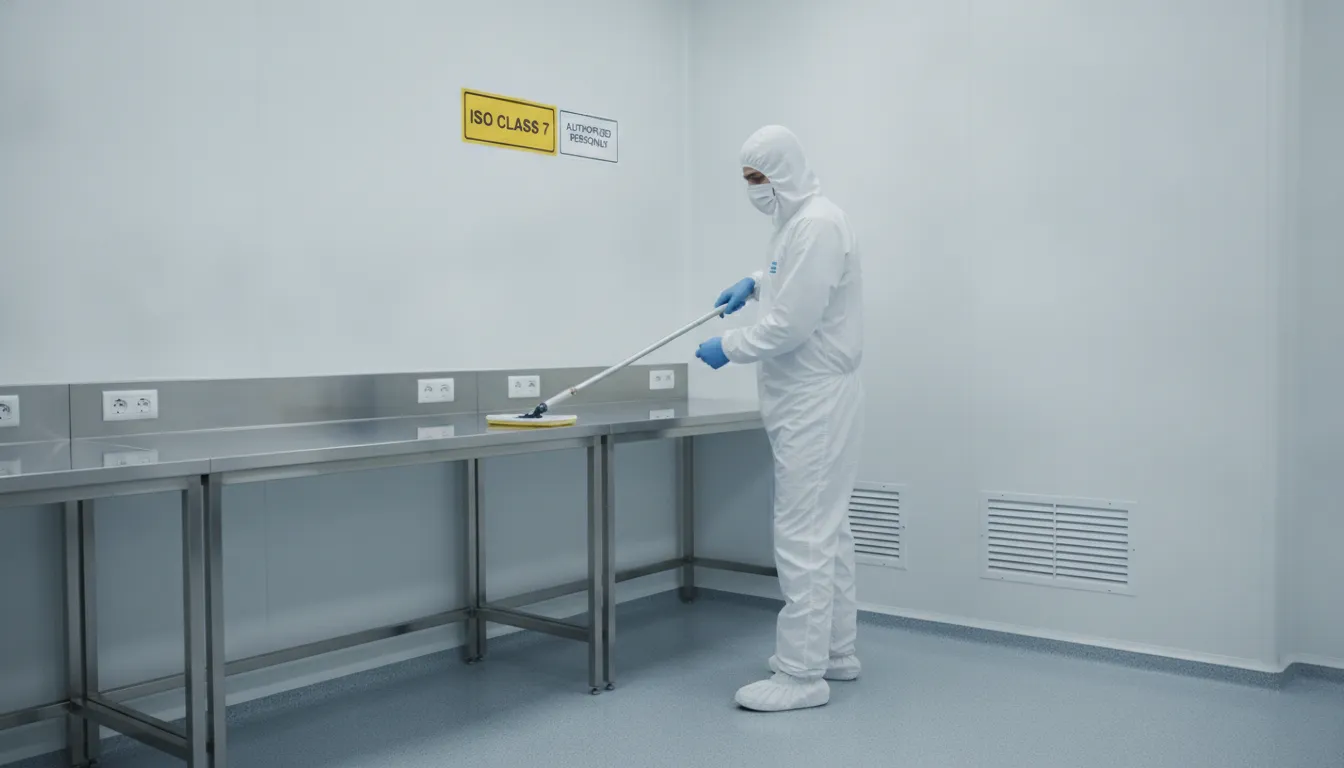
A single breach in contamination control protocols can damage years of research or destroy sensitive technical infrastructure.
Cleanroom cleaning protocols are set by ISO 14644-1 standards. These rules limit the number of microscopic particulates allowed in a cubic meter of air. The standards decide how staff must dress and how often they must perform deep cleans for Class 5 through Class 8 rooms. According to ISO standards, these classes range from very clean to basic. Every level needs its own contamination control protocols to keep the air safe. At Foreman Pro Cleaning, we use special plans and HEPA-filtered vacuums to meet these goals. We also use validated cleaning agents to stay within the right particle limits. If a team skips these steps, the room will fail its tests. This puts equipment and lab results at high risk.
Contact Foreman Pro Cleaning today to schedule a facility consultation and learn how our critical environment cleaning services align with your ISO class requirements.
Understanding how these standards apply to your facility is the first step toward solid contamination control. You must first find the specific needs for your room and how they change daily upkeep. The next section explains the core framework behind cleanroom classification.
Cleanroom Cleaning Protocols: What Are ISO 14644-1 Cleanroom Classifications?
The International Organization for Standardization (ISO) sets the global rules for controlled spaces. These rules, known as the ISO 14644-1 standard, define how cleanroom cleaning protocols must work to keep areas safe. The system ranks rooms based on the count and size of microscopic particulates found in one cubic meter of air.
How does the ISO scale work?
The ISO 14644-1 standard uses nine levels of cleanliness. ISO Class 1 is the most stringent level. ISO Class 9 is the least stringent. This system replaced the older US Fed Standard 209E to create one global approach to contamination control. Each level sets a clear limit on how many contaminants can exist in the air before the room fails its test.
At Foreman Pro Cleaning, we use these levels to guide our work in critical areas. A room that must meet ISO Class 5 standards needs more care than one at ISO Class 8. Knowing these gaps helps us choose the right tools and cleaning agents for each job.
What are the limits for Class 5 through Class 8?
Most cleanrooms in biotech or tech fall between Class 5 and Class 8. An ISO Class 7 space must have no more than 352,000 particles of 0.5 microns or larger in each cubic meter of air. If the count goes higher, the room is out of compliance. This strict limit is why contamination control protocols are vital for daily work.
A Class 5 room is even tighter. It allows only 3,520 particles of that same size. In contrast, a Class 8 room can have up to 3,520,000 particles. As the class number goes up, the allowed count of microscopic particulates grows by ten times for each level. This shift changes the cleaning schedule and the type of HEPA-filtered vacuums used to keep the space clean.
Why did ISO replace Fed Standard 209E?
The move to ISO 14644-1 gave the world one set of rules for cleanrooms. The old 209E system used English units, like cubic feet. This made global trade harder. The new ISO rules use the metric system to count particulates per cubic meter. This change helps teams in Maryland or Virginia work with the same data as teams in Europe or Asia. It ensures that critical environment cleaning stays the same across the globe.
How Do Class 5 Through Class 8 Cleanrooms Differ in Cleaning Requirements?
Cleanroom workspaces are sorted by the count and size of particulates in the air. The ISO 14644-1 standard sets these limits to keep sensitive work safe. As the class number goes down, the rules for cleaning get much tighter. A Class 5 room needs far more care than a Class 8 space to prevent contamination control protocols from failing.
What defines the ISO class levels?
The main way to tell these rooms apart is by how many airborne particulates are in each cubic meter of air. For a Class 5 room, the limit is very low. It must stay under 3,520 particles that are 0.5 microns or larger. By contrast, a Class 8 room can have up to 3,520,000 of these same specs. This huge jump means your team must use different tools and steps for each type of site.
| ISO Class | Max Particles (0.5 µm) | Cleaning Frequency | Gowning Type | Primary Industry |
|---|---|---|---|---|
| Class 5 | 3,520 | Each Shift | Full Sterile Suit | Biotech & Pharma |
| Class 6 | 35,200 | Daily | Hoods & Coveralls | Electronics |
| Class 7 | 352,000 | Twice Weekly | Lab Coats & Gloves | Medical Devices |
| Class 8 | 3,520,000 | Weekly | Basic Hairnets | General Assembly |
How do cleaning protocols change with each class?
At Foreman Pro Cleaning, we know that high-class cleanrooms need constant care. In a Class 5 room, you must clean after every shift. This helps keep the air pure for sensitive work. You must use sterile cleaners and lint-free wipes that will not shed new fibers. If you miss a single spot, it could ruin a whole batch of medicine or a silicon chip. Our cleanroom cleaning protocols ensure that every surface stays within its specific limit.
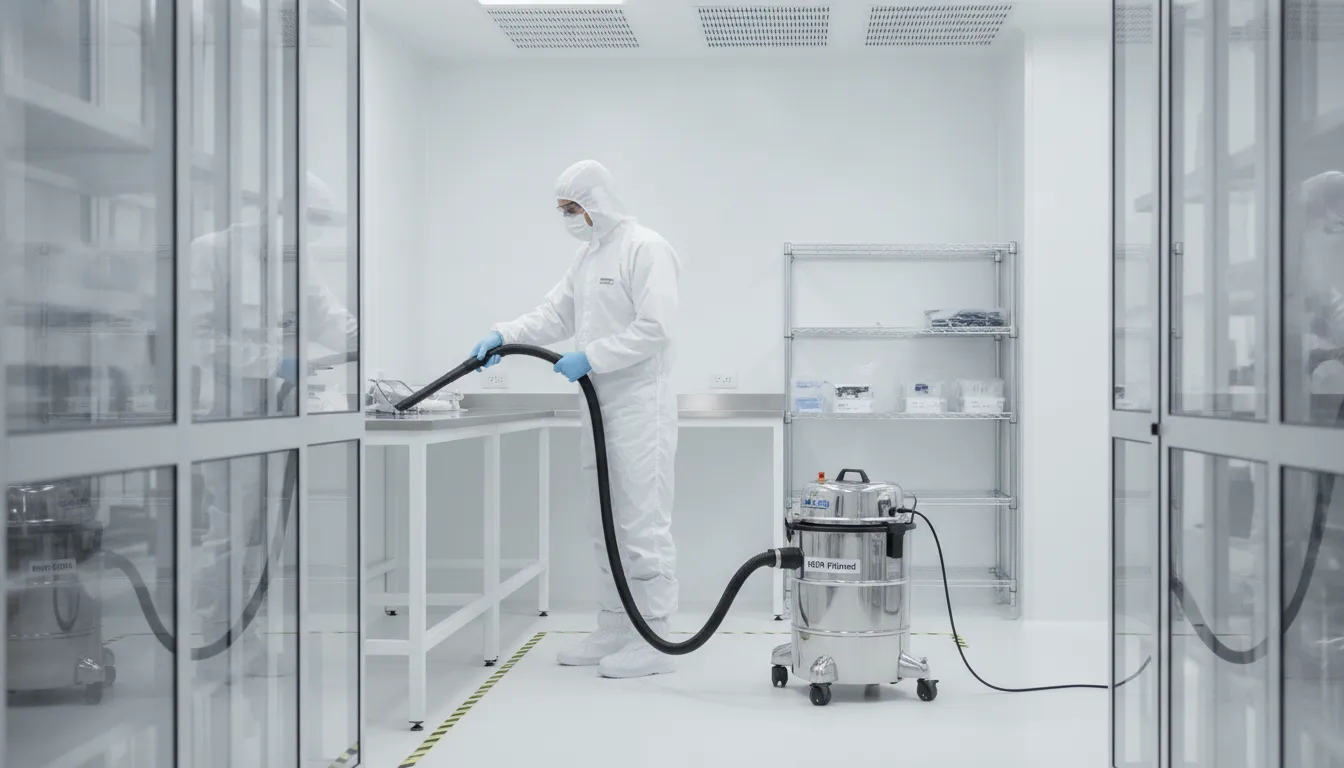
Class 7 and 8 rooms have a bit more room for error, but they still need a plan. Most of these sites only need a deep clean once or twice a week. You can use standard gowns and shoe covers instead of full sterile suits. But you must still use a HEPA-filtered vacuum to catch microscopic particulates before they settle. Even in these lower classes, keeping a clear log is vital for your critical environment cleaning services to pass a check.
Why is testing vital for high-class cleanrooms?
Testing proves that your cleaning works. In Class 5 and 6 rooms, you often need to count particles all the time. This gives you a live look at the air quality. You might also need to swab surfaces to check for contaminants. In Class 7 and 8, you might only need to check once a month or look for visible soils. No matter the class, you must follow the rules to stay in line with ISO standards and keep your site safe from harm.
What Cleaning Protocols Does Each ISO Classification Require?
Each cleanroom has a unique set of rules based on its ISO rank. These rules decide how teams clean and which tools they use. A room with a strict rank needs more care than one with a loose rank. Foreman Pro Cleaning follows these cleanroom cleaning protocols to keep your site safe and compliant.
How do Class 5 and 6 rooms stay sterile?
ISO Class 5 and 6 rooms have very tight limits on microscopic particulates. To meet these goals, teams must use sterile agents and wipes. These wipes are often made of non-shedding polyester. Every cleaning event must be logged with full detail. This keeps the room in line with ISO 14644-1 standards for high-level safety.
Staff in these rooms must wear full gowns. This includes hoods, masks, and gloves. The cleaning happens from top to bottom. Teams start at the ceiling and move toward the floor. They also clean from the far point toward the exit. This top-down path stops the spread of contaminants during the process.
What are the rules for Class 7 and 8 spaces?
Class 7 and 8 rooms are common in many labs. They allow more particulates than Class 5 rooms but still need strict care. Teams use HEPA-filtered vacuums to trap tiny particles. They also use EPA-registered disinfectants to kill contaminants. These steps help maintain strong contamination control protocols at each site.
Gowning in these spaces is less strict than in Class 5. Staff usually wear lab coats, hairnets, and booties. But they must still follow the same top-down cleaning sequence. This path ensures that gravity does not pull residue onto a space that was already cleaned.
Why do protocols change by class?
A Class 5 room cannot tolerate the tools used in a Class 8 room. For example, a mop for a Class 8 room might shed too many fibers for a Class 5 space. Using the wrong tool can ruin a batch of products or break sensitive hardware. At Foreman Pro Cleaning, we match our tools and cleaning agents to your specific class level.
This match is vital for the safety of your site. We use validated cleaning agents that do not leave residue. Our teams are trained to know the difference between each ISO rank. This expertise helps prevent cross-contamination and keeps your cleanroom running well.
How Does Cleanroom Classification Dictate Cleaning Frequency?
Keeping strict cleanroom cleaning protocols is a must for any site that deals with sensitive work. The ISO class of your room sets the rules for how often you must clean. Lower ISO numbers mean your room has very low limits for microscopic particulates. Because these rooms have tighter rules, you must clean them more often to avoid costly downtime.
Why does classification affect the schedule?
The class of a cleanroom tells you the maximum number of microscopic particulates allowed in the air. For example, an ISO Class 7 room allows only 352,000 particles of 0.5 micron size per cubic meter of air. Lower classes like Class 5 allow even fewer contaminants. This means there is less room for error. Even a small amount of residue or debris can push a Class 5 room out of spec. Frequent cleaning helps catch these issues before they cause a failure.
Regular checks are also a key part of the process. You must monitor the air often to see if your cleaning works well. If particle counts rise, you may need to clean more often. This helps you find risks like failing filters or leaks in the room seal. Regular monitoring of the air is critical to maintain environmental control.
What are Class 5 and 6 needs?
Class 5 and Class 6 rooms need the most care. These spaces often house very sensitive hardware, lab work, or biotech processes. For a Class 5 room, you need a full clean every day. High frequency helps stop the buildup of soils and other contaminants that could harm your output. These spaces often follow these rules:
- Daily cleaning of all floors and work surfaces.
- Weekly deep cleaning for Class 5 rooms.
- Biweekly deep cleaning for Class 6 rooms.
During these sessions, teams use specialized equipment to remove debris. Using HEPA-filtered vacuums and hospital-grade disinfectants ensures that you meet high standards. These tools pick up tiny particulates that regular mops might leave behind. It also stops cross-contamination between different parts of the lab.
How often should Class 7 and 8 be cleaned?
Class 7 and Class 8 rooms have higher particle limits, but they still need regular work. Most Class 7 sites need cleaning three to five times per week. This schedule keeps the air and surfaces within the right range for your cleanroom environment maintenance goals. Class 8 rooms usually need two to three cleans per week. The exact timing often depends on your shift schedules.
It is best to clean after a shift ends. This removes any debris brought in by workers before the next shift starts. It also gives any wet surfaces time to dry before the room is used again. This simple step reduces the risk of new contaminants sticking to damp spots.
What Gowning and Entry Protocols Apply at Each Classification Level?
Personnel are the largest source of microscopic particulates in a cleanroom. Even small movements can shed thousands of skin cells and hair fragments per minute. To stop these contaminants from entering the workspace, staff must follow strict gowning rules. These cleanroom cleaning protocols change based on the ISO class of the room.
How do gowning rules change for ISO Class 7 and 8?
For ISO Class 7 and 8 spaces, gowning focuses on basic coverage. Staff usually wear a lab coat or smock, a hairnet, and booties over their shoes. They must also wear single-use gloves to prevent oils from reaching surfaces. Before they enter, workers walk across a sticky mat to pull debris off their footwear. These rooms often serve as the first step for laboratory cleaning services that manage sensitive research sites.
These environments use air locks to keep pressure high. This pressure keeps outside air from rushing in when doors open. According to the ANSI Blog, standardizing these steps is key to environmental control. Even in these lower classes, staff must put on their gear in a specific order. This top-down method ensures that any particulates shed during gowning do not fall onto clean items.
Which protocols are required for ISO Class 5 and 6?
High-purity rooms like ISO Class 5 and 6 need much more care. Staff must wear a full bunny suit, which is a hooded coverall that covers the whole body. They use double gloves, a face mask, and safety glasses to block all human output. Many of these sites also use air showers. These systems use high-speed air to blow microscopic particulates off the suit before the worker enters the main room. Sequential gowning through multiple air locks is also standard.
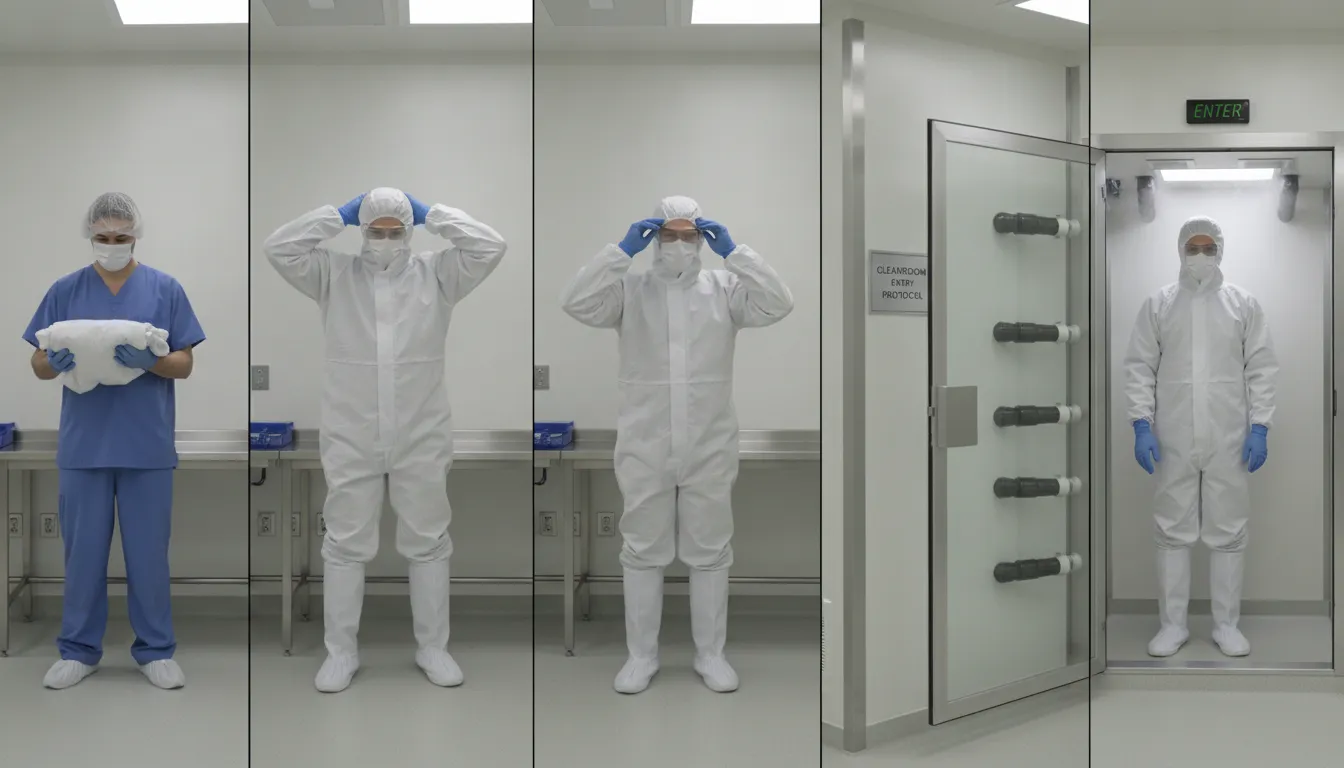
Contamination control protocols in these zones require a high level of discipline. For example, an ISO Class 7 room must have no more than 352,000 particles of 0.5 micron size per cubic meter, based on ISO 14644-1 standards. To stay below this limit, gowning rooms must have clear zones for clean and dirty sides. Foreman Pro Cleaning trains staff to respect these lines to prevent cross-contamination. This technical focus ensures that every person who enters helps maintain the required air quality.
Why Does ISO 14644-1 Compliance Depend on Proper Cleaning Protocols?
Maintaining ISO 14644-1 compliance is not a one-time event but a steady process of contamination control. Proper cleanroom cleaning protocols are the main tool used to keep airborne particulate levels within set limits. Without these strict steps, microscopic particulates can quickly build up and cause a facility to lose its certification.
How do cleaning records help during audits?
Auditors look for a clear trail of work to verify that a cleanroom is managed well. Records must show that staff follow contamination control protocols on a set plan. These logs prove that you take active steps to manage risks to your hardware and infrastructure. If you lack these logs, an auditor may find that your cleanroom does not meet the standards for its class.
Clear records from a partner like Foreman Pro Cleaning give you peace of mind during a review. We provide full reports on the methods and cleaning agents used in your facility. This data is also vital for data center cleaning and other tight spaces where particulate control is a top priority.
What role do particle counts and swabs play?
Particle count checks are a core part of the ISO 14644 series. This rule defines how to monitor and test cleanroom air, as noted by the ISO. Validation swabs also help find hidden contaminants on surfaces that could become airborne. These tests provide the data needed to show that cleaning methods work as planned. Regular testing helps find issues before they lead to a failed audit or damaged equipment.
For example, an ISO Class 7 cleanroom must have no more than 352,000 particles of 0.5 micron size per cubic meter of air. This fact comes from official ISO standards for cleanroom air. If tests show higher counts, it often points to a break in cleaning steps or poor air filters. Following a strict plan for microscopic particulates ensures your space stays safe for vital work.
How does third-party auditing protect your facility?
A third-party audit acts as an extra layer of safety for your cleanroom status. These experts check that your staff or teams use the right tools. These tools include HEPA-filtered vacuums and hospital-grade disinfectants. They also verify that the cleaning frequency matches the needs of your specific cleanroom class. This outside look helps find small gaps in your process that could lead to big problems later.
By using a partner that understands these high standards, you reduce the risk of human error. Our team at Foreman Pro Cleaning stays up to date on all rule changes to help you keep a clean and compliant space. This focus on detail is what allows us to maintain a high rate of client trust across the MD, DC, and VA areas.
Ready to ensure your facility meets ISO 14644-1 standards? Contact Foreman Pro Cleaning to schedule a comprehensive cleanroom assessment with our certified critical environment team.
Frequently Asked Questions
Can standard cleaning teams perform cleanroom cleaning protocols?
No. Most cleaning teams lack the specific training needed for critical spaces. Cleanroom cleaning protocols require knowledge of airflow, gowning, and particulate control. Professional teams like Foreman Pro Cleaning undergo specific training to handle these sensitive areas. Our staff hold certifications in critical environment cleaning and understand the ISO 14644-1 standards that govern cleanroom operations.
How often must an ISO Class 7 cleanroom be cleaned?
An ISO Class 7 cleanroom typically needs cleaning three to five times per week. This includes daily surface wiping, floor mopping with appropriate disinfectants, and periodic deep cleaning. The exact schedule depends on the room’s use, the number of personnel, and the specific contamination control protocols established for the facility.
What is the difference between ISO Class 5 and Class 8 cleaning?
The difference is substantial. ISO Class 5 rooms require cleaning after every shift with sterile tools and full gowning, while Class 8 rooms can use standard cleaning methods with basic protective gear. Class 5 allows only 3,520 particles of 0.5 microns per cubic meter, whereas Class 8 can have up to 3,520,000 of the same particles.
Do cleaning records really matter for ISO certification?
Yes. Auditors require documented evidence that cleaning occurs on schedule and follows proper procedures. Without detailed logs showing dates, methods, cleaning agents, and personnel involved. A facility may fail its certification audit even if the room meets particulate limits at the time of testing.
What cleaning agents are safe for ISO cleanrooms?
Only validated, residue-free cleaning agents should be used in ISO-classified spaces. These include EPA-registered disinfectants, sterile isopropyl alcohol, and hydrogen peroxide-based solutions. Standard household or commercial cleaners may leave residue or introduce new contaminants that violate particulate limits.
