
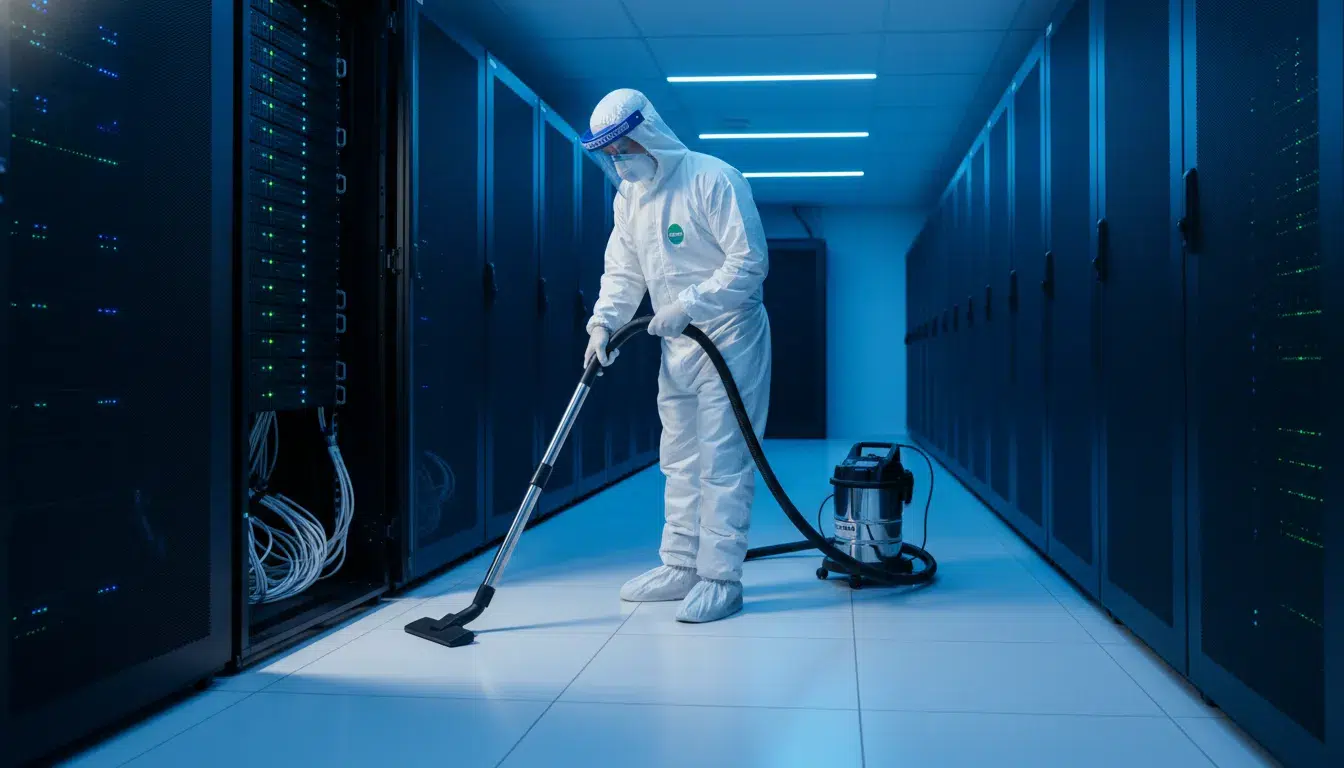
Data center cleaning vs janitorial cleaning is not a cosmetic comparison. One loose cloud of dust can become a hardware risk inside an active data center. That changes every tool, movement, and record a cleaning crew must manage.
Call Foreman Pro at 888-360-1608 to schedule specialized data center cleaning before routine dust becomes an uptime risk.
Data center cleaning is controlled contamination removal for rooms where live IT equipment, airflow, and uptime are at risk during routine work and maintenance events. Unlike regular janitorial work, it uses HEPA-filtered vacuuming, anti-static compounds, lint-free supplies, and non-disruptive methods around operating systems rather than broad spray applications. Crews also plan access, protect raised-floor airflow, control cleaning materials, document each task, and keep technicians informed of work zones before contamination becomes an incident. Research published through the National Science Foundation links uncontrolled fine particles and gases with premature hardware failure and reduced reliability in shifting temperature and humidity conditions. That is why critical-space cleaning manages equipment risk, not just visible soil, because a small cleaning mistake can affect service continuity.
For managers comparing vendors or setting procedures, the real question is what safeguards prevent routine cleaning from creating operational exposure. Why data center cleaning is not regular janitorial work starts with the hazards, controls, and accountability built into every visit. Here is how.
Why data center cleaning is not regular janitorial work
An office can look clean after dusting, trash removal, and routine floor care. A data center can look clean while harmful particles remain in airflow paths, subfloors, or near live equipment. Data center cleaning starts with a different question: what could disrupt reliable operation?
Appearance versus risk reduction
Office janitorial work is built around health, order, and a presentable workspace. Those goals matter in support areas, but server halls have another concern. Dust moved from one surface to another is not a cosmetic miss; it may become an equipment risk.
Critical-environment cleaning aims to control what can reach sensitive electronics. Research on IT equipment reliability notes that uncontrolled fine particles and gaseous contaminants may cause early hardware failure or loss of reliability. That link between contamination and reliability changes the job scope.
Where ordinary methods create risk
In an office, a crew may clean around desks while people continue normal work. In a live data center, each movement near racks, cable paths, and intake air must be planned. A tool that sheds lint, leaves residue, or spreads captured dust can add contamination instead of removing it.
Data center cleaning also extends beyond visible floor surfaces. Particles may gather beneath raised flooring, along cable routes, and where cooling air moves through the space. The work should address those pathways without disturbing live systems or blocking airflow.
Scope starts before a vacuum enters the room. A technical cleaning plan maps access limits, sensitive zones, approved supplies, and the work order around equipment. The crew can then remove particulate without treating the server hall like an open office floor.
This is why process matters as much as effort. Foreman Pro describes its data center cleaning process as using HEPA-filtered vacuuming and anti-static cleaning compounds. Its process also uses non-disruptive techniques for live systems. Each choice is meant to limit contamination around technical equipment.
Why IT operations experience matters
Cleaning in a critical environment is part of operational control, not just facility upkeep. Crews must understand that airflow, rack access, subfloor work, and work timing affect more than appearance. A spotless tile does not show whether the process respected the technology around it.
Foreman Pro combines cleaning practice with an IT operations perspective. That background shapes practical questions before work begins. Which areas are live, and what routes protect access? Which cleaning steps avoid needless disruption?
It also helps separate office service from critical-environment service within the same property. Lobbies, break rooms, and standard offices can follow commercial cleaning routines. Technical rooms need procedures suited to active electronics and controlled particulate removal.
For IT and facilities managers, the key difference is simple. Regular janitorial work maintains a clean workplace. Data center cleaning manages contamination where a poor method can carry operational consequences. The scope, tools, and crew awareness must fit the environment.
What contamination risks make data centers different?
In short: data centers are different because airborne particles, static, hidden subfloor debris, and cooling airflow can turn ordinary dust into equipment and uptime risk.
A data center is not just a room with equipment in it. Air moves through racks, cables, floor voids, and cooling paths while systems stay live. Uncontrolled fine particles and gases can raise the risk of early hardware failure or lost reliability, especially as heat and humidity change. This risk is described in a National Science Foundation-hosted review of IT equipment contamination.
Airborne particles and reactive gases
Dust is easy to see on a floor or rack top, but the smaller concern may be what air carries into equipment. Fine particles can settle at server intakes, fan areas, and exposed surfaces. As buildup grows, it can restrict clean airflow and add stress where systems need steady cooling.
Gaseous contaminants call for a different level of care. They do not collect in visible piles, yet changing heat and moisture can make their effects more serious. For this reason, critical-space data center service focuses on controlled work in the technical space, not general dust removal alone.
Static is another risk because a live equipment room is sensitive to the cleaning process itself. A tool, cloth, or motion that would be routine elsewhere may be a poor choice near active hardware. Data center cleaning must limit new debris and avoid methods that create added risk around equipment.
Hidden debris in the airflow path
The room surface is only one part of the contamination path. In a raised-floor environment, the plenum can hold dust, fragments, and residue below the work area. When that space carries supply air, loose debris can move toward racks instead of staying out of sight.
Cable pathways create more places for debris to gather. Bundles, cutouts, ladder racks, and floor penetrations are hard to inspect during ordinary cleaning. Debris left after buildout or changes can remain near air routes. Post-construction data center cleaning protocols address this source before material spreads through an operating room.
Some facilities also require checks for zinc whiskers from galvanized raised-floor components. Their presence cannot be assumed from a quick walk-through. If found during assessment, they require planned containment and careful removal. Routine sweeping or forceful air movement could spread a concern into sensitive zones.
Cooling flow and uptime risk
Contamination control is tied to cooling control. Dust at intake points, debris beneath raised floors, or blocked cable openings can change how air reaches equipment. The issue is not cosmetic appearance. The issue is whether a known cooling path stays clear while IT loads remain online.
A disrupted airflow path can place more heat stress on operating systems. In a critical environment, the practical concern is not a dirty surface by itself. It is the chain from debris to uneven cooling, thermal trouble, and possible service interruption. Cleaning scope should therefore include the paths that feed and return air.
Safe work also depends on control during the task. Crews need tools and procedures suited to active technical rooms, including anti-static methods and filtered collection practices. They must avoid pushing material into racks, under flooring, or along cable runs. That is why data center cleaning is planned around contamination risk and operating continuity.
Protocols, tools, and controls regular cleaners do not use
Key difference: specialized teams use HEPA filtration, anti-static supplies, lint-free materials, controlled access, and documented work steps instead of standard office cleaning products.
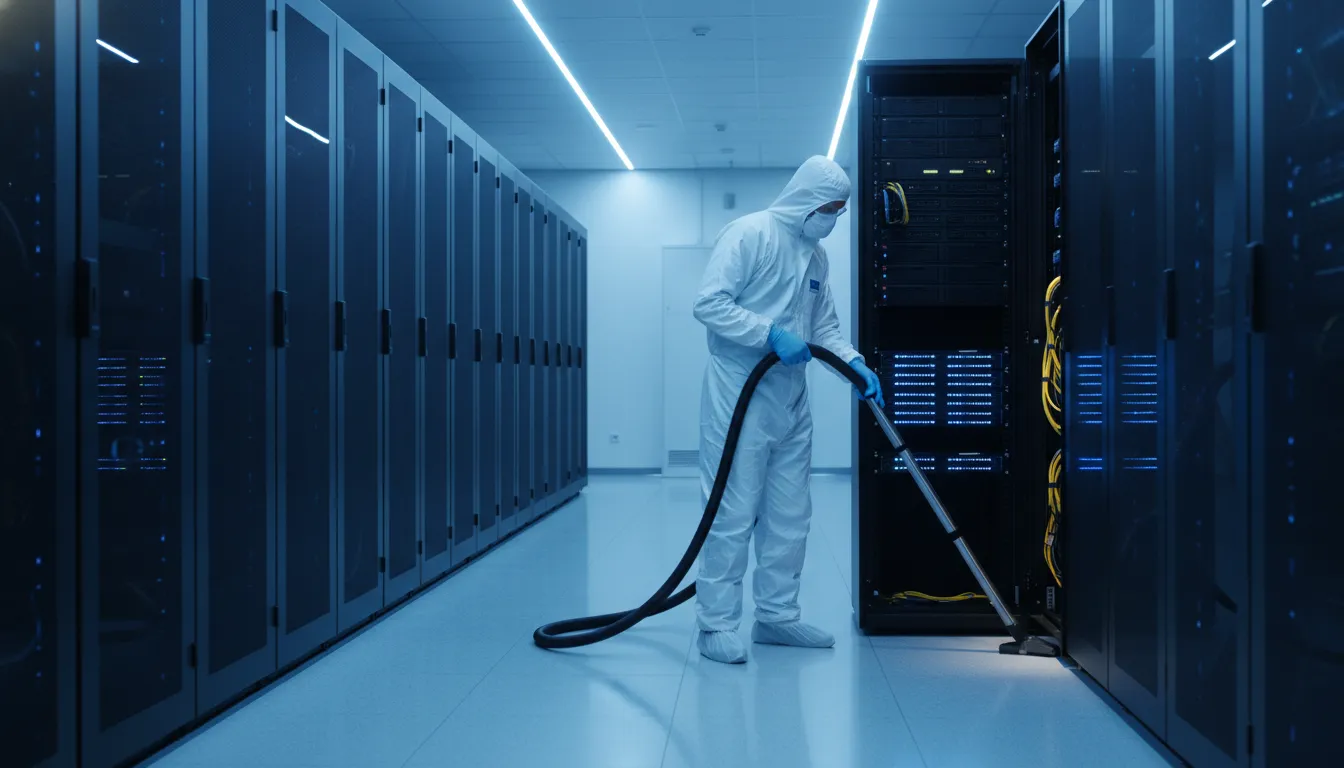
Different rooms, different risks
Regular commercial cleaning is built for occupied office areas, restrooms, floors, and common touchpoints. A data hall is different. Fine particles and gases can affect equipment reliability when heat and humidity shift. A review available through a National Science Foundation repository describes this risk to information technology equipment.
That risk changes the work plan. Data center cleaning focuses on removing particles without spreading them, adding residue, or disturbing active systems. The cleaner needs to understand racks, airflow paths, cable areas, and raised floors before work starts. In this setting, a clean-looking surface is not enough.
Tools matched to critical space work
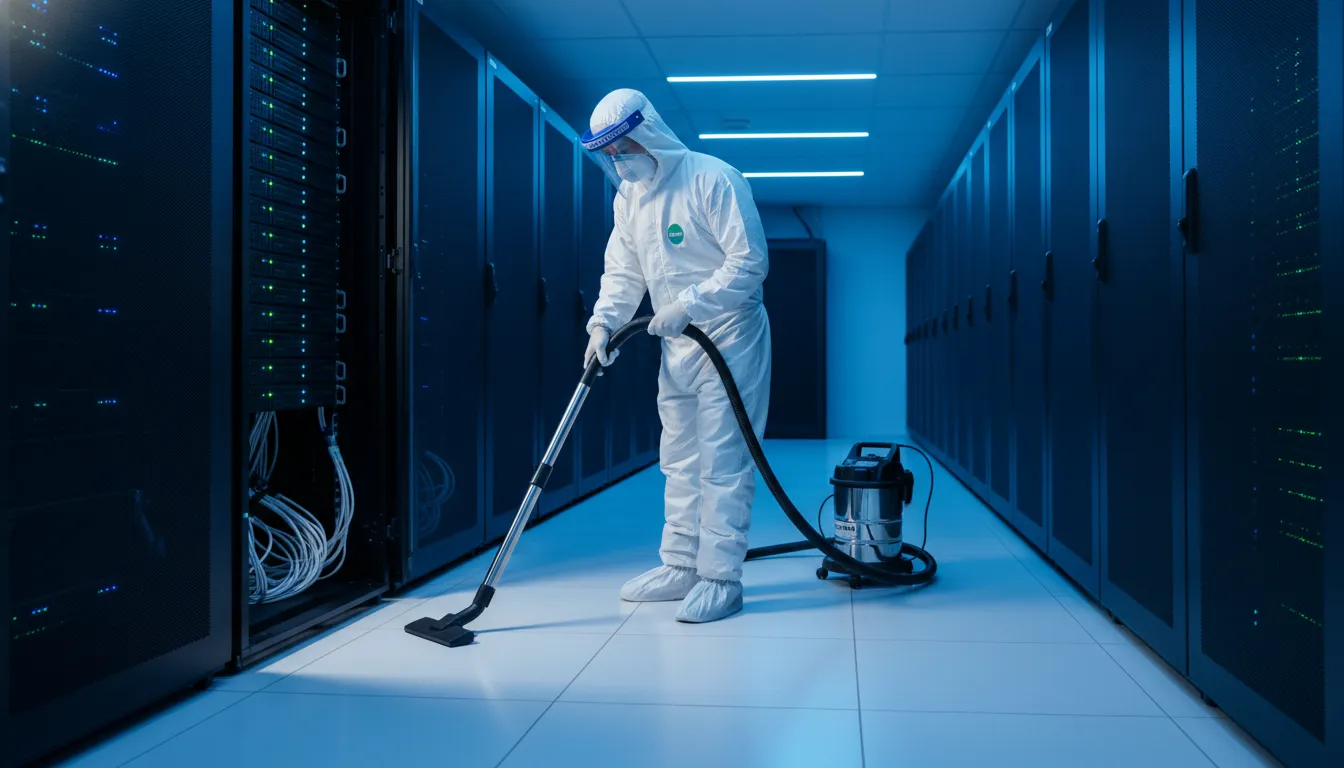
A regular crew may use tools that work well in a lobby or break room. A critical environment crew uses controls chosen for equipment areas. Foreman Pro’s HEPA-filtered data center cleaning applies anti-static cleaning compounds and non-disruptive techniques for live systems.
| Control point. | Regular janitorial approach. | Data center protocol. |
|---|---|---|
| Particle removal. | General vacuuming for visible debris. | HEPA-filtered vacuuming to capture removed particles. |
| Surface contact. | Reusable cloths for routine surfaces. | Lint-free wipes for equipment-area surfaces. |
| Static control. | No equipment-specific static step. | Anti-static compounds and ESD-aware handling. |
| Chemicals. | Products suited to office finishes. | Controlled products selected to avoid residue near equipment. |
| Live operations. | Work can interrupt access to an area. | Non-disruptive work methods around active systems. |
| Recordkeeping. | Completion noted by area. | Documented scope, methods, findings, and work completion. |
The table summarizes why data center cleaning cannot follow a generic office checklist. Each control is chosen to reduce contamination risk near active technology.
Tools are only part of the difference. Lint-free supplies help avoid leaving new fibers behind after removal work. Controlled chemicals address residue risk near sensitive equipment. HEPA-filtered collection, anti-static methods, and careful movement work together as one contamination control plan.
Controls before, during, and after service
Before work begins, the crew should confirm the scope, access rules, equipment boundaries, and approved supplies. PPE should match the site rules and the assigned work area. A trained crew also needs clear procedures for working near live equipment, without touching or moving assets outside the scope.
During service, non-disruptive techniques help keep the operating space stable. Work can move in controlled zones, with attention to rack fronts, airflow paths, cable areas, and the raised floor plan. Where the project includes subfloor areas, raised floor cleaning requires its own controlled approach.
After service, documentation turns cleaning into an accountable facility process. A record can note the areas addressed, tools used, products approved, and conditions observed. That record helps IT and facilities teams review work done in a critical space. It also separates specialized data center cleaning from routine appearance-based service.
How specialized cleaning protects uptime and equipment life
Operational value: specialized cleaning reduces preventable contamination near live systems, protects airflow paths, and gives facilities teams records they can use for maintenance planning.
A data center can look orderly while dust remains near air paths, cable runs, or raised floor spaces. Specialized data center cleaning addresses contamination where it can affect live equipment and cooling flow. The goal is simple: keep the room clean without creating new risk during the work.
Cleaner airflow and lower heat risk
Equipment depends on a steady path for cool air and heat removal. Dust at server intakes, racks, and subfloor spaces can work against that path. A National Science Foundation record reviews contamination risks for IT equipment. It notes that uncontrolled particles and gases can pose a risk to reliability when heat and humidity change.
Cleaning should focus on the parts of the room that support airflow, not only visible floor areas. Foreman Pro uses HEPA-filtered vacuuming, anti-static cleaning compounds, and non-disruptive techniques for live systems. Those methods help remove debris while limiting residue, airborne spread, and avoidable contact with sensitive hardware.
Raised floor areas also call for a planned approach. Dust in a sub-floor plenum can enter the air path that serves equipment racks. A scope that includes accessible plenum areas, rack surroundings, and air-path surfaces supports a cleaner operating space. It also gives facilities and IT teams a clearer view of contamination concerns.
Careful work around live equipment
Uptime protection depends on how the work is done. A critical environment is not the place for routine janitorial tools, loose fibers, or careless movement near cords and racks. Cleaning teams need clear boundaries, safe materials, and steps that avoid disruption. Foreman Pro’s critical-environment cleaning team is built around that controlled approach.
The process matters because each action occurs close to vital systems. HEPA-filtered equipment helps control removed particles. Anti-static products help manage equipment handling risk. Non-disruptive techniques allow cleaning around operating areas without treating the room like an empty office. Together, these controls support equipment care and a stable critical environment.
Documented accountability for critical spaces
Good cleaning is also visible in the record of work. A data center manager needs to know what areas were covered, what method was used, and what conditions need follow-up. Documented service helps teams prepare for audit requests and plan the next cleaning scope with less guesswork.
Foreman Pro’s approach is process oriented: defined procedures, appropriate tools, and clear accountability for critical areas. That focus connects cleaning to operational needs, rather than surface appearance. When construction or repair activity adds unusual debris risk, post-construction data center cleaning protocols can help teams plan controls before normal operations resume.
Cleaner airflow paths, careful equipment handling, and service records each support the same aim: a controlled room for systems that must remain available. Specialized cleaning cannot replace monitoring or maintenance. It can remove preventable contamination risks and give IT and facilities teams a more disciplined base for protecting equipment life.
How often should a data center be cleaned?
Practical schedule: cleaning frequency should reflect room traffic, construction activity, maintenance events, filtration, and the sensitivity of the equipment in each zone.
There is no single cleaning interval that fits every data center. A safe schedule matches the space, equipment activity, filtration, nearby work, and site risk controls. Data center cleaning should cover routine control work, planned deep work, and prompt response to unusual events.
Fine particulate and gaseous contaminants can affect equipment reliability when temperature and humidity change. This risk is noted in a National Science Foundation record on IT equipment reliability. A schedule is an operating control, not a calendar reminder alone.
Daily and weekly controls
Daily surface controls keep visible dust, tracked soil, and loose debris from spreading through active technical areas. Tasks may include entry checks, accessible floor inspection, approved waste removal, and review of any new dust source. Staff should log concerns without disturbing live racks or cables.
Weekly detail work can address approved surfaces, perimeter areas, cable-route surroundings, and other dust collection points. The exact weekly scope depends on access rules and site procedures. Before assigning specialist tasks, review specialized server room cleaning support and set the approved work zone.
Quarterly and event-based work
Many facilities can use quarterly planning for deeper work, with frequency changed when conditions require it. Raised-floor spaces need care because work near a plenum may affect airflow paths and controlled operations. Foreman Pro’s framework calls for quarterly raised-floor cleaning to manage particles in the sub-floor plenum.
Deep work may cover approved sub-floor areas, room edges, access floor surfaces, and logged inspection findings. It must be planned with facility contacts, clear access limits, and equipment-safe methods. Do not treat a technical room like a general office cleaning zone.
Building a site-specific schedule
A useful schedule starts with risk and operating limits, then assigns work by frequency. Use these steps to build a plan that can be reviewed and adjusted.
- Map critical zones, raised-floor areas, entrances, equipment rows, cooling paths, and spaces affected by nearby work. Mark zones that need escorted or restricted access.
- Set daily surface controls for accessible areas and record possible sources of debris or contamination. Keep the work non-disruptive around live systems.
- Assign weekly detail work where traffic, packaging, filters, or approved maintenance tasks create a repeat cleaning need.
- Plan quarterly raised-floor or deeper cleaning where the site’s design and risk review support that interval. Change the interval when inspections show a need.
- Trigger added cleaning after construction, maintenance, an environmental incident, or an audit finding. Define the affected zone before work starts.
Event-based work matters because a calendar cannot predict every contamination source. After construction or major service work, use documented post-construction data center cleaning protocols that fit the affected zone.
Record completed tasks, observed conditions, access limits, and follow-up needs after each visit. This record lets managers change the schedule when traffic, construction, filtration, or site conditions change. The result is a tailored schedule tied to the actual facility, not a fixed template.
Talk with Foreman Pro about a data center cleaning schedule matched to your traffic, maintenance windows, and risk profile.
What should you look for in a critical-environment cleaning partner?
Vendor test: choose a partner that can explain its training, HEPA and anti-static controls, documentation process, and plan for working around live equipment.
Training and operating controls
A qualified partner should explain its data center cleaning training before work begins. Ask who may enter white space, what site orientation crews complete, and how supervisors enforce access rules. Training should cover equipment awareness, restricted touch points, incident reporting, and safe work near active racks.
Request written SOPs for routine service, raised floors, post-construction dust, spills, and change control. Those procedures should name approved tools, work zones, stop-work triggers, and sign-off steps. For a new buildout or renovation, review the vendor’s post-construction data center cleaning protocols before scheduling service.
Tools for particle and static control
Cleaning in technical space calls for tools chosen to control particles and static risk. Ask whether crews use HEPA-filtered vacuums, lint-free supplies, and anti-static cleaning compounds for approved surfaces. Also confirm how the vendor checks, transports, and stores equipment between clean zones and office areas.
The reason for care is practical: uncontrolled fine particles and gases can put IT equipment reliability at risk. A review of contaminants affecting IT equipment notes the risk of early hardware failure or reduced reliability. A vendor should connect each method to that risk, rather than offer a broad dusting checklist.
Ask for a controlled chemical list and safety data sheets before approval. Confirm which products are allowed near electronics, which surfaces must remain dry, and how residue is prevented. ESD awareness should be clear in supplies, work sequence, crew briefing, and escalation steps.
Records and accountable coverage
Good documentation makes service review possible without relying on memory. Require a scope by room and zone, completed-task logs, issue notes, and supervisor sign-off. Reports should record exceptions, such as blocked access, damaged tiles, unexpected dust, or work delayed by operations.
Use the walkthrough to turn these points into clear questions. Record each answer beside the scope and keep it with the bid file for later comparison.
- Who trains each crew member for energized spaces, and how is training confirmed?
- Which SOP applies to racks, raised floors, overhead areas, and nearby offices?
- Which HEPA and ESD-safe tools will arrive on site?
- Which chemicals are approved for each surface, and who approves changes?
- What report will document completed work, findings, and corrective action?
- What insurance, supervision, and escalation contacts apply to this location?
Before award, request proof of insurance and confirm who owns site communication and incident response. Review how the partner corrects missed work, manages subcontractors, and protects access credentials or visitor records. These checks test accountability before a problem occurs.
Facilities may include white space, support rooms, loading areas, restrooms, and offices under one service plan. The partner should separate critical-environment methods from office tasks, while coordinating schedules and reporting. Review Foreman Pro’s live-equipment cleaning safeguards, then ask how adjacent areas are managed within the same plan.
Frequently Asked Questions
Do data centers need to be cleaned?
Data centers need planned cleaning because contamination is an equipment risk, not only an appearance issue. Fine particles and corrosive gases can affect hardware reliability during shifts in temperature and humidity, according to a contamination review archived by the National Science Foundation. A data center cleaning plan targets equipment-adjacent surfaces, airflow paths, and subfloor spaces while controlling access and electrostatic risk.
How often should a data center be cleaned?
Cleaning frequency depends on traffic, construction activity, filtration, humidity, equipment layout, and contamination readings. A practical program combines routine surface care with scheduled technical cleaning for racks, cable areas, and raised-floor plenums. Facilities with active construction, heavy particulate load, or changing air conditions may need added service. Documented inspections and particulate monitoring help managers adjust timing without relying on a one-size-fits-all schedule.
What tools are used for professional data center cleaning?
Professional data center cleaning uses tools selected to remove particles without introducing static, lint, residue, or excess moisture. Typical items include HEPA-filtered vacuums, ESD-safe equipment, lint-free wipes, approved anti-static compounds, and controlled-access documentation. Cleaning plans should specify which tools may enter technical spaces and where each tool is used, especially around powered racks, cables, cooling paths, and raised-floor systems.
How much does data center cleaning cost?
Data center cleaning is usually priced after reviewing the site, rather than through a single flat rate. Cost factors include square footage, raised-floor access, rack and cable density, contamination level, access restrictions, service frequency, and whether live equipment areas are included. A useful quote should identify work zones, approved tools, timing, documentation, and risk-control procedures so facilities teams can compare scopes accurately.
Ready to protect your critical environment?
Treating a data center like a routine janitorial space can leave sensitive operating areas exposed to avoidable dust, handling, and disruption concerns. Waiting to develop a tailored plan can limit scheduling choices and force your team to address cleaning needs under tighter time pressure. Starting now gives you time to review access, equipment zones, and operational priorities before work begins.
Ready to protect your critical environment? Call 888-360-1608 to schedule a data center cleaning consultation. Talk with Foreman Pro about scope, timing, site access, and a risk-aware cleaning approach suited to your critical space. A defined plan supports clear coordination and helps your team avoid rushed decisions around active equipment and restricted spaces.
