
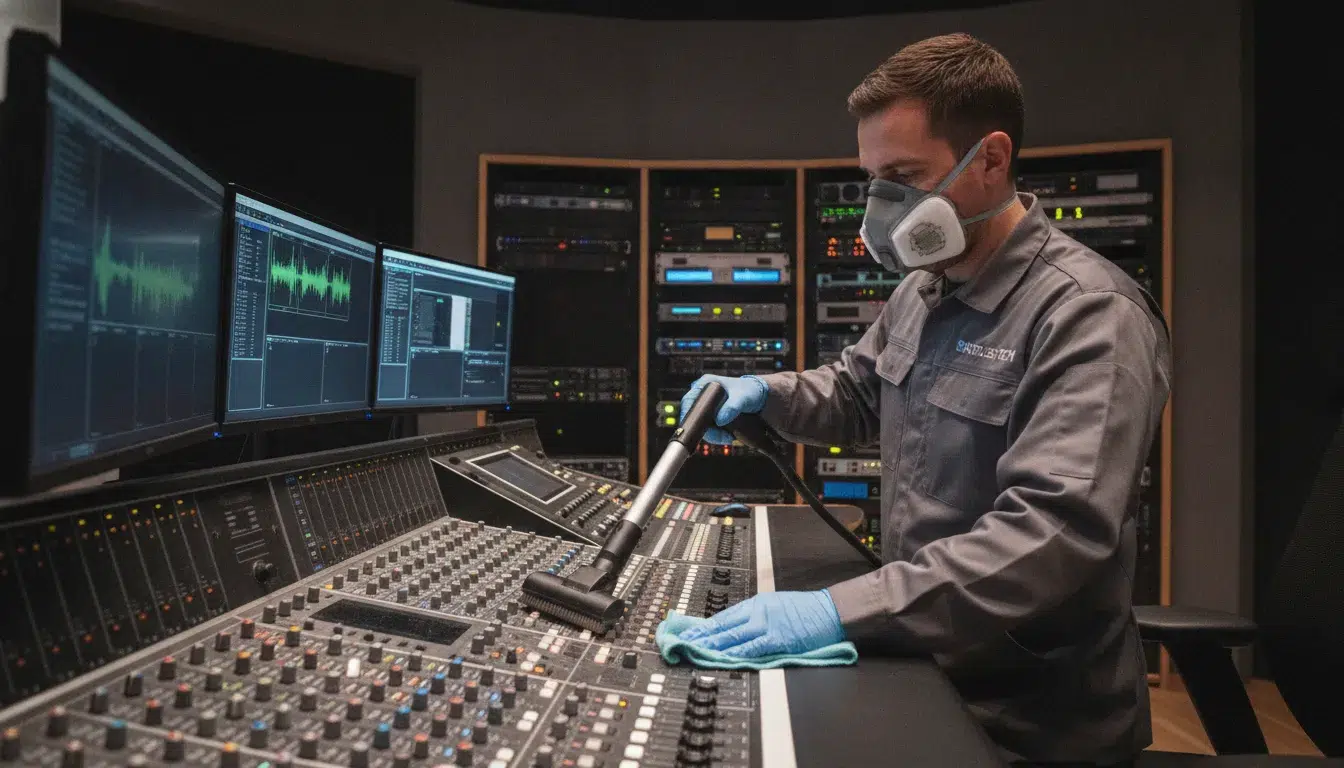
A broadcast studio shutdown costs thousands of dollars every hour in lost revenue. Microscopic particulates and electrostatic discharge can damage sensitive equipment if left alone. Professional cleaning prevents these costly technical failures.
Broadcast studio cleaning is a specialized process that protects high-value production equipment from microscopic particulates and electrostatic discharge. Standard janitorial methods often fail to fix the unique needs of control rooms where dust buildup leads to downtime. To keep your systems running, facility managers must use a two-phase approach that includes both general area care and micro-cleaning of sensitive systems. According to NewscastStudio, using ethanol-based cleaners on plastic electronics helps maintain hygiene without causing damage. Foreman Pro Cleaning provides these expert services to help studios keep high acoustic quality and system uptime across Maryland and Virginia. Professional teams reduce hardware risk by following strict ISO 14644-1 standards for contamination control.
Maintaining a clean broadcast facility needs more than just a mop and a bucket. You must understand the technical risks that standard cleaning crews often overlook when working near sensitive audio and video equipment. This guide explains how broadcast studio cleaning protects your facility. We start by exploring what makes it different from standard janitorial services.
Broadcast studios are complex spaces where dust and static can ruin costly systems. Standard janitorial teams focus on the look of a room. They often use tools that move dust around. But broadcast spaces need a deeper focus. Every surface and wire must stay safe from debris and static. Foreman Pro Cleaning uses specialized training to protect these rooms. This keeps your studio on the air and prevents hardware failure.
What Makes Broadcast Studio Cleaning Different from Standard Janitorial?
Protecting Sensitive Electronic Infrastructure
Standard cleaners use cotton mops and paper towels. These tools leave lint behind. They also do not stop static build-up. In a studio, static attracts contaminants to mixer boards and servers. We use HEPA-filtered vacuums and microfiber tech to trap most particulates. This level of care matches ISO 14644-1 cleanroom standards. Our team knows how standard janitorial cleaning falls short for sensitive facilities like yours.
Electronic systems in studios generate heat. This heat draws in small bits of debris. If dust builds up, it causes parts to fail. Our staff uses a special training program. This ensures we clean without causing static damage. We focus on the small details that general cleaners miss. This includes the gaps between buttons and sliders on high-end boards. Keeping these parts clear helps you avoid costly downtime.
Improving Studio Sound and Air Quality
Dust does more than hurt systems. It also ruins sound quality. Debris on set walls and foam panels changes how sound moves. This leads to poor audio for your listeners. We use a two-phase plan to fix this. First, we do a top-down standard clean. Second, we use micro-cleaning for sensitive equipment. This thorough work keeps customers coming back. We maintain a 98% retention rate.
| Cleaning Aspect | Standard Janitorial | Critical Environment Cleaning |
|---|---|---|
| Vacuum Tools | Standard bag vacuums | HEPA-filtered vacuums |
| Cleaning Cloths | Cotton or paper towels | Lint-free microfiber |
| Static Awareness | None or very low | Full anti-static plans |
| Chemical Use | General-purpose soap | EPA-registered disinfectants |
| Training Level | Entry-level janitorial | Proprietary CET training |
We use specific agents for touchpoint disinfection. For plastic surfaces, we use cleaners with ethanol levels between 76% and 81%. This kills germs but keeps the hardware safe. We never use ammonia on acrylic sets because it causes clouding. Our leadership brings 30+ years of IT experience to every job. This skill makes our broadcast studio cleaning services the best choice for Maryland, Virginia, and DC studios.
Broadcast studios are complex spaces where hardware and daily work meet. Standard cleaning crews often lack the training to handle these rooms safely. At Foreman Pro Cleaning, we use our 30 years of IT work experience to manage the risks in broadcast hubs. These threats range from microscopic particulates to static buildup on sensitive systems.
Why Do Broadcast Studios Require Specialized Cleaning Protocols?
How does dust impact studio sound and electronics?
Dust is more than a look in a studio. Microscopic particulates can build up on sound panels and mics, which changes how sound moves. Over time, these contaminants also clog vents in server racks and boards. This buildup leads to heat and system failure. Our critical environment cleaning services keep equipment cool so it stays in top shape.
Debris also poses a threat to power safety. Data from the Environmental Protection Agency (EPA) shows that indoor air has high levels of bits that settle on hardware. In a broadcast room, these bits can cause signal loss. Our team uses HEPA-filtered vacuums to catch debris that standard tools would miss. This helps keep your broadcast signal clear.
Which technical risks affect broadcast equipment?
Static discharge is a big worry for any room with many electronics. Broadcast equipment makes static, which draws more bits from the air. This can lead to short circuits if not managed. We use special tools that meet ISO 14644-1 standards for cleanrooms to keep your systems safe from static.
Another hidden threat is the growth of zinc whiskers on raised floor tiles. These tiny metal bits can break off and enter the air of your HVAC system. Once they land on a board, they can cause a crash. Specialized broadcast studio cleaning services find and clear these metal growths. Our staff knows how to stop these risks before they cause a shutdown.
How does particulate buildup lead to system failure?
When debris settles inside high-end systems, it acts like a coat. This stops heat from getting out, which makes fans work harder. In a studio, loud fan noise can ruin a live take or a session. Heat stress shortens the life of your hardware. By using our cleaning protocols, you protect your gear and keep your studio on the air.
Expert broadcast studio cleaning follows a strict, two-phase plan. This method makes sure that both the facility and the sensitive production systems stay free of particulates. Foreman Pro Cleaning uses custom critical environment techniques to protect high-value hardware while keeping a clean workspace. These broadcast studio cleaning services help prevent downtime and maintain high audio and video quality. By splitting the work into clear phases, technicians can handle large-scale needs first. This prevents damage to delicate electronics later in the process.
How Are Broadcast Studio Facilities Professionally Cleaned?
Phase 1: Foundation and standard facility care
The first phase focuses on the structural base of the studio. Technicians use a top-down approach to catch contaminants before they settle on sensitive systems. This stage includes HEPA-filtered vacuuming of floors, walls, and vents. HEPA filters are needed because they trap microscopic particulates that standard vacuums would just blow back into the air. Staff also use microfiber technology to wipe down non-sensitive spots like desks, handles, and light switches. Since standard janitorial cleaning falls short for sensitive facilities, this base is vital for a deep clean. Microfiber cloths are better than paper towels because they grab debris rather than just moving it.
Phase 2: Micro-cleaning of technical spaces
Phase two targets the most sensitive areas, such as control rooms and edit suites. Here, the focus shifts to microscopic particulate management on the technical infrastructure. Technicians use specialized tools to remove dust from mixer boards, video control boards, and camera controllers without causing harm. These spaces often house millions of dollars in equipment that cannot handle moisture or standard sprays. Instead, cleaners use precision brushes and low-moisture wipes to clear out sliders, buttons, and keyboards. This careful work prevents build-up that could cause heat or component failure.
Disinfection and specialized chemical protocols
Disinfection is the final layer of safety for any modern broadcast hub. Using EPA-registered disinfectants, teams treat high-touch spots to reduce biological risks. For plastic electronics, specific ethanol-based cleaners are used to prevent surface harm. Facts from NewscastStudio show that a mix of 76.9% to 81.4% ethanol is best for these parts. It kills germs fast but dries quickly enough to stay safe for the hardware. Electrostatic application is also common to give full coverage across large set pieces. This tool sprays a fine mist that wraps around objects, ensuring every side gets treated.
- Initial site assessment: Technicians walk through the facility to find high-risk zones and group equipment by sensitivity.
- Top-down HEPA vacuuming: Cleaners start at the ceiling and work down to the floor to catch all loose particulates.
- Surface microfiber wiping: Staff use dry and damp microfiber cloths to clear dust from all structural elements and furniture.
- Technical micro-cleaning: Experts use specialized tools to clean between buttons and sliders on mixer boards and video controllers.
- Electronics disinfection: Technicians apply ethanol-based cleaners to buttons and keyboards to kill germs without harming plastics.
- Electrostatic spraying: Teams use electrostatic tools to apply a fine mist of disinfectant across the whole room for full coverage.
- Final quality check: A supervisor verifies that all particulates are gone and all systems are ready for the next broadcast.
A broadcast facility has many zones that need special care to keep the signal live and the gear safe. From the busy master control room to the server area, each space has its own risks. Foreman Pro Cleaning uses a broadcast studio cleaning services plan to manage these needs.
What Areas of a Broadcast Facility Need the Most Attention?
How Should Control Rooms and Production Spaces Be Cleaned?
Control rooms are the heart of any station. These areas house boards and video switchers. Microscopic dust can build up on buttons, sliders, and knobs. This leads to sticky controls or shorts. We use microfiber tools and strong cleaners to remove residue without harm to the hardware. High-touch surfaces like chairs also need daily cleaning with EPA-registered products to keep staff safe.
Airflow is a big concern in these rooms. Dust often hides in vents and under floors, where it can be pulled into fans. Regular data center cleaning steps like HEPA-filtered vacuuming help keep these areas clear. This stops dust from blowing back onto the tech where it could cause heat or damage.
What Are the Best Methods for Production Studios and Set Pieces?
Studios contain many materials that each need a specific touch. Sets use metals and plastics that can scratch or cloud if cleaned with the wrong tools. For example, using some common cleaners on acrylic can cause permanent damage. We use special products like Brillianize to keep these surfaces clear. Lighting rigs also need care to prevent dust from falling onto the set during a live show.
In these areas, the goal is both look and function. Dust on surfaces can hurt sound quality and affect the look of the set on camera. Our teams use anti-static rules to clean lights and camera lenses safely. This work helps keep the show quality high for every broadcast.
How Are Server Rooms and Transmission Areas Protected?
The server areas are the most sensitive parts of the building. These rooms need tight control to prevent downtime. One big risk in these spaces is zinc whisker growth, which can lead to shorts in racks. Foreman Pro Cleaning has the training to find and stop these tiny metal growths before they cause a crash.
We also follow standard janitorial vs critical environment cleaning rules to avoid static. Standard tools like cotton mops can create static that fries chips. Instead, we use special vacuums and tools that meet the highest safety standards. These steps ensure that your server systems stay safe while we remove microscopic dust.
Broadcast studios run on tight schedules. Every hour a studio is down can cost a station thousands in lost revenue. To keep shows on air, you must set a strict cleaning plan. The right plan stops microscopic particulates from building up on sensitive equipment and ruining acoustic quality. Professional critical environment cleaning services ensure your facility meets high standards for air quality and system health.
How Often Should a Broadcast Studio Be Cleaned?
How to clean high-traffic areas?
Control rooms and production studios see a lot of use. Staff touch buttons, sliders, and knobs all day long. These touchpoints need a daily wipe down with EPA-registered disinfectants to stop the spread of germs. During active show runs, you should clean these surfaces after each use. This fast work keeps the gear safe and the crew healthy.
Micro-cleaning of sensitive systems should also happen daily in these rooms. Dust can cause heat buildup or static discharge that hurts hardware. Using microfiber technology helps you get into small gaps without scratching plastic surfaces. Foreman Pro Cleaning uses a two-phase approach to handle both the floor and the fine gear inside the rack.
When to clean technical rooms?
Server rooms and transmission areas do not see as many people. However, they are vital for staying on the air. These areas should get a deep clean every week. This follows common critical environment standards for technical facilities. You must check for dust on server racks and cable paths to prevent fire risks or system errors.
Edit suites fall into a middle ground. If your team uses them all day, they need daily care. For suites used less often, once or twice a week is enough. Focus on monitors and keyboards to keep the work area clear. Regular data center cleaning steps work well for these rooms because they protect against static and heat.
What factors change the schedule?
Your studio size and staff count change how often you need to clean. A big station with many crews will see more debris than a small edit booth. If you have many people in and out, you need to clean more often. You should also look at your local rules. Some states have health codes for workplaces that you must follow.
| Area Type | Cleaning Task | Target Frequency |
|---|---|---|
| Control Rooms | Touchpoint Disinfection | Daily or per production |
| Production Sets | Surface Micro-Cleaning | After each use |
| Server Areas | Particulate Management | Weekly |
| Edit Suites | General Technical Care | Weekly to Bi-weekly |
Frequently Asked Questions About Broadcast Studio Cleaning
What is broadcast studio cleaning?
Broadcast studio cleaning is a specialized form of critical environment cleaning that addresses the unique requirements of television and radio production facilities. It involves protocols for cleaning sensitive electronic equipment, control rooms, production studios. And transmission areas using HEPA-filtered vacuums, microfiber technology, and EPA-registered disinfectants that will not damage sensitive broadcast equipment. Foreman Pro’s broadcast studio cleaning services follow a two-phase approach that protects both the facility and its costly technical infrastructure.
How often should a broadcast studio be professionally cleaned?
High-traffic control rooms and production studios benefit from daily touchpoint cleaning during active productions. Server and transmission areas should receive weekly critical environment cleaning. Edit suites typically need weekly to bi-weekly care depending on usage frequency. Most broadcast facilities schedule a comprehensive deep cleaning monthly or quarterly based on production volume and facility size.
Can standard janitorial services clean broadcast studios?
Standard janitorial services lack the specialized training, equipment, and protocols required for broadcast studio environments. They may use harsh chemicals that damage sensitive electronics and acrylic surfaces, cotton mops that spread contaminants. And standard vacuums that recirculate particulates rather than capturing them with HEPA filtration. Specialty cleaning is the only safe option for these environments.
What cleaning products are safe for broadcast studio equipment?
Ethanol-based cleaners with concentrations between 76.9% and 81.4% are recommended for plastic electronics surfaces when applied lightly with a soft cotton cloth. Microfiber cloths are preferred over paper towels to prevent surface scratching. For acrylic and plexiglass surfaces, products like Brillianize are recommended. Ammonia-based cleaners such as Windex should be avoided as they can cause permanent clouding.
Why is dust a problem in broadcast studios?
Dust in broadcast studios poses multiple risks. Microscopic particulates can settle on sensitive electronic equipment, causing overheating and premature hardware failure. Dust buildup degrades acoustic quality by absorbing and scattering sound waves on studio panels and acoustic treatments. Conductive particles create electrostatic discharge risks that threaten both equipment and broadcast signal integrity. Professional critical environment cleaning services manage these risks through HEPA filtration and anti-static protocols.
Why Should You Schedule Professional Broadcast Studio Cleaning?
Microscopic particulates and static buildup can cause system failure. They can also lead to costly studio downtime. Debris can damage your sensitive hardware and lower the sound quality of your shows. A professional cleaning plan provides a safe space for your team and helps your systems last for many years. You can reduce the risk of sudden technical issues by starting a deep cleaning plan today. Our experts use tools like HEPA-filtered vacuums to remove contaminants without harming your electronics.
Ready to request a free estimate for your broadcast studio cleaning? Contact us online or call (888) 360-1608 to talk to a cleaning expert today.
