
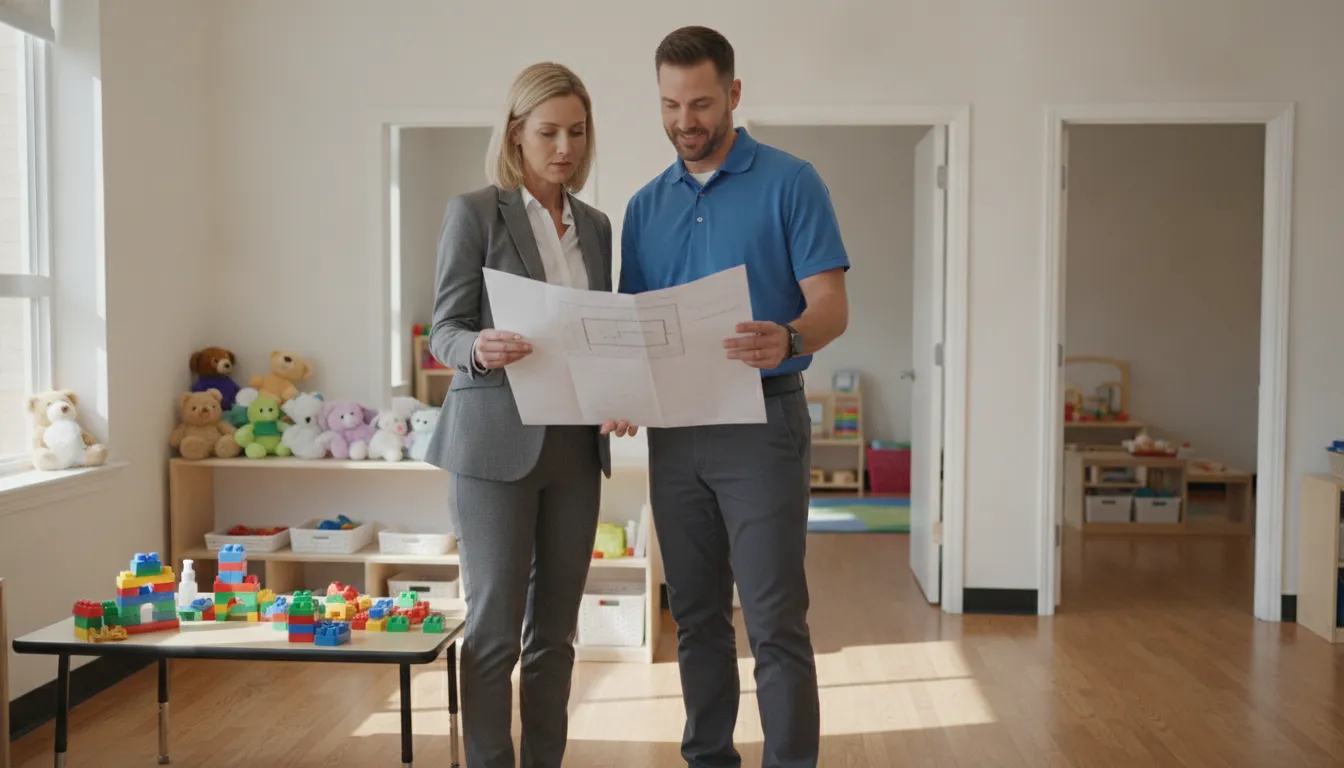
A daycare disinfection quote should do more than present a price. It should show facility leaders exactly what will be addressed, how the work will be performed, when service will occur, and how completion will be documented. A walkthrough and needs assessment are essential because classrooms, nap areas, diapering spaces. Food-preparation areas, restrooms, and shared activity zones do not carry the same surface or scheduling requirements.
To get a quote for daycare disinfection, ask for a written Scope of Work covering rooms. High-touch and child-mouth-contact surfaces, product protocols, contact time, service frequency, access windows, exclusions, safety controls, and quality-control reporting.
Foreman Pro Cleaning develops customized programs for facilities across Maryland, Washington, D.C., and Virginia, connecting the proposed scope to practical operating needs rather than a generic checklist. Request a facility consultation to begin. The first question is what the quote should define about each room and surface.
What should a daycare disinfection quote define about rooms and surfaces?
A professional quote should replace vague whole-building language with a room-by-room and surface-by-surface Scope of Work. During a walkthrough and needs assessment, the provider should identify how each space is used, which surfaces receive frequent contact, and what level of service is appropriate. That gives a daycare leader a practical basis for comparing proposals and deciding whether to get a quote for daycare disinfection that reflects the facility rather than a generic checklist.
At minimum, ask the written scope to identify the following areas and assets:
- Classrooms and playrooms: tables, chairs, door handles, light switches, cubbies, shelves, play structures, and other high-touch points.
- Toys and child-mouth-contact items: toys, infant feeding items, high-chair trays, and shared equipment. The CDC says surfaces that come into contact with children’s mouths, including infant feeding items and toys, should be sanitized. CDC guidance also distinguishes sanitizing from disinfecting, so the quote should state which process applies to each item.
- Meal and food-preparation areas: lunch tables, counters, feeding areas, sinks, and adjacent touchpoints. Visibly dirty lunch tables and craft areas should be cleaned daily after a meal or activity, according to the CDC.
- Restrooms and changing areas: fixtures, partitions, handles, dispensers, floors, and any surfaces connected to diapering or hygiene procedures.
- Floors and soft furnishings: hard floors, carpets, rugs, mats, and upholstered or washable items, with the method and frequency defined separately where materials require different care.
High-touch surfaces such as tabletops, doorknobs, handles, and toys are more likely to have germs. So they should not be hidden inside a broad phrase such as “general cleaning.” The quote should state whether service is daily. Scheduled at another frequency, or triggered by a specific activity or condition. It should also note exclusions, such as staff-only rooms, exterior areas, personal belongings, damaged materials, or items that require manufacturer-specific handling. If an area is omitted, the document should say so clearly.
Foreman Pro Cleaning develops a customized plan and written Scope of Work after reviewing the facility. That process helps connect rooms, surfaces, access requirements, and reporting expectations to an executable program for childcare facilities in Maryland, Washington, D.C., and Virginia.
How should products, label directions, and contact time appear in the quote?
A professional daycare disinfection quote should identify the product category and the surfaces where it is intended to be used, without treating every room or material as interchangeable. The written Scope of Work should state whether each activity is routine cleaning, sanitizing. Or disinfecting, then connect that activity to the appropriate surface, application method, and safety control.
What is the difference between cleaning, sanitizing, and disinfecting?
Cleaning uses soap, water, and scrubbing to remove impurities. Sanitizing reduces germs on a surface to levels considered safe by public health codes or regulations. Disinfecting uses chemical products to destroy remaining germs after cleaning. These are distinct steps, not interchangeable labels. The Centers for Disease Control and Prevention recommends cleaning surfaces before sanitizing or disinfecting because impurities can make chemical products less effective. CDC guidance for early-care and education settings supports documenting that sequence in the quote.
That distinction matters in a daycare because a toy, changing-area surface, food-contact area, restroom fixture, and floor may require different procedures. Surfaces that contact children’s mouths, including infant feeding items and toys, should be addressed through an appropriate sanitizing procedure. A quote should identify those items specifically rather than using a broad phrase such as “disinfect everything.”
Which product and label details should be documented?
The quote should name the product category or approved product selected for the task, identify compatible surfaces, and state that staff will follow the product label. CDC guidance says products must be suitable for each surface and applied according to label instructions. Review the CDC surface and product guidance for this principle. The Scope of Work should also explain what happens when a surface is delicate, porous, food-contact, or otherwise restricted by its manufacturer.
Contact time, sometimes called dwell time, should appear as a label-directed requirement, not as a generic promise. The document can specify that the surface must remain visibly wet for the product’s required contact time, along with any required rinse, ventilation, storage, or re-entry instruction. It should not invent a duration when the product has not been selected.
Because children are more vulnerable to potentially toxic chemicals while their bodies are growing and developing, EPA recommends careful attention to chemical exposure in child-care settings. EPA child-care environmental health guidance supports documenting product handling, training, and access controls. Foreman Pro Cleaning can review these details during a walkthrough and incorporate them into a facility-specific plan for Maryland, Washington, D.C., or Virginia.
How can a daycare compare scope, schedule, and service frequency?
A useful daycare cleaning proposal makes the service pattern easy to evaluate. Instead of treating every visit as the same, compare what happens routinely, what requires targeted disinfection, and what belongs in a periodic deep-cleaning rotation. The right mix depends on the facility assessment, including room layout, age groups, traffic patterns, operating hours, and applicable requirements.
For example, the CDC recommends cleaning visibly dirty lunch tables and craft areas daily after a meal or activity. It also notes that heavily used areas may need more frequent cleaning or disinfection in addition to routine cleaning. Those guidelines support a facility-specific schedule, not an automatic frequency recommendation for every daycare.
| Service element | Purpose | Typical timing trigger | Scope to confirm | Documentation |
|---|---|---|---|---|
| Routine cleaning. | Remove soil and maintain regularly used areas. | Scheduled visits and after visibly dirty meals or activities. | Classrooms, food areas, restrooms, floors, staff spaces, and assigned high-touch points. | Task checklist, service frequency, exclusions, and access window. |
| Targeted disinfection. | Address selected surfaces after cleaning when additional control is appropriate. | High traffic, illness-related needs, body-fluid events, or facility-specific protocols. | Doorknobs, handles, tabletops, toys, changing areas, and other identified touch points. | Product and procedure requirements, responsible staff, and completion record. |
| Periodic deep cleaning. | Reach less frequent or more intensive maintenance needs. | Planned rotation, closure, seasonal reset, or assessment finding. | Detailed floor care, hard-to-reach areas, fixtures, and other agreed rotation items. | Rotation calendar, completed tasks, observations, and follow-up actions. |
Ask whether the proposal distinguishes cleaning, sanitizing, and disinfecting, and whether the scope follows practices appropriate to childcare facilities and applicable regulations. The CDC emphasizes adapting recommendations to the facility type and its requirements. Foreman Pro Cleaning can also account for square footage, layout, restroom count, traffic, service frequency, compliance requirements, and specialized protocols when developing a written Scope of Work.
Scheduling should reflect how the center operates. An after-hours, early-morning, weekend, or day-porter arrangement may be appropriate, but the decision should protect access, supervision, drying time, and continuity of care. To compare a proposal fairly, review its flexible cleaning programs for educational facilities, then request a walkthrough and needs assessment before selecting a frequency.
What safety controls should a professional daycare plan document?
A professional daycare plan should make safety procedures visible before service begins. The written scope should identify when technicians may enter each room, which areas must remain occupied or closed, and how the facility will communicate changes to access windows. That detail helps the provider work around nap periods, meals, arrival, and pickup without treating every room as if it has the same risk profile.
The plan should also document separation controls. Supplies, tools, and waste-handling procedures should be organized to reduce the chance of transferring material from restrooms. Diapering areas, or other designated zones into classrooms, food-service spaces, or play areas. The exact method belongs in the provider’s Standard Operating Procedures and the facility-specific scope, rather than in a generic promise.
Which product and exposure controls belong in the scope?
Product use should follow a clear sequence. CDC guidance says surfaces should be cleaned before they are sanitized or disinfected because impurities can make chemical action less effective. The CDC also distinguishes disinfecting as a chemical step used after cleaning.F007 F012 The quote should name the intended product category or product, the surfaces approved for use. Required contact time when specified by the label, dilution or application directions, and any rinse requirement.
It should state that products will be suitable for each surface and used according to the label, as CDC guidance requires. Following the product label protects the process from improvised application.F013 The scope should assign PPE according to the product label and the provider’s SOP. If a label requires ventilation, restricted occupancy, or a re-entry interval, those instructions should be recorded with the room-release procedure. A daycare should never have to guess when children or staff may safely return.
How should staff training and child-use items be addressed?
Training should cover label reading, contact time, PPE, spill response, room segregation, and hand hygiene. Staff should wash their hands with soap and water for 20 seconds after cleaning, consistent with CDC facility guidance. Handwashing is a defined post-cleaning control, not an optional courtesy.F029 The plan should separately identify toys, infant feeding items, and other surfaces that contact children’s mouths, because CDC advises sanitizing those items.
Finally, the scope should reference practices and regulations appropriate to the facility type, as CDC directs. Facility-specific regulatory alignment belongs in the documented plan.F022 Chemical controls deserve particular care because children are more vulnerable to potentially toxic chemicals while their bodies are developing, according to EPA. EPA’s child-care guidance explains this vulnerability.F031 Foreman Pro Cleaning can use a walkthrough to translate these controls into a practical Scope of Work without promising a germ-free facility.
How should reporting and quality control be handled after service?
A professional daycare program should remain understandable after the crew leaves. Reporting is not simply a confirmation that someone arrived. It should show what was completed, what was not accessible, what required additional attention, and what the facility team should review before the next service. This record gives a director a practical way to evaluate the work against the written Scope of Work and keep communication focused on facility needs.
Foreman Pro Cleaning uses a five-stage framework: walkthrough and discovery, tailored plan development, safety training and standards, reliable execution, and quality control with reporting. The final stage should connect back to the first four. A useful quality-control report can identify the rooms and surfaces covered, service date and access window, exceptions, and any open corrective items. If a classroom, storage area, toy set, or restroom could not be serviced because of access or scheduling. That exception should be visible rather than implied to be complete.
What should a supervisor review?
Quality control may include an inspection by a supervisor or another designated reviewer against the facility-specific plan. The review should consider whether the documented tasks were performed, whether high-touch areas received the attention assigned to them, and whether the work followed applicable Standard Operating Procedures. The report can also record observations, follow-up actions, responsible parties, and a target for reinspection when an item remains open. This creates accountability without promising that one service eliminates every health risk.
The documentation should also preserve relevant product and procedure information. Where appropriate, records may identify the product used, the applicable label directions, required contact time, and the SOP or safety instruction followed. CDC guidance states that cleaning and disinfection recommendations should reflect the facility type and applicable regulations. So a daycare report should support the center’s own operating requirements rather than rely on a generic checklist: CDC facility guidance.
How should follow-up communication work?
Agree on a communication cadence during the walkthrough and include it in the service plan. A manager may receive a report after each visit, a recurring summary for routine trends. And an immediate notification when an access problem, damaged surface, supply issue, or corrective need affects the agreed scope. The cadence should make it easy to adjust the plan as rooms, schedules, enrollment patterns, or facility requirements change.
For Maryland, Washington, D.C., and Virginia facilities, Foreman Pro’s commercial cleaning services can be evaluated through a facility-specific walkthrough, written scope, execution standards, and documented follow-up. Ask to see how reporting will make completion, exceptions, and next actions clear before selecting a program.
When is it time to get a quote for daycare disinfection?
A quote is useful when your facility needs a defined program rather than an isolated response. The right scope depends on the rooms, surfaces, traffic patterns, access windows, and operating requirements of your daycare. Foreman Pro Cleaning begins with a walkthrough and needs assessment, then develops a written Scope of Work and tailored proposal. That process gives facility leaders a practical basis for comparing coverage, scheduling, documentation, and service frequency without relying on a generic package.
Consider requesting an assessment when one or more of these situations applies:
- You are changing the facility’s cleaning program. A shift in enrollment, room use, staffing, or daily activities can change which surfaces receive routine attention and which areas need a more frequent service plan. CDC guidance notes that high-traffic areas may call for more frequent cleaning or disinfection in addition to cleaning. Review the CDC guidance on high-traffic areas when preparing your questions for a walkthrough.
- You are opening a facility or adding a room. New classrooms, infant areas, food-service spaces, restrooms, and staff areas should be evaluated before the program is written. A walkthrough can identify surface types, access limitations, child-mouth-contact items, and the sequence of work required for each space.
- Recurring high-touch needs are exceeding your current process. Tabletops, handles, doorknobs, and toys receive frequent contact. If the same areas need attention between regular service visits. Ask for a scope that separates routine cleaning from targeted sanitizing or disinfection and defines how often each task is performed.
- Someone has been ill or has an elevated risk of illness. CDC guidance recommends disinfecting surfaces where people have obviously been ill and recommends disinfection when someone is sick or at higher risk of getting sick. The CDC’s early-care guidance can help frame the response, while a professional assessment can identify affected areas and operational constraints without making unsupported promises about outcomes.
- You are preparing for a compliance or documentation review. Request a quote when you need a written Scope of Work, defined safety procedures, quality-control checks, or reporting that aligns with your facility’s applicable practices and regulations. CDC advises adapting cleaning and disinfection recommendations to the facility type and appropriate regulations.
Bring room plans, current procedures, access windows, inspection requirements, and any recurring problem areas to the walkthrough. Those details help Foreman Pro Cleaning build a defensible plan for your Maryland, Washington, D.C., or Virginia facility.
Frequently Asked Questions
What should a daycare disinfection quote include?
It should define the rooms, surfaces, service frequency, scheduling window, products, contact-time requirements, safety controls, and reporting deliverables. A walkthrough helps the provider account for square footage, room layout, restrooms, traffic patterns, and specialized protocols before preparing a written Scope of Work.
What products are appropriate for a childcare facility?
Product selection depends on the surface, intended use, and label directions. The CDC recommends choosing products suitable for each surface and using them according to the label. Rather than relying on broad claims such as “non-toxic” or “child-safe.” The EPA also notes that children can be more vulnerable to toxic chemicals because their bodies are still developing. CDC guidance and EPA guidance can inform the facility’s written safety plan.
When should daycare disinfection services be scheduled?
Many facilities schedule routine work after children leave, then coordinate more detailed service during closures or low-occupancy periods. The right schedule depends on room use, traffic, activities, and operational requirements. Heavily used areas may need more frequent attention, according to the CDC.
How are toys and child-mouth-contact surfaces handled?
They require a defined process, not a one-size-fits-all treatment. The CDC distinguishes cleaning, sanitizing, and disinfecting, and recommends sanitizing items and surfaces that children may put in their mouths. The quote should identify applicable items, preparation steps, product use, and any required rinse or storage procedure.
What documentation should we receive after service?
Ask for a service record tied to the agreed Scope of Work, including the date, areas addressed, notable exceptions, quality-control observations, and recommended follow-up. Clear reporting gives facility leaders a practical record for internal review and helps refine the program as room use or operational needs change.
How can you get a daycare disinfection quote?
Bring your room list, operating hours, access windows, current procedures, and recurring concerns to a facility walkthrough. Foreman Pro Cleaning can use that information to develop a tailored Scope of Work for your daycare, preschool, or early-childhood facility in Maryland, Washington, D.C., or Virginia. The proposal should make coverage, safety controls, scheduling, and reporting clear before service begins.
Request a daycare disinfection walkthrough and tailored quote
