
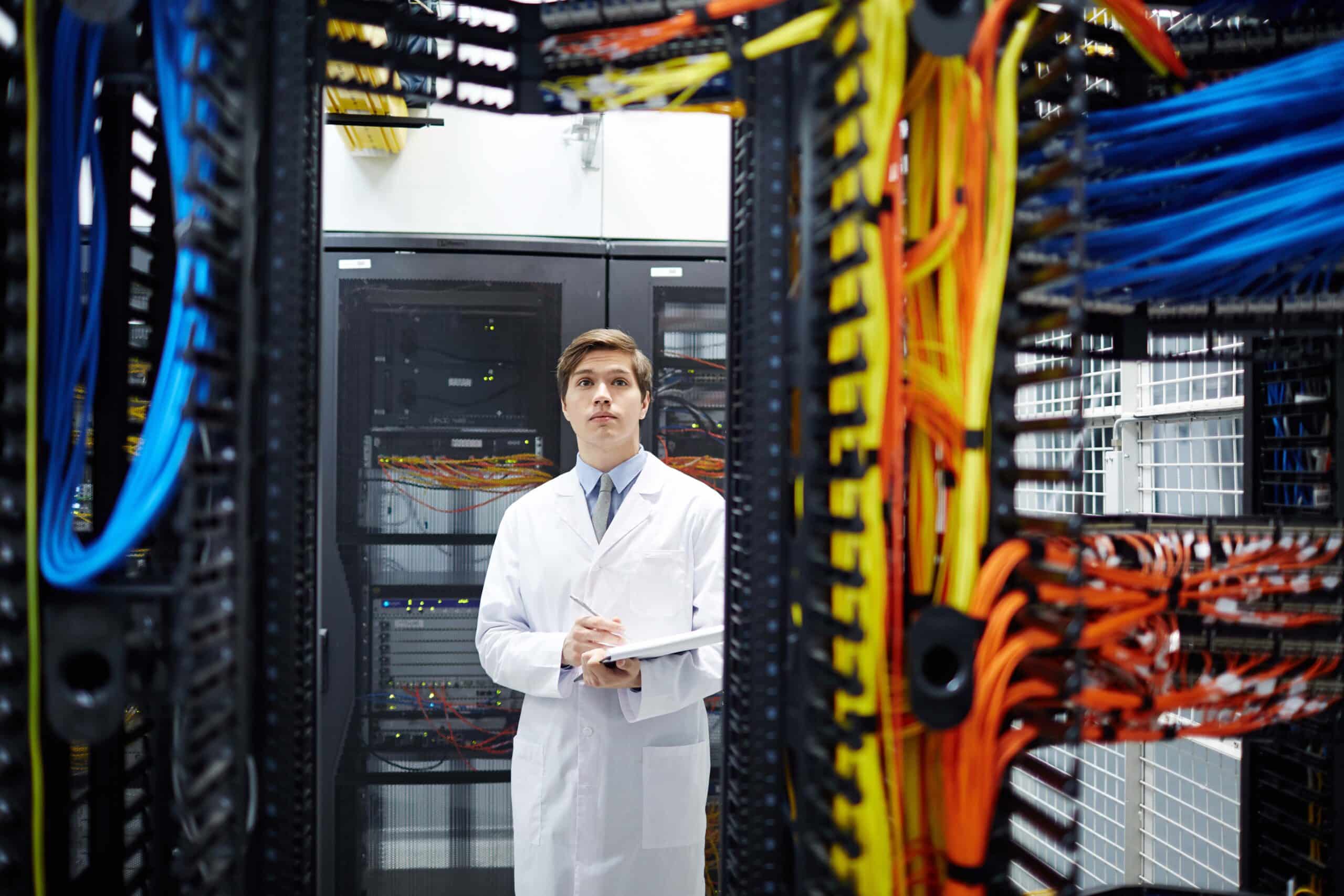
Dust in a server room is more than a housekeeping issue. Fine particles can restrict airflow, collect inside racks, settle on electronics, and make cooling systems work harder. The best way to reduce dust in a server room is to control what enters the space, remove particles with equipment-safe methods, and keep the room on a documented cleaning schedule.
Need help reducing dust around critical equipment? Foreman Pro Cleaning provides server room and data center cleaning assessments across Maryland, Washington D.C., and Virginia.
This guide focuses on prevention and contamination control. If you need a deeper procedural walkthrough, use our related guide on how to clean a server room safely. For facilities that need recurring specialist support, Foreman Pro also provides data center cleaning services for critical IT environments.
Quick Answer: How Do You Reduce Dust in a Server Room?
To reduce dust in a server room, limit access, keep doors closed, remove cardboard and clutter, improve filtration, maintain controlled airflow, clean floors and raised floor cavities with HEPA-filtered tools, and schedule recurring professional cleaning. Avoid dry sweeping, compressed air, household vacuums, and cleaning methods that can push particles into equipment or create static risk.
Server room dust control works best when facilities, IT, and cleaning teams follow the same plan. The goal is not just to make the room look clean. The goal is to keep airborne particles away from racks, cabling, cooling pathways, underfloor plenums, and sensitive electronics.
Why Dust Is a Serious Server Room Risk
Server rooms depend on clean airflow. When dust accumulates on vents, filters, floor tiles, cable pathways, and equipment surfaces, it can interfere with cooling and raise the risk of avoidable downtime. Even small spaces such as network rooms, telecom closets, and communications rooms can develop contamination problems when they have frequent foot traffic or shared storage.
Airflow restriction and overheating
Dust can block air intakes, clog filters, and collect around fans. That buildup makes cooling less efficient and can force equipment to run hotter than intended. Over time, heat stress may shorten component life and contribute to shutdowns, alerts, or performance problems.
Contamination, corrosion, and downtime risk
Airborne contaminants can include dust, lint, construction debris, fibers, and residue from stored materials. In sensitive IT environments, contamination control is tied to uptime protection. ASHRAE guidance for data center environments references particle control, filtration, and humidity management as part of reducing risk. Facilities should treat dust prevention as a reliability practice, not a cosmetic task.
Common Sources of Server Room Dust
Reducing dust starts with finding the source. Many server rooms are clean immediately after service, then dust returns because the same entry points and behaviors continue.
Foot traffic and open doors
People bring particles in on shoes, clothing, carts, packaging, and tools. Doors left open can also pull in dust from hallways, mechanical spaces, loading areas, or construction zones.
Construction and maintenance work
Renovations, ceiling tile work, drilling, cabling projects, drywall repairs, and HVAC maintenance can release fine debris. Even work outside the server room can migrate into the space if doors, penetrations, and airflow are not controlled.
Packaging, cardboard, and stored materials
Cardboard boxes, paper, spare parts packaging, food containers, and general storage create fibers and dust. Server rooms should not be used as storage closets. Keeping these materials out of the room reduces particle sources and supports better airflow.
Poor filtration or uncontrolled air movement
Dust problems can become worse when filters are not replaced, return vents are dirty, pressure relationships are unmanaged, or air movement pulls contaminants from adjacent spaces. Filtration strategy should match the equipment, room layout, and facility requirements.
Step-by-Step Server Room Dust Prevention Plan
Use this prevention plan as a practical checklist for facilities teams, IT managers, property managers, and operations leaders responsible for server room reliability.
1. Control access and keep doors closed
Limit server room access to authorized personnel. Keep the door closed when work is not actively happening, and avoid using the room as a shortcut. A simple sign-in process can help document traffic and identify whether dust events are tied to specific vendors, projects, or maintenance windows.
2. Remove clutter, cardboard, and nonessential storage
Remove cardboard boxes, paper records, spare packaging, food, drinks, and general storage from the room. Store equipment and supplies in a separate controlled area. If parts must be staged temporarily, unpack them outside the server room whenever possible.
3. Use the right filtration strategy
Work with facilities or HVAC professionals to confirm that filters are appropriate for the environment and replaced on schedule. Data center contamination guidance commonly discusses layered filtration, including room filtration and higher efficiency filters for incoming air where conditions require it. Do not change filter ratings without confirming that the HVAC system can handle the pressure impact.
4. Maintain positive pressure where appropriate
In some environments, maintaining appropriate positive pressure can help reduce the amount of dust pulled in from adjacent spaces. This should be evaluated by qualified facilities or HVAC professionals because pressure, cooling, humidity, and airflow must work together.
5. Clean floors and raised floor cavities safely
Floors, corners, under-rack areas, and raised floor cavities often hold dust that later becomes airborne. Use HEPA-filtered vacuuming and controlled wiping methods instead of dry sweeping. Raised floor cleaning should be planned carefully so tiles, cabling, airflow, and underfloor components are not disturbed.
6. Use HEPA-filtered and ESD-safe cleaning tools
Server rooms require equipment-safe methods. HEPA-filtered vacuums help capture fine particles instead of redistributing them. Microfiber tools, anti-static methods, and critical environment cleaning procedures help reduce dust while protecting sensitive electronics.
7. Avoid risky methods near equipment
Do not use compressed air to blow dust around the room. Do not dry sweep. Do not use household vacuums that may exhaust particles back into the air. Do not spray cleaners near equipment. Cleaning should remove contamination from the room, not move it from one surface to another.
8. Plan cleaning around maintenance windows
Coordinate cleaning with IT and facilities teams. Schedule work when access can be controlled, equipment risks can be reviewed, and sensitive tasks can be supervised. For active data centers, cleaning should minimize disruption and protect uptime.
9. Document inspections and recurring cleaning frequency
Track when inspections, filter changes, floor cleaning, raised floor cleaning, and professional services occur. Documentation helps identify patterns, prove that preventive work is happening, and support a more consistent contamination control program.
Recurring dust, recent construction, or unexplained equipment contamination? A professional walkthrough can identify particle sources, airflow concerns, underfloor debris, and cleaning frequency needs before they become reliability issues.
How Often Should a Server Room Be Cleaned?
Most server rooms should be inspected regularly and cleaned on a recurring schedule based on traffic, equipment density, construction exposure, and contamination risk. A lightly used network room may need a different schedule than a high-traffic data center, but waiting until dust is visible on equipment is too late.
As a practical starting point, inspect the room monthly, clean accessible floors and exterior surfaces regularly, and schedule professional critical environment cleaning at least annually. High-traffic rooms, raised floor environments, sites with construction activity, and facilities with recurring dust may need quarterly or semiannual service.
When to Bring in a Professional Data Center Cleaning Team
Bring in a professional team when dust returns quickly, when cleaning involves raised floors or equipment-adjacent areas, when there has been construction nearby, or when internal staff do not have HEPA-filtered and ESD-safe tools. Specialist teams understand how to work around racks, cabling, vents, underfloor spaces, and critical infrastructure without using risky cleaning shortcuts.
Foreman Pro Cleaning supports critical environment cleaning needs across Maryland, Washington D.C., and Virginia. Our team works in data centers, server rooms, network rooms, telecom closets, laboratories, cleanrooms, and other spaces where contamination control matters.
Server Room Dust Control Checklist
- Limit server room access to authorized personnel.
- Keep doors closed and avoid using the room for storage.
- Remove cardboard, paper, food, drinks, and clutter.
- Confirm filters are changed on schedule.
- Review airflow and pressure with qualified facilities staff.
- Use HEPA-filtered vacuums and microfiber tools.
- Avoid compressed air, dry sweeping, and household vacuums.
- Clean floors, corners, and raised floor cavities safely.
- Schedule work around maintenance windows.
- Document inspections, service dates, and recurring dust issues.
FAQs About Reducing Dust in Server Rooms
Can dust damage servers?
Yes. Dust can restrict airflow, clog filters, collect around fans, and settle on sensitive components. That can contribute to overheating, equipment stress, contamination risk, and avoidable downtime.
What is the safest way to remove dust from a server room?
The safest approach is to use HEPA-filtered vacuuming, microfiber tools, anti-static methods, and controlled cleaning procedures designed for critical IT environments. Cleaning should remove particles from the room instead of pushing them into equipment or airflow paths.
Should you use compressed air in a server room?
Compressed air is usually the wrong tool for room-level dust control because it can blow particles into equipment, racks, vents, and other hard-to-reach spaces. Use controlled, capture-based cleaning methods instead.
How often should server rooms be professionally cleaned?
Frequency depends on traffic, equipment density, room design, construction exposure, and dust levels. Many facilities benefit from annual professional service, while high-traffic or contamination-sensitive rooms may need quarterly or semiannual cleaning.
What is the difference between routine dusting and critical environment cleaning?
Routine dusting focuses on visible surfaces. Critical environment cleaning uses specialized tools, methods, and planning to control contamination around sensitive equipment, airflow pathways, raised floors, racks, cabling, and other mission-critical infrastructure.
Schedule a Server Room Cleaning Assessment
Reducing dust in a server room takes more than a one-time cleanup. It requires source control, safe cleaning methods, better habits, and a recurring contamination control plan. If your server room, data center, network room, or telecom closet has visible dust, recurring debris, or recent construction exposure, Foreman Pro Cleaning can help assess the space and recommend a practical cleaning schedule.
Foreman Pro Cleaning is a family-owned commercial and critical environment cleaning company serving Maryland, Washington D.C., and Virginia. Our leadership background in IT operations helps us understand the uptime, safety, and contamination concerns that matter in critical infrastructure spaces.
Contact Foreman Pro Cleaning for a Data Center Cleaning Assessment
Reference: Uptime Institute, Solving Air Contaminant Problems in Data Centers, https://journal.uptimeinstitute.com/solving-air-contaminant-problems-data-centers/
