
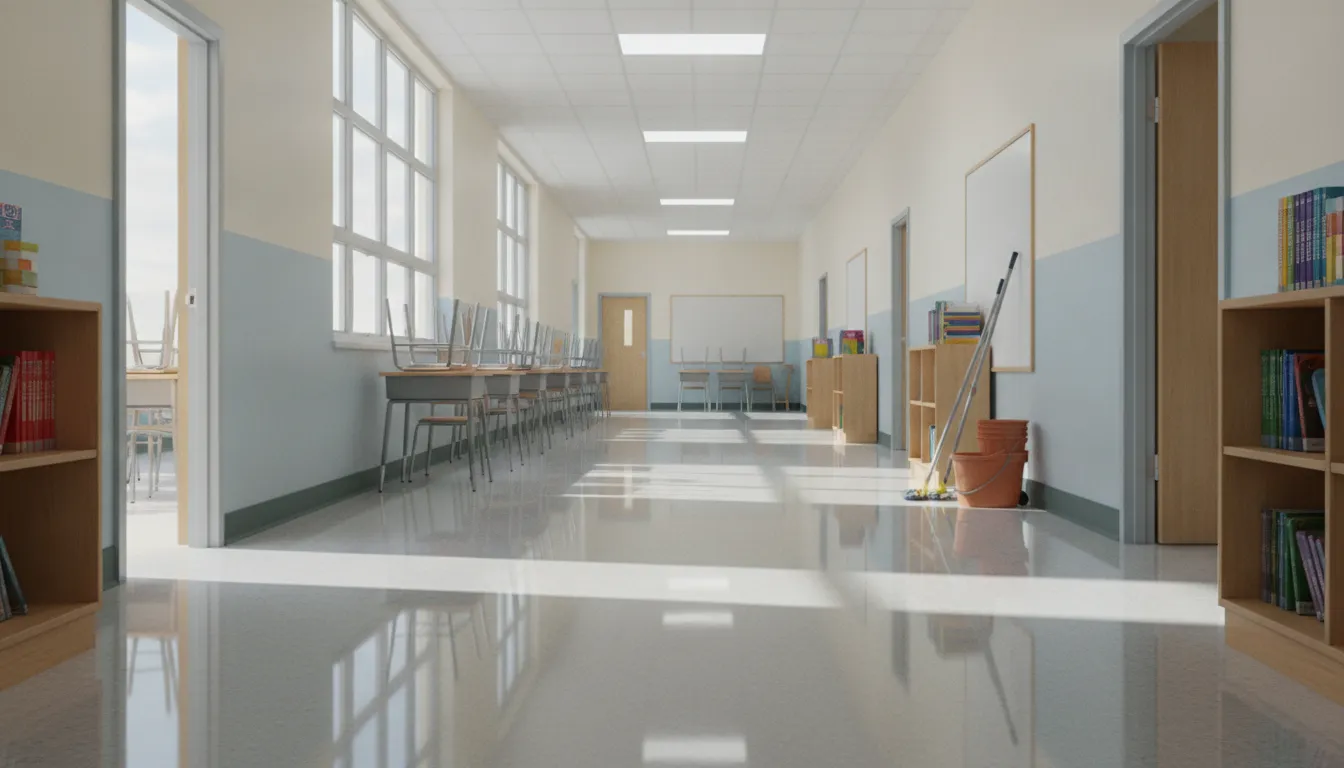
Summer break is the best time for a summer school cleaning checklist to guide building deep cleaning. The low student traffic lets your staff focus on deep cleaning and floor care without any stops.
A summer school cleaning checklist helps get your building ready for the coming fall session. By using the quiet months of summer break, school leaders can do deep cleaning tasks that are hard to do when students are there. This work includes deep sanitizing, floor care, and air system checks to keep the indoor air clean. Following a clear plan helps teams clean every part of the campus, from rooms and labs to kitchens. This focus on process is why Foreman Pro Cleaning keeps a 98% annual customer retention rate across Maryland, Virginia, and Washington D.C. Using professional school cleaning services and background-checked staff ensures that every school building is safe and ready for the first day of class.
Every campus needs a custom plan to handle the different needs of its many rooms. This work ensures that every student and staff member returns to a fresh and safe environment in the fall. The process starts by following the Summer School Cleaning Checklist: Classroom and Office Preparation.
Summer School Cleaning Checklist: Classroom and Office Preparation
A deep clean of school rooms starts with clearing away the items left over from the year. Removing old papers and boxes is the first step in a summer school cleaning checklist for local campuses. Reducing classroom clutter is vital for better air quality in any school building according to EPA guidance. Once surfaces are clear, teams can focus on detailed work that is not possible when students are present.
Classroom surface disinfection
High touch points like student desks, chairs, and door handles need deep cleaning. We use EPA-approved products to kill germs and remove grime. It is also important to look up during a summer turn. Teams should check light fixtures to replace old bulbs and make needed repairs. Following these classroom maintenance tips helps keep the rooms in top shape. Our crew members also pass rigorous background checks to ensure site security while working in empty halls.
Office and administrative care
Main offices and staff rooms also need a full reset before the fall. We wipe down desks, phones, and keyboards in every work area. We pay close attention to vents and baseboards where dust builds up over time. Using HEPA vacuums helps us trap fine dust to keep the air fresh. This work ensures that staff can start the new term in a space that feels like new. Clear desks and clean floors set a professional tone for the whole school year.
Classroom turn vs lab preparation
Standard rooms and science labs have different needs during a deep clean. Labs require extra care for storage areas and safety gear. The table below shows the key tasks for each room type to help you plan your summer work.
| Task Item | Standard Classroom | Science Lab or Office |
|---|---|---|
| Surface Care | Sanitize all desks and chairs. | Deep clean chemical-safe benches. |
| Storage Areas | Organize book shelves and bins. | Check supply hoods and cabinets. |
| Floor Focus | Clean under and around rugs. | Scrub hard floors near wash sinks. |
| Fixture Check | Swap bulbs in ceiling lights. | Inspect safety eyewash stations. |
Restrooms and Locker Rooms Deep Sanitize Protocols
Summer break is the best time for a deep clean of school restrooms. These busy areas need more than just a quick daily scrub. Our team uses a full plan to reach every surface. This work helps get rid of germs and salt build-up that stays behind during the school year.
Disinfecting Surfaces and Fixtures
Our team cleans the spots people touch most in every restroom. We deep clean stalls, sinks, and towel boxes with care. We use safe cleaners to kill germs that cause illness. This work is a key part of our professional school cleaning services that keep students safe in the fall.
We also look at floors and drains. It is vital to keep water in all drain traps. This simple step helps prevent sewer gas from entering the school building. Our staff makes sure every trap is full as part of our cleaning scope of work for the summer.
Improving Health in Wet Areas
Locker rooms and showers need extra help in the summer heat. Damp floors can lead to mold and fungus. To stop this, we suggest a few big changes. We work with schools to find the best spots for new mats and floor care. These steps show the benefits of professional school cleaning for your campus health.
- Remove old carpets. Summer is the right time to pull up any old carpet near water fountains. This helps prevent fungal growth in areas that get wet often.
- Add door mats. Place heavy mats at all school entrances during the summer break. This keeps dirt and germs out of your clean halls and rooms.
- Check drain traps. Pour water down every floor drain to keep the traps full. This blocks sewer gas and stops bad smells from filling the locker rooms.
- Follow label directions. Always mix cleaning solutions as the label says. This keeps the work safe and makes sure the cleaners work well.
- Deep clean stalls. Wash every inch of the restroom stalls and walls. Removing grime from these surfaces is a vital part of a summer school cleaning checklist.
Our team at Foreman Pro Cleaning uses these steps to give you a deep clean. We follow clear rules for every task. We make sure your restrooms are fresh and ready for the first day of school.
Cafeteria and Commercial Kitchen Deep Cleaning
The school kitchen needs a deep clean every summer. This area sees high use during the school year. Food bits and grease can build up in spots you cannot see. A summer clean helps keep the space safe for kids and staff. It is a key part of your summer school cleaning checklist. Our teams focus on cleaning every surface to meet high health standards.
Cleaning food prep surfaces
Counters and prep tables need more than a quick wipe. Over time, germs can hide in cracks or joints. We use strong cleaners to kill these germs. It is key to use these tools the right way. You must mix liquids according to label steps to keep staff safe. Also, store all cleaning liquids in closed jugs to prevent leaks or fumes. This care helps protect the air quality in the lunchroom.
We also clean the walls and floors near food areas. Grease can stick to these surfaces and attract pests. A full scrub removes this film. This work is often part of a full cleaning scope of work for school kitchens. By removing all dirt, you ensure a fresh start for the fall term.
Cleaning kitchen gear
Kitchen tools like ovens and fridges need a deep scrub. We pull these units away from the walls. This lets us clean the dust and grease behind them. Clean coils help fridges run well and use less power. We also scrub the inside of every unit. This removes old food spills and smells. Here are some key tasks for kitchen gear:
- Cleaning grease from oven hoods and vents.
- Scrubbing the inside of walk-in coolers.
- Cleaning behind and under heavy stoves.
- Checking fridge seals for cracks or dirt.
Keeping these tools clean extends their life. It also stops fire risks from grease build-up. We make sure every piece of gear is ready for the first day of school.
Checking floor drains and pipes
Floor drains are easy to forget but very important. During the summer, water in traps can dry up. If the trap is dry, bad smells can enter the room. You should keep water in drain traps to stop sewer gas from getting into the building. This simple step keeps the kitchen smelling fresh and safe. We check every drain in the kitchen and dish room area.
We also clean the grease traps and sink drains. This prevents clogs when the kitchen gets busy again. Muck in these drains can cause slow flow or floods. Our process clears out these blocks before they start. A clear drain system is a sign of a well-kept school kitchen.
Hallways, Gyms, and High-Traffic Flooring Restoration
Common areas like hallways and gyms see the most wear during the busy school year. Dirt, scuffs, and deep spills build up fast in these high-traffic spots. A summer school cleaning checklist helps your team focus on these tough floors when the building is quiet.
Since student traffic is low, summer break is the best time to do building-wide deep cleaning. This window lets crews do work that takes many hours to dry or cure without any foot traffic.
Stripping and waxing hard floors
Hard floors in school hallways and gyms need more than a simple mop and bucket. Over many months, the clear finish wears down and lets grit sink into the tile.
Deep cleaning starts by stripping away old layers of wax and trapped grime. Skilled teams use strong fluids to break down the old finish and remove it. Then, they apply new coats of high-grade wax to bring back a clean shine.
This work does more than just make the floors look new for the first day of class. It creates a hard seal that protects the tile from future scuffs and scratches.
Taking these steps offers many benefits of professional school cleaning, such as making daily care much easier for staff in the fall. A fresh finish also prevents water from soaking into the porous floor and causing long-term damage.
Hot water extraction for carpets
Many schools use carpets in libraries, main offices, or lower-grade rooms to keep noise levels down. These fibers trap dust, dirt, and small bits that a normal vacuum cannot reach.
Hot water extraction is the best way to pull out that deep-set dirt from the base of the rug. This method uses heat and high pressure to rinse the carpet fibers and suck out the liquid waste.
Proper drying is the most vital part of a carpet cleaning job. The EPA notes that thorough cleaning and drying of carpeting is needed to avoid mold growth.
If moisture stays in the carpet pad, it can lead to bad smells and poor air quality in the classroom. Crews use high-powered fans to move air across the floor until every spot is dry to the touch.
Managing moisture and damp air
Moisture is a major enemy of a clean school building during the humid summer months. When teams strip floors or clean carpets, they add a large amount of water to the indoor air.
If the air in the school is too damp, nothing will dry fast enough to prevent issues. High humidity can cause new wax to turn cloudy or let mold grow deep in the carpet fibers.
Keeping the HVAC system running at the right settings helps pull moisture from the rooms. Teams should check humidity levels to make sure they stay within a safe and dry range.
This step keeps floors in top shape and ensures the building is ready for the return of staff and students. By following a clear plan, schools can protect their floors and keep the indoor air fresh all year long.
HVAC, Indoor Air Quality, and Safety System Checks
Safe air is a top goal for every campus. A good summer school cleaning checklist must look at more than just floors. It must also focus on the air students breathe. When a school stays closed for the summer, it can trap damp air. This is why you should keep your fans and vents running even when the school is empty. Moving air stops the building from feeling stuffy. It also keeps moisture levels low.
Managing Summer Humidity and Airflow
In damp areas like Maryland and Virginia, moisture is a big threat. High humidity can lead to mold and dust mites. The Environmental Protection Agency (EPA) says that keeping indoor humidity below 60 percent is key. This helps stop mold from growing. If moisture stays too high, it may damage the school. Check your ceiling tiles for any brown or yellow stains. If you find them, you must replace those tiles. But first, make sure you fix the leak. Fixing the cause of the water is a vital step. This early care is a main part of a cleaning scope of work for schools.
HVAC Filtration and Filter Care
Your HVAC units act like the lungs of the school. During the summer break, have a pro team look at these systems. You should check for mold or fungus inside the units. Using the right filters makes a big change in air safety. High-efficiency filters are the best choice. These filters remove small bits of dust that standard ones miss. This helps kids who have allergies or asthma. You should set a clear plan to swap these filters often. New filters help the system run well. They also keep the air clean and lower your power bills.
Sealing the Building for Safety
A safe school should be a tight building. Air leaks in windows and doors let heat and damp air inside. These leaks make your HVAC work harder than it needs to. As part of your summer work, check every door and window. Look for gaps, cracks, or broken seals. You should also check the seals around the frames for wear. Fixing these leaks keeps the indoor air clean and steady. It also stops bugs from getting inside while the school is quiet. Small fixes now will stop big problems when the kids come back in the fall.
Meticulous Campus IT Infrastructure and School Computer Lab Care
Campus tech centers need more than standard care. A full summer school cleaning checklist must include plans for computer labs, broadcast rooms, and campus data centers. These high value spots house gear that is easy to hurt with dust and static. Basic cleaning tools often just move dust around. This can lead to hardware failure over time.
Critical environment cleaning steps
Cleaning a data center or IT lab is a tech task that needs real training. You should not treat these rooms like a regular classroom. Specialized critical environment cleaning uses ESD safe steps to stop static shocks that could fry server parts. As noted by the EPA, keeping good indoor air is key for school buildings all summer long.
Foreman Pro Cleaning uses HEPA vacuums to catch tiny bits that basic tools miss. This way, dust does not land back on circuit boards or inside computer fans. Our team follows clear rules to clean under raised floors and on top of server racks without any downtime. This deep care is why we keep a 98 percent customer retention rate across our campus work.
Care for labs and server rooms
Computer labs get a lot of use during the school year. This leaves skin oils and crumbs on keys and mice. Our summer deep clean includes wiping every desk spot with EPA approved cleaners. We focus on touch points like power buttons and screen edges to help stop the spread of germs when students come back. This work helps your tech budget last longer by stopping early wear on gear.
For big campus data centers, we offer full plans that cover the room from top to bottom. We use special wipes and agents that are safe to use near live gear. By removing very small bits of dirt, we help your cooling systems run well and lower the risk of fire from dust. You can find more benefits of professional school cleaning by seeing how expert care protects your long term tools.
Frequently Asked Questions
What should be included in a summer school cleaning checklist?
A thorough summer school cleaning checklist should cover every room on campus. Start with deep cleaning classrooms, offices, and libraries. This includes dusting light fixtures and cleaning all surfaces. In high-traffic areas, strip and wax hard floors or use hot water tools on carpets. Restrooms need deep cleaning and work to remove grime. Finally, specialized rooms like computer labs and data centers need careful work to protect fragile machines from dust and germs.
Why is deep cleaning important for schools during the summer break?
Summer is the best time for deep cleaning because student traffic is low. This allows teams to finish deep tasks like floor care and HVAC work without stops. According to the EPA, establish and check cleaning practices now to ensure students return to a healthy space. Proper summer care also helps control mold by managing moisture levels in the air before the fall session begins.
Should cafeteria and kitchen machines be deep cleaned in summer?
Yes, summer is the perfect time to deep clean lunchroom machines and large kitchens. Teams should scrub all counters, machines, and walk-in coolers to remove grease and food buildup. It is also vital to keep water in drain traps. This prevents sewer gas from passing into the building while the school is closed. Always mix cleaners according to the rules on the label and store them in proper bins to stay safe.
How often should HVAC systems be inspected during summer cleaning?
You should inspect HVAC systems at the start of the summer break. Check for air leaks around windows and doors to keep cooled air inside. High-quality filters should be replaced on a set schedule to remove small bits from the air. It is also important to check for mold growth and ensure all vents are clean and clear. These steps help keep the air clean and protect student health throughout the entire school year.
Ready to get your school campus deep cleaned and ready this summer?
Leaving dust and germs in place during the break leads to more sick days for your staff and higher costs once the fall term starts. If you wait until the school year begins to clean your floors, you will miss the best chance to reset your campus for the year. Set up your summer cleaning plan now to save yourself from stress and late fixes when the halls fill up with students again in August.
Ready to request a free commercial school cleaning consultation and customized proposal? Call (888) 360-1608 to talk to a cleaning expert about your site, get your questions answered, and book your spot today.
