
Critical Environment Certification: What It Means for Controlled Environment Cleaning
In a cleanroom, laboratory, data center, or other contamination-sensitive facility, cleaning is part of the control strategy. It is not a cosmetic task. Airflow patterns, particulate management, electrostatic discharge mitigation, containment, and documentation all influence whether work protects the environment or introduces new risk.
Discuss your facility’s critical-environment cleaning requirements with Foreman Pro Cleaning.
Critical environment certification is a documented evaluation of a defined facility, process, or person’s ability to meet technical requirements for contamination control, safety, or operational risk. The phrase does not describe one universal credential. Its meaning depends on what was evaluated, which standard or protocol applied, who performed the evaluation, and how current the evidence is.
That distinction matters for facility leaders in Maryland, Washington, D.C., and Virginia. Laboratories, cleanrooms, technology operations, and other high-stakes spaces have different hazards and performance requirements. The goal is to connect formal verification with practical cleaning execution without claiming that a cleaning provider certifies a room or its engineering systems.
What Does Critical Environment Certification Actually Mean?
Certification should answer a defined question. A room evaluation may examine airborne particle concentration, pressure relationships, airflow, or environmental monitoring. A personnel credential may evaluate knowledge and practical competency. A process review may examine whether documented procedures are followed and whether records support the result. These forms of assurance are related, but they are not interchangeable.
What is the difference between facility certification and personnel training?
Facility certification addresses the environment itself. In a cleanroom, ISO 14644-1 classifies air cleanliness by airborne particle concentration. A biosafety laboratory evaluation can instead focus on containment, engineering controls, and risk management, as described in this peer-reviewed review of laboratory biosafety certification. Neither evaluation certifies every cleaning activity performed inside the facility.
Personnel training addresses competency. A trained cleaning professional should understand the facility’s work instructions, approved routes, zoning, protective equipment, material handling, and stop-work conditions. Training supports correct execution. It does not independently certify the room, HVAC system, containment cabinet, or other engineering control.
What does process verification add?
Process verification examines whether an approved method was followed and whether the result can be supported by records. Depending on the environment, the facility may use visual inspection, particle monitoring, microbial monitoring, differential-pressure review, equipment checks, or corrective-action documentation. A cleaning provider may contribute service records and supervisor inspection results. The facility owner and qualified technical authority remain responsible for the applicable environmental determination.
What does certification say about a cleaning provider?
Provider capability is a separate question. A company can demonstrate specialized training, supervision, inspection procedures, and traceable reporting without claiming that it has certified a customer’s room. When a proposal uses the word certified, ask for the credential’s exact scope, issuing organization, covered competencies, review terms, and limitations.
Which Standards Shape Certification for Cleanrooms and Laboratories?
Standards give facility teams a common vocabulary for risk, measurement, and acceptance criteria. They do not all address the same problem. A sound review matches the standard to the facility’s purpose instead of treating every certificate as interchangeable.
How does ISO 14644-1 apply to cleanrooms?
ISO 14644-1 defines cleanroom air-cleanliness classes using airborne particle concentration. That classification is one part of environmental control. It does not by itself define the complete cleaning program, certify a cleaning company, or establish every site-specific work instruction. A cleaning plan should account for the classified space, critical surfaces, pressure relationships, material flow, gowning requirements, and approved maintenance window.
What does biocontamination control add?
Biocontamination control requires more than removing visible residue. It includes a controlled approach to microorganisms, sampling, monitoring, and documented response. Facility teams should confirm which edition and adoption of a standard applies to their operation, then align service procedures with the quality system and responsible technical authority. A routine cleaning visit should not be represented as a substitute for required environmental testing or validation.
How is biosafety laboratory certification different?
Biosafety laboratories manage hazards that can involve biological agents, containment levels, engineering controls, waste pathways, and personnel practices. The CDC and NIH Biosafety in Microbiological and Biomedical Laboratories resource describes a risk-assessment approach for laboratory work. Cleaning must follow the laboratory’s approved biosafety plan, access controls, decontamination instructions, and incident-reporting process. Cleanroom classification and biosafety designation answer different questions.
| Verification area | Primary question | Cleaning implication |
|---|---|---|
| Cleanroom classification | How many airborne particles are permitted? | Control movement, tools, fibers, and work sequence. |
| Biosafety controls | How is biological risk contained? | Follow approved access, PPE, waste, and decontamination procedures. |
| Personnel competency | Can the worker perform the assigned method? | Verify training, observation, supervision, and retraining triggers. |
| Process records | Can the facility show what happened? | Maintain checklists, inspections, exceptions, and corrective actions. |
How Does Certification Affect Daily Cleaning in a Controlled Environment?
Certification changes the operating conversation. Instead of asking only whether a room looks presentable, the team asks whether the approved method was followed. It asks whether the work introduced contamination risk. It also asks whether the evidence supports the facility’s quality requirements. The result is a deliberate service plan with clear boundaries.
How do work instructions and zoning guide the service?
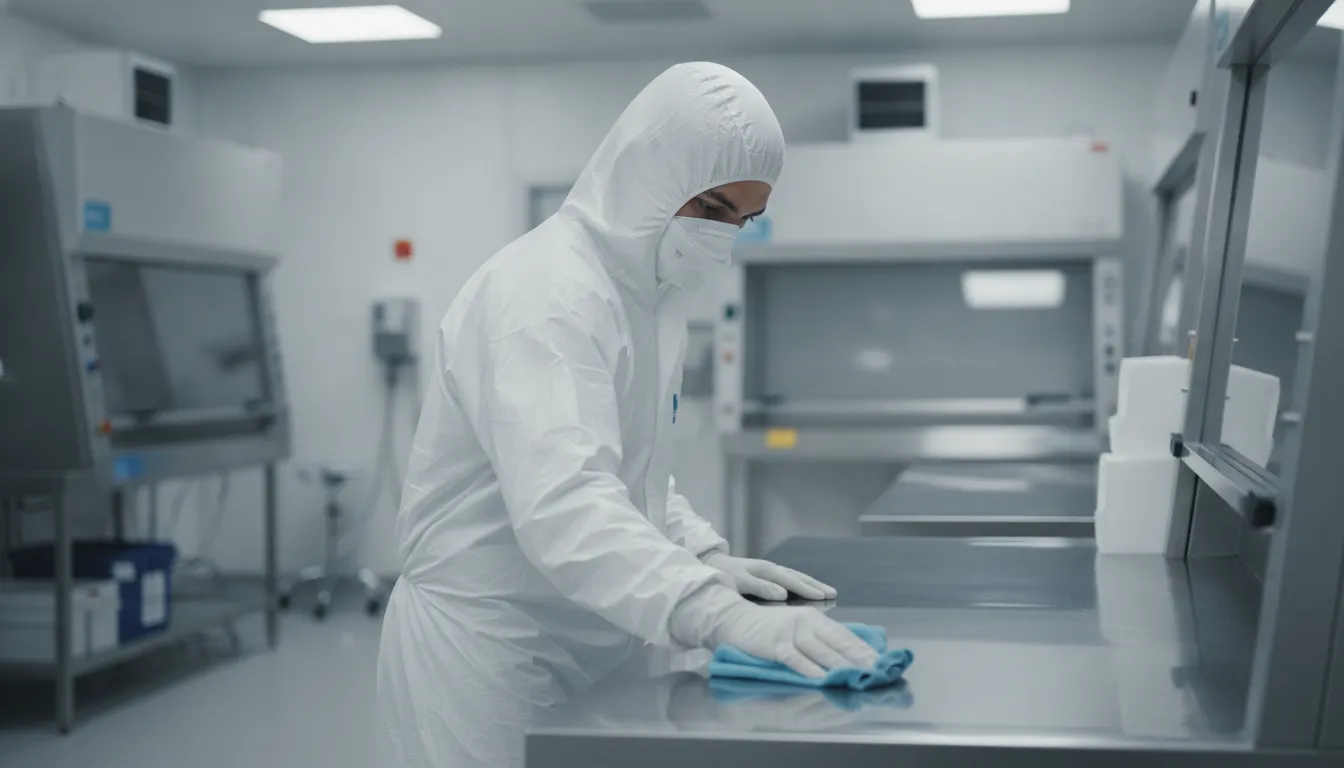
A controlled-environment cleaning plan should identify entry routes, gowning or protective requirements, clean-to-less-clean movement, tool segregation, waste handling, and the surfaces included in each service. It should also define what happens when a door is opened, a material is dropped, a spill occurs, or a task conflicts with production.
Instructions should be specific enough for consistent execution while reflecting the facility’s actual layout. A data center, laboratory, and cleanroom may all require contamination control, yet their equipment, hazards, access protocols, and downtime tolerances are different. A plan that works in one environment should not be copied into another without review.
What do particulate and ESD precautions change?
Particulate control influences fiber control, cloth selection, vacuum filtration, wiping direction, tool storage, and the order of operations. In technology environments, electrostatic discharge precautions can affect footwear, clothing, floor-care materials, and how staff approach racks or exposed equipment. Foreman Pro’s data center cleaning service page describes specialized approaches for raised floors, server rooms, and equipment-sensitive areas.
Why do documentation and change control matter?
Records allow a facility manager to identify trends rather than rely on memory. Useful records may include the assigned team, service date, areas completed, inspection result, exception, corrective action, and approving supervisor. When a room layout, production process, cleaning chemistry, or access window changes, the work instruction should be reviewed before the next service. Change control protects the relationship between the approved process and the work performed.
Why Do Trained Cleaning Personnel Matter for Contamination Control?
A certificate is useful only when the person performing the work can translate requirements into safe field behavior. Training helps workers recognize that a surface, route, or tool may carry a different risk in a controlled environment than in a conventional commercial space.
How does practical competency protect sensitive operations?
Competency involves more than attendance. It can include instruction, observation, written or verbal checks, supervised practice, and periodic review. A capable technician stages materials without blocking an access route, protects equipment, and follows the approved wiping pattern. The technician keeps clean and used materials separated, then stops work when conditions fall outside the procedure.
Those decisions protect the facility’s process and its people. They also limit avoidable rework. Foreman Pro Cleaning combines proprietary critical-environment training with leadership experience in IT operations and facilities management. That combination is relevant when service takes place around mission-critical systems.
Why do supervision and process segregation matter?
Supervision creates an independent check on whether the written plan matches actual work. A critical-environment supervisor can review completion records, inspect the result, document exceptions, and escalate a condition to the facility contact. Process segregation also matters. Tools used in one zone should not move to another without the approved cleaning or transfer step.
What should facility managers look for beyond a certificate?
- A training curriculum relevant to the facility type.
- Documented competency checks and a method for refreshing training.
- Supervisory inspections tied to the actual scope of work.
- Traceable records for exceptions, corrective actions, and customer review.
- A clear distinction between cleaning support and facility certification.
These indicators provide more useful assurance than a credential name without scope. They also make it easier to compare proposals on execution quality rather than broad promises.
- Define the facility’s controlled zones, hazards, and operating windows.
- Match each requirement to a responsible owner, approved procedure, and record.
- Verify worker competency, supervision, inspection, and corrective-action practices.
Request a facility-specific cleaning plan from Foreman Pro Cleaning for your controlled environment.
How Can Facility Managers Evaluate Certification Claims?
Start by defining the outcome that needs to be verified. A facility may need evidence of room classification, worker competency, a validated decontamination process, or consistent service delivery. These are related but different requirements. The evaluation becomes clearer when each claim is matched with an owner, a standard, a record, and a review date.
What should you define before reviewing a provider?
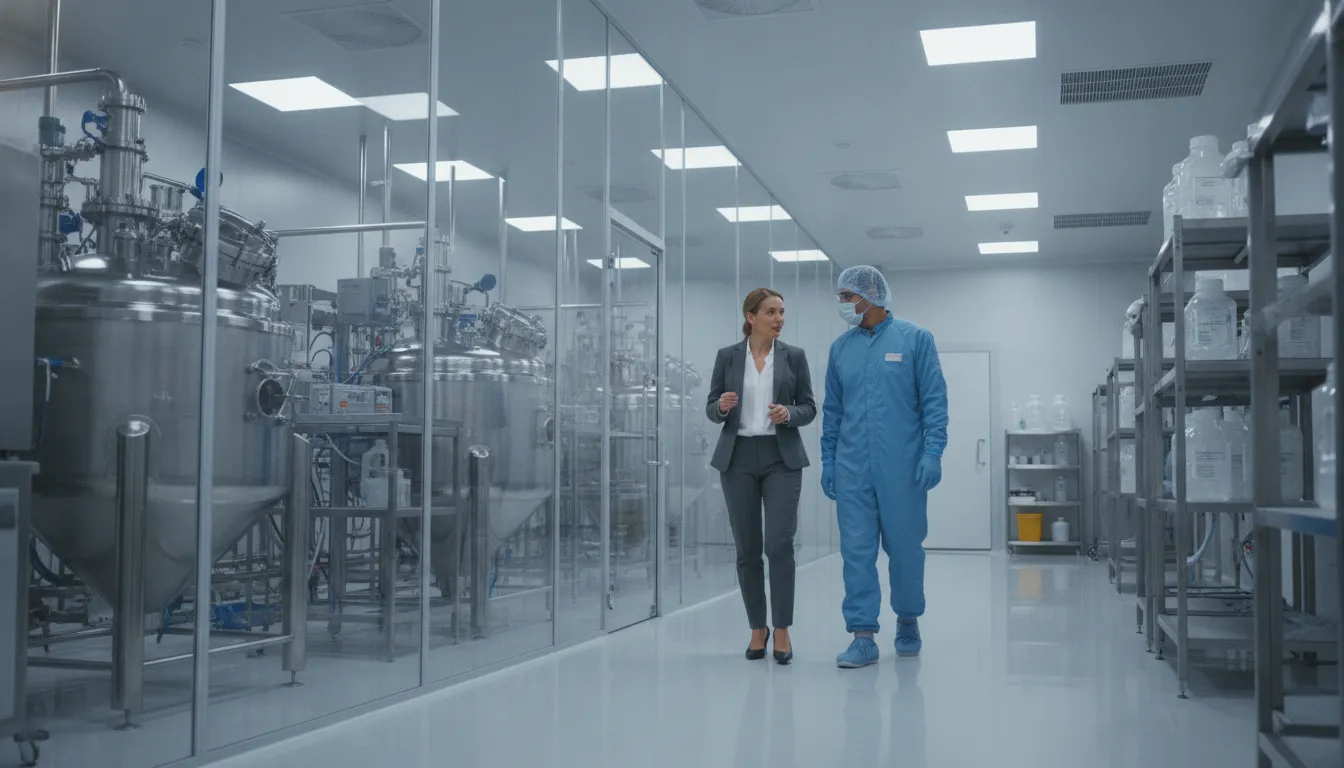
Document the facility type, controlled zones, operating hazards, equipment sensitivities, access restrictions, service frequency, production windows, and reporting expectations. Note whether the work concerns a cleanroom, laboratory, data center, server room, command center, or another critical environment. Define which tasks are in scope and which remain the responsibility of engineering, environmental health, safety, or quality personnel.
Which evidence should facility managers request?
Ask for a sample scope of work, training outline, inspection checklist, escalation path, and record-retention approach. If a provider uses the word certified, request the issuing body, credential title, covered competencies, expiration or review terms, and limitations. Do not accept a generic credential as proof that the provider can meet your room’s work instructions.
How do you keep the claim current?
Set review points when personnel change, the facility is modified, a standard is updated, an inspection identifies an exception, or the cleaning method changes. A current program should connect training records, service records, supervisor review, and facility quality records. Reverification should follow the facility’s governing quality system and qualified authority’s requirements rather than an invented universal calendar.
How Does Foreman Pro Cleaning Apply Critical Environment Training?
Foreman Pro Cleaning approaches critical-environment service as a facility-specific operating program. The process begins with consultation and a walkthrough, then moves to a customized plan, trained execution, supervisor inspection, a post-service report, and program assessment. This sequence connects technical requirements with repeatable service.
How does CET translate technical requirements into field procedures?
Critical Environment Team training helps personnel understand why the sequence matters. The team works from documented procedures that address access, material handling, surface priorities, equipment sensitivity, contamination control, and communication with the facility contact. The procedure is selected for the environment instead of applying one broad routine everywhere.
What does CVI add to the cleaning process?
Critical-environment visual inspection supports a second look after service. Inspection can confirm that agreed areas were addressed, identify exceptions, and give the customer a record for internal review. It is not a substitute for particle, microbial, pressure, or engineering certification performed by the qualified party. It is a service-quality control that supports the larger facility program.
How is the approach customized for regional facilities?
Foreman Pro serves commercial and critical environments across Maryland, Washington, D.C., and Virginia. A regional program can account for operating schedules, security requirements, local team coverage, and maintenance windows. Its critical environment cleaning overview describes support for data centers, server rooms, laboratories, broadcast studios, and command centers. The laboratory cleaning service page addresses laboratory work specifically. Cleanroom certification and laboratory cleaning remain distinct considerations, so the final scope should be confirmed during consultation.
For related operational context, facility leaders can review Foreman Pro’s IT operations approach to critical-environment cleaning and its guide to evaluating a critical-environment cleaning company.
Schedule a documented cleaning-program discussion before your next controlled-environment review.
FAQs: What Questions Do Facility Managers Ask About Critical Environment Certification?
What is critical environment certification?
It is documented evaluation against defined technical, safety, contamination-control, or competency requirements. The term should be qualified by what was certified, who performed the evaluation, which standard applied, and when the evidence was reviewed.
Does personnel certification certify a cleanroom?
No. Personnel certification or training supports worker competency. Cleanroom classification, environmental testing, and facility certification address the room and its systems. The two forms of assurance should support one another, not be treated as interchangeable.
Which facilities may need specialized cleaning competency?
Examples include cleanrooms, laboratories, data centers, server rooms, network operations centers, broadcast studios, command centers, and other spaces where particulate, biological, electrostatic, security, or uptime risks affect operations. The responsible technical and quality teams determine the applicable requirements.
What should a cleaning provider document?
A provider should explain the service scope, worker training, approved procedures, inspection process, exceptions, corrective actions, and customer reporting. Facility leaders should also receive clear limits on what the provider’s credential does and does not certify.
How often should critical environment training be reviewed?
Review timing should follow the facility’s quality system and training program requirements. Reassessment may be appropriate after a procedure change, facility modification, incident, inspection finding, or extended absence. There is no universal interval that replaces the governing standard or facility-specific risk assessment.
