
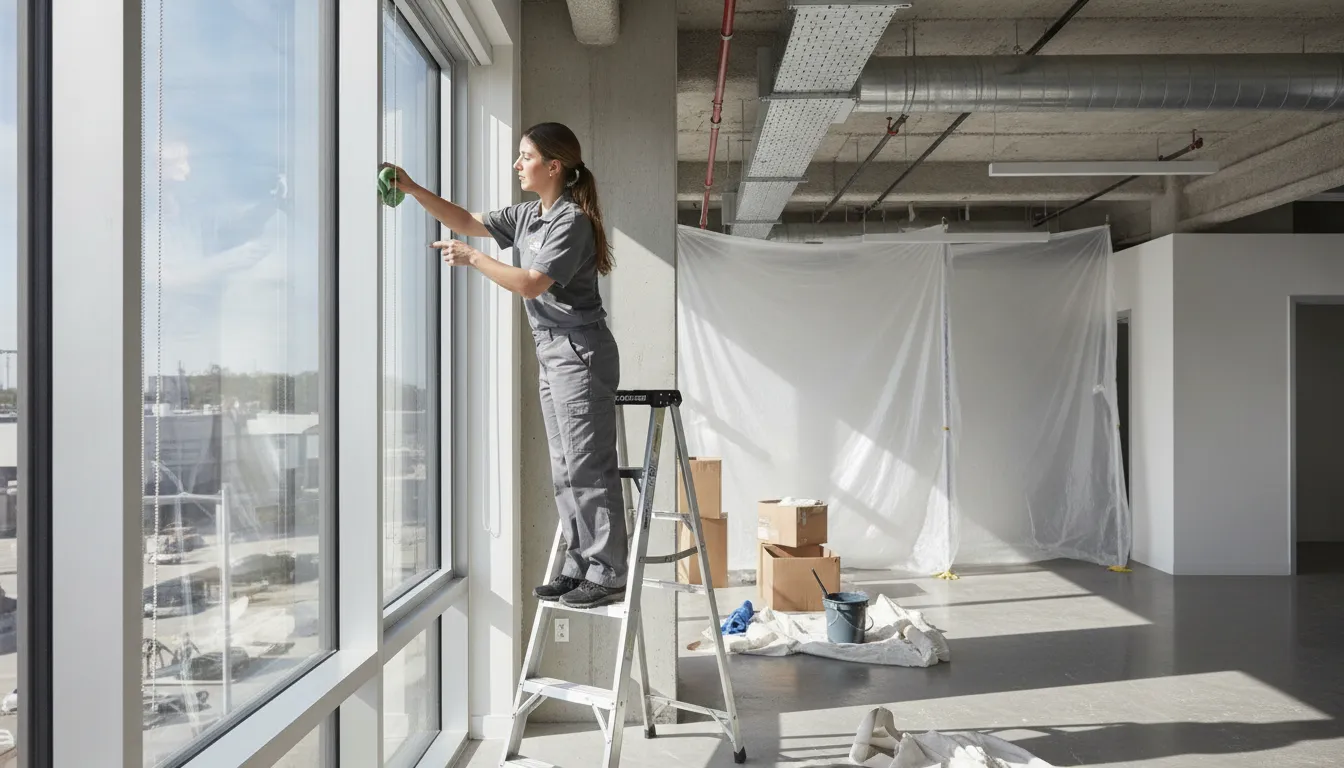
A commercial facility can look complete while construction residue remains on air-handling components, ledges, flooring, and other surfaces. If that residue is left for routine janitorial service, the final handover may be delayed. Occupied spaces may be harder to maintain, and fine particulate can continue moving through the building. The EPA identifies construction and renovation as sources of indoor particulate matter.
Professional post construction cleaning services coordinate debris removal, HEPA-supported particulate control, detailed surface cleaning, and final quality checks across rough, final, and touch-up phases. The right scope depends on the facility, trades, finishes, systems, and occupancy schedule. So Foreman Pro Cleaning begins with a walkthrough and customized plan rather than a generic checklist.
For commercial properties across Maryland, Washington, D.C., and Virginia, that disciplined approach helps align cleaning with project milestones and operational requirements. Understanding what each phase covers is the first step toward a cleaner, safer, and more predictable transition into use.
Contact Foreman Pro Cleaning to plan your post-construction cleaning scope
What Does Post Construction Cleaning Include for Commercial Facilities?
Post-construction cleaning is the controlled transition from an active construction site to a facility that is ready for inspection, handover, or occupancy. It addresses more than visible residue. A commercial cleaning team removes construction debris, controls fine particulate, completes surface-by-surface detailing, and sanitizes the environment according to the facility’s use and risk profile.
The work usually begins with a walkthrough that identifies remaining materials, access limitations, finish requirements, and sensitive areas. Foreman Pro Cleaning then develops a customized plan for the building, coordinating the sequence with the general contractor, facilities team, or property representative. That planning matters in offices, medical spaces, schools, retail environments, and critical facilities where dust migration or an overlooked residue can affect operations.
How Is Debris and Waste Removed Safely?
The first pass focuses on construction debris and coarse particulate. Packaging, offcuts, abandoned protective materials, and other waste are collected from floors, corridors, work areas, and service spaces. Housekeeping is also a recognized construction safety requirement under OSHA 29 CFR 1926.25, which addresses keeping work areas, passageways, and stairs free of debris and other hazards. Waste materials must be handled and removed in accordance with OSHA 29 CFR 1926.252.
Professional removal is not a substitute for the contractor’s responsibility to manage construction waste. Instead, it provides a disciplined cleaning and preparation process after the trades have completed their work. Teams should confirm what materials are included in the cleaning scope, what requires contractor disposal, and whether hazardous or regulated materials need a separate specialist.
How Are Construction Dust and Fine Particles Controlled?
Fine particulate can settle on ledges, fixtures, flooring, air-handling registers, and other surfaces after the visible debris is gone. The EPA identifies construction and renovation activity as a source of indoor particulate matter. For that reason, post-construction cleaning includes HEPA-filtered vacuuming and methodical dust removal rather than simply wiping the most noticeable surfaces. The EPA’s renovation-dust guidance also identifies HEPA vacuums as an important tool for capturing renovation dust.
Where the scope allows, registers, returns, and accessible ducting points are addressed so construction dust is not recirculated into occupied areas. A post-construction cleaning checklist can help facilities teams coordinate these areas with final detailing and inspection.
What Does Final Detailing and Sanitization Cover?
Final detailing typically includes glass, walls, doors, baseboards, trim, counters, shelving, cabinetry, fixtures, hardware, and window sills. Hard flooring and carpet require different methods based on the material, finish, and remaining particulate. Once residue has been removed, sanitization may be performed with EPA-approved disinfectants where appropriate. In laboratories, data centers, and other sensitive environments, the sequence and materials must also follow the site’s contamination-control protocols.
What Is the Difference Between Rough, Final, and Touch-Up Cleaning?
Post-construction cleaning is staged because a commercial project creates different cleaning requirements as work progresses. Removing large waste and coarse particulate is not the same operation as detailing glass, fixtures. And flooring, and neither replaces a final inspection after occupants or trades have used the space. A phased plan helps the general contractor, facilities team, and cleaning provider coordinate access, protect finished surfaces, and prepare the building for its next milestone.
The rough phase supports a safer, workable site. Construction housekeeping rules address the removal of debris and waste that can create hazards, while separate OSHA requirements address the handling of waste materials. Review OSHA 1926.25 housekeeping requirements and OSHA 1926.252 waste-disposal requirements for the regulatory context. This stage may include collecting packaging, scrap materials, and larger debris, followed by coarse particulate removal from accessible areas.
| Phase | Primary focus | Typical timing | Primary tasks | Who needs or performs it |
|---|---|---|---|---|
| Rough | Debris, coarse particulate, and waste removal | During construction or shortly after major work | Collect construction waste, clear access routes, remove larger debris, and reduce heavy particulate before detailed work | General contractors and project managers coordinate it; trained cleaning crews perform the cleaning scope |
| Final | Detailed, surface-by-surface presentation and readiness | After trades finish and before occupancy or handover | Detail glass, walls, baseboards, fixtures, cabinetry, kitchens, bathrooms, hard floors, and carpet; remove abrasive construction residue and sanitize applicable surfaces | Owners, facilities teams, tenants, and GCs need it; professional post construction cleaning services execute the documented scope |
| Touch-up | Spot correction and finish restoration | After occupancy activity or immediately before final handover | Correct fingerprints, scuffs, missed details, and new marks on high-traffic or high-visibility surfaces | Facilities teams and GCs request it; cleaning specialists address punch-list items and visible finish concerns |
Final cleaning requires more precision than a broad debris pass. Crews work across individual materials and fixtures, using methods appropriate to the finish rather than treating every surface identically. Fine construction dust can remain on horizontal surfaces, settle around registers, or move through occupied areas if it is not controlled. The EPA identifies construction and renovation activity as sources of indoor particulate matter, which is why HEPA-filtered vacuuming and disciplined particulate control matter during the transition to occupancy.
Touch-up is not a substitute for final cleaning. It is the controlled correction stage that recognizes how handoffs, inspections, deliveries, and early occupancy can create new marks after the main detail is complete. Foreman Pro Cleaning can structure the phases around the construction schedule, facility requirements, and documented quality-control checkpoints. For a practical planning aid, review this post-construction cleaning checklist.
What Surfaces and Systems Does Professional Post-Construction Cleaning Cover?
A commercial facility needs more than visible debris removal before it is ready for occupants. Fine particulate can settle on exposed surfaces, enter air-handling components, and migrate into areas that appear finished. The EPA identifies construction and renovation activity as sources of indoor particulate matter, so a thorough scope follows the building from overhead systems to finished floors. Professional post construction cleaning services should define each surface, access point, and equipment category before work begins.
- Air-handling components: Registers, returns, accessible ducting, grilles, and surrounding ledges are inspected and HEPA-vacuumed where appropriate. This reduces the chance that construction dust will be redistributed when the system operates. The EPA explains the role of HEPA vacuums in cleaning renovation dust. Access limitations, filter changes, and HVAC commissioning requirements should be coordinated with the facilities team rather than assumed.
- Vertical surfaces: Walls, doors, frames, baseboards, crown molding, glass, and other architectural details receive surface-appropriate dust removal and detailing. Glass may require careful removal of residue without scratching, while painted walls and trim require methods that protect the finish.
- Horizontal surfaces: Crews address counters, shelving, cabinetry interiors and exteriors, window sills, ledges, work surfaces, and other collection points. These areas are cleaned systematically from higher surfaces toward lower ones so settled particulate is not reintroduced after an area has been completed.
- Flooring: Tile, sealed concrete, wood, and other hard floors each require a compatible vacuuming, damp-cleaning, or finish-care method. Carpet is handled separately, with HEPA vacuuming and extraction or other approved treatment selected according to the fiber, backing, adhesive, and project specifications. Abrasive construction residue should not be treated as ordinary daily maintenance.
- Fixtures and hardware: Lighting fixtures, plumbing fixtures, appliances, handles, hinges, escutcheons, and other installed hardware are detailed without compromising electrical, mechanical, or finished components. Final sanitization is performed with methods and EPA-registered disinfectants when the facility plan calls for it.
- Critical-environment equipment: Laboratories, data centers, server rooms, and similar spaces require controlled access, approved materials, and contamination protocols. Equipment surfaces are not treated like general construction areas. The cleaning plan should identify ESD-safe methods, clearance requirements, protected zones, and any owner-approved standard operating procedures before execution.
Foreman Pro Cleaning builds this scope through a walkthrough and customized plan, then aligns execution with site-specific training and quality-control reporting. For a practical room-by-room planning aid, review this post-construction cleaning checklist before the final handover.
Why Does Post-Construction Cleaning Protect Occupants and Equipment?
How Does Final Cleaning Support Occupant Health?
Construction leaves more than visible debris behind. Cutting, sanding, drywall work, and material handling can release fine particulate into the indoor environment. The U.S. Environmental Protection Agency identifies renovation and construction activities as sources of indoor particulate matter, which is why a space should not move directly from trade completion to occupancy without a controlled cleaning phase.
Fine particles can remain suspended in the air, settle on horizontal surfaces, and collect around air-handling components. If registers, returns, and accessible ducting areas are not addressed, the HVAC system may redistribute residual construction dust when it starts operating for occupants. NIOSH guidance on indoor environmental quality during construction and renovation emphasizes controlling contaminants and maintaining effective housekeeping and filtration practices. A professional post-construction cleaning plan treats air quality as part of readiness, not as a cosmetic afterthought.
The mitigation process starts with source removal. Crews use HEPA-filtered vacuums and methods appropriate to the material and surface, then complete detailed cleaning and sanitization where the facility requires it. The EPA explains that HEPA vacuums are required for cleaning dust created by covered renovations under its RRP rule. Although project requirements vary by facility and work scope, HEPA filtration provides an important control when fine particulate must be captured rather than redistributed.
Why Does Equipment Protection Require More Than General Tidiness?
Construction residue can interfere with the way sensitive spaces and equipment operate. Particulate may settle on electronics, racks, sensors, fixtures, work surfaces, and ventilation pathways. In laboratories, cleanrooms, data centers, and other critical environments, even a small amount of uncontrolled residue can undermine contamination-control objectives or add risk to commissioning and handover.
That work requires more than a broad wipe-down. Foreman Pro Cleaning applies critical-environment protocols for data centers, labs, and cleanrooms, using HEPA-filtered equipment, ESD-safe methods where appropriate, and EPA-approved disinfectants. The process is organized around the facility’s risk profile, access restrictions, materials, and operating procedures. A walkthrough and customized plan establish what can be cleaned, which areas require specialized controls, and how quality-control reporting will document completion.
For project teams, this approach protects two outcomes at once: a healthier transition for occupants and a cleaner operating environment for the assets inside the facility. The post-construction cleaning checklist can help facilities managers coordinate the final inspection, systems review, and readiness activities before turnover.
How Long Does Professional Post-Construction Cleaning Take?
There is no reliable universal duration for commercial post-construction cleaning. A small, straightforward office with one completed trade and a limited surface mix has a different cleaning profile from a multi-floor facility with active contractors. Specialty flooring, extensive glazing, or sensitive operational areas. The right timeline is scoped from the conditions on site, not selected from a generic hourly estimate.
Project size and square footage are important starting points, but they do not tell the whole story. A larger building may have efficient open areas, while a smaller facility can require more time when it includes intricate millwork. Exposed systems, multiple restrooms, detailed fixtures, or surfaces that require separate treatment methods. The amount and type of construction residue also matter. OSHA identifies housekeeping and waste-material controls as important construction-site responsibilities in 29 CFR 1926.25 and 29 CFR 1926.252.
How Do Cleaning Phases Affect the Timeline?
Phase staging can add separate mobilizations to the schedule. Rough cleaning addresses debris and coarse particulate while trades are completing work. Final cleaning follows trade completion and moves room by room through glass, walls, fixtures, cabinetry, flooring, and other surfaces. Touch-up work then corrects scuffs, fingerprints, or missed details before handover or occupancy. When several trades finish at different times, the cleaning plan must coordinate access and return visits instead of forcing one premature final pass.
Why Does Facility Complexity Change the Schedule?
Building complexity and surface mix influence both labor and sequencing. Hard floors, carpet, glass, resilient materials, painted walls, and specialty finishes cannot all be treated identically. A standard office generally has a more predictable sequence than a medical, laboratory, data center, broadcast, or command facility. Critical environments may require contamination-control procedures, ESD-safe methods, HEPA-filtered equipment, controlled access, and documented quality checks. Those requirements are part of the timeline, not optional add-ons.
Foreman Pro Cleaning establishes a realistic schedule through its five-step delivery process: Walkthrough, Custom Plan, SOP Training, Execution, and QC Reporting. The walkthrough identifies square footage, remaining trades, access conditions, surfaces, systems, and operational sensitivities. The custom plan then defines phase sequence, staffing, equipment, and quality checkpoints. This approach gives facilities managers and construction teams a defensible timeline for post-construction cleaning checklist planning without promising a duration the site conditions cannot support.
How Much Do Commercial Post-Construction Cleaning Services Cost?
Commercial post-construction cleaning services do not have a responsible one-size-fits-all price. The final scope depends on the condition of the facility, the size of the space. The number of cleaning phases, and the level of detail required before handover or occupancy. A vacant office with standard finishes presents a different project from a medical facility, data center, laboratory, or other controlled environment.
Which project details shape the scope?
Square footage is an important starting point, but it is only one part of the assessment. A customized walkthrough should identify the following:
- Phase scope: Rough cleaning may focus on construction debris, coarse particulate, and waste removal. Final cleaning requires detailed treatment of surfaces after the trades have completed their work. Touch-up cleaning addresses scuffs, fingerprints, and missed details before handover or occupancy.
- Surface mix: Glass, walls, baseboards, fixtures, cabinetry, counters, and flooring each require an appropriate method. Hard flooring, concrete, wood, and carpet may need different equipment, chemistry, and finish-sensitive techniques.
- Building systems: Air-handling registers, returns, and accessible ducting points can collect fine construction particulate. HEPA vacuuming helps prevent that material from being recirculated into occupied areas. The EPA specifically identifies HEPA vacuums as required equipment for certain renovation-dust cleanup under its Renovation, Repair and Painting rule. Learn more about the EPA’s HEPA-vacuum guidance.
- Environmental controls: Critical environments may require ESD-safe methods, controlled access, contamination-control procedures, documentation, and specialized training. Those requirements can materially change the labor, sequencing, and quality-control plan.
How can a facility prepare for an accurate estimate?
Provide the project schedule, floor plans, finish specifications, occupancy date, trade-completion status, and any requirements from the owner, general contractor, or facility manager. A post-construction cleaning checklist can help organize those details before the walkthrough and reveal areas that are easy to overlook.
Foreman Pro Cleaning uses a walkthrough to build a customized plan rather than applying a generic rate. The plan can define phase boundaries, surface treatments, HEPA-vacuuming requirements, sanitization, access constraints, and quality-control reporting. This project-specific approach gives the client a clearer basis for comparing scope and scheduling, without promising a price before the facility has been properly assessed.
Contact Foreman Pro Cleaning to discuss the right scope and schedule for your facility
Frequently Asked Questions
What does post construction cleaning include?
It typically includes debris removal, detailed surface cleaning, and sanitization after construction activity. A commercial scope may cover glass, walls, baseboards, fixtures, cabinetry, hard flooring, carpet, and accessible air-handling points. The exact sequence depends on the trades involved, the condition of the facility, and whether the space has special contamination-control requirements.
What is the difference between rough, final, and touch-up cleaning?
Rough cleaning removes larger debris and coarse particulate so the site is orderly and safe for subsequent work. Final cleaning is the detailed, surface-by-surface pass completed after trades finish. Touch-up cleaning corrects missed details, fingerprints, scuffs, or other visible issues before handover or shortly after occupancy. These phases address different conditions and should not be treated as interchangeable.
How long do post construction cleaning services take?
There is no reliable one-size-fits-all timeline. Duration depends on facility size, construction residue, the number of trades, access conditions, surface types, and whether work must follow a controlled schedule. A professional provider should confirm timing during a walkthrough, then document the sequence, staffing, quality checks, and any required return visits.
Why is professional cleaning necessary before occupancy?
Construction and renovation activities can introduce fine particulate into indoor spaces. The EPA identifies construction and renovation as sources of indoor particulate matter. Detailed removal helps limit residue on occupied surfaces and prevents dust from being carried into operational areas. HEPA vacuuming is also an established approach for renovation-dust cleanup under the EPA renovation, repair, and painting guidance.
Ready to Schedule Professional Post Construction Cleaning for Your Facility?
Foreman Pro Cleaning serves commercial facilities across Maryland, Washington, D.C., and Virginia with a disciplined, documentation-driven approach to post-construction cleaning. From a rough pass on a dynamic jobsite to detailed final cleaning and controlled touch-up work. The scope is defined by a walkthrough and a customized plan, not a generic checklist. For critical environments, data centers, labs, and cleanrooms, the same team applies contamination-control protocols, HEPA-filtered equipment, ESD-safe methods, and EPA-approved disinfectants.
Set a realistic timeline and an accurate scope for your project milestone by talking with our team. A commercial cleaning partner that understands debris removal, particulate control, finish care, and quality-control reporting can help you move from construction to occupancy with fewer surprises.
Contact Foreman Pro Cleaning to build your post-construction cleaning plan
