
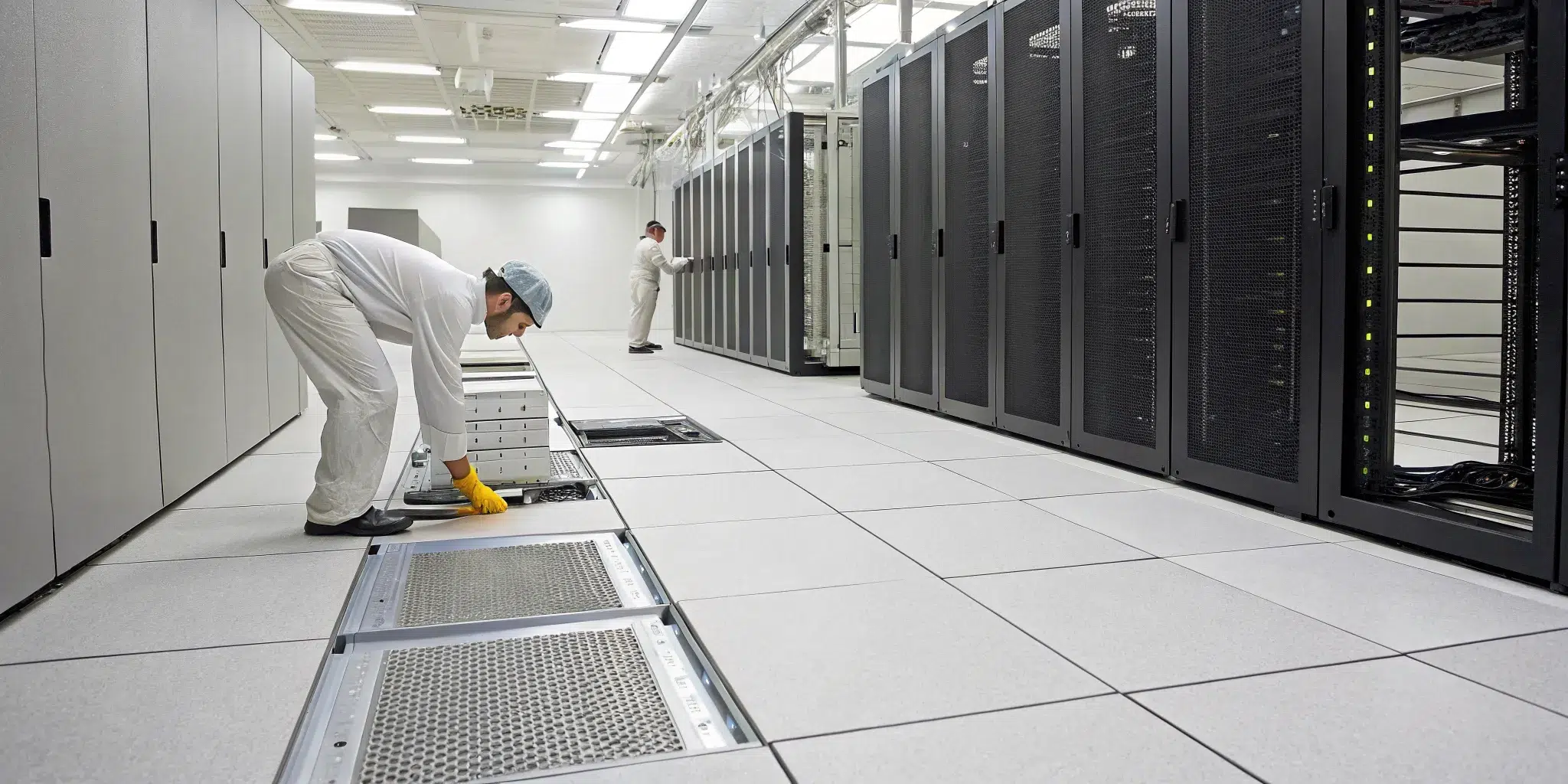
You wouldn’t ask your office janitor to configure a server rack, so why would you trust them with the environment that keeps it running? The space beneath your raised floor is a highly sensitive plenum, and treating it like any other area is a costly mistake. Using the wrong tools or techniques can introduce static, cause short circuits, or simply fail to remove harmful contaminants. This is where the distinction between general cleaning and specialized service becomes critical. A proper data center subfloor cleaning requires specific training, anti-static equipment, and a deep understanding of how to work safely around live hardware without disrupting your operations.
Key Takeaways
- Treat your subfloor as critical infrastructure: The plenum beneath your raised floor is the lung of your data center, circulating essential cool air. Neglecting its cleanliness leads to poor airflow, equipment overheating, and increased operational risk.
- Data center cleaning requires specialized expertise: Your regular janitorial crew or in-house team lacks the specific training and tools for this job. Professionals use anti-static equipment and HEPA filtration to remove contaminants safely, preventing static discharge and equipment damage.
- Vet cleaning partners on their technical knowledge: When hiring a service, ask about their specific experience with critical environments, staff training protocols, and adherence to standards like ISO 14644. The right partner provides detailed documentation that proves compliance and protects your warranties.
What’s Lurking Under Your Data Center’s Raised Floor?
It’s easy to focus on what you can see: tidy server racks and polished floors. But in a data center, the most significant threats to your operation often hide just out of sight. The space beneath your raised floor, the subfloor plenum, is the lungs of your facility. It circulates the cool air your sensitive equipment needs to function. When this space is contaminated with dust and debris, it distributes those threats directly to your most critical assets.
Why Subfloor Cleaning is Non-Negotiable
Think of subfloor cleaning as essential maintenance, not just janitorial work. A clean subfloor is fundamental to your data center’s health. When this space is free of contaminants, your cooling systems can circulate clean air more efficiently, reducing strain on HVAC units and lowering energy costs. A clean environment also helps prevent static electricity, which can damage sensitive components. Ultimately, a proactive approach to data center cleaning is about risk management. It’s a foundational practice that prevents small problems from turning into catastrophic failures.
How Contaminants Spread Through Your Facility
Your data center’s cooling system pulls cool air from the subfloor plenum and pushes it up through perforated tiles to cool your server racks. This effective system has one major vulnerability: it circulates whatever is in the plenum. Even microscopic dust particles, zinc whiskers, or leftover construction debris get swept into the airflow. From there, contaminants are drawn into your equipment by internal cooling fans. They settle on circuit boards, clog heat sinks, and coat sensitive electronics. This hidden circulation of dirt is a constant threat that can silently degrade your hardware.
The Hidden Risks of a Dirty Subfloor
A dirty subfloor isn’t just an aesthetic issue; it’s a direct threat to your hardware and operational continuity. As dust and debris accumulate, they clog air filters and block cooling vents, causing equipment to overheat. This thermal stress is a leading cause of premature hardware failure. The National Fire Protection Association (NFPA) notes that many data center fires have unknown origins, often starting near hot equipment where dust has accumulated. Beyond the fire risk, contaminants can cause short circuits and void equipment warranties. A professional raised floor cleaning service is designed to mitigate these dangers.
The Real-World Consequences of Neglect
Ignoring the space beneath your raised floor isn’t just an oversight; it’s a gamble with your facility’s operational health. The dust, debris, and other contaminants that gather there don’t just sit idle. They actively work against your equipment, creating tangible problems that can lead to downtime, data loss, and expensive repairs. These aren’t distant possibilities, they are the direct results of neglecting this critical, yet often unseen, part of your data center. Understanding these consequences is the first step toward preventing them.
Overheating and Poor Airflow
Modern data centers are packed with powerful, heat-generating equipment. Your cooling system is designed to manage this heat load, but it can only do so if the airflow is unobstructed. When dust and debris accumulate in the subfloor, they get pulled into your cooling units and clog air filters and server vents. This contamination acts like a blanket, trapping heat and disrupting the carefully planned circulation of cool air. The result is equipment that runs hotter than it should, leading to thermal throttling, reduced performance, and a significantly shorter lifespan for your valuable hardware.
Static Buildup and Hardware Failure
Even microscopic dust particles pose a major threat due to electrostatic discharge (ESD). Many types of dust and debris are perfect conductors for static electricity. As these particles build up under the floor and on equipment, they create an environment where a random static discharge is not just possible, but likely. A single, unseen spark can silently damage or destroy sensitive microelectronics within your servers and networking gear. This often leads to mysterious hardware failures, intermittent errors, and voided warranties, causing headaches that are difficult to diagnose and expensive to fix. A professional raised floor cleaning service is your best defense against this invisible threat.
The Silent Threat of Zinc Whiskers
A particularly sneaky danger lurking in some data centers is the presence of zinc whiskers. These are tiny, hair-like metallic filaments that can grow from galvanized steel surfaces, such as older subfloor panels or support structures. They are highly conductive and can break off, becoming airborne within your facility’s airflow. If one of these whiskers lands on a circuit board or other electronic component, it can cause a catastrophic short circuit, leading to immediate equipment failure. Mitigating this risk requires specialized knowledge and techniques, underscoring the need for a true critical environment cleaning partner.
Common Myths About Data Center Subfloor Cleaning
When it comes to data center maintenance, a few persistent myths about subfloor cleaning can lead to some seriously expensive problems. These misconceptions often stem from treating a highly specialized environment like any other office space. Let’s clear the air and tackle these ideas head-on so you can protect your critical infrastructure.
Myth: “It’s not that important.”
Thinking of subfloor cleaning as a “nice-to-have” is one of the biggest gambles you can take with your data center. The space beneath your raised floor is the primary plenum for your cooling system. When dust, debris, and other contaminants build up, they get circulated throughout the facility, clogging air intakes and coating sensitive components. This forces your cooling systems to work harder, leading to overheating and poor airflow. Regular, professional data center cleaning is crucial for preventing this buildup, reducing the risk of hardware failure, and extending the life of your equipment. It’s not just about looking clean; it’s about maintaining operational health.
Myth: “Any cleaning crew can handle it.”
It’s tempting to think that cleaning is just cleaning, but in a data center, that couldn’t be further from the truth. Your regular janitorial service, while great for the breakroom, is not equipped for this environment. They often use the wrong tools and chemicals that can introduce static, leave behind residue, or even cause damage to your equipment. As industry experts point out, untrained cleaners can actually cause downtime. A professional critical environment cleaning team uses specialized, anti-static equipment like HEPA-filtered vacuums and understands the protocols for working around live equipment without disrupting your operations. They are trained to see what others miss.
Myth: “Our in-house team can do it.”
Your IT and facilities teams are experts in their own right, but data center cleaning is a completely different discipline. Asking your tech staff to clean the subfloor is not only an inefficient use of their time but also a significant risk. Without the proper training for working in these sensitive areas, they could accidentally unplug a critical server, cause a static discharge, or fail to remove contaminants effectively. A professional service that specializes in raised floor cleaning has the experience and established procedures to do the job safely and thoroughly. Let your team focus on what they do best, and leave this specialized task to certified professionals.
Myth: “It costs too much.”
Let’s talk about cost. While professional cleaning has a price tag, it’s important to see it as an investment, not an expense. The cost of a scheduled cleaning service is a tiny fraction of what you would spend recovering from a single catastrophic hardware failure or an extended outage caused by contamination. As experts at Data Center Knowledge explain, this proactive spending protects your equipment and keeps your operations running smoothly. Investing in regular, professional cleaning is a powerful form of insurance for your most valuable assets, preventing costly problems before they can even start.
What Professional Subfloor Cleaning Looks Like
When you hire a team for professional subfloor cleaning, you’re not just getting a crew with vacuums. You’re bringing in specialists who follow a meticulous process designed to protect your most valuable assets. This isn’t a simple janitorial task; it’s a technical service that requires precision, specialized knowledge, and the right equipment. A true professional service understands that what happens under the floor directly impacts the performance and longevity of the equipment above it. From the initial assessment to the final checks, every step is calculated to remove harmful contaminants without disrupting your operations or introducing new risks.
Site Assessment and a Custom Plan
The first thing a professional cleaning partner will do is conduct a thorough site assessment. They won’t just show up and start working. Instead, they’ll take the time to understand your facility’s specific layout, airflow patterns, and operational schedule. This initial walkthrough is crucial for identifying potential problem areas and understanding your unique requirements. Based on this evaluation, they will develop a customized cleaning plan that outlines the scope of work, the methods to be used, and a schedule that minimizes any disruption to your daily operations. This tailored approach ensures the cleaning is both effective and efficient.
Specialized Tools for a Sensitive Environment
Cleaning a data center subfloor requires more than a standard toolkit. Professionals use equipment specifically designed for critical environments. This includes HEPA (High-Efficiency Particulate Air) filtered vacuums that capture and contain microscopic particles as small as 0.3 microns, preventing them from becoming airborne and circulating through your HVAC system. They also use non-static generating brushes, anti-static cleaning solutions, and lint-free wipes. Using the wrong tools can be disastrous, potentially causing electrostatic discharge (ESD) that can damage or destroy sensitive electronic components. Every tool and technique is chosen to safely remove dust, debris, and other contaminants.
Anti-Static Treatments and Subfloor Sealing
A truly comprehensive subfloor cleaning service goes beyond just removing existing dirt. After the area is clean, the bare concrete subfloor can continue to produce dust over time. To prevent this, a professional team can apply a specialized sealant. This isn’t just any paint or coating; it’s an anti-static sealant designed to encapsulate the concrete, preventing dust from flaking off. This treatment also helps to dissipate static electricity, adding another layer of protection for your equipment. This proactive step is a hallmark of a service that understands the long-term needs of a data center environment.
Post-Cleaning Airflow and Performance Checks
The ultimate goal of subfloor cleaning is to improve the operational environment of your data center. After cleaning, you should see a noticeable improvement in airflow, as the underfloor plenum is now free of obstructions. This helps your cooling systems work more efficiently, reducing the risk of overheating. A professional cleaning partner understands this connection and will often conclude their service by ensuring everything is in order. They will properly replace all raised floor tiles and confirm that airflow is unobstructed. This final step ensures the cleaning has delivered on its primary purpose: creating a safer, more efficient environment for your critical hardware.
Understanding Data Center Cleanliness Standards
Cleaning a data center isn’t like tidying up an office. It’s a technical service that must meet strict industry standards to protect your operations. These standards aren’t just suggestions; they are benchmarks that ensure your sensitive equipment remains safe from contamination and functions as intended. For facility managers and IT directors, understanding these requirements is the first step toward creating a truly resilient environment. A professional cleaning partner will not only know these standards but will also help you meet and document them, providing a clear framework for maintaining the health of your critical infrastructure.
Meeting ISO 14644 Compliance
The most recognized global benchmark for data center cleanliness is ISO 14644-1. This standard classifies air cleanliness based on the number and size of particles per cubic meter. Think of it as a grading system for your facility’s air quality. Most data centers are expected to meet ISO Class 8, which allows for a specific, limited concentration of airborne particles. However, for highly sensitive or secure environments, the stricter ISO Class 7 standard is often required. Achieving and maintaining this level of purity isn’t possible with standard cleaning methods; it requires a specialized data center cleaning protocol that actively manages and removes microscopic contaminants.
Adhering to OEM Requirements
Beyond general industry standards, the companies that make your servers, switches, and storage arrays have their own rules. Original Equipment Manufacturers (OEMs) like IBM and Dell specify cleanliness requirements to ensure their hardware performs reliably and to keep your warranties valid. Dust and debris can block air intakes, causing equipment to overheat and fail prematurely. This is why OEMs often mandate clean, sealed subfloors and controlled environments. A general janitorial crew lacks the training and equipment for this work and can accidentally cause static discharge, introduce new contaminants, or even trigger downtime. Only a team experienced in critical environment cleaning can work safely around your valuable assets.
Why Proper Documentation is Key
How do you prove your facility meets these standards? Through meticulous documentation. A professional cleaning service will provide detailed reports after every visit, outlining the procedures performed, the areas cleaned, and the results of any air quality tests. This documentation is your proof of compliance for internal audits, insurance purposes, and OEM warranty claims. It creates a historical record of maintenance, demonstrating that you are proactively managing risks within your facility. This paper trail provides peace of mind and shows stakeholders that you are committed to operational excellence, especially when it comes to complex tasks like raised floor cleaning and subfloor decontamination.
How to Choose the Right Cleaning Partner
Selecting a cleaning service for your data center isn’t like hiring a crew for your office lobby. The stakes are much higher, and the required expertise is worlds apart. Your regular janitorial team, while great at what they do, simply won’t have the training or tools for this sensitive job. You need a true partner who understands the operational risks and technical requirements of a critical environment. Making the right choice protects your investment, ensures compliance, and keeps your facility running smoothly. Here’s what to look for.
Verify Their Critical Environment Experience
First things first, you need a specialist. Look for a company whose primary focus includes critical environment cleaning, not one that just lists it as an add-on service. Ask about their track record. How many data centers have they serviced? A seasoned company will be able to point to millions of square feet of cleaned critical spaces and speak confidently about their experience. General cleaning companies lack the specific knowledge to work around sensitive equipment, which can lead to accidental damage or disruptions. You want a team that lives and breathes this work and understands the unique challenges of a data center subfloor.
Ask About Training, Certifications, and Staff
The people entering your facility matter just as much as the company they work for. Don’t be shy about asking about their team. Are the technicians background-checked and properly insured? What kind of specialized training do they receive? Reputable providers invest heavily in proprietary training programs that cover everything from security protocols to handling anti-static equipment. Inquire if they adhere to industry standards like ISO 14644. A well-trained team knows how to operate safely and effectively, minimizing the risk of human error and ensuring your facility remains secure and compliant throughout the entire cleaning process.
Inquire About Their Equipment and Methods
The right tools are essential for a safe and effective subfloor cleaning. A professional data center cleaning crew will arrive with specialized equipment you won’t find on a standard janitorial cart. This includes HEPA-filtered vacuums that capture microscopic particles without exhausting them back into the air and anti-static cleaning solutions that prevent electrostatic discharge. Ask potential partners to walk you through their process for raised floor cleaning. They should be able to explain exactly how they contain dust and debris, protect your equipment, and ensure no harmful residues are left behind.
Key Questions to Ask Before You Hire
Before you sign a contract, get clear answers to a few key questions. This simple step can save you from major headaches down the road. Having a list ready helps you compare different providers and ensures you’re making a fully informed decision.
Here are a few questions to get you started:
- What specific tasks are included in your standard subfloor cleaning service?
- Can you provide a detailed cleaning plan and schedule it during our off-peak hours to avoid disruption?
- Are all your technicians insured, bonded, and trained specifically for data center environments?
- What kind of documentation or reporting do you provide after the service is complete?
Related Articles
- Raised Floor Cleaning & Maintenance Guide | Data Center Experts
- Raised Floor Cleaning Service in MD, D.C., VA | Foreman Pro
- How Often Should a Data Center Be Cleaned? | Complete Guide
Frequently Asked Questions
How often does a data center subfloor need to be cleaned? The ideal frequency depends on your specific environment. Factors like the age of your facility, the amount of foot traffic, and recent construction all play a role. As a general rule, a comprehensive subfloor cleaning is recommended at least once a year. However, a professional assessment can help create a custom schedule that makes the most sense for your operational needs and helps you maintain compliance with industry standards.
Will your cleaning process disrupt our live operations? A professional cleaning service is designed to be completely non-disruptive. We work with you to schedule the cleaning during your slowest periods, such as nights or weekends. Our technicians are highly trained to operate in live environments, following strict protocols to work safely around your critical equipment. The entire process is carefully managed to ensure your operations continue without any interruption.
My facility is brand new. Is subfloor cleaning still necessary? Yes, a post-construction clean is one of the most important steps you can take in a new data center. Construction projects, no matter how carefully managed, leave behind fine dust, drywall particles, and other debris in the subfloor plenum. Removing these contaminants before your facility goes live is essential to prevent them from being circulated into your brand-new equipment from the very beginning.
What makes your service different from a standard janitorial crew? The key difference is specialization. A data center is not a typical office, and cleaning it requires specific expertise and equipment. Our technicians are trained exclusively for critical environments, using tools like certified HEPA-filtered vacuums and anti-static solutions to safely remove contaminants without harming your hardware. A standard cleaning crew is not equipped to manage these risks and can inadvertently cause damage or introduce new problems.
What happens if we just ignore the subfloor? Ignoring the space beneath your raised floor is a significant risk. Over time, the accumulation of dust and debris will obstruct airflow, forcing your cooling systems to work harder and causing your equipment to overheat. This leads to reduced performance, a shorter hardware lifespan, and an increased chance of sudden failure. It’s a problem that starts small but can eventually lead to costly downtime and repairs.
