
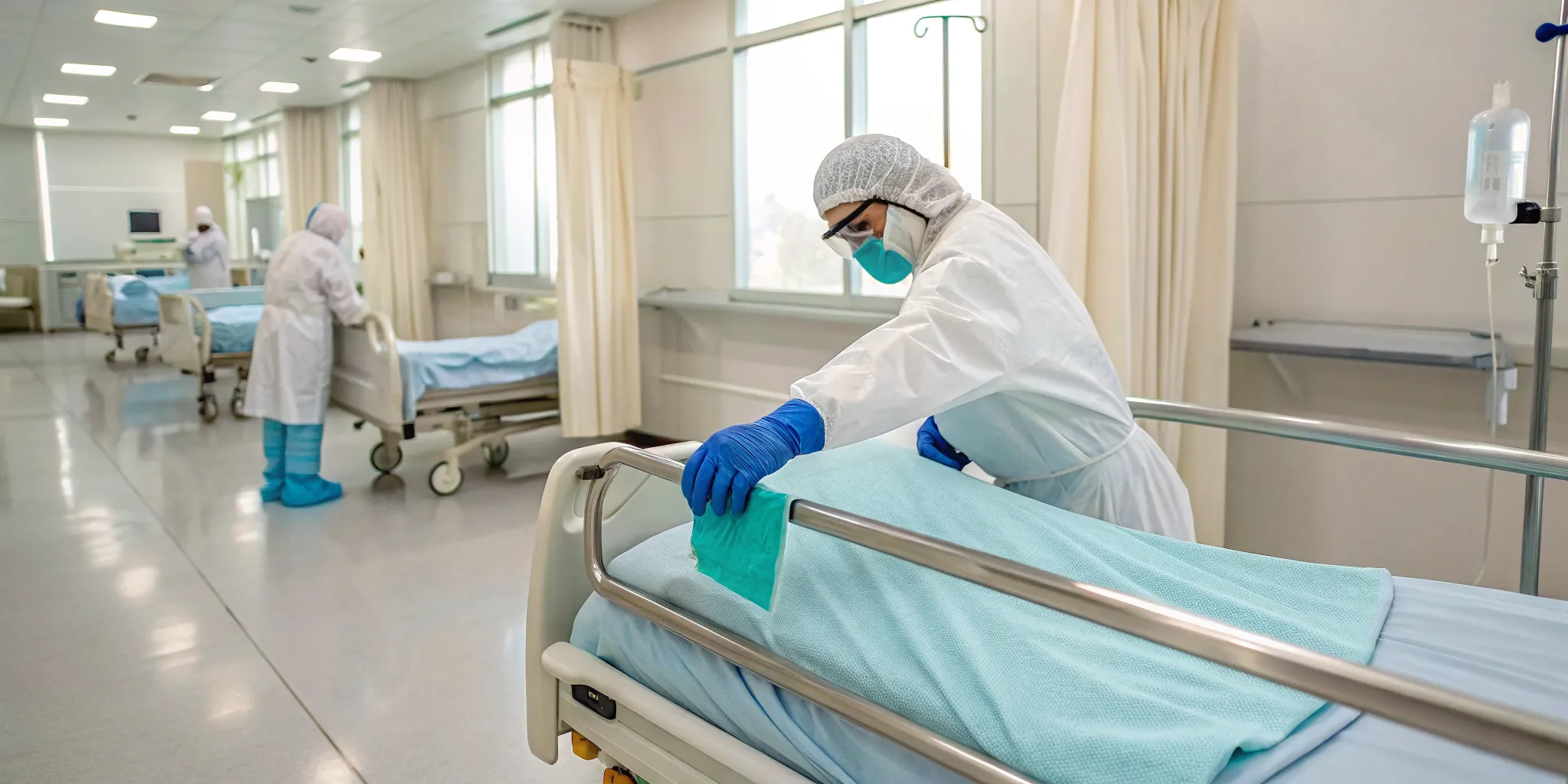
When we think of patient safety, we often picture doctors and nurses. But there is another team of highly trained professionals working behind the scenes whose role is just as vital. These are the experts who perform terminal cleaning. So, what is terminal cleaning in a hospital, and what makes the people who do it so essential? It’s a specialized task that requires deep knowledge of infection control, pathogen transmission, and the correct use of personal protective equipment (PPE). This isn’t a job for an untrained janitor; it’s a professional service that demands precision and an unwavering commitment to creating a sterile environment for every patient.
Key Takeaways
- Go beyond standard cleaning for safety: Terminal cleaning is a methodical disinfection process that completely resets a patient room after discharge. It’s designed to break the chain of infection by eliminating pathogens, which is essential for protecting incoming patients and staff.
- Follow a strict, science-backed protocol: An effective clean isn’t random; it involves a top-to-bottom approach to prevent re-contamination. This includes using EPA-registered disinfectants for their required contact time and meticulously disinfecting all high-touch surfaces.
- Rely on trained experts and verification: This is a job for trained professionals who understand infection control, proper PPE use, and quality assurance. Verifying the clean with checklists or inspections ensures the space is truly safe and meets regulatory standards.
What Is Terminal Cleaning in a Hospital?
Terminal cleaning is a comprehensive, top-to-bottom disinfection process for a patient room or care area. It’s performed after the patient occupying the space has been discharged or transferred. Unlike routine daily cleaning, which maintains a basic level of cleanliness, terminal cleaning is designed to completely eradicate pathogens and prepare the environment for the next patient. The ultimate goal is to break the chain of infection, creating a truly safe and sterile space for everyone.
What It Is and Why It Matters
At its core, terminal cleaning is about patient safety. It’s a methodical disinfection process that makes a room safe for the next person after a patient leaves. The primary goal is to eliminate harmful microorganisms and prevent the spread of germs. This is a crucial line of defense against dangerous healthcare-associated infections (HAIs), which pose a significant risk in medical environments. By thoroughly cleaning every surface, from the ceiling down to the floor, terminal cleaning protects not only the next patient but also the dedicated healthcare staff and any visitors who enter the room. It’s a non-negotiable step in providing responsible and safe patient care.
When It’s Performed
It’s important to distinguish terminal cleaning from the daily tidying a room receives. Routine cleaning handles day-to-day messes and general upkeep while a patient is still in the room. Terminal cleaning, however, is a much more intensive procedure performed only at specific times. This deep clean is triggered after a patient is discharged or transferred to another unit. It is also absolutely essential when a patient with a known contagious illness, or one who was under isolation precautions, leaves the room. This isn’t a quick wipe-down; it’s a scheduled, systematic process that requires trained professionals who specialize in healthcare cleaning services.
Why Is Terminal Cleaning Crucial for Patient Safety?
Terminal cleaning goes far beyond a standard wipe-down. It’s a methodical, top-to-bottom disinfection process that is absolutely essential in any healthcare setting. When done correctly, it serves as a powerful line of defense, protecting patients, staff, and visitors from dangerous pathogens. The stakes are incredibly high, and a thorough clean is one of the most effective tools a facility has to maintain a safe environment for everyone. Let’s look at the three biggest reasons why this process is so vital for patient safety.
Stop the Spread of Infections
After a patient is discharged, especially one with a contagious illness, the room can still harbor harmful microorganisms on surfaces. These invisible threats won’t go away with a simple cleaning. Terminal cleaning is a comprehensive procedure designed to address this exact problem. The main goal is to deeply clean and disinfect every surface, from the ceiling vents down to the floor, to remove pathogens. This systematic approach ensures the room is completely reset and safe for the next patient, their family, and the healthcare professionals who will care for them. It’s a fundamental part of a facility’s infection control strategy.
Safeguard At-Risk Patients
Hospitals are filled with individuals whose immune systems are already compromised, making them highly susceptible to new illnesses. The last thing they need is to contract an infection during their stay. Unfortunately, hospital-acquired infections (HAIs), or nosocomial infections, are a serious risk and are linked to tens of thousands of deaths in the United States each year. Terminal cleaning is a critical defense against this threat. By creating a sterile environment between patients, you significantly reduce the chance that a vulnerable person will be exposed to dangerous bacteria or viruses left behind, allowing them to recover without facing additional complications.
Break the Chain of Transmission
Infection spreads when a pathogen moves from a source to a susceptible person, often by way of a contaminated surface. This is known as the chain of transmission. A patient might touch a bed rail, which is later touched by a nurse or the next patient, continuing the cycle. Terminal cleaning is designed to break this chain decisively. By meticulously disinfecting every high-touch surface, like doorknobs and light switches, as well as less obvious areas, the process eliminates the environmental reservoir for germs. This is a core component of any successful critical environment cleaning program, as it stops pathogens in their tracks and prevents them from spreading throughout the facility.
How Does Terminal Cleaning Differ from Routine Cleaning?
At a glance, routine cleaning and terminal cleaning might seem similar, but they are fundamentally different in their scope, frequency, and purpose. While routine cleaning maintains a baseline level of cleanliness in a healthcare facility, terminal cleaning is a comprehensive, top-to-bottom disinfection process designed to completely sanitize a space. Understanding these differences is key to creating a safe environment for both patients and staff. Think of it as the difference between a daily tidy-up and a deep, restorative clean.
How Often Cleaning Happens
The most obvious difference is the schedule. Routine cleaning is a daily task. It involves cleaning floors, emptying trash, and wiping down surfaces in patient rooms, waiting areas, and hallways to manage dust and dirt. Terminal cleaning, on the other hand, is not an everyday job. It’s performed in specific situations that demand the highest level of sanitation. For example, after a patient with a known infectious disease is discharged or transferred, the room must be terminally cleaned. This intensive process ensures the room is completely safe and ready for the next patient, effectively stopping the spread of pathogens.
The Level of Detail Required
Routine cleaning maintains general order, but terminal cleaning involves a much deeper level of detail. The goal is to perform a thorough cleaning and disinfection of an entire patient care area after it has been used. This means every single surface, from the ceiling vents down to the floor, is meticulously cleaned and disinfected. This includes hard-to-reach spots, high-touch objects like light switches and bed rails, and all medical equipment left in the room. This process ensures the area is fully prepared and safe for the next patient, leaving no trace of the previous occupant.
Specialized Tools for the Job
You can’t achieve a terminal clean with a simple bucket and mop. This process requires specific equipment and powerful cleaning agents to be effective. Professional cleaning teams use special tools and products, and the right choices directly impact the success of the disinfection. This often includes hospital-grade, EPA-registered disinfectants proven to kill a broad spectrum of pathogens, HEPA-filter vacuums that capture microscopic particles, and microfiber cloths and mops that trap and remove contaminants instead of just spreading them around. Using the correct commercial cleaning services ensures the right tools are used for the job every time.
What Are the Key Steps in the Terminal Cleaning Process?
Terminal cleaning isn’t just a deep clean; it’s a systematic process designed to completely disinfect a space. To be effective, it has to follow a specific sequence of steps. Skipping a step or doing them out of order can compromise the entire process, leaving behind harmful pathogens. Think of it as a carefully choreographed routine where every move counts. When done correctly, this method ensures that a patient room or medical suite is reset to the highest standard of cleanliness, ready and safe for the next person. Let’s walk through exactly what this process looks like from start to finish.
Step 1: Prepare the Room
Before any cleaning can begin, the room must be completely prepared. This initial step involves removing all portable items to ensure technicians can reach every single surface. This includes gathering all trash, used linens, and disposable medical supplies for proper disposal. Any patient belongings are also carefully removed. This isn’t just about decluttering; it’s a crucial part of infection control that removes potential sources of contamination from the environment. By creating a clear and empty space, cleaning teams can work efficiently and guarantee that no corner is overlooked during the disinfection process.
Step 2: Clean from Top to Bottom
Once the room is clear, the physical cleaning begins, always following one simple rule: work from top to bottom. This is a fundamental principle in professional cleaning that uses gravity to your advantage. Technicians start with the highest surfaces, like ceiling vents, light fixtures, and the tops of cabinets. From there, they work their way down to mid-level surfaces such as monitors, bedrails, tables, and counters before finally addressing the floors. This methodical approach prevents dust, debris, and microbes from falling onto areas that have already been cleaned, ensuring a truly thorough job without any need for re-cleaning.
Step 3: Disinfect Every Surface
After the initial cleaning removes visible soil, the disinfection stage begins. This is what truly eliminates dangerous pathogens. Using EPA-registered, hospital-grade disinfectants, technicians meticulously treat every surface in the room. A critical part of this step is observing the proper “contact time,” which is the amount of time a disinfectant must remain wet on a surface to kill germs effectively. Simply spraying and wiping isn’t enough. Trained professionals understand that different disinfectants have different contact times, and they ensure these requirements are met to achieve a complete and effective kill of bacteria and viruses.
Step 4: Inspect and Verify the Results
The final step is to confirm the job was done right. A thorough inspection is performed to ensure that every surface has been properly cleaned and disinfected according to protocol. This quality assurance check is non-negotiable. In some cases, this might be a detailed visual inspection, while in other settings, it could involve using tools like ATP meters to test for any remaining organic matter. If any area doesn’t meet the required standard, it’s cleaned again. This final verification provides peace of mind that the space is truly sterile and safe, a core component of any professional critical environment cleaning service.
Who Performs Terminal Cleaning and What Training Do They Need?
Terminal cleaning is a specialized task that requires more than just a mop and bucket. The success of the entire process depends on having a team that is not only dedicated but also expertly trained. Because the stakes are so high, understanding who is qualified to perform these duties and what their training should cover is essential for any healthcare facility. It’s a role that demands precision, a deep knowledge of infection control, and a commitment to patient safety that goes far beyond standard janitorial work.
The Roles of EVS and Nursing Staff
Hospitals have a few different options when it comes to assigning terminal cleaning duties. Most often, the facility’s Environmental Services (EVS) team is responsible for this critical task. In some situations, nursing staff might handle certain aspects, or a specialized internal team is created just for this purpose. Many facilities also choose to partner with a professional external company that provides commercial cleaning services for medical environments. The benefit of this approach is that these teams come with the necessary training and experience already in place. Regardless of who performs the cleaning, the key is that they are properly equipped and trained for this high-stakes job.
Essential Training in Infection Control
Simply following a checklist isn’t enough for effective terminal cleaning. The most important element is thorough and ongoing training in infection control. Cleaning staff need to understand the “why” behind each step, not just the “how.” This includes having a solid knowledge of common pathogens, how they are transmitted, and which disinfectants work against them. Training should be a continuous process, with regular refreshers on protocols and updates on new cleaning technologies or emerging infectious diseases. A well-trained team knows how to apply these principles to different areas of the hospital, ensuring a consistently safe environment for patients and staff.
Proper Use of Personal Protective Equipment (PPE)
Personal Protective Equipment (PPE) is non-negotiable for anyone performing terminal cleaning. This involves a full set of gear, typically including gloves, gowns, masks, and eye protection, to shield staff from contact with infectious agents. Crucially, training must also cover the correct procedures for putting on (donning) and taking off (doffing) PPE. If done incorrectly, the risk of self-contamination is high, which can lead to the spread of pathogens. Adhering to strict PPE protocols is a fundamental part of the process that protects both the cleaning professionals and the next patient who enters the room.
Which Areas and Surfaces Need Special Attention?
When it comes to terminal cleaning, not all surfaces are treated equally. A successful cleaning protocol depends on a strategic approach that identifies and prioritizes the areas most likely to harbor and transmit dangerous pathogens. Think of it as a targeted attack on germs. Instead of just wiping things down, a professional team follows a detailed map of the room, paying extra attention to the places where contamination risk is highest. This methodical process ensures that every critical point is addressed.
This focus is what separates a standard clean from a true terminal clean. It involves a deep understanding of how people move and interact within a healthcare space. From the light switch you flip without a second thought to the complex equipment used for patient care, each item presents a unique challenge. By concentrating on high-touch surfaces, medical equipment, and critical zones, cleaning professionals can effectively break the chain of infection and create a genuinely safe environment for the next patient.
Focus on High-Touch Surfaces
High-touch surfaces are the germ superhighways of a hospital room. These are the spots that patients, staff, and visitors frequently touch throughout the day, including bedrails, doorknobs, light switches, call bells, and bedside tables. Because they are touched so often, they become primary points for transferring bacteria and viruses. A simple, quick wipe-down just won’t cut it. Terminal cleaning requires these surfaces to be meticulously disinfected with the right products and techniques to eliminate any lingering pathogens. A professional team is trained to spot every one of these critical points, ensuring nothing is overlooked in their comprehensive commercial cleaning services.
Properly Cleaning Medical Equipment
Medical equipment, especially portable items, can easily carry contaminants from one room to another if not handled correctly. Items like IV poles, blood pressure cuffs, and suction regulators must be thoroughly cleaned and disinfected before they are moved or used for another patient. This step is non-negotiable. Failing to properly clean equipment completely undermines the purpose of terminal cleaning and puts patients at risk. Specialized training is essential for handling these sensitive and often complex devices. Professionals know how to disinfect equipment effectively without causing damage, ensuring it’s safe and ready for its next use in a sterile setting like a laboratory or clinic.
Special Protocols for Critical Areas
Certain areas in a hospital demand an even higher standard of cleaning. Operating rooms, intensive care units (ICUs), and isolation rooms are considered critical areas where the risk of infection is exceptionally high. After a patient is discharged or transferred from one of these spaces, a rigorous terminal cleaning protocol is deployed to prepare it for the next person. This process is far more intensive than a routine clean. It often involves specific procedures and powerful disinfectants to achieve near-sterility. Handling these spaces requires true expertise, which is why facilities rely on teams trained in critical environment cleaning to meet these exacting standards.
What Products and Equipment Are Essential for an Effective Clean?
Achieving a truly sterile environment isn’t just about technique; it’s about having the right arsenal of supplies. The effectiveness of terminal cleaning depends heavily on using the correct products and state-of-the-art equipment. Without them, even the most thorough process can fall short, leaving behind unseen threats. Professional cleaning teams understand that every tool, from the disinfectant solution to the cloth used to apply it, plays a role in the final outcome.
This is especially true in sensitive settings where microscopic contaminants can cause major disruptions. For any facility, particularly those with critical environments, investing in the proper gear is non-negotiable. It ensures that every cleaning procedure is not only effective but also safe and compliant. The three pillars of a well-equipped cleaning operation are hospital-grade disinfectants, specialized tools, and comprehensive personal protective equipment (PPE). Each component works together to create a space that is meticulously clean and safe for its next occupants.
Using EPA-Registered Disinfectants
When it comes to eliminating pathogens, not just any cleaning product will do. The foundation of any effective terminal cleaning process is the use of hospital-grade, EPA-registered disinfectants. It’s essential to use products approved by the EPA and to let them stay wet on surfaces for the correct amount of time, as stated on the label. This “dwell time” is the period a disinfectant must remain on a surface to kill specific germs, and it’s a critical step that can’t be rushed. A professional team knows that choosing a disinfectant proven to kill specific germs is the only way to ensure a surface is truly sanitized and ready for patient use.
The Right Tools and Technology
The right equipment is just as important as the right cleaning solutions. As experts note, “The choice of equipment impacts the overall effectiveness of hospital cleaning services.” This goes far beyond a simple mop and bucket. Professional teams use tools designed to capture and remove contaminants, not just spread them around. This includes HEPA-filter vacuums that trap microscopic particles, color-coded microfiber cloths to prevent cross-contamination between areas like restrooms and patient rooms, and advanced application tools like electrostatic sprayers that ensure disinfectant coats every side of a surface. In specialized areas like a laboratory, this level of technology is essential for maintaining sterile conditions.
Meeting PPE Standards
Personal Protective Equipment (PPE) is crucial for protecting both the cleaning staff and the environment they are working in. According to healthcare guidelines, “Personal Protective Equipment (PPE) for Terminal Cleaning… reflect[s] the critical role of cleanliness in patient safety and infection prevention.” Standard PPE for terminal cleaning includes disposable gloves, gowns, shoe covers, and N95 masks or other respirators. This gear prevents cleaners from coming into direct contact with infectious materials and, just as importantly, stops them from accidentally carrying contaminants from a dirty room to a clean one. Proper use of PPE is a hallmark of professional commercial cleaning services and a fundamental aspect of infection control.
What Regulations and Standards Govern Terminal Cleaning?
Terminal cleaning isn’t a freestyle activity. It’s a precise, science-backed process governed by strict regulations to protect patients and staff. Think of it less like general housekeeping and more like a critical medical procedure. Several national and state-level organizations set the standards that healthcare facilities must follow. These rules ensure that every room is cleaned and disinfected to the same high standard, every single time.
Key organizations like the Centers for Disease Control and Prevention (CDC), the Environmental Protection Agency (EPA), and the Occupational Safety and Health Administration (OSHA) all play a role. They provide the framework, from which disinfectants to use to what safety gear your team needs. On top of these federal guidelines, facilities must also create and follow their own detailed internal protocols. This combination of external regulations and internal policies creates a system of accountability that is essential for effective infection control. For specialized areas like research facilities, even more stringent protocols for laboratory cleaning may apply.
Following CDC and EPA Guidelines
When it comes to terminal cleaning, the CDC and EPA are the two main authorities. The CDC provides the playbook, offering evidence-based guidelines on how to prevent infections in healthcare settings. Their recommendations cover everything from cleaning techniques to the frequency of cleaning for different areas. They help facilities understand the science behind why certain procedures are necessary to stop the spread of pathogens.
The EPA, on the other hand, regulates the tools of the trade: the disinfectants. For a product to be used in a hospital for terminal cleaning, it must be registered with the EPA and proven effective against specific microorganisms. These hospital-grade disinfectants are essential for ensuring a truly sterile environment. Following these guidelines is non-negotiable, as facilities must comply with various industry standards to ensure cleanliness and safety for everyone who walks through their doors.
The Importance of Documentation and Audits
Simply performing a terminal clean isn’t enough; you have to be able to prove it. That’s where documentation and audits come in. Every healthcare facility must have clear, written policies and procedures that outline every step of the terminal cleaning process. This documentation acts as a guide for the environmental services (EVS) team, ensuring consistency and removing any guesswork. It specifies which areas get cleaned, what products are used, and how each task is performed.
These documents are also crucial for audits. Regulatory bodies like The Joint Commission or state health departments can review these records at any time to verify compliance. Internal audits are just as important, as they help facility managers confirm that their teams are following the established protocols. This paper trail provides a layer of accountability that is vital for patient safety and for protecting the facility from liability.
How to Monitor for Compliance
Consistent results depend on consistent monitoring. To ensure every terminal clean meets the required standards, facilities need a robust quality assurance program. This starts with direct observation and detailed checklists that supervisors can use to verify that no steps were missed. This hands-on approach helps reinforce training and provides immediate feedback to the cleaning staff.
For an even deeper level of verification, many hospitals use scientific methods. ATP (adenosine triphosphate) testing, for example, uses a swab to measure for any remaining organic matter on a surface after cleaning. Another method involves using fluorescent markers, which are invisible to the naked eye but show up under a UV light, to see if a surface was properly wiped down. Meeting these rigorous standards requires a deep understanding of the healthcare environment, which is why many facilities partner with expert commercial cleaning services that have proven compliance systems.
What Challenges Do Hospitals Face with Terminal Cleaning?
Performing terminal cleaning effectively is a non-negotiable part of patient safety, but it comes with a unique set of hurdles. Hospitals must balance the need for absolute thoroughness with the realities of a fast-paced environment. From staffing to scheduling, several factors can make it difficult to maintain the highest standards of hygiene. Understanding these challenges is the first step toward creating a cleaning protocol that truly protects everyone who walks through your doors.
Ensuring Staff Training and Compliance
Terminal cleaning is far more complex than standard janitorial work. It demands a deep understanding of infection control, pathogen transmission, and the proper use of hospital-grade disinfectants. Staff must be trained not just on what to clean, but how and why. Without comprehensive and ongoing education, it’s easy for team members to miss critical steps or misunderstand protocols, leading to inconsistent results and potential compliance issues. This is why many facilities partner with professionals who specialize in commercial cleaning services for healthcare environments, ensuring their teams have the required expertise from day one.
Working with Time and Resource Limits
In a hospital, time is always a critical factor. The pressure to turn over a discharged patient’s room quickly for the next admission can put an immense strain on environmental services (EVS) teams. They are often asked to perform a meticulous, multi-step cleaning process under tight deadlines. This rush can lead to missed surfaces or improperly applied disinfectants. Compounding this issue are often tight budgets, which can limit staffing levels and access to the most effective cleaning technologies. Juggling the need for speed with the demand for perfect hygiene is a constant operational challenge.
Achieving Consistent Results Everywhere
A hospital is a dynamic environment with constant foot traffic from patients, visitors, and staff, making it difficult to maintain a uniform standard of cleanliness. The goal of terminal cleaning is to reset the room to a baseline level of hygiene, but achieving that same result every single time is a major hurdle. Consistency requires airtight systems, clear checklists, and rigorous quality assurance to ensure no steps are skipped, regardless of which team member is on duty or how busy the unit is. Without these robust processes, the level of disinfection can vary from room to room, creating unpredictable risks for patient safety.
How Can Hospitals Improve Their Terminal Cleaning Process?
Even with a solid plan, there’s always an opportunity to refine your terminal cleaning process. The goal is to create a system that is not only effective but also consistent and resilient, especially in a busy healthcare environment where the stakes are incredibly high. Focusing on a few key areas can make a significant difference in protecting patients and staff from healthcare-associated infections (HAIs). The main challenge in hospital cleaning is managing these strict hygiene standards amid constant foot traffic and the fast-paced nature of patient care. This complexity can make it difficult to maintain high levels of cleanliness consistently across all areas of the facility.
Without a systematic approach, even well-intentioned efforts can fall short, potentially leading to gaps in disinfection and an increased risk of pathogen transmission. Improving your process often comes down to three main strategies: establishing strong quality control, embracing modern cleaning methods, and addressing the common obstacles that get in the way of a perfect clean. By making targeted improvements in these areas, you can ensure your facility’s cleaning protocols meet the highest standards of safety and compliance. This isn’t about overhauling your entire operation overnight, but rather about making smart, strategic adjustments that yield significant returns in patient and staff safety. Let’s look at how you can put these strategies into action.
Implement Quality Assurance Checks
A terminal cleaning plan is only as good as its execution. That’s why quality assurance checks are non-negotiable. These checks create accountability and ensure that every member of your environmental services (EVS) team follows the established protocols to the letter, every single time. This starts with having clear, documented policies that outline exactly what the terminal cleaning process involves. To make this happen, use detailed checklists for each room. After a room is cleaned, a supervisor can use this list to conduct a thorough inspection. Some facilities even use fluorescent markers, which are invisible to the naked eye but show up under a blacklight, to verify that specific surfaces were wiped down. These systematic checks help maintain high standards of hygiene and catch any potential gaps before they become a problem.
Adopt New Technologies and Best Practices
The tools and techniques for cleaning are constantly evolving, and healthcare facilities can benefit greatly from staying current. Relying on outdated methods can leave you a step behind in the fight against pathogens. Adopting new technologies and best practices is a powerful way to enhance the effectiveness of your terminal cleaning efforts and provide a safer environment for everyone. For example, electrostatic sprayers can apply disinfectants more evenly and efficiently than traditional trigger sprayers, ensuring comprehensive coverage on complex equipment and hard-to-reach surfaces. Another best practice is implementing a color-coded system for microfiber cloths and mops to prevent cross-contamination between restrooms and patient rooms. Partnering with a professional commercial cleaning service can give you access to this advanced equipment and expertise without the upfront investment.
Break Through Common Barriers
Hospitals are dynamic, often chaotic environments. The constant flow of patients, staff, and visitors presents a significant challenge to maintaining strict hygiene standards. Time pressure can lead to rushed jobs, and without a clear system, there’s a real risk of spreading germs from one surface to another. These common barriers can undermine even the best-laid cleaning plans. Overcoming these hurdles requires a proactive approach. One of the most effective solutions is to work with a specialized cleaning partner. An expert team trained in critical environment cleaning can work efficiently without cutting corners, bringing the right tools and techniques for the job. This not only ensures consistent results but also frees up your hospital staff to focus on patient care, confident that the environment is clean and safe.
Related Articles
- Specialized Healthcare Facility Cleaning | Protecting Patients & Staff
- Expert Terminal Cleaning Services | Foreman Pro Cleaning
Frequently Asked Questions
What’s the simplest way to explain the difference between routine and terminal cleaning? Think of routine cleaning as the daily tidying that keeps a patient’s room orderly and manages surface dust while it’s occupied. Terminal cleaning, however, is the complete, top-to-bottom disinfection that happens only after a patient is discharged. Its sole purpose is to eradicate pathogens and reset the room to a safe, sterile state for the next person.
Why is specialized training so important for the cleaning staff? Terminal cleaning is a science-based procedure, not just a janitorial task. A properly trained team understands the “why” behind each step, including how different pathogens spread and which specific disinfectants are needed to eliminate them. They also know the importance of contact time, which is how long a disinfectant must sit on a surface to work. Without this knowledge, a team could go through the motions without actually making the room safe.
How can you be sure a room is truly clean after the process is finished? A professional cleaning process always ends with a quality assurance check. This isn’t just a quick glance; it’s a formal inspection using a detailed checklist to confirm every step was completed correctly. Some verification methods even use scientific tools, like ATP meters that test for microscopic organic material, to provide concrete data that a surface is free of contaminants.
Is terminal cleaning just for standard patient rooms? No, it’s a critical process for many areas within a healthcare facility. While it’s standard practice for patient rooms after discharge, the protocols are even more rigorous for high-risk environments. Operating rooms, intensive care units (ICUs), and isolation rooms all undergo an extremely thorough terminal cleaning to meet the highest standards of sterility required for those spaces.
What is the single biggest mistake to avoid in terminal cleaning? The most common and dangerous mistake is not respecting the disinfectant’s required contact time. Every EPA-registered disinfectant has a specific “dwell time,” which is the period it must remain wet on a surface to effectively kill germs. Simply spraying and immediately wiping a surface dry might make it look clean, but it fails to disinfect, leaving dangerous pathogens behind.
