
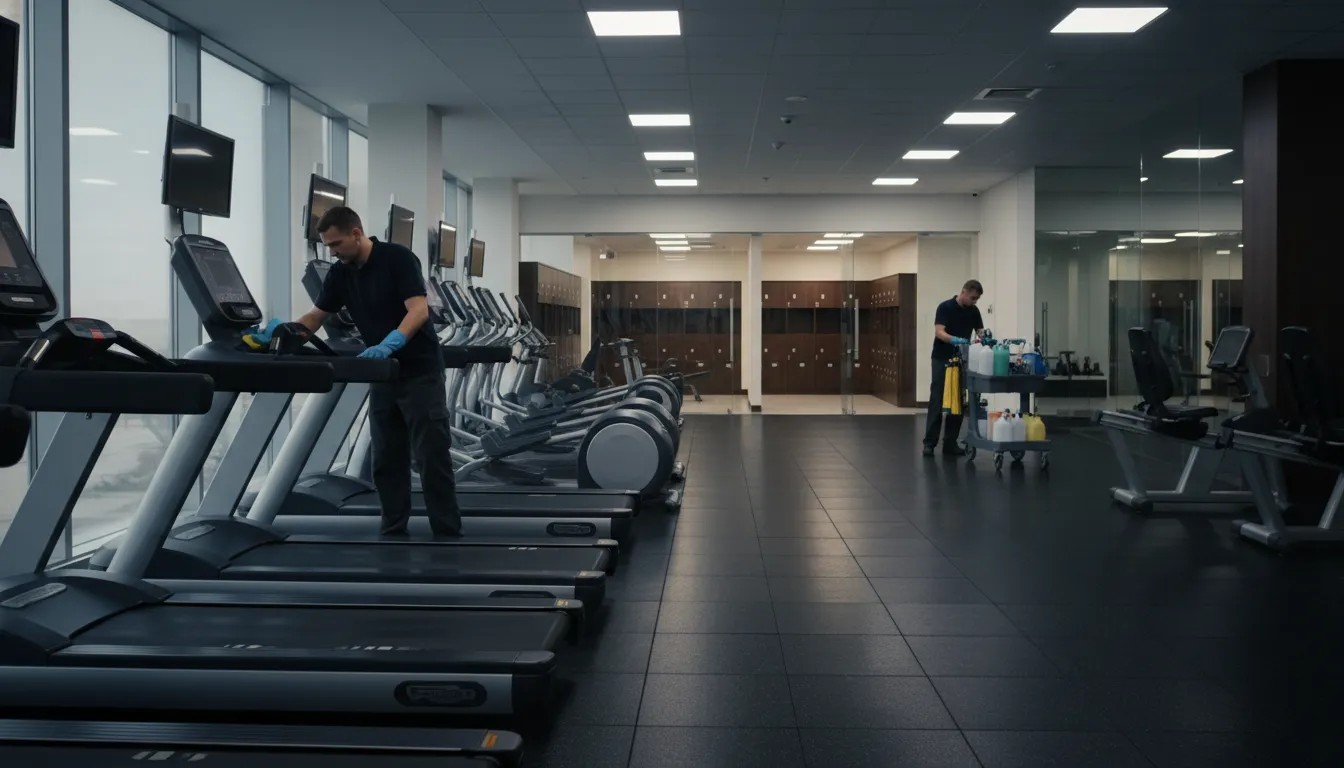
Every sweaty grip, damp locker room floor, and empty soap dispenser shapes a member’s next visit. A reliable cleaning plan keeps those visible failures from becoming your facility’s reputation.
Request gym fitness center cleaning support from Foreman Pro.
A gym cleaning checklist assigns repeatable tasks for equipment, floors, locker rooms, restrooms, and reception. Use it to schedule checks, restock supplies, document work, and catch wet floors or missed touchpoints before members do.
The practical question is not whether a busy gym gets dirty, but which tasks must happen before opening and while members use the space. Start with the daily routine below, where reliable coverage is built one check at a time.
Gym cleaning checklist: Daily opening and operating-hours tasks
Opening walk-through
A daily gym cleaning checklist starts before members reach the fitness floor. Walk the entrance, mats, glass, reception desk, and lobby in the same order each morning. Note tracked-in soil, fingerprints, odor, full bins, or supplies that need refilling. A clean arrival area sets a clear operating standard for staff.
Continue through workout zones, restrooms, and locker room entry points. Look for visible dust, hair, wet spots, abandoned towels, and damaged equipment surfaces. The CDC advises facilities to repair or remove items with surfaces that cannot be cleaned well. See its guidance on cleaning shared athletic equipment.
Opening and in-service routine
Use a short sequence that staff can repeat on every shift. It keeps immediate member-facing needs separate from longer work that belongs in a full service visit.
- Inspect entrances and reception. Vacuum or spot mop visible soil, empty full trash bins, wipe smudged glass, and reset the front desk area.
- Scan active workout areas. Remove waste, address spills at once, and place warning signs until wet flooring is safe and dry.
- Spot clean shared touchpoints. Focus on handles, machine controls, bench contact points, water station buttons, door pulls, and locker room touchpoints.
- Support equipment wipe-down. Keep member wipe stations stocked and make sure shared equipment is cleaned between users when the facility procedure calls for it.
- Record the round. Log the time, staff initials, area checked, spill response, refill needs, damaged surfaces, and items routed to evening service.
High-touch spot cleaning is the operating-hours response to active use and visible needs. It is not a replacement for full floor care, detailed restroom cleaning, or planned disinfection after closing. Facilities that need daytime support can align this routine with gym cleaning services.
Touchpoints, spills, and service records
When staff disinfect a touchpoint, they should follow the product label for contact time and proper use. A quick wipe that dries too soon may not meet label directions. Use each inspection round to confirm dispensers, towels, liners, and spill supplies are ready for the next rush.
A simple log makes missed tasks easier to find. Review it at shift change and before the after-hours crew begins work. Flag repeat spill areas, fast-filling bins, low wipe inventory, and equipment with worn surfaces. That record helps the facility manager adjust rounds without confusing daytime response work with scheduled full cleaning.
How should you clean gym equipment and high-touch surfaces?
Clean shared gym equipment by naming every touchpoint, removing visible soil, following the product label for disinfecting contact time, and allowing surfaces to dry before reuse. Keep wipe stations stocked, then document staff checks during each operating shift.
Member wipe stations
Start with the surfaces members touch through each workout: dumbbell grips, cable handles, bench pads, treadmill rails, bike controls, and touch screens. A gym cleaning checklist should name these items, not group them under a vague line such as “equipment.” Clear lists make missed touchpoints easier to spot.
Set wipe stations where members can reach them before and after equipment use. Keep directions short, visible, and easy to follow. A wipe station supports daily upkeep, but it does not replace assigned staff rounds or documented checks.
Cleaning and disinfecting tasks
Cleaning and disinfecting are related tasks, not the same step. Cleaning removes sweat, dust, and visible soil. The CDC guidance for facilities says cleaning with soap or detergent lowers germs on surfaces and reduces infection risk.
Disinfecting is a separate task when your plan calls for it. Staff should use the product label for contact time, safe use, and needed precautions. They should also follow equipment maker instructions. Pads, screens, and electronic controls may need specific care.
- Clean handles, grips, rails, adjustment pins, and bench pads during assigned rounds.
- Check touch screens and control panels using the method allowed by the equipment maker.
- Replace empty wipes and remove used wipes before bins overflow.
- Record torn pads, leaking dispensers, or damaged controls for follow-up.
Staff ownership for busy floors
A member-facing system works better when staff ownership is plain. Assign zones, set check times, and name the person responsible for restocking and review. This keeps weight areas, cardio rows, stretching zones, and entry touchpoints from falling between shifts.
High-touch items need attention as use rises, so staff should adjust rounds during peak periods. Include front desk counters, door pulls, water station buttons, and locker handles. These are easy to miss when the focus stays only on workout machines.
For routine support during open hours, fitness center cleaning support can help set clear task coverage. The goal is practical accountability: stocked stations for members, assigned rounds for staff, and label-led care for each surface.
Fitness floors and group exercise spaces need their own plan
Surface zones on the checklist
A gym cleaning checklist should separate floor types instead of treating every square foot the same. Rubber flooring collects grit, chalk, hair, and debris around racks and cardio machines. Start with dry soil removal, then use the product and method approved for that floor. This keeps the surface clean without leaving a film under foot.
Tile, sealed concrete, and other hard surfaces need close attention near bottle filling stations and entrances. Address spills when they occur, and keep wet areas clear until dry. At reception, carpet-to-hard-floor transitions can carry in soil and moisture. Vacuum entry carpet, check edges, and clean tracked marks before they spread.
Studio floors and mat storage
Group exercise rooms change quickly between classes. Sweat, shoe marks, and moved equipment can leave the floor unevenly soiled. Clear the room first, remove loose debris, and damp clean the full traffic path. Use only enough solution for the task, since excess product can leave slippery residue on a training surface.
Mats need a separate routine. The CDC advises cleaning shared equipment after each use and allowing it to dry before the next person uses it. Apply that practice to shared class mats, using the mat maker’s care guidance and an appropriate product. Review the CDC guidance for athletic facilities when setting touchpoint procedures.
- Separate used mats from clean, dry mats after each class.
- Store mats only after both sides are dry.
- Keep racks clean, stable, and free of damp towels or debris.
Planned floor-care support
Daily checks should catch spills, grit, and visible residue during open hours. Schedule detailed floor care when traffic is low, so crews can move equipment and let cleaned areas dry. Record the floor type, approved products, problem spots, and completed work. A short record helps staff follow the same safe process each shift.
Busy facilities may also need floor checks between classes or during peak periods. Foreman Pro’s hard floor cleaning service can support a planned routine for fitness floors and studios. That routine can also cover reception paths and other high-traffic zones.
What belongs on a locker room and restroom checklist?
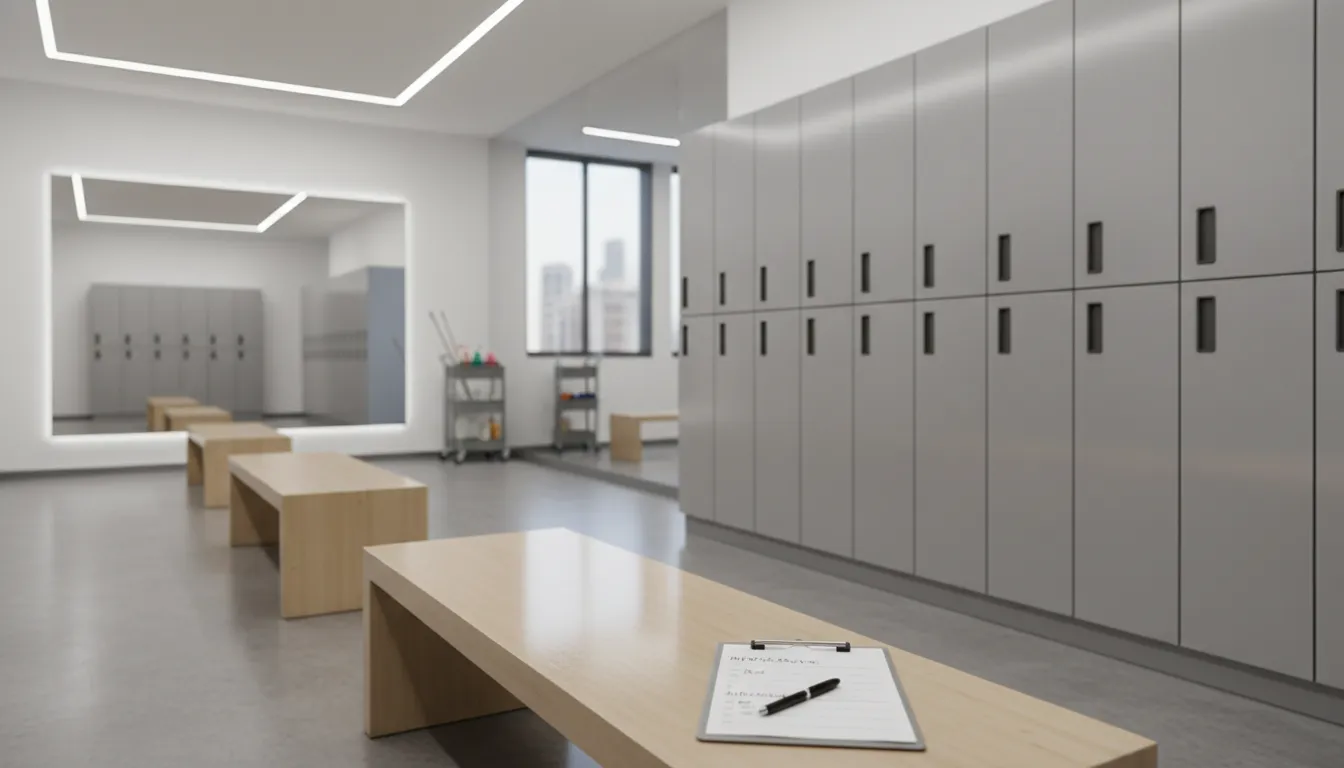
Locker rooms, showers, and restrooms need a zone-based check, not a quick glance at the floor. Build this part of a gym cleaning checklist around touch points, wet areas, supplies, odor, and clear notes. Set inspection times around member traffic, classes, and closing routines.
Locker and bench touch points
Start where members set down bags, change clothes, and move between activities. Check locker handles, keypad buttons, hooks, bench tops, door pulls, hair dryer grips, and changing stall latches. The CDC guidance for athletic facilities advises focusing on surfaces that touch bare skin each day.
- Wipe locker doors, handles, locks, hooks, cubby edges, and bench surfaces.
- Look for sticky residue, dust at locker bases, abandoned items, or damaged surfaces.
- Empty waste bins before overflow, then note broken parts or lost-item concerns.
A checklist should separate completed cleaning from issues that need action. A broken latch, cracked bench finish, or loose hook calls for a repair note, not a check mark. Assign each issue to the staff member who can follow it through.
Shower and restroom checkpoints
Move next to showers, toilet stalls, sinks, and vanity counters. Small misses in wet zones are easy for members to spot. Look for standing water, soap film, blocked drains, streaked mirrors, splashed partitions, and empty dispensers.
- Check shower walls, doors, curtains, controls, shelves, drain covers, grout, and floor edges.
- Clean toilet seats, flush controls, stall locks, grab bars, sink faucets, counters, and partitions.
- Refill soap, toilet tissue, paper towels, bin liners, and approved member supplies.
- Review accessible fixtures for condition, clear approach, and needed follow-up.
Use the product selected for each surface, with the method and contact time listed on its label. For an organized plan across these rooms, commercial gym cleaning can help define tasks by traffic and layout.
Floors, moisture, odors, and reports
Finish with conditions that may point to a recurring problem. Check floor corners, grout lines, mats, drains, wall bases, vents, and spaces below benches. Remove tracked debris, address wet areas, and note anything that cannot be corrected during the round.
- Record puddles, slow drains, leaks, loose tiles, torn mats, and signs of poor airflow.
- Note odors by location and time, rather than covering them with fragrance.
- Log the date, shift, staff initials, supplies refilled, work completed, and action needed.
Issue notes give managers a usable pattern over time. Repeated wet spots, empty dispensers, or odor reports can guide repairs and cleaning-round changes. The checklist then serves both the daily room check and the follow-up record.
Daily, weekly, and periodic gym cleaning schedule
Everyday high-touch work
A gym cleaning checklist works best when it names tasks by area and sets a clear review cycle. Daily priorities should center on shared contact points and spaces that stay busy during operating hours. The CDC guidance for athletic facilities says shared equipment should be cleaned after each use. It should dry before the next person uses it.
Set out equipment wipes or a simple member cleaning station, then assign staff to check use and refill supplies. Staff should also clean handles, grips, adjustment pins, benches, and mats during routine rounds. For disinfectants, follow label directions for surface type and contact time.
Area-by-area schedule matrix
Use this matrix as a starting plan, not a fixed rule. Managers can assign each item to opening staff, floor staff, a day porter, or an after-hours cleaning crew. Document missed items and repeat issues, since those notes show where the schedule needs more attention.
| Area | Daily tasks | Weekly tasks | Periodic tasks |
|---|---|---|---|
| Equipment |
| Clean frames, bases, and racks. | Inspect worn or damaged surfaces. |
| Fitness floors |
| Deep clean floor zones and mat areas. | Inspect edges, corners, grout, and condition. |
| Locker rooms and restrooms |
| Detail partitions, locker fronts, tile, and drains. | Review recurring odor, moisture, or repairs. |
| Lobby and reception |
| Detail furniture, baseboards, and displays. | Review entry flooring and wear. |
Adjusting the schedule
A morning-only plan may not keep pace with a gym that is busy before work and after work. Add rounds when member traffic rises, operating hours expand, or staff see sweat, spills, empty supplies, or restroom issues. If cleaning must happen while members are present, professional fitness center cleaning can support a planned, area-based routine.
- Increase equipment and floor checks near classes, free weights, and cardio peaks.
- Increase locker room and restroom checks during shower use and changing-room rushes.
- Increase lobby checks during check-in surges, tours, events, and wet-weather entry traffic.
Keep the plan safe as well as practical. Cleaning staff should use the product as directed, including the stated wet contact time. The CDC advises staff to follow disinfectant label instructions for proper product use. A short inspection log helps managers confirm completion and change frequency when observed conditions call for it.
Contact Foreman Pro to build a practical gym cleaning plan.
How can facility managers keep cleaning accountable?
Facility managers keep cleaning accountable by assigning zones by shift, logging check times and staff initials, recording supply refills or repairs, and inspecting recurring misses. A checklist works when staff can see who owns each task and when it was completed.
Route sheets and zone ownership
A dependable gym cleaning checklist does more than list chores. It records the route, zone owner, check time, and action taken for each area. Use one sheet for fitness floors, equipment areas, studios, locker rooms, restrooms, and reception.
Give every zone to a named staff member for each shift. Require initials only after the task is finished and checked. If the next shift sees a missed task, the record shows who should fix it and when.
Shared machines, benches, and mats need a clear sign-off rule. The CDC tells athletic facilities to clean shared equipment after each use and let it dry before use. Staff should note torn padding or cracked surfaces that cannot be cleaned well. This guidance sets a sound base for recorded equipment checks.
Restocking and spill response
Supply control is part of cleaning control. Add a restocking line for wipes, soap, paper goods, liners, gloves, and approved products in each zone. Mark low stock during every route, then name the person responsible for refills.
Spill response needs a separate, visible escalation process. Staff should isolate the area, report the spill, and record who accepts the cleanup. The supervisor then records the clearing time and any floor, mat, or machine closed for repair.
A daytime porter or assigned lead can handle urgent resets while members are present. For managers planning that coverage, gym facility cleaning can align staffed routes with active operating hours. Written coverage shows which team responds when traffic rises.
Quality checks during high traffic
A completed route is not proof of a clean zone. Supervisors should inspect a sample of completed work on each shift. Check touchpoints, dry equipment, stocked dispensers, clear walking surfaces, waste levels, and closed spill records. Record corrections beside the original sign-off so repeat gaps become easy to trace.
High-traffic periods require a live adjustment, not a longer unchecked list. Before morning rushes, after-work peaks, or large classes, increase rounds near equipment, showers, entrances, and wipe stations. Delay low-risk detail work until use drops, but keep spill response and shared equipment checks active.
Review sheets each week for missed checks, repeated shortages, and spill hotspots. If one zone draws repeat corrections, change the route, stock location, or staff coverage. A written change lets managers test the fix during the next peak period and hold the team to it. Keep prior sheets on file so later reviews use the same standard.
When a fitness center needs professional cleaning support
A gym cleaning checklist can guide daily work, but it cannot add staff hours during a crowded operating day. Contracted support may make sense when the same spaces need attention throughout open hours. It can also help when closing shifts leave key tasks unfinished.
Signs routine coverage is stretched
Shared equipment creates a need for clear work routines. The CDC advises facilities to clean shared equipment after each use and let it dry before the next user.
Member traffic can create a steady loop of touch points, spills, waste, and damp floors. Staff may also need to run the front desk or assist members. In that case, set cleaning rounds may become hard to keep.
- Long open hours leave few windows for detailed work outside member use.
- Peak traffic produces repeat needs in restrooms, refill stations, entry areas, and exercise zones.
- Locker room checks fall behind when wet areas need frequent attention during busy periods.
- Floor-care tasks are delayed because training areas cannot be cleared at the right time.
Daytime upkeep and planned service
A fitness center may need daytime upkeep when spills, supplies, restrooms, and locker rooms need checks while members are present. Planned service can focus on floor work and detail cleaning during less active periods.
This split helps management match tasks to the right time of day. It may reduce disruption while staff keep the facility open. Foreman Pro offers commercial cleaning services for facilities in Maryland, Virginia, and Washington D.C.
Choosing a useful service scope
Before seeking support, compare open hours, busy periods, cleaning logs, floor-care tasks, and locker room checks. Note where tasks repeat, get rushed, or stay unfinished. Those patterns help define the coverage a contractor should review.
Management can also note which zones affect member use first, such as entrances, restrooms, showers, and exercise floors. A walkthrough can turn those needs into a practical scope, without adding work the site does not need.
Foreman Pro provides cleaning support for gyms in its stated service region. A facility assessment can help managers discuss service needs and request a custom quote.
Frequently Asked Questions
What should be included in a daily gym cleaning checklist?
A daily gym cleaning checklist should cover equipment touchpoints, fitness floors, locker rooms, showers, restrooms, reception counters, entry handles, waste removal, and supply restocking. Assign checks during busy periods and document completed tasks. The CDC advises cleaning shared equipment after each use and letting it dry before the next person uses it.
How often should gym mats and floors be cleaned?
Clean spills and visible soil from gym floors promptly, then set routine floor cleaning around foot traffic, class schedules, surface type, and product instructions. Treat shared exercise mats as equipment because bare skin contacts them regularly. The CDC advises cleaning shared equipment after each use and allowing it to dry before reuse.
Why is a gym cleaning checklist important for facility managers?
A checklist gives facility managers a consistent way to assign tasks, record completion, restock supplies, and spot areas needing attention. This matters in gyms because people share equipment and use locker rooms throughout the day. A documented plan helps the team adjust service when traffic or observed conditions change.
What are the essential items for a gym cleaning kit?
A practical gym cleaning kit includes a suitable disinfectant, floor cleaner, microfiber cloths, mop supplies, waste liners, gloves, and caution signs. Include refill products for member wipe stations. Match each product to the surface being cleaned. The CDC states that disinfectant users should follow label directions, including the required contact time.
How can facility managers maintain cleanliness in high-traffic gym locker rooms?
Facility managers should schedule regular locker room checks for wet floors, used towels, waste, depleted soap, toilets, showers, benches, handles, and locker touchpoints. Staff should clean visible soil before applying disinfectant and follow product contact times. A daytime route can address spills and restocking during crowded hours, while after-hours work can cover detailed cleaning without interrupting members.
Ready to build a cleaner gym routine that lasts?
A missed cleaning task can become a visible problem in the spaces members use most. When floors, equipment, locker rooms, restrooms, or reception areas fall behind, your team spends valuable time catching up. Start now to create a practical cleaning plan your staff can follow with confidence each day.
Ready to protect your schedule and keep every zone on track? Request a customized gym cleaning plan to set priorities and plan the right service approach for your facility. A clear plan today helps your team address routine needs sooner, before missed tasks create extra work. Contact Foreman Pro to discuss a plan shaped around your facility, traffic patterns, and cleaning needs.
