
.
A clean-looking gym can still fail during the first crowded hour. Sweat on handles, odors near locker rooms, and overflowing bins tell members the schedule missed actual usage.
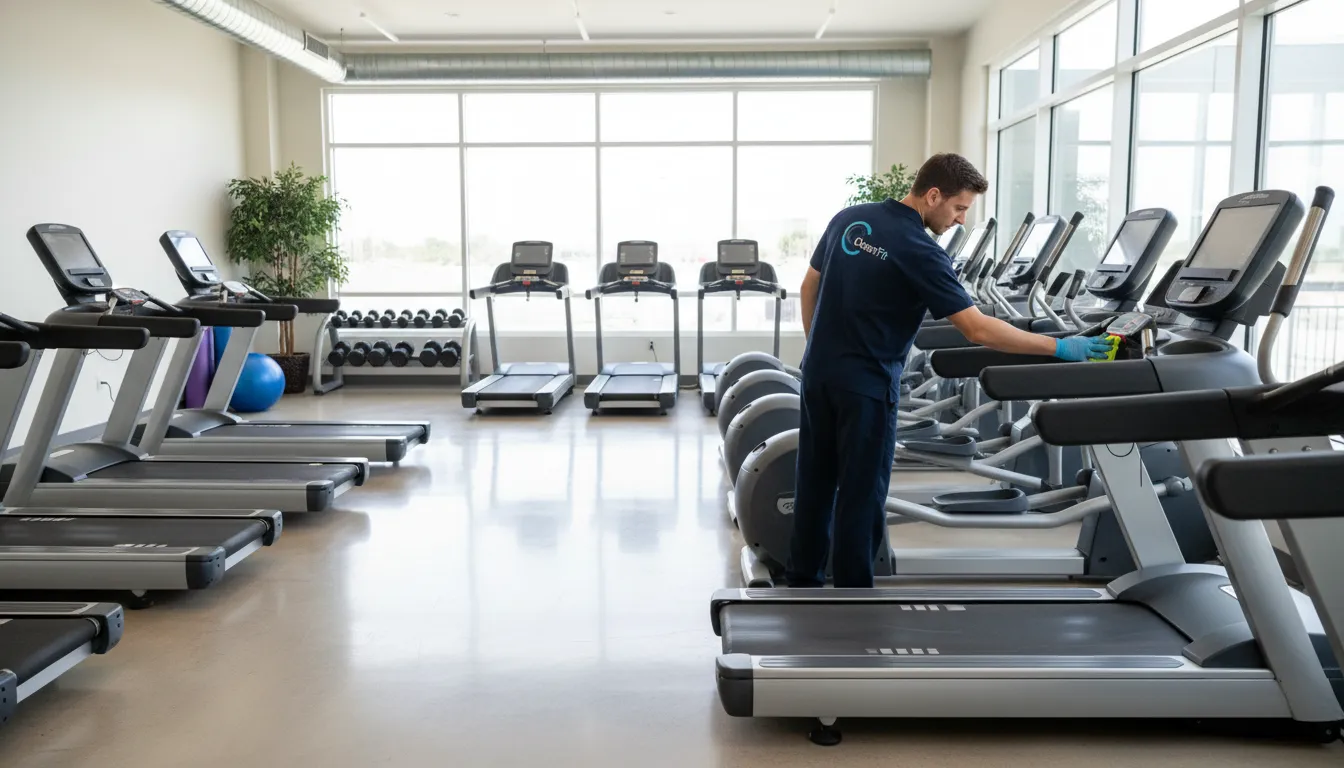
Gym cleaning frequency should follow traffic, touch points, and moisture exposure rather than one fixed building-wide interval across a busy facility. Members should wipe shared equipment after each use, while staff inspect and disinfect equipment and skin-contact surfaces throughout the day between professional cleaning rounds. The CDC recommends cleaning shared equipment after each use and focusing daily on surfaces that contact bare skin in athletic facilities. Staff should clean restrooms, locker rooms, floors, and trash areas at least daily, with added peak-hour checks to control odors and refill supplies. A documented schedule should also assign weekly deep cleaning and less frequent detail work for vents, carpets, and other low-touch areas on a set cycle.
The practical question is how often each zone needs attention as member traffic changes. Gym cleaning frequency at a glance sets the baseline for equipment, locker rooms, floors, odor control, and peak-hour staffing. The next section provides a workable starting schedule.
Gym cleaning frequency at a glance
The baseline schedule.
A practical gym cleaning frequency plan uses four layers: clean after use, daily service, weekly detail work, and scheduled deep cleaning. Shared equipment needs the fastest response. The CDC advises cleaning shared equipment after each use and letting it dry before the next person uses it.
Daily service is the baseline for areas with steady traffic. Restrooms, locker rooms, entrances, studios, and floors need checks during the day when use is high. A closing clean should reset those spaces for the next shift.
Area-by-area cleaning cadence
The table below is a starting schedule, not a fixed rule. For example, this facility cleaning frequency guide calls for daily restroom disinfection and daily cleaning of touch points.
| Area. | Continuously or as used. | Daily. | Weekly. | Periodic deep clean. |
|---|---|---|---|---|
| High-touch equipment. | Wipe grips, pads, controls, and benches after use. | Inspect and clean all units. | Detail seams, frames, and nearby floor edges. | Deep clean around and beneath equipment. |
| Restrooms. | Restock supplies and address spills. | Clean toilets, sinks, dispensers, handles, and floors. | Detail partitions, edges, and fixtures. | Scrub grout and other buildup zones. |
| Locker rooms and showers. | Address wet floors, trash, and supply needs. | Disinfect benches, lockers, handles, showers, and floors. | Detail drains, corners, and partitions. | Deep scrub tile and grout. |
| Gym floors and studios. | Remove spills and visible soil. | Vacuum, dust mop, or damp mop by surface type. | Detail edges and movable items. | Extract carpet or deep clean hard flooring as needed. |
| Entrances and common touch points. | Remove debris and address tracked-in soil. | Clean doors, handles, railings, push plates, and mats. | Detail corners, glass edges, and matting. | Extract carpet runners and clean buildup zones. |
| Low-touch surfaces. | Clean visible marks as found. | Inspect for soil. | Dust ledges, shelves, and reachable surfaces. | Clean vents, high dust zones, and hard-to-reach areas. |
Traffic-based adjustments
The right plan changes with the building. A busy gym may need a day porter for spills, trash, restroom checks, and supply refills. A smaller site may cover the same tasks through timed rounds and a documented closing checklist.
Use this schedule as a control point for staff duties and vendor scopes. Then adjust it for class turnover, peak hours, seasonal rushes, and surface types. A provider of gym cleaning services can map each task to the facility’s actual traffic pattern.
How does gym traffic change the cleaning schedule?
Traffic-based cleaning intervals
Gym cleaning frequency should reflect how members use each space, not just the facility’s closing time. A quiet studio and a busy weight floor do not create the same workload. Schedule more checks where people rotate through equipment, touch shared surfaces, or leave moisture behind.
Peak-time walkthroughs help staff find issues before they build up. During each walkthrough, check restroom supplies, trash bins, locker rooms, entry points, and high-touch equipment. A tailored gym cleaning services plan can set the right intervals for each zone.
Member wipe-downs and professional cleaning
Member wipe-downs are part of the daily routine, but they do not replace professional cleaning. The CDC says shared equipment should be cleaned after each use and allowed to dry before the next person uses it. Signs and stocked wipe stations can support that habit.
A cleaning team still needs to follow a set scope. That scope should cover surfaces members may miss, such as equipment frames, adjustment pins, handles, mats, locker room touch points, and floor edges. Staff should also review damaged surfaces that cannot be cleaned well and report them for repair.
Class turnover and seasonal changes
Group classes create short bursts of demand. After a cycling, yoga, or circuit session, staff may need a turnover check before the next group enters. The check should cover used gear, mats, floor spots, trash, and any shared touch points.
Traffic patterns can also change through the year. A winter rush, membership campaign, tournament, or special event may call for added walkthroughs and more daytime support. When planning for a busy season, review the steps for preparing fitness facilities before the schedule gets crowded.
A day porter can help when the facility stays busy for long stretches. The porter handles visible issues and restocking during open hours, while the main crew completes scheduled cleaning. This split keeps the program responsive without turning every task into an urgent response.
How should high-touch gym equipment be cleaned?
High-touch equipment needs a repeatable process, not a quick wipe at closing. The CDC says shared equipment should be cleaned after each use and allowed to dry before the next use. This applies to handles, grips, benches, mats, touch screens, and adjustment pins.
A clean-then-disinfect workflow
Cleaning and disinfecting are separate jobs. Start by removing sweat, dust, and visible soil from the surface. Then apply a disinfectant that suits the equipment and follow its label. Check the equipment maker’s instructions before adding a new product.
This matters because materials differ. A product that works on a metal handle may not suit vinyl upholstery or a touch screen. The CDC also advises cleaning equipment according to the maker’s instructions so the cleaner does not harm the item.
- Identify the surface and read the equipment maker’s care instructions. Note any products or methods that could harm padding, screens, coatings, or electronics.
- Remove visible soil with the approved cleaner and a fresh cloth. Work across grips, controls, seats, pads, and adjustment points in a set order.
- Apply the approved disinfectant as directed on its label. Keep the surface wet for the listed dwell time rather than wiping it dry too soon.
- Allow the surface to dry before use. Replace the cloth or wipe as needed to avoid moving soil between equipment pieces.
- Record the task, time, area, and any damage found. Send torn pads, cracked grips, or damaged surfaces for review because they can be hard to clean well.
Product choice and task records
A site plan should name the approved product for each surface type. It should also state who cleans equipment between uses and who completes scheduled rounds. Foreman Pro’s gym cleaning services page shows how equipment care fits with restroom and general facility cleaning.
Use a simple log for each zone. Record the date, time, staff initials, product, and any follow-up item. This helps managers review gym cleaning frequency during busy periods and adjust rounds when use rises.
Focused infection-control checks
Pay close attention to surfaces touched by hands or bare skin. The CDC recommends repairing or disposing of equipment with damaged surfaces that prevent proper cleaning. Add defects to the log at once. Keep an item out of service when safe cleaning is not possible.
Targeted checks are more useful than relying only on broad spraying. Review wipe stations, product levels, signage, and logs during each round. A clear process makes missed tasks easier to spot and correct.
Locker rooms and restrooms need a tighter routine
Locker rooms and restrooms need a closer check than many shared gym areas. Showers, changing benches, sinks, toilets, floors, and drains all sit within a small space. A useful gym cleaning frequency plan separates routine service from checks tied to traffic, moisture, and visible soil.
Daily surface control
Start with fixtures and surfaces that members touch or use at close range. A University of Northern Iowa cleaning frequency guide calls for daily restroom cleaning. Its daily tasks include toilets, urinals, sinks, dispensers, doors, light switches, and other touch points.
Locker rooms add benches, locker handles, shower controls, and floors to the routine. The CDC advises athletic facilities to focus each day on surfaces that touch bare skin. Its locker room cleaning guidance supports a targeted routine instead of a vague spray-and-go approach.
- Clean and disinfect restroom fixtures, touch points, and changing benches.
- Service showers, including controls, walls, ledges, and nearby floors.
- Remove trash and refill soap, towel, and tissue supplies.
- Inspect floor edges, grout lines, and corners for soil or standing water.
Moisture and drain checks
Daily floor care should include more than a quick mop. Staff should check shower approaches, toilet bases, drain covers, and low spots where water may collect. The routine should note repeated wet areas. The facility team can then review drainage, leaks, or member traffic flow.
Drains also need a set inspection step. Clear visible debris, clean drain covers, and note slow drainage or recurring odors for follow-up. Ventilation deserves the same attention. Record stale air, heavy moisture, or surfaces that stay damp after service.
A tailored plan matters because locker room use changes during the day. Facilities with busy class blocks or evening peaks may need checks between full cleanings. Foreman Pro’s gym cleaning services page outlines a broader routine for equipment, restrooms, and shared spaces.
Odor control without masking
Fragrance is not a fix for a recurring odor. It can cover the warning sign while the cause remains. First check trash bins, drains, wet mats, damp floor edges, shower residue, and refill stations for the source.
Then clean the affected area and log what staff found. If the odor returns, the record helps the facility team trace patterns by time and location. This keeps odor control tied to cleaning steps, moisture checks, and needed maintenance.
Why visible cleanliness shapes the member experience
The first walk-through
Members start forming an impression before they reach a machine. The entrance, front desk area, mirrors, and floors should look ready when the doors open. Smudged glass, tracked-in dirt, or a full bin can make a completed cleaning shift feel unfinished.
An opening walk-through gives staff a simple way to catch those gaps. Check the entry, scan mirrors for streaks, remove floor debris, empty bins, and note any odor that needs attention. This visible review supports a steady standard alongside planned gym cleaning services.
Small details members can see
Visible cleanliness is not limited to polished floors. Members touch door handles, railings, push plates, dispensers, and drinking fountains as they move through the facility. A University of Northern Iowa cleaning guide calls for daily disinfection of touch points, including door knobs, railings, and push plates.
Bins also need routine attention. The same guide calls for daily emptying and cleaning of trash receptacles and liners where needed. Removing waste helps staff address odor sources before they become part of the member experience. Clean mirrors, dry floors, clear walkways, and stocked restrooms make the space look cared for.
Consistency across the day
Opening readiness is the baseline, not the final check. Gym cleaning frequency should reflect traffic patterns, class times, locker room use, and the points where members gather. A midday check can catch a missed bin, a damp floor, or fresh marks on glass before the next rush.
Consistency supports trust because members can see whether the routine holds up across different visits. A written checklist also helps managers separate appearance checks from cleaning and disinfection tasks. That approach fits clear gym cleanliness standards without treating every area as if it has the same needs.
The most useful schedule names the area, task, time, and person responsible. It should also include a way to record issues that need follow-up, such as a damaged touchpoint or a recurring odor.
How can fitness centers staff the cleaning plan?
A workable plan separates member-facing upkeep from deeper service work. It also names the person responsible for each zone. Gym cleaning frequency should reflect traffic, class times, locker room use, and the layout of the facility. A busy cardio floor may need more checks than a low-use office.
Daily ownership and walkthroughs
Start with clear shift duties. Opening staff can inspect supplies and restrooms before members arrive. During operating hours, a floor attendant or day porter can complete mid-shift walkthroughs. Closing staff can handle trash, floors, locker rooms, and missed touch points.
The CDC advises cleaning shared equipment after each use and letting it dry before the next use. Wipe stations help members take part, but staff should still check the floor. They can restock wipes, spot-clean missed areas, and flag damaged surfaces.
- Assign each zone to a named role for every shift.
- Set walkthroughs around busy periods, classes, and locker room demand.
- Log low supplies, spills, damaged pads, and follow-up work.
Deep-clean blocks and written checks
Routine service is not the same as a deep clean. Reserve planned blocks for floor edges, equipment bases, grout, vents, and other areas that quick walkthroughs cannot cover. Place this work outside the busiest periods when possible. The schedule should state the zone, task, method, and person responsible.
Use a checklist that supervisors can review. This keeps small misses from turning into repeat problems. A University of Northern Iowa cleaning guide lists daily work for restroom touch points, drinking fountains, and trash receptacles. Those tasks belong in the routine log, not in an informal reminder.
- Require initials and a time stamp for each completed zone.
- Add a notes field for repairs, supply needs, and repeat concerns.
- Review open items at the next shift handoff.
Professional support for a tailored plan
In-house teams often cover visible needs during the day. A commercial cleaning partner can handle scheduled service, deep-clean blocks, and documented follow-up. This division of labor helps managers protect staff time without losing accountability. It also makes the cleaning plan easier to adjust as traffic changes.
Foreman Pro provides regional gym cleaning services across Maryland, Virginia, and Washington, D.C. The service plan can be customized for the facility, including the areas, tasks, and timing that need professional support. Facility managers can then align staff walkthroughs with the commercial cleaning schedule.
Build a cleaning calendar your team can follow
A usable cleaning calendar turns gym cleaning frequency into clear assignments. Set the plan by zone and usage level, not one blanket rule for the full building. Start with a walk-through during peak hours. Note where members gather, what they touch, and which areas need checks during the day.
Zone map and task ownership
Group tasks by workout floor, locker rooms, restrooms, entrances, and staff areas. Within each zone, separate member actions from staff duties. The CDC advises facilities to clean shared equipment after each use and let it dry before the next use.
- Workout floor: Stock wipe stations, check shared equipment, and assign a closer.
- Locker rooms and restrooms: Schedule fixture cleaning, floor care, trash removal, and supply checks.
- Entrances and common areas: Track doors, railings, drinking fountains, mats, and visible debris.
- Back-of-house spaces: Include offices, storage rooms, and staff break areas at a suitable pace.
Each line on the calendar should name the zone, task, time window, and owner. Add the product and method when a task needs a specific process. If you use outside gym cleaning services, keep staff duties on the same calendar. That avoids gaps between member use, daytime checks, and closing work.
Verification and escalation
A checked box is not enough. Require initials, a time stamp, and a short exception note for missed work. Supervisors should spot-check high-use zones and review incomplete entries before the next shift begins.
Build an escalation path into the calendar. Staff should report empty wipe stations, damaged equipment surfaces, spills, odors, and recurring missed tasks to a named manager. Set a backup owner for urgent items. This keeps small issues from waiting for the next planned cleaning round.
- Record the issue and zone.
- Assign the next action and owner.
- Set a due time based on the risk.
- Verify the fix and close the entry.
Review cadence
Review the calendar each week when the plan is new. Compare inspection notes with actual traffic, class schedules, and member feedback. A University of Northern Iowa guide calls for daily disinfection of touch points, including door knobs, railings, and push plates.
Adjust the calendar when a zone stays busy longer, supplies run low, or checks show repeated misses. Add seasonal reviews before enrollment rushes and special events. The goal is a living procedure: easy to follow, easy to verify, and clear when a manager must step in.
Frequently Asked Questions
How often should gym equipment be cleaned?
Shared gym equipment should be wiped after every use and allowed to dry before the next person uses it. The CDC gives this guidance for shared athletic equipment. Staff should also inspect high-touch items during scheduled rounds and clean them according to manufacturer instructions. These checks cover missed surfaces, visible soil, and damaged materials that cannot be cleaned properly.
How often should a professional deep clean for a gym be performed?
A commercial gym should schedule a detailed deep clean at least once each week, then adjust the schedule for traffic and facility conditions. A weekly baseline is consistent with this gym cleaning guidance. Daily cleaning still matters for restrooms, locker rooms, floors, trash, and high-touch surfaces. Busy gyms may need more frequent service during peak seasons.
How do you create a routine gym cleaning frequency?
Start with usage levels for each area, then assign tasks to after-use, daily, weekly, and monthly intervals. List the responsible staff member, service window, products, and inspection step for every task. High-traffic spaces need more daytime checks than offices or storage rooms. Review odor complaints, supply use, member feedback, and peak-hour traffic regularly so staffing matches actual conditions.
Why is gym cleaning frequency important for infection control?
Gyms have shared equipment and surfaces that often contact bare skin. The CDC recommends focusing each day on surfaces that directly contact bare skin. A written schedule helps staff address equipment, locker rooms, restrooms, and touch points consistently. Cleaning should also follow product label instructions, including the required wet contact time for disinfectants.
Ready to set a cleaner schedule for your gym?
Without a tailored plan, routine cleaning gaps can become harder to manage when member traffic rises, odors linger, infection-control needs increase, or staff priorities compete. Starting now gives your team time to map each area, assign clear responsibilities, and set a realistic service cadence before small issues shape daily decisions. A defined schedule helps your gym maintain a consistent standard across equipment, locker rooms, restrooms, floors, and shared spaces throughout the entire week.
Set expectations now, then review the plan as traffic patterns, staffing needs, and facility priorities change. Ready to build a practical routine for your facility? Request a customized commercial cleaning plan to schedule the right level of support for your gym before cleaning concerns start directing your staff’s day.
