
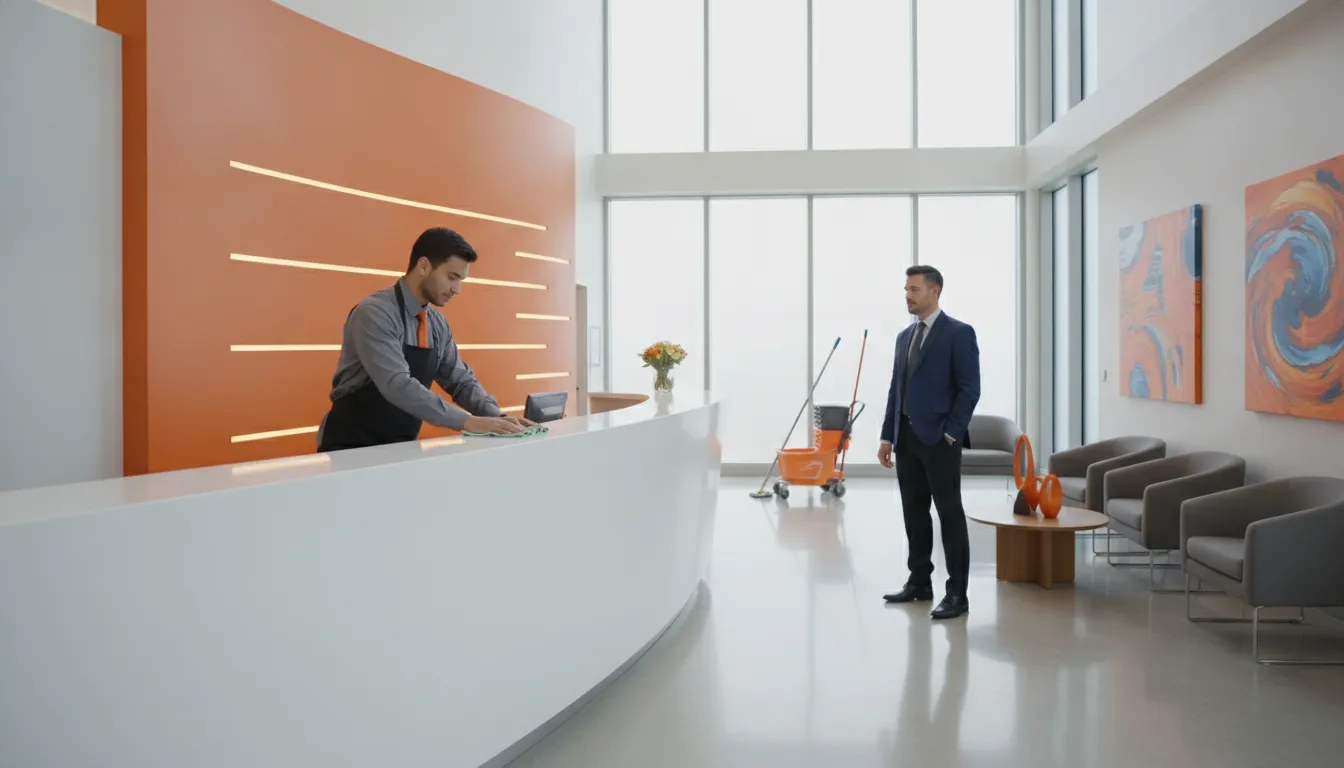
Corporate offices change throughout the workday. Employees arrive, visitors move through reception, meetings fill conference rooms, and shared amenities see repeated use. If you need to hire day porter for corporate office operations, begin with the daytime outcomes your facility must maintain. Then choose a provider that can document how those outcomes will be delivered.
Request a customized day porter plan for your corporate office.
What Does a Day Porter Add to a Corporate Office?
A day porter provides scheduled, business-hours support for an occupied facility. Foreman Pro Cleaning programs may include restroom replenishment, break-room service, entry presentation, waste monitoring, touchpoint attention, and issue reporting. The right plan connects each duty to traffic patterns, access rules, service standards, and a clear escalation process.
A day porter is an on-site professional who follows a defined route while the building is active. That presence helps a facility respond to conditions that develop between after-hours visits. A lobby may need attention after a busy arrival period. A restroom may require service before an important meeting. A break room may need a planned check after a shared meal period.
The role should not be an undefined promise to handle every request. A strong program identifies the areas to check, the cadence for recurring work, the expected condition after service, and the situations that require a supervisor or facilities contact. The manager can then review performance against observable standards instead of relying only on informal complaints.
Which operational problems can daytime support solve?
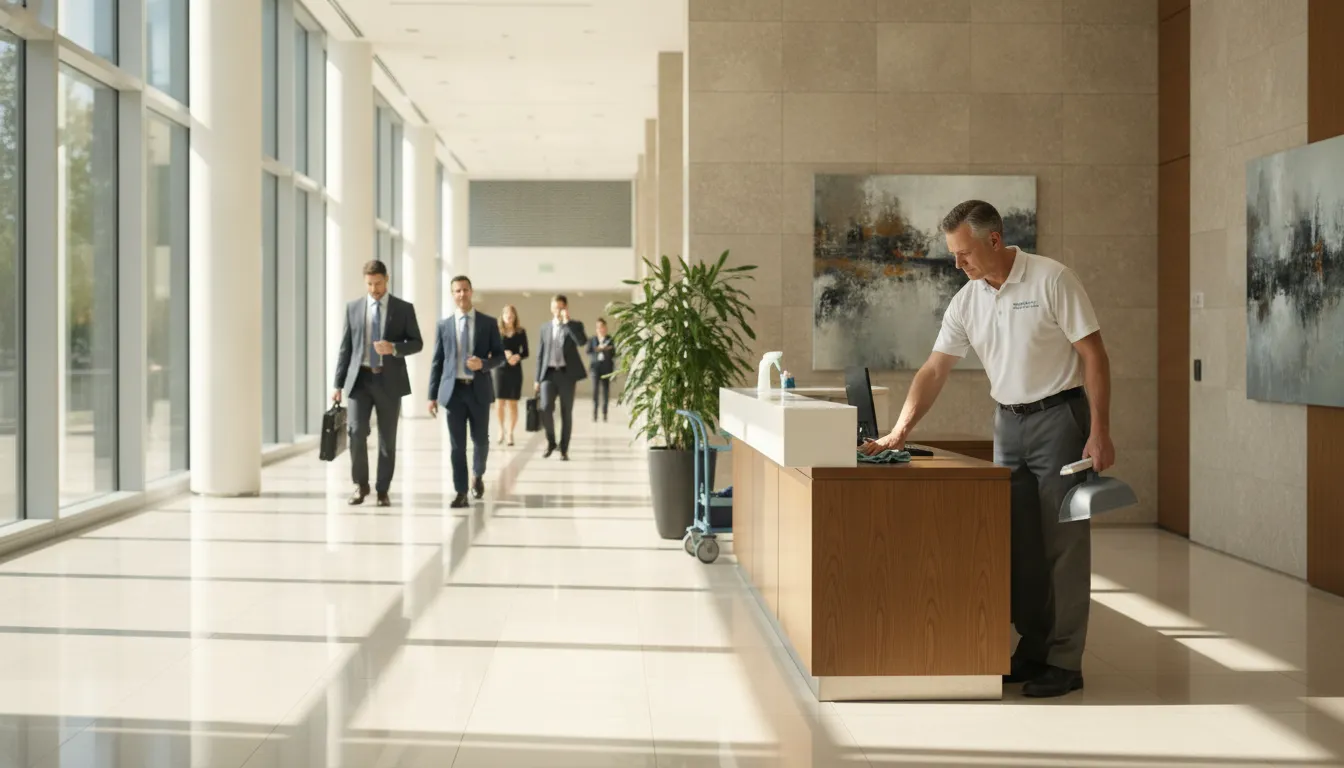
Daytime support is useful when visible, recurring needs cannot wait for the next scheduled visit. A porter can monitor restrooms, maintain shared amenities, respond to spills through approved procedures, keep waste collection points orderly, and report conditions outside the assigned scope. This creates a planned response that protects presentation and usability during occupied hours.
When is a day porter a good fit?
Consider the service when an office has sustained visitor traffic, several shared amenities. Frequent meetings, a multi-tenant layout, or a presentation standard that must remain consistent throughout the day. A day porter can complement after-hours janitorial service rather than replace it. Review what a day porter does before deciding which outcomes matter most at your site.
How Should You Define the Day Porter Scope of Work?
Define the scope by area, task, frequency, service standard, documentation method, and escalation path. Foreman Pro Cleaning uses the operating conditions identified during a walkthrough to shape a practical plan. A written scope helps the provider staff appropriately and gives the facility manager a fair basis for inspections and approved revisions.
Start with a walkthrough during the busiest parts of the day. Observe entrances, reception, restrooms, break rooms, elevators, conference rooms, waste stations, and shared corridors. Note where traffic concentrates, when meetings create surges, which amenities need replenishment, and which areas have restricted access.
Describe the expected condition, not only the activity. “Check the restroom” is incomplete. A usable standard can identify fixture service, supply replenishment, touchpoint attention, floor condition, odor reporting, and the process for leaks or plumbing problems. The scope should also identify who supplies consumables, where approved products are stored, and how completed work is documented.
| Area | Cadence | Expected condition | Escalation |
|---|---|---|---|
| Lobby and reception | Opening check and periodic rounds | Entry surfaces, visible floors, and reception surroundings remain orderly and presentable. | Report damaged flooring, furniture, doors, or visitor-facing conditions requiring facilities support. |
| Restrooms | Checks based on occupancy | Fixtures and touchpoints receive the specified service, supplies are replenished, and floors remain usable. | Notify the designated contact about leaks, plumbing issues, persistent odors, or shortages. |
| Break rooms | After peak use and as needed | Tables, counters, sinks, and approved touchpoints remain ready for use. | Escalate blocked drains, appliance leaks, damaged equipment, or repeated misuse patterns. |
| Waste stations | Monitor throughout the shift | Containers do not overflow, liners are replaced correctly, and collection points remain orderly. | Flag unusual volume, leaks, prohibited materials, or recurring collection constraints. |
| Spills and entryways | Respond when observed | The area is secured, addressed with the approved procedure, and returned to a safe condition. | Immediately notify the contact for hazards, bodily-fluid incidents, significant leaks, or work outside routine service. |
For additional planning context, review day porter services for office buildings. A precise scope also makes it easier to adjust service when occupancy, events, tenant use, or operating hours change.
How Can You Hire Day Porter for Corporate Office Support?
To hire day porter for corporate office support, compare providers on relevant commercial experience, staff screening, training, insurance, supervision, coverage, communication, and inspection practices. Foreman Pro Cleaning recommends a facility walkthrough before proposal review. The strongest proposal explains how accountability will continue after onboarding.
Vetting should test whether a provider can work reliably inside an active corporate office. Ask about facilities with similar occupancy, access controls, floor surfaces, visitor volume, and operating hours. The provider should explain how the route and priorities change when traffic or business activity changes.
What qualifications and safeguards should you verify?
Ask for information about staff screening, employment eligibility procedures, role-specific training, references, and supervision. Confirm how assigned personnel are prepared to work around confidential areas, occupied offices, visitors, and building security requirements. The provider should explain safe product handling, storage, ventilation, protective equipment, and occupational exposure prevention. The Harvard occupational exposure research supports treating product safety as a formal responsibility.
How should safety, quality, and communication be evaluated?
Request written procedures for restroom sanitation, touchpoint service, waste handling, spill response, storage, and reporting. Ask how the provider follows building rules and selects products appropriate for each surface. The CDC environmental cleaning evaluation guidance illustrates why defined methods and consistent quality checks matter, while a corporate office should apply the principle proportionately to its own risks.
Request current certificates for commercial general liability and workers’ compensation insurance before service begins. Confirm who supervises the assigned team, who covers an absence, how inspections are recorded, and how missed work is corrected. A credible answer includes a named account contact and a backup process, not only a promise that someone will respond.
Schedule a walkthrough with the operations lead who will manage the account. Walk actual routes, review storage constraints, identify sensitive spaces, and discuss peak traffic. Pricing should follow the documented scope, task frequency, staffing coverage, and facility requirements. Foreman Pro Cleaning can develop a commercial cleaning plan for offices in Maryland, Washington, D.C., and Virginia around those operating realities.
Talk with Foreman Pro Cleaning about your corporate office requirements.
Which Onboarding Details Protect Daily Operations?
Effective onboarding gives the day porter a site-specific route, access boundaries, priority list, approved products, communication contacts, shift expectations, and escalation rules. Foreman Pro Cleaning recommends reviewing the plan during the first week, comparing it with actual building use, and documenting every approved adjustment.
A day porter program should start with an operating plan, not a generic checklist. Use this sequence to make the first shift practical and reduce avoidable disruption.

- Complete a site walkthrough. Cover entrances, reception, restrooms, break rooms, conference areas, elevators, loading points, supply storage, and waste collection locations. Identify floor types, high-traffic routes, restricted areas, and periods when service can occur with minimal interruption.
- Define access and security controls. Establish which doors, floors, closets, and service corridors the porter may enter. Explain badge use, key control, visitor procedures, escort requirements, alarm protocols, and rules for items left in workspaces. Sensitive environments require tailored protocols and explicit facility approval.
- Set priority zones and response standards. Put recurring duties in writing, including restroom replenishment, break-room service, entry presentation, waste monitoring, and spill response. Distinguish immediate conditions from work that can wait for the next planned round.
- Confirm supplies and safe-use procedures. List approved products, dilution requirements, protective equipment, tools, storage locations, and replenishment responsibilities. Never substitute an unapproved product because a supply is temporarily unavailable.
- Publish escalation contacts. Name the facility manager, security contact, building engineer, and cleaning supervisor. Define who receives reports about leaks, damage, bodily-fluid incidents, access problems, shortages, and conditions outside the porter’s scope.
- Document shift expectations. Record start and end times, identification requirements, check-in procedures, communication channels, inspection points, breaks, and end-of-shift handoff expectations.
- Hold a first-week review. Compare completed tasks, occupant feedback, response issues, supply usage, and access questions against the agreed scope. Adjust routing or cadence only after the facility manager and provider approve the change.
Keep the current scope accessible to the porter, supervisor, and facility manager. When a new event, tenant, or occupancy pattern changes the workday, update the route and inspection criteria together. That keeps the program consistent without turning every informal request into an unapproved expansion.
How Will You Measure Day Porter Quality?
Measure day porter quality with a scorecard tied to the approved scope. Track completed duties, exceptions, inspection findings, issue reports, response status, and recurring patterns. Foreman Pro Cleaning combines supervisor checks with facility-manager reviews and occupant feedback. The goal is evidence of service consistency, not a checklist that ignores building conditions.
Begin with a task-based scorecard. Record scheduled duties, completed duties, exceptions, locations, priorities, responses, resolution status, and follow-up owners. This creates accountability while preserving professional judgment in an occupied building.
Which inspection routines provide useful evidence?
Use the same observable criteria across entrances, lobbies, restrooms, break rooms, conference areas, and high-traffic corridors. Review supply readiness, surface condition, floor presentation, waste removal, and occupant access. Combine routine supervisor inspections with periodic facility-manager reviews. The CDC evaluation guidance provides a general rationale for defined evaluation, while the office’s inspection should reflect its actual risks and scope.
How Should Issues and Response Expectations Be Documented?
Define the difference between an urgent condition and a routine deficiency before launch. A spill at an entrance, an overflowing restroom, or a blocked access route may need immediate attention. A cosmetic issue may be recorded for the next planned rotation. Agree on the priority, contact, expected action, and closure method for each class of issue.
The supervisor should confirm closure rather than only marking an item assigned. Repeated issues in one location may indicate a schedule, staffing, product, building-use, or maintenance problem. That pattern deserves a management decision and may require a scope review.
How Can Communication and Occupant Feedback Improve the Program?
Set a communication cadence that fits the facility. Daily shift notes can cover completed work and unresolved conditions. A weekly review can identify recurring issues, missed priorities, and upcoming occupancy changes. A monthly or quarterly business review can examine inspection results, response performance, trends, and alignment with the facility manager’s requirements.
Collect occupant feedback through a defined channel instead of relying only on informal comments. Look for patterns by location and time of day, then compare them with inspection records. Feedback should inform decisions, but it should not automatically add work without approval. Foreman Pro Cleaning can use this documented feedback loop to keep a customized plan aligned as the office evolves.
When Is a Day Porter the Right Choice for a Corporate Facility?
A day porter is a strong fit when a corporate facility must remain orderly, sanitary, and presentation-ready while people are actively using it. High daytime traffic, shared amenities, visitor-facing areas, and frequent refresh needs support the case. Foreman Pro Cleaning designs daytime coverage to complement broader janitorial work and reflect the facility’s actual operating pattern.
Look for a daytime program when common spaces decline between scheduled visits or when the facility manager is repeatedly pulled into routine service coordination. A dedicated presence can address business-hours needs before they become occupant complaints or visitor-facing disruptions.
- Heavy daytime traffic: Employees, visitors, deliveries, and meetings create recurring needs that cannot wait until evening.
- Shared or multi-tenant spaces: Common areas serve multiple groups and need one consistent operating standard.
- Visitor-facing operations: Reception areas, entrances, restrooms, and conference spaces must remain ready for clients, tours, and leadership meetings.
- Frequent refresh requirements: Break rooms, touchpoints, and high-use areas need scheduled checks as conditions change.
A day porter should complement, not automatically replace, after-hours janitorial service. The daytime role provides visibility and response while the building is occupied. The evening team can complete broader scheduled routines when employees and visitors are no longer present. The right balance depends on traffic, floor plan, operating hours, tenant expectations, and the written scope.
Presentation-sensitive offices may benefit from consistent front-of-house routines. Review Class A corporate facility cleaning for additional context, then use a site assessment to decide whether daytime coverage solves a demonstrated operational need.
What Should Facility Managers Ask Before They Hire Day Porter for Corporate Office Needs?
Before you hire day porter for corporate office needs, ask the provider to explain staffing coverage. Supervision, access controls, safety procedures, inspection methods, issue escalation, absence coverage, and first-week review. Foreman Pro Cleaning connects those answers to the building’s layout, traffic, occupants, and operating requirements.
Use these questions during the final comparison:
- Which corporate or commercial facilities have similar traffic, access, and operating conditions?
- Who supervises the assigned porter, and who covers an absence?
- Which duties are recurring, which are on-demand, and which require separate approval?
- How are products, supplies, storage, and protective equipment managed?
- How will the team document completed work and unresolved conditions?
- What is the escalation process for spills, leaks, access problems, security concerns, and bodily-fluid incidents?
- How will the first-week review identify changes to the route or cadence?
- Which inspection records and communication reports will the facility manager receive?
Compare answers against the written scope, not only the initial price. Specific coverage, accountability, and boundaries make a program easier to manage. Foreman Pro Cleaning’s commercial cleaning team can help organizations in Maryland, Washington, D.C., and Virginia build daytime coverage around facility requirements.
For related planning, facility managers can also review commercial carpet care and hard floor service when the day porter scope needs to coordinate with periodic floor maintenance.
Request a facility assessment before you select a day porter provider.
Frequently Asked Questions?
What should a day porter handle in a corporate office?
A day porter typically handles defined business-hours duties such as restroom checks, supply replenishment, break-room service, entry presentation, waste monitoring, touchpoint attention, and issue reporting. The exact scope should be written for the building’s traffic, layout, access rules, and operating standards.
Is a day porter a replacement for after-hours janitorial service?
Usually, no. Daytime coverage and after-hours janitorial work serve different purposes. The day porter responds while employees and visitors are present. The evening team can complete broader scheduled routines with fewer interruptions. The facility manager should decide the balance after reviewing traffic, frequency, floor plan, and scope.
How do I hire a day porter for corporate office operations?
Begin with an operating-hours walkthrough, document the scope, and compare providers on commercial experience, screening, training, supervision, insurance, communication, and quality control. Ask for a proposal tied to your actual facility conditions rather than a generic list of duties or an unexplained rate.
How should day porter quality be measured after launch?
Use a scorecard that records completed duties, exceptions, inspection findings, issue response, closure status, and recurring patterns. Review the data with the provider during the first week and at an agreed recurring cadence. Adjust the route or scope only after the facility manager approves the change.
Talk with Foreman Pro Cleaning about a customized corporate office day porter program.
