
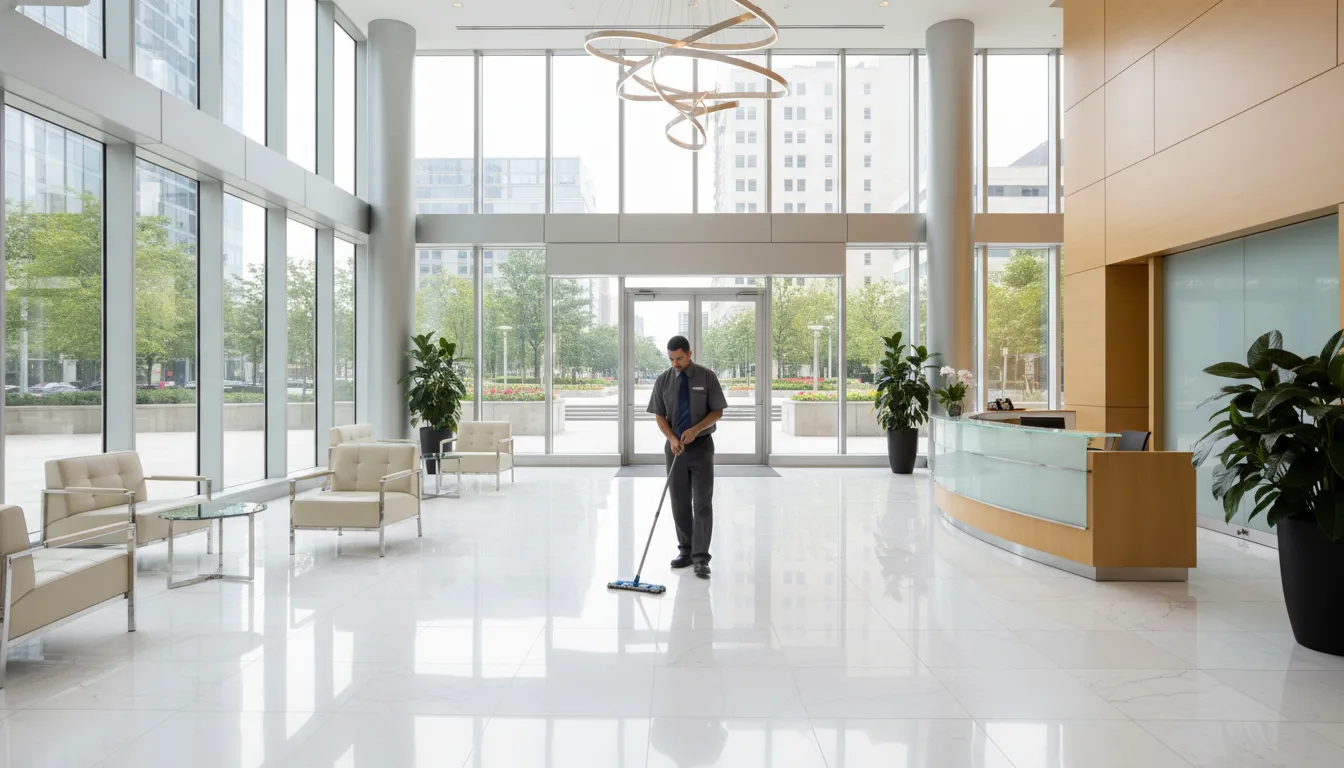
Property managers know that a single neglected lobby, restroom, or shared space can undermine a premium tenant experience. Commercial cleaning for Class A office buildings requires a detailed plan for high-traffic areas, premium finishes, tenant spaces, and specialized rooms.
Request a customized Class A office cleaning plan.
Commercial cleaning for Class A office buildings is an expert service that focuses on keeping the high visual and clean standards that business tenants expect. These services go beyond basic work to include careful floor care, frequent cleaning of common areas, and close attention to building parts like marble or glass. Property managers should expect a partner that uses trained staff and safe products while following formal checks and clear steps to guarantee steady results every day. This level of care helps with tenant stay by creating a healthy and expert workspace that reflects the high look linked with Class A real estate. Foreman Pro Cleaning rules state that high-end buildings need health-focused steps to prevent germs and protect the health of everyone who enters the business property.
Keeping these high standards requires a deep look at the specific needs of premium properties. To check your current service, we have listed exactly What commercial cleaning for Class A office buildings should deliver to keep your building in top shape. The path toward a clean facility begins with.
What commercial cleaning for Class A office buildings should deliver
Property managers of elite assets know that first looks matter. In a Class A space, the goal is not just to remove trash but to keep the prestige of the building. High-end tenants pay more for these spaces and expect a level of care that goes far beyond a basic mop and bucket. When you hire commercial cleaning for Class A office buildings, the focus shifts to small details that keep the building in top shape and help with tenant retention.
The standard of care for elite spaces
Elite buildings need a team that knows the worth of the materials they clean. From marble floors to glass walls, every surface needs a specific plan. This means using the right tools and products that clean well without causing damage over time. The Environmental Protection Agency (EPA) suggests using green products to keep indoor air clean. A trained cleaning crew follows these guidelines to protect building surfaces and occupants.
Being open about results is also a big part of the job. You should expect a clear plan that shows what was cleaned and when. This is done through formal checks and standard steps. These steps make sure that every part of the office stays up to the high mark set by the property owners. It turns cleaning from a task into a key part of the facility plan.
Focus on the tenant experience
For tenants in a Class A building, the cleaning crew is part of their daily life. This is why day porters are so helpful. These pros work during the day to keep high-traffic areas like lobbies and bathrooms clean. They act fast if there is a spill and make sure the space looks great all day long. This quick help keeps tenants happy and helps the building run well.
The crew must also be trained to work around people. They should be quiet and not get in the way of the work being done in the office. This is very important in legal or financial hubs where focus is key. Training in safety and health protocols, such as those from the Occupational Safety and Health Administration (OSHA), ensures the crew works safely in these busy spaces.
Customized scope and speed
No two buildings are the same, so the cleaning plan should not be either. A top firm will walk through the space with you to find out what it needs. They may find that the server rooms need extra care or that the gym area needs daily deep cleaning. This custom path ensures you only pay for what you need while keeping the building in great shape. It also allows for changes if the building needs to host a big event or deal with a sudden issue.
A proactive cleaning partner identifies maintenance concerns before they become larger problems. They might spot a floor that needs new wax or a rug that needs deep cleaning. By being pro-active, they save you money in the long run. This type of help makes the cleaning team a vital part of your management success. They do more than clean; they help keep the value of your Class A asset high for years to come.
How cleaning quality supports tenant retention
High cleaning work is a main way to keep tenants in Class A office buildings. When people enter a building, they see the floors, the glass, and the air. A clean space shows that the owners care about the site and the people. This builds trust and makes tenants want to stay for years. Steady commercial cleaning for Class A office buildings helps make an expert space where firms can grow. It turns a simple office into a place where people feel safe and proud to work.
Tenants look at the small parts of a building before they sign a lease. If the lobby is dusty or the glass has marks, it hurts the building’s name. A well-kept site tells all people that the building is top-tier. Shiny floors and fresh air are not just for looks. They show that the team values the tenant visit. This high level of care helps keep lease rates high over time. Owners can use a clean site as a strong point when they talk to new leads.
First looks in lobbies and front doors
The lobby and front door are the first things a guest sees. Clean glass doors and bright floors set the mood for the whole visit. If these spots are dirty, it sends a bad sign to firms. Tenants want their guests to be happy when they walk in. Keeping lifts and halls clean is just as key. These shared spots see many people each day. These shared areas require frequent attention to stay clean and presentable.
Using a day porter service can help keep these spots clean during the day. This team responds to spills and trash right away. They make sure the front doors stay neat from morning to night. This steady care gives tenants peace of mind. They know their building will always look its best for their own clients. A clean lobby is a main tool for making a good first look.
Clean restrooms and high-touch spots
Restrooms are often the most watched spots in any office. A restroom that is not clean can lead to many complaints. High-quality work goes past just taking out the trash. It means deep cleaning sinks, toilets, and floors to kill germs and smells. Using CDC health standards helps keep the office safe for all. This care stops the spread of germs and keeps the team healthy. A fresh restroom makes the whole day better for all people in the building.
High-touch spots like door knobs and lift buttons also need focus. These spots can hold many germs if the team skips them. Using the best tools, like HEPA-filter vacuums, helps clear dust and germs. This deep clean gives tenants trust in their workspace. They know their health is a top goal. People feel better when they know their office is truly clean and safe from top to bottom.
Building tenant trust and loyalty
Steady cleaning work leads to long-term trust with firms. Tenants are more likely to sign new leases when they like the building’s state. At Foreman Pro Cleaning, we keep a 98% yearly client rate because we focus on the small parts. We use special training to make sure our team knows how to clean big office sites. This skill helps us give the same high results every day. We know that every floor and every desk matters to the people who work there.
When a cleaning team is trusty, owners have less to worry about. They can focus on other parts of the building while the cleaning is done right. This team-up keeps buildings full and tenants loyal for a long time. A clean office is not just about looks. It is about the value it adds to the whole group. When firms feel happy in their space, they stay for years. Good cleaning is a wise move for the building’s future.
- Clean lobbies and front doors make a great first look for guests.
- Deep restroom care stops complaints and keeps people healthy.
- Spotless shared spots build trust for both current and new firms.
- Trusty cleaning helps keep lease rates high and tenants happy.
When does a Class A property need day porter support?
Class A office buildings set a high bar for style and care. These spaces often have high-end finishes, busy lobbies, and large teams. While evening crews do the deep work, they cannot keep up with the day’s mess. This is where day porter support becomes a vital part of commercial cleaning for Class A office buildings. A porter stays on-site to fix small issues before they become big problems. They act as a visible sign that the building team cares about quality.
Care for common areas
The lobby is the first thing people see when they walk in. In a Class A building, this space must stay spotless. Foot traffic brings in dirt and debris all day long. A day porter handles quick touchups to keep the floors and glass clean. They also check elevators and entrance doors for smudges. These tasks protect expensive finishes like marble and chrome. By keeping these areas bright and tidy, the building shows its true value to every guest. This work helps maintain the high standards that tenants expect from a top-tier space.
High-traffic zones like elevator banks and main hallways need constant watch. A porter can wipe down touch points often to stop the spread of germs. They make sure that floor mats are straight and that trash cans are not over-full. These small tasks add up to a clean and inviting area. When the lobby looks good, it sets the tone for the whole work day. Guests feel welcome and tenants feel proud of their office home.
Restroom care and supplies
Restrooms in busy offices experience sustained traffic throughout the workday. If a soap dispenser is empty or a floor is wet, it reflects poorly on the property. Porters monitor these spaces on a schedule. They restock paper towels, toilet tissue, and soap as needed. They also clean up water around sinks to prevent slips. This constant care helps buildings follow health guidelines from groups like the Centers for Disease Control and Prevention (CDC). Tenants feel better knowing their space is safe and clean.
A day porter does more than just fill soap. They check for leaks and clogged toilets. They also wipe down counters and mirrors to keep them shining. This active care stops small leaks from causing floor damage. It also ensures that the restroom is always ready for the next user. In a Class A building, “good enough” is not the goal. The goal is to keep things perfect at all times. Porter support makes this goal possible even during the busiest hours of the day.
Handling spills and safety risks
Accidents happen in every office. A coffee spill in a hallway or a broken glass in a break room needs fast action. Evening crews are hours away, but a day porter can respond in minutes. They have the training to handle debris and safety hazards quickly. This fast response protects the building’s carpets and keeps people safe. It also shows tenants that the building team cares about their daily needs. Being there to help makes a big difference in how tenants view their building.
Safety is a key part of the porter’s job. Wet floors from rain or snow can be a major risk. A porter can place “wet floor” signs and mop up water right away. They also watch for items left in walkways that might cause a trip. This work helps the building stay in line with safety rules from OSHA. By spotting risks early, porters help avoid costly accidents. This keeps both the people and the property safe from harm.
Working with evening crews
A day porter is not a replacement for a night crew. Instead, they work together to provide full care. The porter can leave notes for the evening team about specific issues. For example, they might flag a stubborn carpet stain or a light that is out. This hand-off ensures that nothing gets missed. It also helps the night crew focus on deep cleaning tasks. This team effort leads to a better result for the building owner.
The porter also handles tasks that are hard to do at night. This includes cleaning glass that needs natural light to see streaks. They can also tidy up meeting rooms between sessions. This keeps the building looking its best through every shift. The bond between day and night crews is the secret to a great cleaning program. It ensures that the Class A standard is met every hour of every day.
| Service Feature | Evening Janitorial Crew | Day Porter Support |
|---|---|---|
| Main Focus | Deep cleaning and floor care | Visible upkeep and response |
| Visibility | Works after business hours | Works during business hours |
| Restroom Care | Full nightly deep clean | Hourly checks and restocking |
| Spill Response | Not there during the day | Fast on-site response |
| Supply Checks | Set up for the next day | Checked during the shift |
| Meeting Rooms | Cleared for the morning | Tidied between meetings |
Floor care should protect the property, not just improve appearance
Commercial cleaning for Class A office buildings must do more than just make floors look good. A top-tier plan treats the floor as a major asset that needs long-term care. High-end office spaces often use costly stone, tile, or thick carpet. These flooring systems can require a substantial investment to purchase and install.
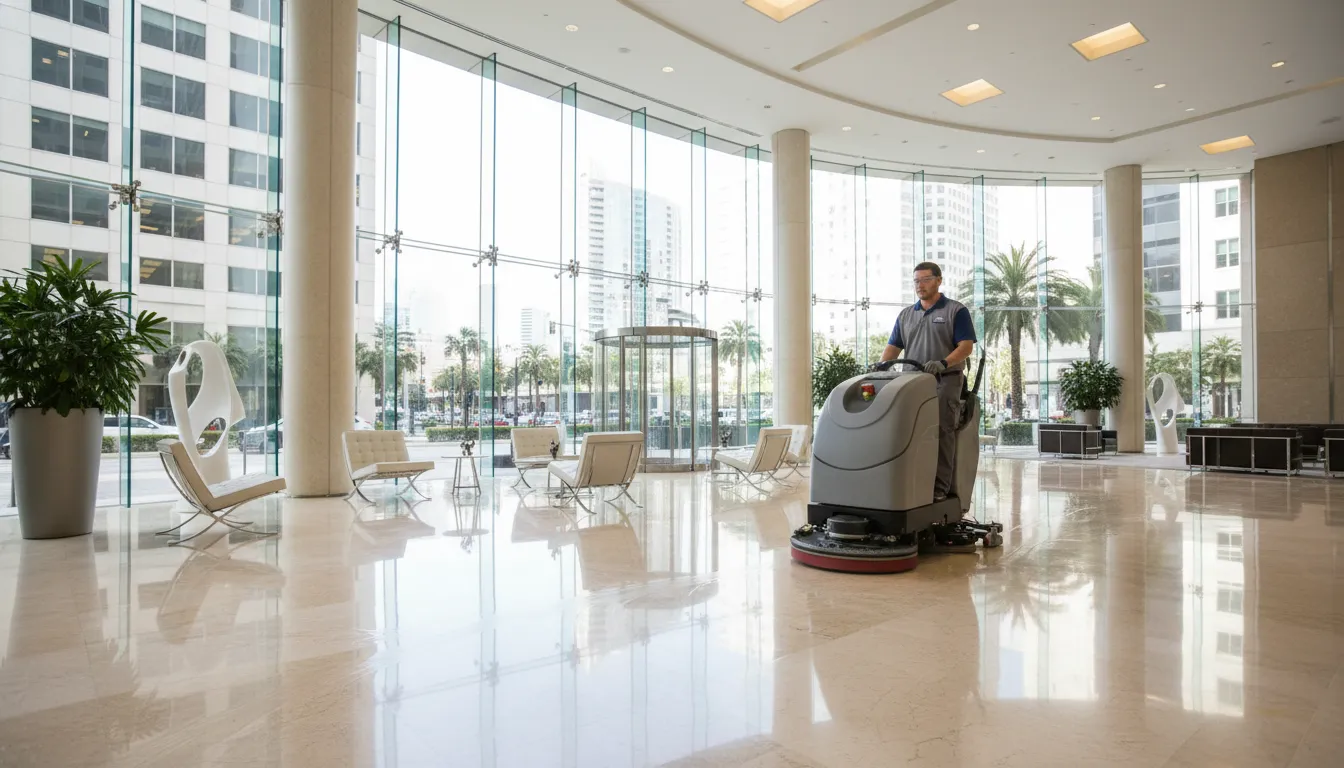
If they are not cared for well, they will wear out fast. A smart plan looks at the unique needs of every floor type. For instance, stone floors need mild cleaners to stay shiny. Sturdy floors like vinyl tile need a strip and wax service sometimes.
This keeps them safe from deep marks and scuffs. When you focus on protecting the floor, you save money on new floors over time. This path keeps the property value high and ensures the office always looks its best for guests and staff.
Saving the floor as an asset
The first step in a good program is to see the floor as an investment. In a Class A building, the lobby is the face of the firm. But below the surface, the floor is a part of the building that can lose value if missed.
A full plan covers all areas, from the main lobby to the back halls. It should include daily cleaning and deeper work that happens on a set schedule. By using the right tools and steps, you can double the life of your carpet or hard floors.
This saves the owner from the high cost of a full floor replacement every few years. It also makes the space safer for workers by removing spills and trash that could cause a fall.
Daily steps and routine care
The best way to save your floors is to stop damage before it starts. Dirt and grit act like small pieces of glass under the shoes of people in the building. Over time, this grit eats away at the finish of the floor.
This is why daily work is so vital for the office. High-traffic spots like lobby doors need large mats to catch dirt and mud as people walk in. Teams should use dust mops and auto-scrubbers every day to keep surfaces clean.
It is also a good idea to use vacuums with HEPA filters on all carpeted spots. The EPA explains that indoor air quality can be changed by the dust and dirt that builds up in a building. Regular floor care helps to keep the air clean and the floors safe for everyone.
Deep cleaning and seasonal work
Even with daily care, floors need deep cleaning to stay in peak shape. For carpets, a seven-step carpet cleaning process is the best path. This method uses hot water and pro tools to pull dirt out from deep in the fibers.
It does more than just remove stains; it makes the carpet last much longer and stay fresh. Hard floors also need extra care based on the time of year. For example, winter salt can be very hard on a floor finish.
It can leave white marks and eat into the wax layer. Setting a plan for a deep scrub or a new coat of finish after the winter helps to fix this damage.
A good plan covers every part of the building, from the main halls to the server rooms. This ensures that every floor stays strong and looks great for years to come.
What should a cleaning inspection program include?
A good check-up plan keeps your building in top shape. For commercial cleaning for Class A office buildings, you must have a clear path to follow. High-end office spaces need a level of care that goes beyond a quick sweep. A formal plan makes sure every task is done right and on time. It helps build trust with the people who work in and visit your site. When you have a set plan, you can catch small misses before they turn into big complaints.
Map out your zones and tasks
Start by splitting your building into clear zones. Not all spots in an office need the same level of care. A main lobby sees hundreds of feet each day. But a back closet might only see a few. You should list every area and what needs to be done there. This includes floors, glass, desks, and restrooms. A clear map helps the cleaning team stay on track. It also makes it easier for a person to know what to look for in each room.
Use clear and simple rules
You must set hard rules for what “clean” means. If the rules are not clear, you will get poor results. Use a list of items that can be checked as pass or fail. For instance, you can check that there is no dust on high shelves or spots on the carpet. Using OSHA safety standards ensures that the cleaning is safe for all. These standards give your team a goal to reach. They also give you a way to show that you keep your word.
Fix issues and track results
When a check finds a problem, you must act fast. A good plan has a clear way to report and fix misses. You should write down what was found and who needs to fix it. Once the work is done, someone should check it again. This makes sure that the issue is truly gone. A day porter service can help keep high-traffic areas clean between these checks. Tracking your results over time helps you see trends. If the same spot is missed often, it might mean you need to change how the team works.
- List every room and zone that needs to be cleaned and checked.
- Set clear pass or fail rules for every task in those zones.
- Walk through the space and mark any spots that do not meet the rules.
- Report all misses to the cleaning team with clear notes on how to fix them.
- Check the work again after the team has made the needed fixes.
- Log all results to see how the cleaning grade changes over time.
- Meet with the team each month to talk about the results and goals.
How should property managers evaluate a cleaning proposal?
Choosing a commercial cleaning partner for Class A office buildings requires more than just looking at the final price. Property managers must verify that the scope of work matches the high standards of their facility. A clear proposal should detail every task, from the daily care of common areas to the deep cleaning of sensitive zones. You can find more about our office cleaning services to see how we structure our professional programs.
Review the cleaning frequency
The first item on your checklist should be the schedule. High-traffic areas like lobbies and elevators need daily attention to maintain a professional look. For Class A spaces, a 5x weekly schedule is often the standard to ensure consistent quality. The proposal should list how often specific tasks happen, such as trash removal, floor care, and restroom sanitation. This level of detail helps you avoid hidden gaps in service that could lead to tenant complaints.
Check staffing and security protocols
You need to know who is entering your building after hours. A strong proposal will outline the company’s hiring and security standards. Look for firms that perform background checks, drug testing, and identity verification on all staff members. Since Class A buildings often house sensitive data, it is also wise to ask about specialized training. For example, our team follows data center cleaning protocols to handle mission-critical IT spaces safely.
Evaluate equipment and supplies
The tools a cleaning company uses can impact the air quality and lifespan of your building’s assets. A professional proposal should mention the use of HEPA-filter vacuums, which catch small particles rather than blowing them back into the air. This is a key part of maintaining a healthy environment for office tenants. Also, verify that the team uses EPA-approved cleaning products. For medical suites within an office complex, ensure they follow CDC-aligned disinfection protocols to meet health standards.
Look for quality assurance systems
A “set it and forget it” approach rarely works in commercial cleaning. Your potential partner should have a formal system for inspections and feedback. Ask if they use digital service logs to track when tasks are done. A good proposal will also include a commitment to resolve issues within 24 hours. Regular supervisor walkthroughs and monthly performance reports help ensure the team stays on track. This transparency is vital for property managers who need to report on building operations.
Confirm insurance and compliance
Before signing any contract, verify that the cleaning company is fully insured and follows all safety rules. This protects your property and reduces risk. The staff should be trained on OSHA safety standards to handle equipment and chemicals properly. In specialized areas like labs or server rooms, technicians must have the right certifications. This focus on safety ensures that the cleaning process does not disrupt the building’s infrastructure or the work of your tenants.
Frequently Asked Questions
How do background checks and training ensure security in professional offices?
Hiring trusted staff is vital for safe office cleaning. Leading firms perform full checks to see the past of every worker. This step protects your site and gives peace of mind to tenants. As noted by Foreman Pro Cleaning, crews also undergo OSHA training. This ensures they follow safe work steps while moving through secure halls. Proper training helps staff spot risks and keep the high level of trust that elite buildings need.
Why is full insurance and bonding important for a commercial cleaning partner?
An expert cleaning team must have full insurance to protect your building from loss or harm. This cover includes total risk and bonding to cover any mishaps that may occur on site. Working with a licensed and bonded firm lowers the risk for those who run the building. It ensures that any damage to high-end floors or gear is handled well. This layer of safety is a key part of an elite service plan.
Can cleaning services be customized to meet the needs of specific office tenants?
Yes, expert cleaning plans should adapt to the unique layout and use of your building. Every office has varied needs, from high-traffic lobbies to quiet work zones. A qualified provider will walk through the property to define appropriate tasks and frequencies for each area. Office cleaning experts can adjust the scope to focus on what matters most to your tenants. This custom path ensures you get the best value while keeping the building in top shape for every business.
How do professional cleaners protect sensitive equipment in office server rooms?
Cleaning server rooms needs a set of skills to avoid dust and static build-up. Expert teams use HEPA-filter vacuums and static-safe tools to protect your IT assets. These critical spaces need care that goes far beyond standard office tasks. As noted by Foreman Pro Cleaning, crews are trained to move around live systems without causing a break in service. This careful work protects the core of your building’s tech and ensures that high-value gear stays clean and safe.
Ready to set up a plan for your Class A office?
Keeping a Class A office building clean is hard work. When standards slip, tenants notice fast and may look for a new place to work. A dirty lobby or dusty halls can hurt your professional image and lead to high loss of tenants. You can avoid these risks by getting an expert team in place right now. Starting today means your building will stay in top shape and your tenants will stay happy. This peace of mind lets you focus on running your building instead of worrying about dust. A clean space also helps keep your staff healthy and lowers the chance of sick days. Do not wait for a tenant to complain before you make a change. You can get a clear plan that fits your needs and budget today.
Ready to request a customized commercial cleaning plan? Contact us today to request a customized commercial cleaning plan.
