
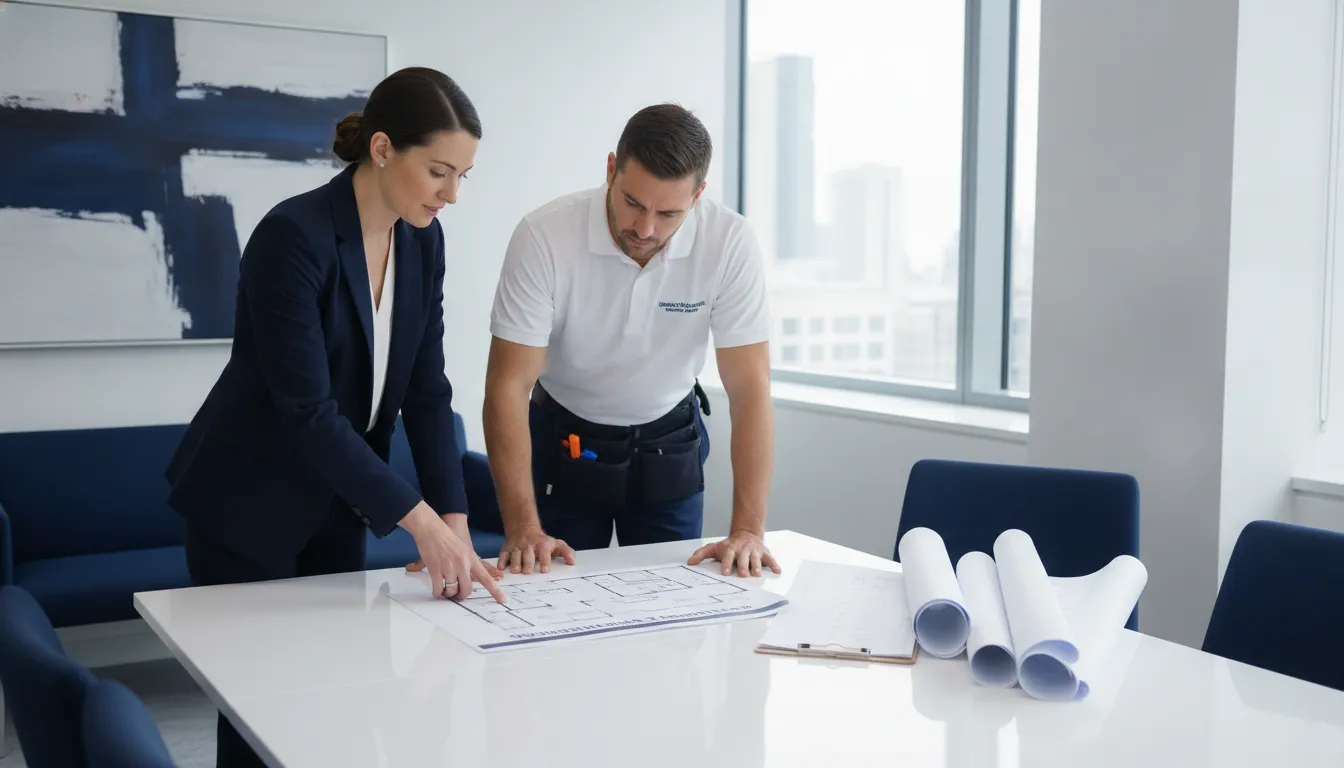
Standard cleaning bids can look identical until you ask specific questions that expose a lack of operational discipline. Vague answers often hide gaps in training, supervision, or quality control. You need a vendor who protects your building with a clear, site-specific work plan.
Commercial cleaning RFP questions should help you identify vendors that can manage teams, maintain safety, and deliver consistent results. Strong questions cover employee screening, training for specialized spaces, task verification, quality inspections, issue resolution, and backup staffing. For buildings with data rooms or other critical environments, ask about dust control, equipment selection, and site-specific protocols. Evaluating these details helps facility managers compare operational capability and risk controls, not just price.
Asking the right questions is the best way to find a vendor that understands your facility. The commercial cleaning RFP questions below reveal operational discipline and help you identify a partner you can trust.
The commercial cleaning RFP questions that reveal operational discipline
A good bid request does more than compare prices. It helps you find a partner that can manage your site. The right commercial cleaning RFP questions test how a vendor works, not just what they charge. Many people make the mistake of asking for a price based only on how often they clean. But a bid for five nights a week could mean a quick sweep or a full deep clean. You must ask for a clear scope so you can compare bids fairly.
Checking quality with clear steps
You need to know how a vendor keeps their promise. Ask about their work checks and how they track tasks. A strong bid should include proof of their work checks. Teams should show how they find and fix errors before you see them. This focus on proof is key in high-stakes areas. In fact, the CDC notes that rules for area control often come from set industry standards. This means your vendor must know how to follow strict rules to stay safe.
Your RFP should also ask about staff and training. Knowing how a team is picked and taught is vital for safety. You must know if they run background checks on every worker. This is even more important when procuring commercial cleaning services for government sites. A vendor with a solid training plan shows they value good work. This focus on rules helps prevent service drops after the first few months.
Testing skill for high-stakes sites
If your site has a data center or lab, basic cleaning is not enough. You must ask about their skill with high-stakes areas. Standard tools can often harm fragile parts. For example, some chemicals can cause static that ruins tech gear. Ask if they use their own standard steps for the job. A vendor that knows the risk of dust can help you avoid downtime. Their background in IT or site work often makes them a better fit than a standard firm.
Spotting red flags in low bids
Price is a factor, but a low bid is a big risk. Bids that are more than 30 percent below the market rate are a major red flag. This often means the vendor will cut staff soon after starting. They might also try to raise prices fast after the first year. You should ask commercial cleaning RFP questions that reveal if their price makes sense. A fair price ensures they can pay their staff and do the job right. Choosing the cheapest bid often leads to poor service and more work for you.
What should you ask about staffing and supervision?
Staffing and supervision are the core of any janitorial service. When you write your bid files, you must include specific commercial cleaning RFP questions about how the vendor manages people. Labor is often the largest part of the cost, so you need to know who is in your building and how they are led. Strong supervision keeps the work on track and holds the team to a high standard.
Screening and hiring practices
Your RFP should ask about the hiring process in detail. Does the vendor use background checks, drug tests, or E-Verify? Since cleaners often work after hours or in sensitive zones, you must be sure they are honest. Ask the vendor to describe their screening steps and how they check the ID of each worker. This protects your site and gives you peace of mind.
It is also wise to ask about employee turnover rates. High turnover can lead to poor quality and safety risks. A vendor with a stable team often provides better results and more steady care for your building. Ask what the company does to keep its best workers and reduce the need for new hires.
Training and site supervision
Ask for clear details on how staff are trained for your specific needs. For unique spaces like clinics or data centers, standard cleaning is not enough. The Centers for Disease Control and Prevention (CDC) says that cleaning methods should be based on a risk check for pathogens. Proper training on their own standard rules ensures that staff use the right tools and chemicals for the job.
You should also ask about the ratio of supervisors to cleaners. Who will check the work each night? How do they report issues to you? A good professional commercial cleaning services team will have a clear chain of command. They should use logs or apps to track work and show that they meet your scope of work.
Attendance and backup plans
What happens when a cleaner is sick or takes time off? Your RFP should ask for a clear backup plan. Some vendors submit low bids but then understaff the site when someone is out. In fact, bids that fall 30 percent below market often lead to poor service or understaffed shifts after the first month. Ask if they have a “bench” of trained staff ready to fill in at a moment’s notice.
Finally, ask about the plan for emergency calls or extra tasks. If a spill happens or you need a quick deep clean, how fast can they respond? Knowing the staffing plan for these “add-on” needs is just as key as the daily schedule. A vendor who can handle both shows they have the depth to support your site through any case.
How will the vendor define scope and measure quality?
A clear scope is the heart of a good bid. Many buyers make a common mistake when they write a bid. They ask how many nights a week the crew will come. But they do not list the actual tasks. This lack of detail leads to bids that are hard to compare. One vendor might plan to spend two hours on your site. Another might plan to spend six. To avoid this, your commercial cleaning RFP questions should focus on exact tasks. You want to know what they do, not just when they show up.
Setting a task-based scope
A strong vendor helps you set a scope based on your needs. This means listing what happens in all rooms. For instance, they might empty trash daily but buff floors once a month. For high-risk areas, the rules must be even tighter. The CDC says cleaning steps should come from a risk test. This test looks at how often a surface is touched. It also looks at who uses the space. A vendor should show how they choose their ways. They should use known rules to guide their work and keep your staff safe.
How to check and track quality
Once the work starts, you need a way to check it. You should ask vendors how they check their own success. Do they use a point system for their checks? Some vendors use apps to track tasks in real time. This lets you see when a job is done. You also need to know how they handle a failed check. A strong vendor will have a clear plan to fix errors fast. This keeps the service level high for a long time. It also keeps you from having to watch the crew yourself.
Handling changes and extra work
Your needs might change as your business grows. A good contract has a way to handle these shifts. You should ask how the vendor adds new tasks or areas. They should have a clear price list for one-time jobs. These might include deep rug cleaning or window washing. Having these prices upfront saves you from big shocks later. It also shows that the vendor has an expert process. Our professional commercial cleaning services adapt to your goals as you grow.
| Topic | Weak Answer | Strong Answer |
|---|---|---|
| Scope of Work | We clean your whole building five nights a week. | We give a task list for every room with set times for each. |
| Task Count | We do whatever is needed to keep the place clean. | We list daily, weekly, and monthly tasks for all areas. |
| Quality Checks | Our leads walk through the building sometimes. | We use tech tools to score work and share reports each month. |
| Fixing Errors | Tell us if we miss a spot and we will fix it next time. | We fix any reported issue within four hours of the call. |
| Extra Tasks | We can do extra work if you pay us more. | We provide a clear price sheet for all special project work. |
Which safety, compliance, and critical-environment questions matter?
Safety and compliance are the most vital parts of any commercial cleaning RFP questions list. A vendor must show they can protect your people and your assets. You should ask for proof of their safety programs and insurance levels. This helps you find a team that follows strict rules to lower risk. In high-stakes sites like labs or data centers, these questions ensure your mission-critical areas stay safe.
Safety and training standards
You need to know how a vendor trains their staff on safety. Ask about their training for chemical use and how they handle spills. It is also wise to ask how they conduct background checks on their employees. For medical sites, vendors should follow CDC risk assessment steps to stop the spread of germs. These checks help ensure that only trained people enter your building.
Critical environment protocols
Cleaning a server room is not the same as cleaning an office. You must ask if the vendor has a background in IT or facility management. Standard tools can hurt sensitive gear, so critical environment services need special steps. Ask if they use tools that are safe from static shock. Also, ask how they keep dust from getting into your servers. These steps prevent costly downtime and equipment failure.
Compliance and incident response
A good RFP asks how a vendor handles accidents. You should ask about their process for reporting and fixing issues on-site. It is helpful to know if they follow standards from groups like the American Institute of Architects (AIA) for healthcare design. This proves they know the rules for your specific field. Clear plans for emergency cleaning also show they can react fast when things go wrong.
How should facility managers evaluate vendor responses?
Picking a cleaning partner is a big task. It goes far beyond just looking at the price on the last page. A low price might feel like a win at first. But a bid that sits far below the market rate often means the team will cut staff later. This leads to missed spots and poor work in just a few months. You need a way to find the real value for your site.
The best way to judge is to look at the details. You want to see if the vendor knows the daily life of your building. This is very true for sites in Maryland and Virginia. These spots have high needs and busy schedules. Use a clear set of checks to find a partner who will keep your space clean and safe.
Using a fair way to rank bids
You must make sure every bid covers the same tasks. If one team skips a deep clean to save money, they are not giving you a full view. You should use your commercial cleaning RFP questions to get clear answers from each group. This helps you spot where a vendor might be cutting corners or missing a key need.
- Align the core costs. Check that each vendor bids on the same scope and set of hours. This ensures you can compare the plans side by side without any hidden fees.
- Score the plans with points. Use a simple set of rules to rank things like staff training and safety tools. This keeps your choice fair and based on real data.
- Go on a site walk. Walk through your building with the top teams. See if they find the same high-traffic spots and cleaning pain points that you deal with each day.
- Meet the person in charge. Talk to the leader who will run your account. You need to know that they can handle the daily needs of your building and your team.
- Call three past clients. Ask other leads about the vendor’s work and how fast they help. Make sure their past results match what you need for your own site.
- Check the 30 day start plan. A good team will show how they will move in and start the job. Look for a plan that covers training and site setup in the first month.
Protecting your most vital spaces
If you run a data center or a lab, you face more risk than a normal office. These high-stakes zones need more than just a basic sweep. The CDC notes that cleaning steps should be based on real risks to people and gear. You must check that each vendor knows how to use safe tools in these tough spots. A background in both tech and site work is a big plus here.
Dust and dirt can cause systems to fail. Standard soap or tools can harm high-tech gear with static or harsh fumes. You should ask for proof of work in sites that need a high level of care. A team that knows how to protect your uptime is worth the cost. This deep knowledge keeps your systems running and prevents data loss. It is the only way to keep a critical site safe and clean.
Using data to track success
A good vendor will have a clear way to check their own work. They should use logs to show when they finish each task. This gives you a clear view of the work done in your space. It also holds the team to a high standard each night. Look for these tools in every bid you get from a pro team.
What does a reliable transition and communication plan include?
A smooth start with a new cleaning vendor depends on a clear transition plan. When you ask commercial cleaning RFP questions about the startup phase, look for a clear path. This plan should cover how the team will learn your site’s needs and set up initial services. A strong vendor will show how they take over the account without breaking your daily routine.
Setting up the account and startup steps
The first few weeks are vital for long-term success. Your RFP should ask for a step-by-step list of how the vendor will move onto your site. This includes hiring staff, training them on your specific floor plan, and getting the right tools in place. For high-stakes sites, this is even more critical. Since data centers need professional commercial cleaning services to prevent gear failure from dust and heat, the startup must include training on your specific gear and safety rules. A solid plan ensures the team knows your site’s unique layout and cleaning goals from day one.
Documentation is a key part of this stage. A reliable vendor creates a site-specific book of standard steps. This guide helps new staff follow your rules even if the main team changes. The CDC notes that cleaning steps for patient care areas should be based on a risk assessment. This same logic applies to any facility. Your vendor should write down how they will handle high-risk areas, what chemicals they will use, and how they will track their work. This level of detail at the start prevents service gaps later.
Communication cadence and technology use
You need to know how you will talk to your cleaning team. A good plan lists how often you will meet and who your main contact will be. Most vendors use software to track tasks and report issues in real time. This tech helps you see when the work is done without having to walk the halls every night. When procuring commercial cleaning services, ask how the vendor uses data to stay on track. They should be able to show you reports on quality checks and supply levels. This keeps things clear and holds the team accountable for their work.
Accountability is better when the owners are involved. In an owner-operated model, you often have a direct line to the people who run the company. This leads to fast fixes and better care. Your communication plan should list how to reach a manager at any hour. If an emergency happens, you need to know who is in charge and how they will respond. A clear chain of command ensures that small issues do not turn into big problems for your facility.
Handling issues and continuity
Even the best teams will face problems. A reliable plan has a clear path for fixing mistakes. Ask vendors how they find and fix errors before you even see them. This often involves regular checks by a site manager who does not do the daily cleaning. They should also have a plan for when staff are out sick. You should not see a drop in quality just because one person is away. A deep bench of trained staff is a must for keeping your site clean every single night.
Continuity is also about keeping the same high standard for years. Ask how the vendor handles staff training over time. They should have a way to keep their team sharp on your site’s rules. This is very important for data centers, where regular cleaning every quarter is needed to keep gear safe. By asking for a long-term plan, you ensure the vendor stays focused on your goals long after the first month. This focus on detail keeps your facility running well and protects your gear from harm.
Frequently Asked Questions
How many vendors should receive a cleaning RFP?
It is best to send your bid request to 3 to 5 vendors. This range is the best for getting a good set of bids that you can compare. Having too many vendors can make the review process too long. Fraser Commercial Services notes that having too few vendors means you may not see enough price points or choices to make a good pick for your building.
How much does commercial cleaning cost per square foot?
Most nightly cleaning services cost between $0.10 and $0.20 per square foot each month. This rate mostly covers five nights of work per week. High-traffic sites like health centers or schools may pay more. For these sites, adding a day porter can add $25 to $40 per hour to the total cost. As stated by Fraser Commercial Services, you should check that your bid includes labor, tools, and basic supplies.
What should a complete commercial cleaning RFP include?
A strong RFP must have eight key parts to be good. These include a clear view of the site and a task-level scope of work. You should also list the schedule, supply needs, and how you will check the work. Millennium Facility Services notes that using a set pricing format helps you compare costs line by line to find the best value for your site.
How do I know if a cleaning bid is too low?
Bids that are more than 30 percent below the market rate are a major red flag. This often means the vendor will not have enough staff to do the job well. They may also plan to raise their prices a lot after the first year. You should look for bids that are close to each other to ensure the vendor knows the work as noted by Fraser Commercial Services.
Are you ready to find a cleaning partner that can handle your next building RFP?
Sticking with a cleaning vendor that fails to meet your needs costs you both time and money every single day that you wait to act. Allowing dust and germs to build up in your building puts the health of your team and the safety of your gear at serious risk. By starting your search now, you can avoid a last minute switch and find a team that understands commercial cleaning cost factors for your budget.
Ready to find a better solution for your site? Contact Foreman Pro Cleaning today to request a customized commercial cleaning proposal for your building. Our team is here to help you get the expert care your building needs to stay in top shape.
