
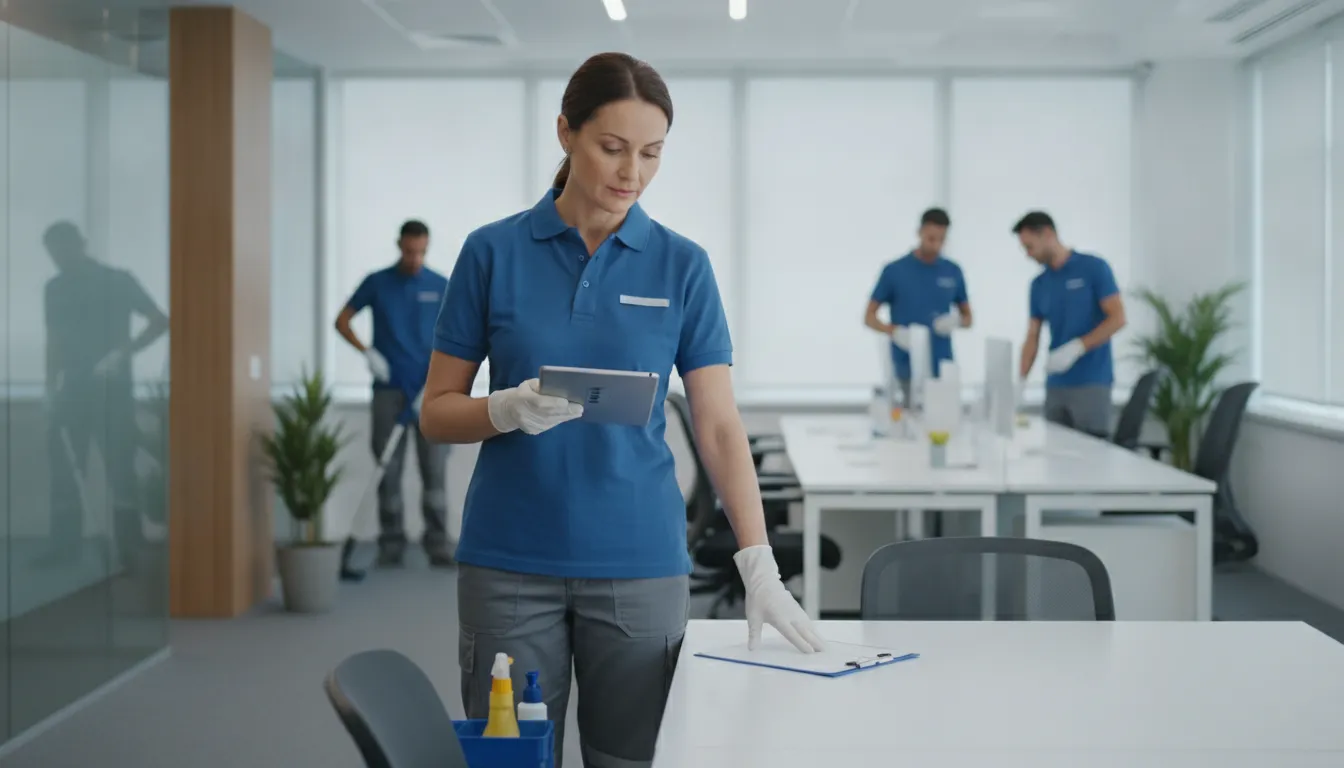
Visible dust is not merely a missed spot. It is evidence that a cleaning team’s oversight system failed to catch and correct the issue. Reliable commercial cleaning requires documented standards, routine inspections, and clear accountability.
Request a customized cleaning quality control plan for your facility.
Commercial cleaning quality control is a formal system of checks and digital reports used to ensure janitorial teams meet specific standards. This process relies on clear programs that help facilities test cleaning success through data, a practice the CDC recommends for high-touch surface care. Robust systems use weekly supervisor checks and technician training to maintain the highest levels of operational discipline and trust. By using a clear rating system, companies can track problems and ensure a 24-hour fix for every found issue. Monthly reports and detailed digital checklists move beyond simple visual checks to ensure all cleaning tasks follow documented rules and standard procedures.
Relying on trust alone often leads to skipped tasks in facilities across Maryland and Virginia. Facility managers need to understand what commercial cleaning quality control should include to keep a building safe and professionally clean. The path begins with measurable standards and a repeatable process.
What commercial cleaning quality control should include
A strong quality system turns a basic service into a reliable partnership. It moves the focus from simple tasks to proven results. For a facility manager, this means you can trust that the work is done right every time. A full program for office cleaning quality checklist helps find small issues before they become big problems.
Clear standards and goals
Every good plan starts with clear rules. You must know what “clean” looks like for every room. These rules often come from standard operating procedures (SOPs). They tell the crew exactly which tools and steps to use. In technical spaces, these goals may include high-tech needs like ISO 14644 levels or ESD-safe care. Setting these marks helps teams reach the same high level of work every day.
Regular site inspections
Checking the work is a key part of the process. Good laboratory cleaning checklist uses both random and planned site walks. A supervisor should check high-touch spots like door handles, light switches, and break rooms. Using objective monitoring programs helps a facility see how well the cleaning really works. This step keeps everyone on the same page and ensures the team follows the plan.
Reporting and fast fixes
Data helps you make better choices for your building. A quality system should log all inspection scores and notes. If a team misses a spot, they should fix it fast. Most pro teams aim to solve any issue within 24 hours. Good records show you where the team shines and where they need to improve. This open look into the work builds trust and keeps the quality of the building at its best.
SOPs turn expectations into repeatable work
SOPs translate a cleaning scope into repeatable instructions for each zone, task, tool, and technician. When teams follow the same documented sequence and supervisors inspect against the same standard, facility managers gain consistent results and a clear basis for coaching or corrective action.
Standard Work Rules (SOPs) are the core of multi-tenant office cleaning checklist. They turn a broad scope of work into a clear set of steps for every tech to follow. Without these rules, cleaning becomes a guess. Good SOPs make sure that every site gets the same high level of care on every visit.
Designing zone-based task lists
We break down a site into set zones to manage work better. Each area has its own set of needs and task lists. For instance, a lobby needs other care than a break room or a rest room. This zone approach helps teams move through a site with speed and focus. It also makes it easier to track what work was done and when it was finished.
Using objective monitoring programs helps sites check if their cleaning plans really work. These programs let us see where a team does well and where they need more help. By using clear lists, we build a system that is easy to repeat and hard to mess up. This structure helps keep sites clean and safe for everyone who works there.
Managing tools and safety steps
SOPs also cover the tools and products used on the job. Each task needs the right gear to be done well. We list the exact soaps, tools, and machines for every zone. This keeps our work safe and stops damage to floors or desks. It also keeps our staff safe from harm while they work.
Safety is a top goal for any cleaning team. We use critical-area inspection practices to track our safety steps. This includes how to use soaps and how to wear safety gear. These rules stop accidents before they happen. They also make sure we follow all local and state safety laws.
Adapting to critical site needs
Critical sites like data centers or labs need even more care. These areas have strict rules for dust and static. We use special tools like HEPA vacuums and ESD-safe cloths. Our SOPs for these zones include ISO 14644 standards. This keeps your fragile gear safe from dust and other small bits.
These high standards need deep training for every staff member. We teach our teams how to work in clean rooms without causing new issues. Change control is also a big part of this work. If a process changes, we update our SOPs right away. This makes sure our high quality never slips, even as your needs grow.
How should commercial cleaning inspections work?
Commercial cleaning inspections turn a guess into a fact. You should not just hope your team does a good job. You need a way to prove it. A strong system builds trust and keeps your site safe. It also helps you find small issues before they become big problems. At Foreman Pro Cleaning, we focus on a clear process and real results. This way, your site stays clean every single day.
Set clear standards first
Before you start a check, you must know what “clean” means for each room. Use a set of rules for every task. These rules help your team know what to do. You can use a detailed commercial cleaning quality control list to set these goals. This way, your team and your site lead agree on the work. When you have clear rules, it is easy to see when a job is done right. It stops fights about whether a room is clean or not.
Every room should have its own list of needs. A high-tech room needs special care compared to a front desk. This helps your team focus on the most vital spots first. It also keeps your staff safe by following firm safety rules. Clear lists make the work better for everyone on the site. They ensure that no one misses the small details that keep a site in top shape.
The cleaning inspection process
To maintain high cleaning standards, follow a set path for every site walk. This keeps the data fair and clear. The CDC says objective monitoring programs help sites see how well their cleaning plans work. A good system makes sure every spot gets the same care. Use this six-step process to track your results.
- Define your path. Walk through the site in the same way each time. Start at the front door and move through every room in a loop. This helps you miss fewer spots.
- Use a scoring system. Give each area a score based on how clean it is. A simple pass or fail works well, but a one-to-five scale gives more detail. This helps you find where the team needs help.
- Take photos and notes. If you find a flaw, take a picture of it. Notes help the team know just how to fix the error. This creates a clear map for the next shift.
- Assign the fix. Send the notes to the cleaning team right away. They should know what to clean again to meet your rules. Good software can do this as soon as you finish your check.
- Check the fix. Walk back through the area to see if the work is done. This step proves the team took ownership of the task. Do not close the task until the room meets the standard.
- Review the scores. Look at your scores over a month or a year. This helps you see if the team gets better or worse over time. You can use these trends to plan for the future.
Review trends for long-term gains
Checking the site once is not enough. You should look at the data from many walks. This helps you find trends in your site. If one room is always dirty, you may need a new plan for that area. This type of quality control builds a better plan. It shows you where to train your team more. You can use this data to show your clients how hard you work to keep their site safe.
Steady reviews also help you spot when tools start to fail. If a floor looks bad every week, it might be time for a new mop or a better soap. Tracking these small details leads to big gains in how the site looks. It also keeps your costs low by fixing small things fast. In the end, data helps you run a better, cleaner site for your staff and guests.
Accountability closes the loop
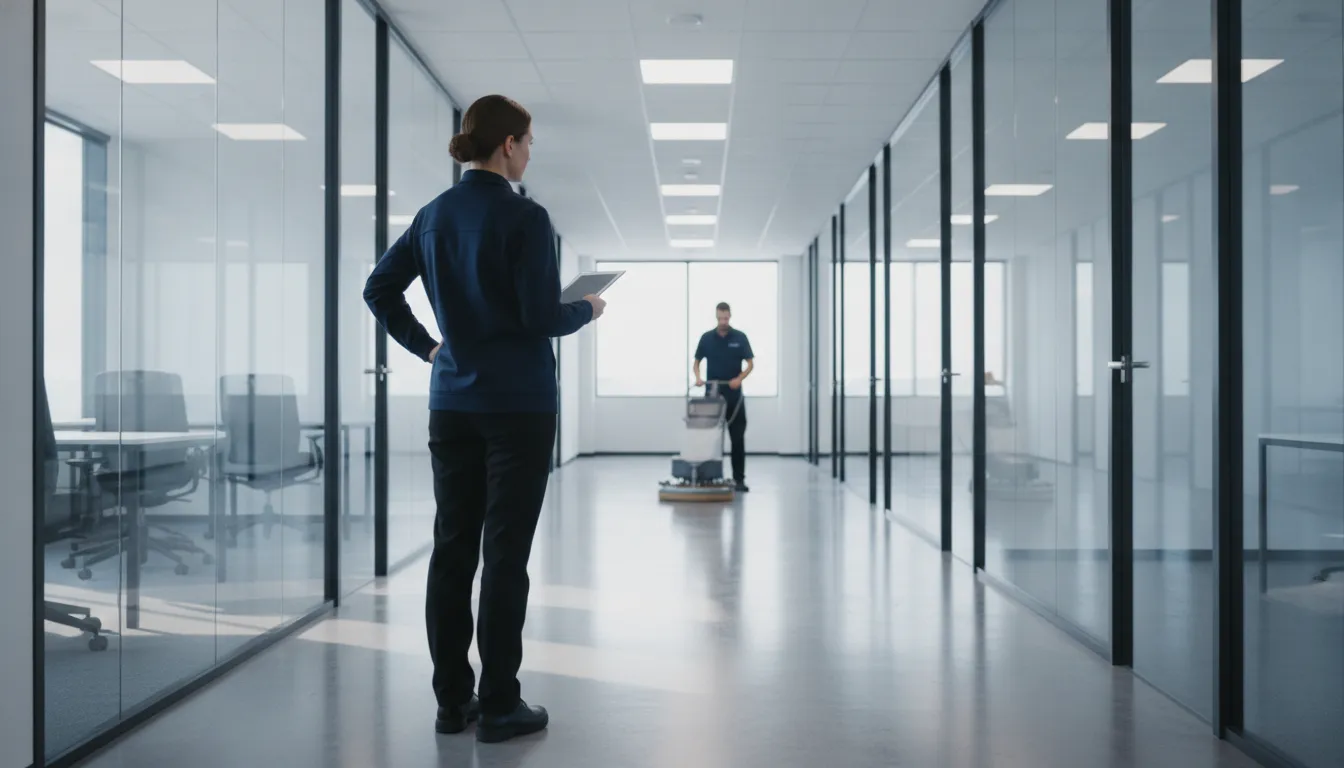
Accountability assigns every cleaning task, inspection finding, and corrective action to a responsible person with a deadline. This closed-loop process prevents issues from disappearing into informal conversations and gives facility managers documented proof that missed standards were corrected and rechecked.
A good plan only works if people follow it. In commercial cleaning, things can go wrong without a clear system. Accountability means every task has an owner. It also means you have a way to fix mistakes fast. This loop keeps your building clean and safe every day.
Assigned owners and clear paths
Each cleaning job needs a name. When workers know they are in charge of a room, they take more care. We assign team members to each zone in your facility. This creates a direct line of duty. If a floor is missed, we know who to talk to right away. This builds trust between the cleaners and the facility manager.
You also need a clear path for when problems arise. We set up steps so you always know who to call. Most issues can be fixed on site. But if a problem stays, a supervisor or owner steps in. This ensures that commercial cleaning quality control is not just a phrase but a real process. We aim to solve any issue within 24 hours to keep your work running well.
Closed-loop corrective actions
Finding a mistake is only the first step. The real value is in how you fix it. A closed-loop system means we track an issue from start to finish. This prevents small slips from becoming big habits. Using objective monitoring programs helps us see where our team needs to improve. We use these tools to check our work and make changes in real time.
Once we find a gap, we take action. This might mean more training for a team member or a change to our site plan. We do not just wipe away the dust. We look for why it was missed. This focus on the root cause helps us commonly missed cleaning areas over a long time. It turns every mistake into a chance to get better.
Transparent reporting for managers
Facility managers should not have to guess about the state of their building. We provide clear reports that show what was done and when. These summaries show scores and any work that was redone. Being open makes our team work harder. It also gives you peace of mind. We use a steady rating system to track our work and note any flaws found during our weekly checks.
We also look at trends. If the same sink is missed three weeks in a row, we know we have a bigger issue. We share these patterns with you so we can work together on a fix. This data-driven look at your site helps us stay ahead of problems. It ensures that our high standards stay the same month after month.
Talk with Foreman Pro Cleaning about a process-driven quality plan.
Reactive oversight versus process-driven quality control
Reactive oversight waits for complaints before correcting cleaning failures. Process-driven quality control uses documented standards, scheduled inspections, trend data, and verified corrective action to prevent repeat problems. The difference is a cleaning program that improves continuously instead of repeatedly responding to the same issues.
Most cleaning companies wait for a problem before they act. This reactive style leads to uneven results and unhappy tenants. A better way is to use a strong commercial cleaning quality control plan. This model finds errors before they become issues. It builds trust through clear rules and steady checks. When you have a solid plan, you can count on a clean workspace every single day.
Reactive oversight focuses on the short term. It tries to fix what people see right now. But it misses the deep cleaning needs of a complex site. A process-driven system looks at the whole building. It sets a high bar for every task, from floor care to trash removal. This path creates a better experience for everyone in your facility.
The trap of reactive cleaning
Reactive cleaning relies on complaints to find mistakes. When a site manager spots dust, the cleaner fixes that one spot. But this does not fix the root cause of why the dust was there. Without a documented cleaning control system, errors will keep happening. It keeps your facility team in a cycle of fire-fighting instead of planning. This method hurts the long-term health of your building and your budget.
Many teams find that reactive cleaning costs more over time. You might pay for extra visits to fix missed spots. You also risk damage to expensive floors or server gear. Without clear steps, cleaners might skip hard-to-reach areas. This leads to dirt build-up that is hard to remove later. A smart manager stops this cycle by moving to a better system.
| Feature | Reactive Oversight | Process-Driven Quality |
|---|---|---|
| Scope | Fixes specific complaints only. | Covers all facility surfaces. |
| Inspections | Occurs after a failure. | Scheduled weekly checks. |
| Reporting | Verbal or basic notes. | Digital logs and monthly data. |
| Corrective Action | Slow response to errors. | Fixed within 24 hours. |
| Training | Learned on the job. | Formal SOP training. |
| Improvement | No long-term change. | Regular system updates. |
Winning with process-driven quality
A process-driven system uses objective tools to measure success. According to the CDC, using objective monitoring helps facilities check how well they clean. This move away from guesswork is key for high-stakes areas like labs. At Foreman Pro Cleaning, we use these methods to maintain cleaning standards every day. This keeps your data centers and offices safe and professional.
A good program uses a set rating system to score work. You might use a simple pass or fail score to track progress over time. This helps teams see where they need to improve their skills. When you have a plan, you can stop small errors from growing into big risks. This path gives you peace of mind and better value for your spend. It ensures that your cleaning team acts as a true partner in your success.
Process-driven quality also builds a culture of pride. Workers know exactly what a good job looks like. They have the tools and training to hit that goal. With clear logs, they can show their hard work to the client. This leads to higher job happiness and lower staff turnover. In the end, a happy, well-trained team provides the best service to your company.
What should facility managers ask a cleaning provider?
Choosing a vendor requires more than a price quote. You must find a partner who values commercial cleaning quality control as much as you do. Start by asking for their standard operating procedures (SOPs). A pro team should have a clear plan for every task. They should show you how they train staff to follow these rules. This keeps your building safe and clean every single day.
Questions about cleaning plans
A good provider uses documented cleaning control to manage risk. Ask if their SOPs are specific to your site. Generic plans often lead to missed spots. You want to see a list of tasks for high-touch areas. For example, the CDC encourages hospitals to use high-touch surface programs to improve cleaning results. This same level of care should apply to your office or server room.
Ask how often they update their plans. Best ways to clean change over time. Your provider should stay current with new tools and safety rules. They must prove that their team knows the plan. Ask about their training for specialized work like ESD-safe cleaning or HEPA filtration. This shows they have the skills to handle sensitive gear in your facility.
Checking for quality and results
You need proof that the work is done well. Ask about their inspection process. Do they use random spot checks? A strong system uses weekly supervisor visits to maintain cleaning standards. You should also ask if they use digital logs. These tools help you see when a job was finished. They create a record that keeps everyone on track.
Ask for a sample of their performance reports. You should see how they track success and find areas to improve. Most experts suggest using a system to monitor cleaning effectiveness over time. If they cannot show you data, they may not have a real system in place. Clear data helps you make better choices for your building budget.
Solving problems fast
No service is perfect, but a good vendor acts fast. Ask about their plan for issue escalation. They should have a clear path for you to report a problem. Many top providers commit to a 24-hour fix for any service gaps. This helps you maintain trust in their work. It also shows they take owner accountability seriously.
Find out who your main contact will be. You want a person who can make quick decisions. Ask how they track issues from start to finish. A good system logs the problem, the fix, and the date it was done. This level of detail protects your site. It also ensures that the same mistakes do not happen again next week.
Use quality data to improve the cleaning program
Quality data helps you make smart choices for your building. By tracking commercial cleaning quality control, you can see where your team wins and where they need to grow. This move turns cleaning into a managed process. It ensures every room stays up to your high standards. It also builds a record of your success over time.
Spot trends with inspections
A strong cleaning plan relies on facts. You should use a simple way to rate each task. This could be a pass or fail grade for every room. Over time, these scores show you clear trends. You can see if some areas or teams often miss the mark. Having this view makes it easy to keep everyone on the same page and focused on the goal.
For high-risk rooms, the CDC says you should check cleaning results with real data. These programs help you see if your team hits the mark. When you find a gap, you can act fast to fix it. This fact-based path builds trust with your staff and your clients. It shows you care about doing a great job every day.
Fix the root cause of cleaning issues
When a problem pops up, do not just fix the mess. Find out why it happened in the first place. This is how you stop the same error from coming back. You might find that a team lacks the right tools for the job. Or maybe they need more time to finish a hard task. Finding the true source of the slip-up is the only way to solve it for good.
Once you know why a task was missed, you can start coaching. Clear data makes these talks more helpful. You are not just guessing about how well someone works. You are showing real facts to help your team get better. This keeps your commercial janitorial services steady and reliable. It also shows your staff that you value their hard work and want them to succeed.
Update guides with data
Your cleaning guides should change as you learn. As you gather data, you will find ways to work in a smarter way. Use your trend reports to update your steps. If a new type of floor is hard to scrub, change the guide to add better steps. This keeps your plan fresh and strong as the needs of your building change over time.
Sometimes the data shows you need to change your daily plan. If a break room gets more use than you thought, you might need to clean it more often. These small shifts make a big impact. By using facts to guide your plan, you make sure your building stays safe and bright. Growing in this way means making small, smart moves every day to reach your goals.
Frequently Asked Questions
Why is quality control important in commercial cleaning?
Quality control is vital because it ensures consistent results and builds trust between the client and the provider. According to industry leader OrangeQC, a strong system creates high levels of accountability and transparency. It gives you clear insights into how well your team performs each night. Without these checks, it is hard to find and fix errors before they impact the safety and look of your building. This helps maintain a high standard of care for every room.
What are the 5 steps of quality control?
The five core steps of quality control include setting clear standards, training staff, performing regular checks, tracking results, and fixing any issues. A good plan uses a consistent rating system, such as a 1 to 5 scale or simple pass and fail marks, to judge work. This method helps teams find gaps in their service quickly. Once a problem is found, the team must take steps to correct it and prevent it from happening again.
How do you create a commercial cleaning quality inspection checklist?
To build a strong checklist, group tasks by area, such as offices, open floors, and equipment. You should use structured checklists that assign specific points or values to each part of the job. For example, you might score early checks and office dusting separately. This makes it easy to see where the team excels or needs more training. A clear list ensures that no high-touch surfaces or hidden corners are missed during the nightly sweep of the building.
What is the best way to monitor cleaning quality?
The best way to monitor quality is through objective monitoring programs. These programs help sites check how well their cleaning efforts work over time. By using data instead of just a quick look, you can see real trends in cleanliness. This is mostly key in high-risk areas like medical clinics or data centers. Consistent checks show your staff that you care about high standards. They also provide the proof you need to show clients that the job is done right.
Ready to improve your commercial cleaning quality control and high standards for your building?
If you wait to fix your cleaning plan, you risk poor staff health and face high repair costs for your site and floors. Every day you delay is a day your building stays dirty, which causes fast wear on your rugs and can lead to more sick days. You can stop this cycle of poor service and gain peace of mind by setting up a solid and safe system with our team today.
Ready to request a customized commercial cleaning plan? Contact our team today to speak with an expert and learn how our proven cleaning systems can keep your site in top shape.
