
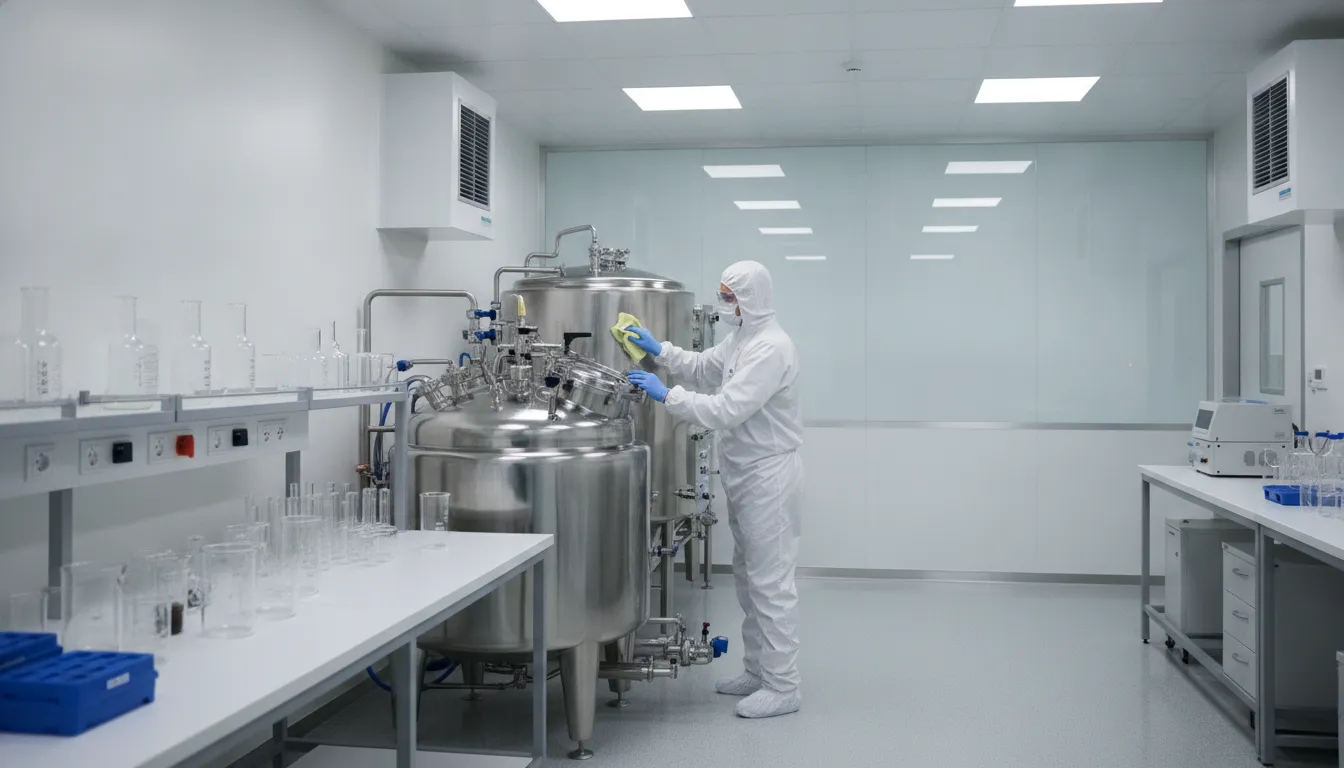
A single missed contamination risk can compromise sensitive research and interrupt an entire lab. For biotech facilities across Maryland, Washington D.C., and Northern Virginia, ordinary janitorial routines do not provide enough control.
Request a customized biotech lab cleaning plan from Foreman Pro.
Biotech lab cleaning services protect controlled research spaces through site-specific protocols, trained personnel, scheduled tasks, and clear boundaries between routine cleaning and specialized decontamination. Effective plans address contamination risks, high-touch surfaces, floors, approved products, sensitive instruments, waste handling, and each facility’s operating schedule. The CDC explains that cleaning is the necessary first step before disinfection or sterilization because it removes soil from environmental surfaces. In Maryland, Washington D.C., and Northern Virginia, the right provider aligns its work with the lab’s biosafety rules, access controls, research zones, and compliance needs. This tailored approach helps protect operational integrity while giving facility leaders clear responsibilities, repeatable procedures, and reliable service around active research.
Facility leaders need to know which controls belong in the scope before crews enter active research areas. Why biotech lab cleaning services require a specialized plan explains the operational risks and planning choices that separate critical-environment care from standard janitorial work. Here’s how.
Why biotech lab cleaning services require a specialized plan
Ordinary janitorial service focuses on visible soil, shared touchpoints, trash, and routine floor care. A biotech lab adds controlled zones, sensitive instruments, active work, and materials that cannot receive the same treatment. For facilities across Maryland, Washington D.C., and Northern Virginia, each plan must reflect the work performed at that specific site.
Contamination control and research integrity
The CDC states that cleaning is the necessary first step before disinfection or sterilization. That sequence matters because soil left on a surface can affect the next treatment step. A specialized plan names the approved method for each surface, instead of applying one product throughout the lab.
Contamination control also protects the conditions around research. A cart, cloth, or worker moving between zones can carry unwanted material into a controlled area. The plan sets traffic paths, tool separation, and cleaning order so staff do not treat every room as interchangeable. A repeatable process also helps teams trace what work was completed.
Routine cleaning tends to group tasks by room type and frequency. Labs need decisions at the surface and process level. A floor near a controlled workspace may require different tools, timing, and access rules than a similar floor elsewhere. Routine janitorial schedules rarely capture those fine distinctions.
- Separate tools and supplies by zone
- Define approved products for benches, floors, and touchpoints
- Set access rules for active and restricted work areas
- Record completed work and any observed issue
Site-specific SOPs and role boundaries
No single cleaning procedure fits every biotech lab. According to CDC guidance, disinfection choices depend on the item, microbial load, organism resistance, soil, and germicide contact time. A site-specific standard operating procedure, or SOP, turns those factors into clear instructions for each room and approved surface.
The SOP must also set role boundaries. Cleaning staff need to know which areas they may enter, which items they may touch, and when lab personnel must take over. It should cover required protective gear, access rules, issue reporting, and steps for a spill or unexpected condition. This structure supports worker safety without asking cleaners to make scientific decisions.
Coordination across DMV facilities
Biotech facilities in the DMV range from research labs to sites within larger office or clinical buildings. That mix makes coordination important. A plan should align cleaning windows, security access, and routine building care with the lab’s schedule and SOPs. These needs also shape laboratory cleaning in Washington DC and nearby markets.
When evaluating biotech lab cleaning services, facility leaders should look beyond a standard task list. The provider should show how it trains staff, controls movement, separates routine work from sensitive tasks, and documents completion. A site walk should confirm room uses, surface limits, access points, and handoff rules before service begins.
What determines a laboratory’s cleaning requirements?
A laboratory’s cleaning requirements are determined by its work, hazards, layout, operating schedule, biosafety plan, approved products, and access rules. A site-specific risk assessment should define which surfaces cleaners may handle, how often tasks occur, and where specialized decontamination remains the laboratory team’s responsibility.
A laboratory’s cleaning plan starts with its work, hazards, layout, and rules. The same schedule will not fit every biotech site. Effective biotech lab cleaning services should match each room’s risk, approved methods, and operating schedule.
Risk-based scope
A risk assessment defines what cleaners may touch, which products they may use, and how often each task occurs. It should consider the material handled, the chance of cross-contamination, sensitive equipment, traffic patterns, and high-touch surfaces. Staff then separate routine housekeeping from work that needs trained lab personnel.
The lab’s classification adds another layer. A general research room may allow routine floor and surface care. A cleanroom may require approved tools, garments, entry steps, cleaning directions, and records. Biosafety levels can also limit access and define how teams handle waste, spills, and decontamination.
| Planning factor | General laboratory area | Cleanroom or higher-risk zone |
|---|---|---|
| Access | Based on the site’s routine rules | Limited to approved, trained staff |
| Tools and products | Selected for each surface | Approved for the room and process |
| Cleaning sequence | Set by the room’s use and traffic | Set by contamination-control procedures |
| Records | Task completion logs as required | Detailed records tied to site procedures |
Surface and process controls
Product choice depends on more than a label. The CDC lists several factors that shape disinfection choices. These include the surface or item, microbial load, organism resistance, organic soil, contact time, and temperature. Cleaning also comes before disinfection or sterilization.
Those factors affect the order of work and the time allowed for each task. Sensitive research instruments may need a separate protocol or may stay outside the cleaner’s scope. Floors, walls, tabletops, and shared touchpoints can each need different tools and methods.
SOPs and regulatory expectations
Site-specific standard operating procedures, or SOPs, turn the risk assessment into repeatable work. They should state approved products, dilution rules, contact times, task frequency, room sequence, access limits, and documentation steps. They should also explain who responds to spills and who can clean specialized equipment.
Regulatory expectations depend on the lab’s activities, materials, and oversight. Facility leaders should map each cleaning task to the rules that apply to their operation. A clear scope also sets training needs and keeps routine janitorial work separate from controlled decontamination.
Before work begins, the lab and cleaning provider should review the SOPs together. This review helps confirm responsibilities, escalation steps, and records. It also lets the cleaning plan change when research, room use, or risk conditions change.
A controlled cleaning workflow for research laboratories
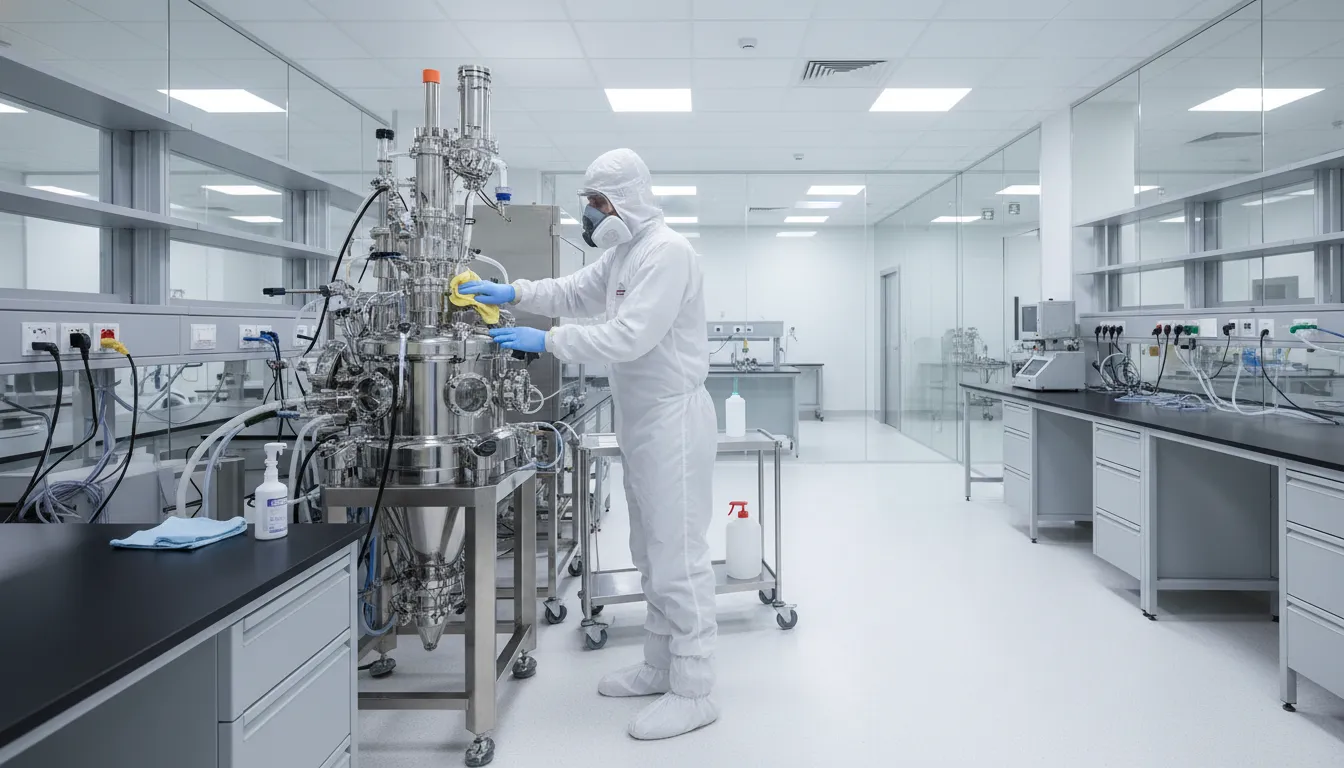
A controlled workflow keeps routine housekeeping apart from specialized decontamination and protects active research areas. Before service starts, the laboratory manager and cleaning lead should agree on scope, access, timing, hazards, and release criteria. That shared plan gives biotech lab cleaning services a clear path through each controlled zone.
Pre-clean controls
The written scope should name approved products, protected instruments, no-entry spaces, and the person authorized to answer questions. It should also define what cleaners may handle and what trained laboratory staff must decontaminate. Foreman Pro’s biotech lab cleaning services page explains its critical-environment approach across Maryland, Virginia, and Washington, DC.
Schedule the work around experiments and maintenance, not only around occupancy. Mark entry and exit routes, staging points, waste routes, and tools assigned to each zone. A short pre-service briefing helps the team spot changes before work begins.
Controlled cleaning sequence
Use the approved site procedure for every visit. The order below helps limit cross-contact while keeping each action easy to check.
Use fresh or site-approved tools at each boundary. Never move a used cloth, mop, or container into a cleaner zone unless the plan allows safe decontamination. Keep labels visible so technicians can confirm each product before use.
-
Coordinate before entry. Confirm current experiments, restricted zones, spill status, shutdown needs, and the day’s cleaning scope with the laboratory contact. Stop and escalate any condition not covered by the plan.
-
Put on required PPE. Inspect each item before crossing the controlled boundary. Use the laboratory’s required hand hygiene and gowning order.
-
Control movement. Move supplies through the approved route. Keep clean tools apart from used tools, and work from lower-risk zones toward higher-risk zones.
-
Remove soil first. Collect waste and visible soil before applying disinfectant. The CDC states that cleaning is the necessary first step before disinfection or sterilization because it removes soil and organic matter.
-
Follow the planned cleaning order. Clean higher surfaces before floors, and cleaner areas before dirtier areas. Use dedicated tools for each zone and protect sensitive instruments from spray, dust, and contact.
-
Disinfect approved surfaces. Apply only the approved disinfectant to listed surfaces. Follow the product label and site procedure. Meet the required dilution, wet contact time, and safe-use rules.
-
Close the work area. Seal and route waste under the site’s rules. Remove PPE in order, perform hand hygiene, and keep supplies within their assigned paths.
Records and release
After cleaning, the technician should record the date, time, areas serviced, products used, contact times, waste path, and any exceptions. The laboratory contact should then inspect the area against the agreed release criteria.
Verification may include a visual check, completed log review, or a site-approved test when the plan calls for one. If a result fails, keep the zone closed, document the issue, and repeat the approved corrective process. These records make each visit traceable and help the facility adjust its cleaning plan as research needs change.
Which laboratory areas need the most careful attention?
High-touch surfaces, active benches, equipment exteriors, controlled-zone floors, cleanrooms, and shared support spaces need the most careful attention. Each area requires a method based on contamination risk, traffic, material compatibility, and asset sensitivity, with clear boundaries between cleaning crews and laboratory personnel.
Not every laboratory surface carries the same risk or needs the same method. The cleaning plan should rank areas by their work, traffic, contamination risk, and asset sensitivity. It should also state which tasks belong to trained cleaners and which remain with laboratory staff.
Benches and equipment exteriors
Benches, worktables, and nearby equipment exteriors need close attention because staff use them during daily work. Soil must be removed before a surface can be disinfected. The CDC describes cleaning as the necessary first step before disinfection or sterilization.
Approved cleaners may wipe accessible equipment exteriors when the site procedure names the product, method, and contact time. Laboratory staff should handle internal parts, sample residue, active spills, calibration points, and any asset that must be opened or moved. Clear boundaries help protect both the equipment and the research.
Floors, cleanrooms, and controlled zones
Floors collect tracked particles and residue, especially near entrances, gowning points, and busy work areas. Their care should follow a set route that keeps tools from moving soil between zones. Walls and tabletops also count as housekeeping surfaces, but each may require a different approved method.
Cleanrooms and other controlled zones need a stricter plan than general laboratory space. The plan should define entry rules, gowning, dedicated tools, cleaning direction, and the order of work. Staff providing biotech lab cleaning services must follow the facility’s written controls rather than rely on a standard janitorial routine.
Cleaning crews should not change airflow settings, move process materials, or enter restricted zones without clearance. Laboratory staff should first secure experiments, label exclusions, and explain any special hazard. This handoff gives cleaners a safe work area and keeps process controls intact.
Support spaces and shared touchpoints
Support rooms can affect the laboratory even when no research occurs there. Corridors, storage areas, break rooms, offices, waste holding points, and restrooms all need planned care. Separate tools and routes can reduce the chance of carrying soil from general spaces into controlled areas.
Door handles, light switches, cart handles, shared controls, and other touchpoints also need routine attention. The scope should name each surface and assign a safe cleaning frequency based on use. It should also identify surfaces that cleaners must avoid, such as emergency controls or sensitive panels.
A useful area plan pairs each zone with an owner, approved method, and exception process. Cleaners can then complete routine work without guessing. Laboratory staff remain responsible for hazards, active materials, and technical decontamination that falls outside the agreed cleaning scope.
Documentation and quality assurance support readiness
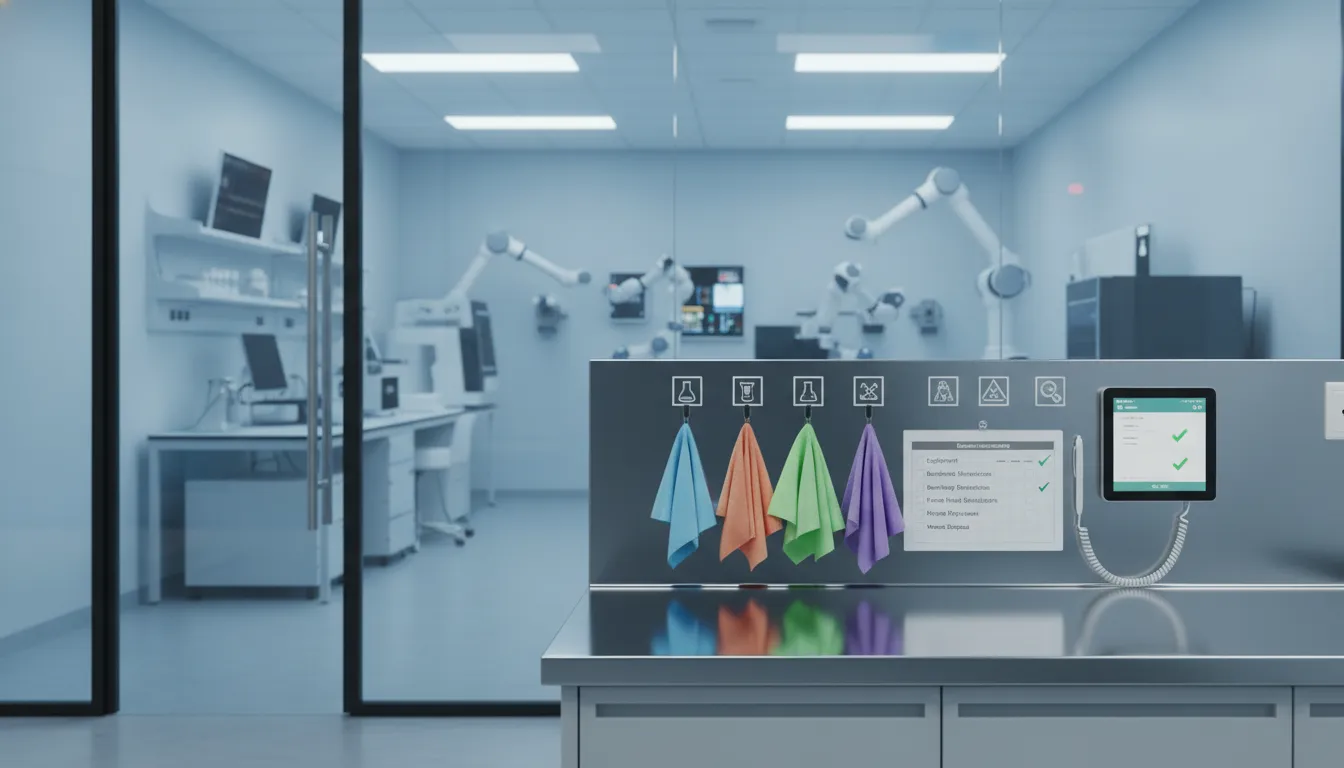
Inspection readiness starts with records that show what work was planned, completed, checked, and corrected. A cleaning provider should fit its records into the lab’s quality system rather than create a separate paper trail. Clear ownership also helps facility, quality, and cleaning teams find answers without delay.
Useful cleaning records
Service logs should identify the room, task, date, time, technician, and product used. They should also note any missed task, unusual condition, or approved change. These records support traceability, but they do not prove regulatory compliance on their own.
The documentation plan should reflect the site’s risks and operating rules. Effective biosafety programs include risk assessment, equipment maintenance, and staff training, according to an NCBI review of biosafety guidelines. Cleaning records can support those controls by showing how approved work was carried out.
- Completed task logs and supervisor review records
- Product labels, safety data sheets, and lot details when required
- Training records for assigned technicians
- Issue reports, corrective actions, and follow-up checks
Quality checks and issue communication
A quality assurance process should define what supervisors inspect and how they record the result. Checks may cover task completion, correct tools, product use, and visible conditions within the approved scope. Any gap should trigger a clear report, an assigned owner, and a due date.
Communication rules matter when lab conditions change. The provider should know whom to contact before entering a restricted room or changing a scheduled task. Escalation paths should cover spills, damaged supplies, access problems, and conditions outside the cleaning team’s approved role.
Scheduling and supply controls
Cleaning schedules should match room use, contamination risks, and facility rules. Teams may need to work around active research, maintenance windows, or controlled access periods. A written schedule helps prevent conflicts and shows when recurring tasks are due.
Supply controls should cover approved products, storage, labeling, inventory, and separation of tools by area. Technicians need a clear process for low stock, damaged items, and product changes. These steps help keep biotech lab cleaning services consistent across shifts and rooms.
Before an inspection or internal review, the provider can help organize requested logs and explain its cleaning process. It can also correct missing entries or service gaps within its scope. The lab remains responsible for its compliance decisions, records, and inspection response.
Talk with Foreman Pro about a controlled cleaning scope for your DMV laboratory.
Local considerations for labs across the DMV
Laboratories across Maryland, Washington D.C., and Northern Virginia operate in a connected but complex region. Each site may face different access rules, work hours, and building controls. A local cleaning plan should account for those differences without changing the required standard of care.
Research corridors and facility needs
Labs near the NIH and FDA corridor may include research, clinical, teaching, or private biotech facilities. Universities and biotech clusters add more site types, from shared research buildings to controlled rooms. The cleaning scope must reflect the work performed in each space.
Biosafety requirements also vary by facility and activity. Published biosafety guidance identifies risk assessment, lab design, equipment maintenance, and staff training as core program elements. Cleaning teams should align their work with the site’s approved procedures and designated points of contact.
- Confirm room classifications and approved cleaning products before service begins.
- Separate general office tasks from controlled lab cleaning.
- Document site-specific restrictions, contacts, and escalation steps.
- Review changes when research activities or room uses shift.
Traffic, access, and security
DMV traffic can make a narrow service window harder to meet. Plans should include realistic travel time, parking instructions, loading access, and alternate routes. For laboratory cleaning in Washington DC, building access rules may also shape arrival times and crew size.
Facility security requires the same level of planning. Teams may need badges, escorts, sign-in steps, or limits on phones and personal items. Managers should confirm these rules before each assignment and keep access lists current.
Cleaning schedules should protect active research and avoid conflicts with deliveries, experiments, or maintenance. A clear handoff process helps the facility report room status before work starts. It also gives technicians a direct path for questions or unexpected conditions.
Consistent service across multiple sites
Organizations with labs in Bethesda, Silver Spring, Washington D.C., and Northern Virginia need a shared operating baseline. That baseline can define training, documentation, approved tools, and quality checks. Site plans can then add the local details that crews need.
Consistency does not mean using one checklist everywhere. Effective biotech lab cleaning services adapt to each facility’s risks while keeping core controls stable. Managers can compare records across sites, review missed tasks, and address gaps before they repeat.
Multi-site oversight also depends on clear ownership. Each location should name a facility contact and a cleaning lead. Regular reviews can track access changes, scope updates, supply needs, and service findings across the regional portfolio.
Request a site assessment for your research laboratory.
How to select a lab cleaning partner
Select a lab cleaning partner by reviewing its critical-environment training, site-assessment process, scope boundaries, supervision, documentation, and ability to follow your facility’s SOPs. The right provider will explain how it controls tools and movement, reports issues, and adapts service around active research.
Choosing a lab cleaning partner requires more than comparing schedules and prices. The right partner must understand your facility, follow its controls, and show how each task will be managed. Use the review process to test those skills before work begins.
Site assessment and scope boundaries
Before pricing the work, invite each provider to complete an on-site assessment with your facility team. The walkthrough should map controlled areas, traffic patterns, sensitive equipment, approved products, waste rules, and access limits. Ask the provider to separate routine cleaning from tasks reserved for lab staff.
Clear boundaries help prevent cleaners from entering restricted areas or handling items outside their role. Biosafety programs depend on risk assessment, equipment care, and staff training, according to this overview of biosafety guidelines. Your cleaning plan should fit those controls rather than rely on a standard janitorial checklist.
Training, SOPs, and supervision
Review training records for the technicians and supervisors assigned to your site. Ask how the provider teaches contamination control, personal protective equipment use, product handling, and response steps. Confirm how often workers receive refresher training and how supervisors check their work.
Next, compare the provider’s proposed methods with your standard operating procedures (SOPs). A qualified team should adapt to approved contact times, cleaning sequences, gowning rules, and room-entry steps. It should also explain how changes will be reviewed before staff use them.
- Request a written training plan and sample technician records.
- Confirm that a named supervisor will oversee the account.
- Ask how inspections, corrections, and staff changes are managed.
- Verify that cleaners follow site SOPs without crossing scope boundaries.
Documentation and a customized plan
Strong biotech lab cleaning services make completed work easy to trace. Ask to see sample cleaning logs, inspection forms, issue reports, and escalation records. The documents should show what was cleaned, when it was done, who completed it, and how exceptions were resolved.
Set communication rules before signing an agreement. Name contacts for daily questions, urgent issues, schedule changes, and scope approvals. Also agree on review meetings and the reports your facility team will receive.
The final proposal should turn the assessment into a customized plan with defined tasks, frequencies, products, roles, and quality checks. Foreman Pro Cleaning applies specialized critical environment training and customized plans across Maryland, Washington D.C., and Northern Virginia. Its biotech lab cleaning services page outlines its approach to laboratory environments.
Frequently Asked Questions
What standards should biotech lab cleaning services follow?
Biotech lab cleaning services should follow the facility’s approved biosafety plan, risk assessment, standard operating procedures, and applicable regulatory requirements. The exact rules depend on the agents, processes, and rooms involved. The NCBI biosafety guidance identifies risk assessment, physical infrastructure, equipment maintenance, and staff training as essential program components.
How often should biotech laboratories be cleaned?
Cleaning frequency should reflect each room’s use, contamination risk, operating schedule, and regulatory obligations. High-touch surfaces and active work areas may need attention every day, while controlled deep cleaning follows a documented schedule. Facility leaders should define tasks, approved products, responsible staff, and verification steps for every cleaning interval.
Does biotech facility cleaning include cleanroom maintenance?
Biotech facility cleaning can include cleanroom maintenance when the provider has trained technicians and protocols suited to that controlled space. The scope may cover approved surface disinfection, floor care, contamination control, and documented completion checks. Cleanroom tasks must follow the facility’s classifications, material restrictions, access rules, and standard operating procedures.
Can commercial cleaning companies handle biotech labs?
A commercial cleaning company can handle biotech labs only when its team has relevant life sciences training and follows site-specific protocols. Facility managers should confirm technician qualifications, product controls, equipment restrictions, documentation practices, and emergency procedures before work begins. General office-cleaning methods alone are not enough for controlled research areas or spaces with sensitive instruments.
Ready to Strengthen Your Lab Cleaning Plan?
Delaying a cleaning plan can let small process gaps become larger operational concerns when your lab can least afford disruption. Starting now gives your team time to review priorities, align expectations, and build a practical plan before cleaning needs become urgent. A clear plan also helps your facility address sensitive areas consistently while keeping daily operations and research schedules in view.
Ready to reduce uncertainty around cleaning requirements for your Maryland, Washington DC, or Northern Virginia lab? Request a customized cleaning plan to discuss your facility, priorities, and timeline with Foreman Pro Cleaning. Contact the team today so you can define next steps early, prepare staff, and put dependable cleaning support in place without a rushed decision.
