
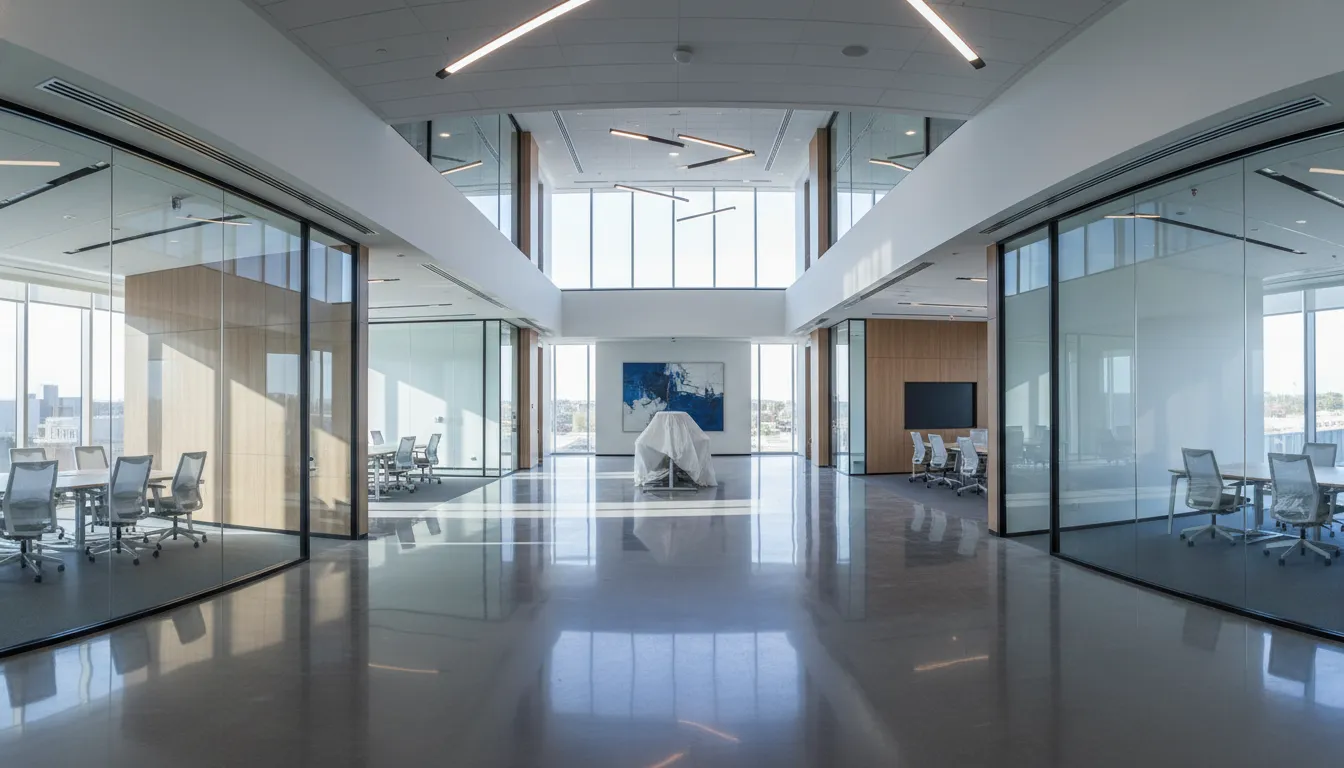
A finished build is not ready for turnover just because the last trade has packed up. Fine dust can remain above sightlines, adhesive can mark glass, floors can carry grit, and restrooms can look complete while fixtures, partitions, and dispensers still need attention. A dependable post-construction cleaning checklist for commercial buildings gives property managers, general contractors, and facility teams a shared definition of ready.
Schedule your post-construction cleaning assessment
The most effective checklist is more than a list of surfaces. It ties cleaning tasks to construction milestones, assigns inspection responsibility, identifies safety constraints, and records exceptions before occupants arrive. Use the following framework to coordinate rough clean, final clean, touch-up work, and the final turnover inspection.
Post-construction cleaning checklist for commercial buildings: plan the turnover
Begin with a site walk before the cleaning crew mobilizes. Confirm which trades are complete, which areas are released for cleaning, and whether any work will continue after the final clean. If painters, electricians, millwork installers, or commissioning teams will return, protect completed zones and schedule a touch-up pass after their work.
Define zones and acceptance standards
Divide the building into manageable zones such as floors, wings, tenant suites, common areas, loading areas, and technical rooms. For each zone, document the target completion time, access rules, responsible inspector, and acceptance standard. A zone should not be marked complete until it has passed a visual inspection from several angles and under normal operating light.
- Confirm construction debris removal responsibilities.
- Identify surfaces that require manufacturer-approved products or methods.
- Record restricted areas, security requirements, and permitted work hours.
- Locate working water, power, waste collection points, and service elevators.
- Agree on punch-list reporting, correction deadlines, and final sign-off.
For projects in Maryland, Virginia, and Washington, D.C., Foreman Pro Cleaning can coordinate professional post-construction cleaning around facility-specific turnover requirements. The team brings the construction and facilities perspective needed to distinguish a cleaning correction from unfinished trade work.
How should rough clean, final clean, and touch-up clean be sequenced?
Commercial post-construction cleaning works best as a controlled sequence. Moving forward too early often means repeating completed work after another trade creates dust, fingerprints, packaging waste, or floor traffic.
- Rough clean: Remove large debris, packaging, labels, and loose construction material after heavy work is complete. Sweep or vacuum accessible areas, clear pathways, and prepare rooms for detailed work. Report damage, sharp objects, chemical residue, and incomplete construction rather than cleaning around them.
- Final clean: Work systematically from high surfaces to low surfaces and from cleaner zones toward exits. Detail ledges, fixtures, walls, doors, frames, glazing, casework, restrooms, and floors. The final clean should occur when dust-producing work is substantially complete and utilities needed for cleaning are operational.
- Touch-up clean: Return shortly before turnover to remove new dust, fingerprints, footprints, and small debris introduced by inspections, commissioning, deliveries, or late trade work. Recheck entrances, restrooms, glass, shared areas, and other high-visibility points.
Use inspection gates between phases
Do not treat the phases as calendar events alone. Require an inspection gate before progressing. If a released zone still has active cutting, sanding, ceiling work, or unresolved leaks, pause detailed cleaning there. This protects completed work and makes schedule risks visible to the project team.
What should the final commercial cleaning checklist cover?
The final checklist should be specific enough that two inspectors reach the same conclusion. General directions such as “clean all surfaces” create avoidable disagreements. Use observable standards, note exclusions, and attach photographs or digital logs when documentation is required.
| Area | Required checks | Turnover standard |
|---|---|---|
| Entrances and common areas | Doors, handles, frames, thresholds, signage, baseboards, walls, fixtures, and floors | No loose debris, dust, labels, adhesive, footprints, or visible smears |
| Offices and tenant areas | Casework, shelves, sills, partitions, outlets, switch plates, vents, and floors | Horizontal and vertical surfaces visibly clean; cabinets and drawers checked if included in scope |
| Glass and glazing | Interior glass, doors, sidelights, mirrors, frames, and tracks | Free of dust, stickers, adhesive, fingerprints, and streaks without damaging coatings |
| Restrooms | Fixtures, partitions, dispensers, mirrors, counters, walls, floors, and drains | Detailed, disinfected where specified, dry, stocked if included, and ready for use |
| Floors | Edges, corners, transitions, stairs, elevator areas, and finish condition | Grit and residue removed using a method appropriate for the floor material |
| Loading and service areas | Debris, pathways, doors, dock edges, utility areas, and waste points | Safe access maintained; remaining project materials clearly separated from waste |
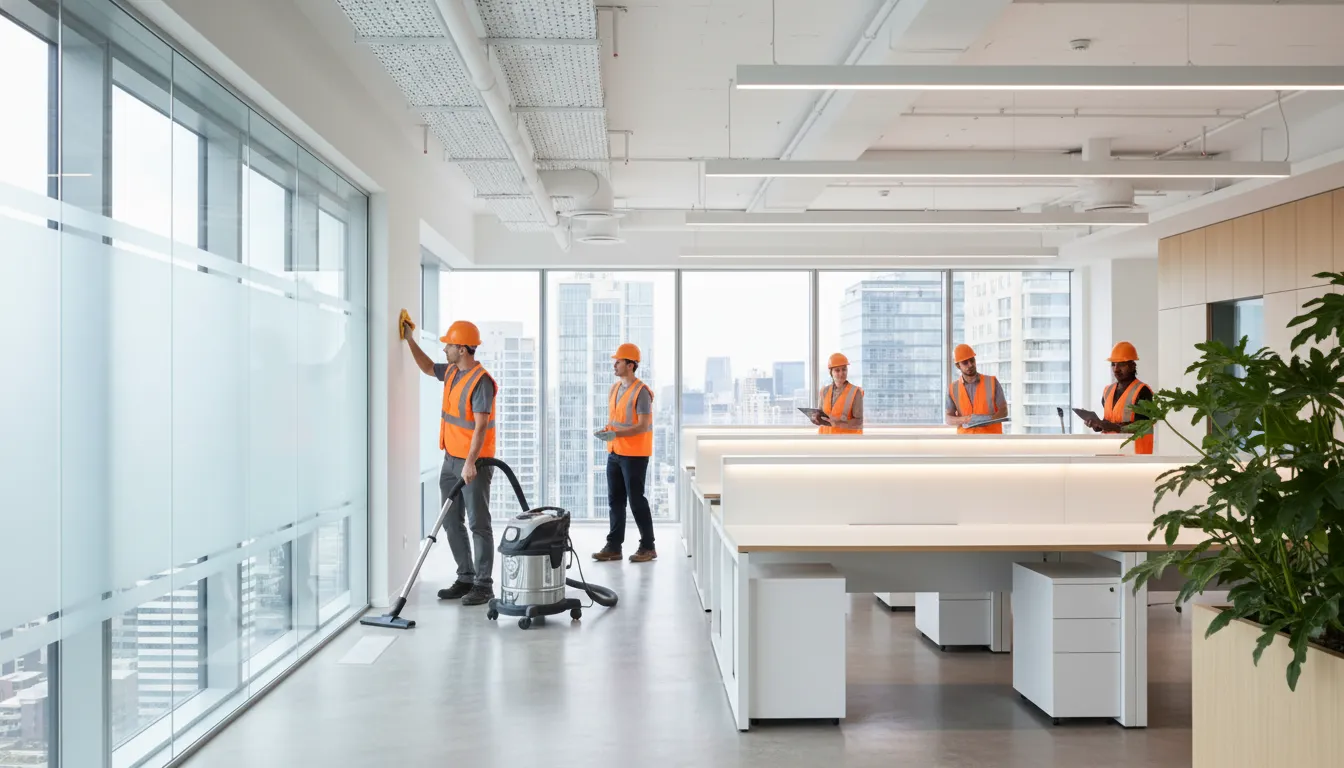
Inspect beyond the direct line of sight
Construction dust settles on the tops of door frames, cabinets, ducts, light fixtures, and other high ledges. Inspectors should check above eye level and around edges, corners, and transitions. These locations often reveal whether the site was detailed methodically or only cleaned where residue was obvious.
How do you remove construction dust without spreading it?
Fine construction dust is easy to redistribute. Dry sweeping, uncontrolled air movement, or cleaning low surfaces before high ones can move dust back onto finished work. Begin by assessing the material, the space, and any facility-specific requirements. Sensitive commercial and technical environments may require specialized procedures.
Follow a controlled top-to-bottom process
- Confirm that active dust-producing work is complete in the zone.
- Address high ledges, fixtures, exposed services, vents, walls, and vertical surfaces before floors.
- Use HEPA-filtered vacuuming where appropriate to capture fine particles rather than redistribute them.
- Use damp methods only where surfaces and facility requirements permit them.
- Clean tools and control cross-traffic between completed and active zones.
- Finish with edges, corners, transitions, and floors, then allow time for a settling-dust recheck.
Foreman Pro Cleaning uses facility-specific assessments and documented procedures, including specialized approaches for critical environments. Teams managing broader ongoing needs can also review the company’s commercial cleaning services.
How should floors, glass, and restrooms be checked before turnover?
Protect floor materials and finishes
Identify every floor type before work begins. Resilient flooring, carpet, concrete, stone, tile, wood, and raised floors can require different equipment and products. Remove loose grit before more detailed work because grit can scratch or dull a new surface. Inspect perimeter edges, corners, stair nosings, transitions, elevator tracks, and areas previously covered by protection. If restoration or ongoing maintenance is needed, coordinate a suitable commercial floor care program.
Detail glass without damaging coatings
Check panes, frames, tracks, hardware, and adjacent surfaces. Remove labels and adhesive carefully, and verify the approved method before using blades, abrasives, or chemicals on coated or specialty glass. Inspect in daylight and interior lighting because streaks and residue can appear differently as conditions change.
Make restrooms operational, not merely presentable
Detail fixtures, partitions, mirrors, counters, dispensers, doors, walls, floors, and drains. Confirm that dust and installation residue are gone, plumbing fixtures are dry and visibly clean, and supplies are stocked if that responsibility is included. Report leaks, loose fixtures, failed dispensers, and damaged finishes to the project team instead of hiding them on a cleaning punch list.
Request a facility-specific cleaning scope
What safety controls belong on the post-construction checklist?
Cleaning crews often enter while a site is transitioning from construction control to normal facility operations. Before work starts, confirm site orientation requirements, personal protective equipment, emergency procedures, access controls, and communication channels. Keep exits, fire equipment, electrical panels, and active work paths accessible.
- Separate sharp objects, chemicals, and hazardous or unknown materials for proper handling.
- Use warning signs and control access around wet floors and active cleaning equipment.
- Verify that ladders and access equipment are suitable for the task and site.
- Do not disturb building systems, specialty equipment, or unidentified residue without authorization.
- Document damaged finishes, incomplete work, leaks, and unsafe conditions immediately.
Adapt controls to the building
A standard office, laboratory, data center, and cleanroom do not share the same risk profile. Technical spaces may require controlled tools, ESD-safe methods, restricted products, and detailed documentation. Define those requirements during the site assessment, not after cleaning has begun. Learn more about the owner-operated team and its experience on the Foreman Pro Cleaning company page.
How do you verify that a commercial building is ready for turnover?
Foreman Pro Cleaning recommends a joint, documented final verification process. Walk each zone with the agreed checklist, review exceptions, and assign every correction to a named owner with a due time. Digital logs and photographs can make the handoff clearer, particularly across large buildings or phased turnovers.
Complete the closeout walk
- Inspect high, low, horizontal, and vertical surfaces under operating light.
- Check high-traffic and high-visibility areas after other inspections and deliveries.
- Verify that cleaned zones remain protected until handoff.
- Separate cleaning defects from construction defects and incomplete trade work.
- Record completed corrections and obtain authorized sign-off.
A disciplined closeout reduces last-minute surprises and gives the facility team a reliable baseline for ongoing care. It also creates accountability without relying on vague impressions of whether a space “looks clean.”
Common turnover misses to catch before occupants arrive
Even a well-managed project can accumulate small issues during the last days of construction. Focus the final review on places where activity overlaps. Entrances collect grit from deliveries. Elevator cabs and service corridors pick up marks from equipment moves. Conference rooms gather packaging from furniture installation. A short, targeted reinspection of these areas often prevents the most visible complaints on opening day.
Look for residue that resembles a construction defect
Adhesive, grout haze, paint specks, protective-film fragments, and fine dust may make a new finish appear damaged. At the same time, aggressive removal can harm the surface. Identify the material first, confirm the approved method, and record any condition that does not respond safely. This approach protects the finish and gives the project team a clear record of unresolved defects.
Check the path occupants will experience
Walk the building as a first-time occupant would. Start at the parking or loading approach, pass through the main entrance, use common corridors and elevators, enter representative rooms, and visit a restroom. Then inspect service routes used by facility staff. This simple exercise reveals inconsistencies between zones and helps teams prioritize corrections that affect readiness, safety, and first impressions.
- Recheck door handles, push plates, elevator controls, and other touchpoints after the closeout walk.
- Inspect baseboards, floor edges, thresholds, and corners for settled dust and grit.
- Confirm that labels and protective film were removed only where authorized.
- Verify that waste, tools, cords, signs, and cleaning supplies have been removed from released areas.
- Record remaining exceptions instead of allowing an unclear verbal handoff.
Frequently asked questions
What is included in a post-construction cleaning checklist for commercial buildings?
It normally covers planning, debris removal, rough cleaning, detailed final cleaning, touch-ups, dust control, floors, glass, restrooms, common areas, safety controls, inspection, punch-list corrections, and documented turnover. The exact scope should reflect the facility, surfaces, schedule, and active construction conditions.
How long does commercial post-construction cleaning take?
Timing depends on building size, the amount and type of residue, trade completion, access, floor and glass conditions, facility sensitivity, and the required standard. A site assessment is the dependable way to set staffing and schedule expectations.
When should the final clean occur?
Schedule the final clean after dust-producing and heavy trade work is substantially complete, released zones are accessible, and required utilities are operating. Plan a touch-up pass after late inspections, commissioning, deliveries, and final trade visits.
Why is a checklist important for property managers?
A checklist translates “ready” into observable standards. It helps property managers track zones, identify exceptions, distinguish cleaning issues from construction defects, assign corrective work, and document the condition accepted at turnover.
Prepare your building for a disciplined turnover
A commercial turnover deserves more than a quick surface clean. Foreman Pro Cleaning brings owner-operated accountability, documented procedures, and facility-aware methods to projects across Maryland, Virginia, and Washington, D.C. Review Foreman Pro’s guidance on choosing a post-construction cleaning company before selecting a partner.
