
Carpet that looks acceptable in a quiet office can already be overdue in a busy lobby, school corridor, or healthcare waiting room. A practical commercial carpet cleaning frequency plan protects appearance and carpet life by matching service to foot traffic, tracked-in soil, spills, and facility operations instead of relying on one annual date.
Request a customized commercial carpet cleaning estimate from Foreman Pro Cleaning.
This guide gives facility managers a practical starting point for offices, schools, daycares, and healthcare facilities. It combines traffic-based schedules with maintenance methods, seasonal considerations, and inspection checkpoints. Use these recommendations to build a preventive plan, then adjust it based on observed conditions and your carpet manufacturer’s guidance.
Commercial carpet cleaning frequency at a glance
Foreman Pro Cleaning recommends dividing a facility into traffic zones instead of placing every carpeted area on one schedule. Match each zone with routine vacuuming, prompt spot treatment, interim cleaning, and periodic hot water extraction. This approach directs time and budget toward the areas that soil fastest.
| Traffic level | Typical areas | Professional cleaning starting point |
|---|---|---|
| Low | Private offices, small conference rooms, storage areas | Every 6 to 12 months |
| Moderate | General office areas, meeting rooms, administrative suites | About every 3 months |
| High | Main corridors, shared workspaces, classrooms, waiting rooms | Monthly or as inspections indicate |
| Very high | Entrances, lobbies, busy corridors, spill-prone areas | One to two times per month as conditions require |
These ranges reflect Foreman Pro Cleaning’s service guidance and should be treated as planning benchmarks, not rigid rules. A facility with strong entry matting, disciplined vacuuming, and limited wet-weather traffic may extend an interval. A busy building during a rainy Maryland spring or snowy Washington, D.C. winter may need service sooner.
Inspect carpet regularly rather than waiting for a scheduled date. If traffic lanes look dull, spots return, fibers begin to mat, or vacuuming no longer restores the appearance, shorten the professional cleaning interval for that zone.
What determines how often commercial carpet should be cleaned?
Commercial carpet cleaning frequency depends on foot traffic, tracked-in soil, spills, carpet construction, appearance standards, and the facility’s operating requirements. Foreman Pro Cleaning evaluates these factors by zone so that the maintenance plan reflects how the building actually functions.
Foot traffic and zone location
Daily occupancy matters, but movement patterns matter more. An entrance used by nearly every visitor collects more soil than a private office used by one person. Lobbies, elevator landings, corridors, and routes between break rooms and work areas usually need closer attention.
Map the paths people take from doors, parking areas, loading points, and cafeterias. These paths often reveal where recurring spots and dark traffic lanes will form. Cleaning those zones more frequently can keep the entire facility looking consistent without over-servicing low-use rooms.
Weather, soil, and entry protection
Rain, snow, road salt, and seasonal debris can accelerate visible wear across Maryland, Washington, D.C., and Virginia. Effective walk-off mats and regular vacuuming help capture tracked-in soil before it moves deeper into the building. Still, busy entry zones may need frequent spot treatment and interim service during wet-weather seasons.
Facility managers should also inspect carpet after landscaping work, construction activity, special events, and periods of unusually high attendance. A temporary increase in soil load may justify an extra service without changing the long-term schedule.
Spills and facility use
Break rooms, childcare spaces, waiting areas, and other spill-prone zones need faster response and shorter cleaning intervals. Prompt treatment reduces the chance that a spill will set or attract more soil. Schedule service sooner when carpet has persistent spots, recurring odors, visible traffic lanes, dull color, or matting.
Carpet construction and manufacturer guidance
Fiber type, color, pile, installation, and warranty requirements all affect the maintenance plan. Review the manufacturer’s instructions before selecting products or methods. Keep service records when required, including the service date, zones cleaned, methods used, and observations for the next inspection.
Choosing between interim cleaning and hot water extraction
Interim cleaning and hot water extraction serve different purposes. Interim methods focus on appearance between restorative visits and can be useful when a busy zone needs attention but the facility cannot accommodate a longer drying window. Hot water extraction provides deeper restorative cleaning for accumulated soil and spots.
When interim cleaning makes sense
Use interim cleaning to maintain entrances, corridors, reception areas, and other visible traffic lanes between full services. It can support a consistent appearance and help facilities address localized wear without cleaning every room. It does not replace routine vacuuming or scheduled restorative cleaning.
How Foreman Pro Cleaning approaches extraction
Foreman Pro Cleaning uses a seven-step commercial carpet cleaning process built around hot water extraction. It begins with pre-inspection, HEPA pre-vacuuming, and pre-spot stain treatment.
The next steps include wet extraction with cleaning and deodorizing agents, post-spot treatment, repeat extraction as needed, and a final inspection. Typical drying time is three to four hours, although conditions can vary.
Plan restorative work around building access and drying needs. After-hours service or phased cleaning can keep essential spaces available while carpet dries. For a closer look at the process, visit Foreman Pro Cleaning’s commercial carpet cleaning services page.
How often should office carpets be professionally cleaned?
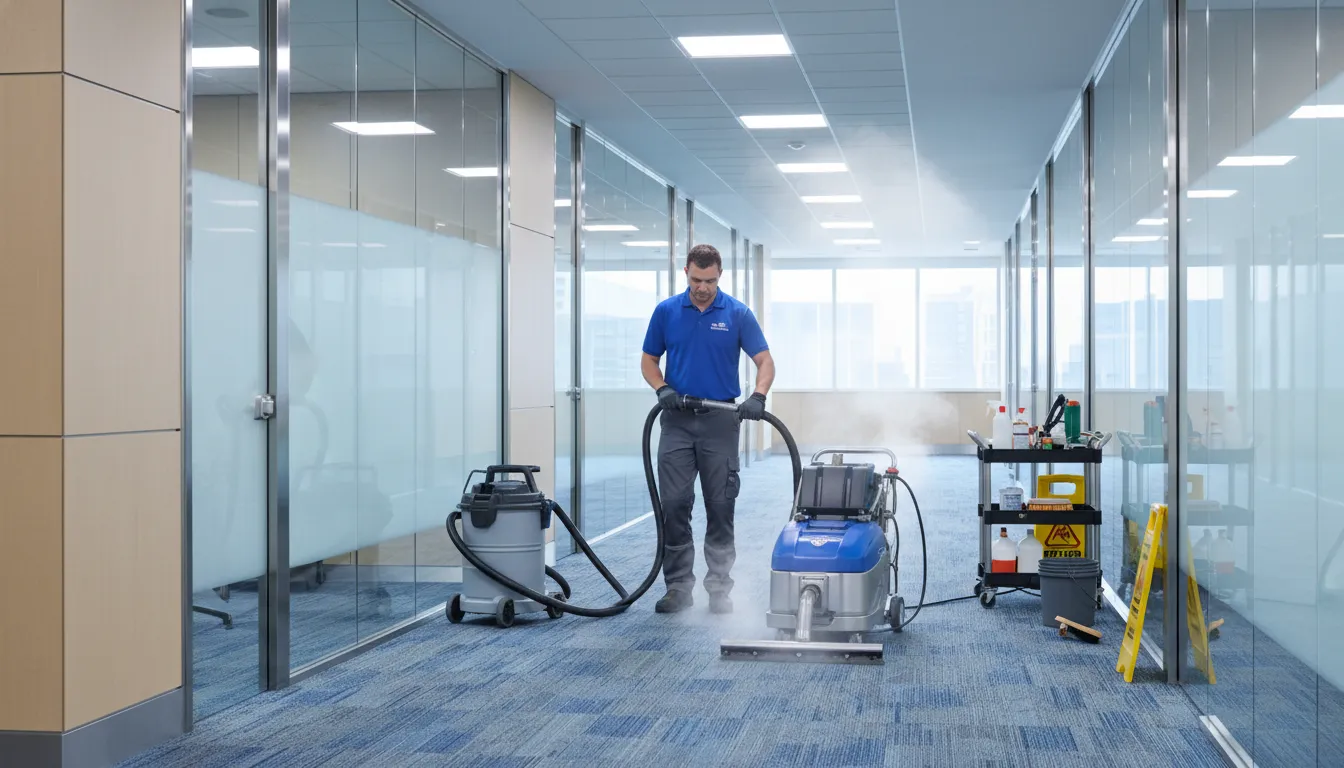
Foreman Pro Cleaning recommends a zone-based office schedule rather than a single annual whole-building event. Entrances, main hallways, and heavily used cubicles may need monthly or twice-monthly professional attention. General offices and common spaces often benefit from quarterly service, while light-use conference rooms and private offices may need service about twice per year.
Office zones that need closer attention
- Entrances and reception areas: Inspect frequently for tracked-in soil, moisture, and visible traffic lanes.
- Main corridors and elevator routes: Watch for dull areas where movement is concentrated.
- Open offices and cubicles: Adjust frequency based on occupancy and the paths employees use daily.
- Break rooms and beverage stations: Treat spills promptly and inspect for recurring spots.
- Conference rooms and private offices: Use condition-based inspections to avoid unnecessary service.
Vacuuming and prompt spot treatment should continue between professional visits. Interim cleaning can improve the appearance of busy lanes without waiting for the full restorative cycle. Scheduling after hours or in phases helps reduce disruption for employees and visitors.
A practical office maintenance checklist
- Daily: Vacuum entrances, corridors, and visible high-use areas; respond to spills.
- Weekly: Inspect traffic lanes, matting, and recurring spots; clean and reposition entry mats.
- Monthly: Review problem zones and determine whether they need interim or restorative service.
- Quarterly: Compare condition notes, service records, and seasonal changes to adjust the schedule.
A cost-conscious plan does not mean waiting until every carpet looks dirty. It means focusing professional work on the zones that need it and protecting the result with consistent daily care. This reduces unnecessary whole-building service while preventing heavily used areas from becoming neglected.
See Foreman Pro Cleaning’s commercial carpet cleaning process and request a facility assessment.
Carpet cleaning schedules for schools and daycares
Schools and childcare facilities experience concentrated traffic, seasonal soil, frequent spills, and periods when restorative work is easier to schedule. Foreman Pro Cleaning recommends treating entrances, main hallways, classrooms, libraries, shared activity rooms, and administrative spaces as separate zones.
Use the academic calendar strategically
Summer breaks, holidays, and professional-development days create opportunities for hot water extraction with more drying time. That does not mean busy carpet should wait until summer. High-traffic entrances and hallways may need recurring interim cleaning throughout the term, while spills should be addressed promptly according to facility procedures.
Before a long break, inspect all carpeted zones and prioritize the areas where deeper cleaning will produce the greatest benefit. After students return, watch for the first signs of recurring traffic lanes. Those observations help refine the next service plan.
Adjust by activity and age group
Early-learning rooms and shared activity areas may need more frequent attention than administrative offices. Inspect carpet after high-attendance events, indoor activities, and wet-weather days. A customized schedule can concentrate resources on heavily used zones while protecting instruction time.
Coordinate access and safety requirements
Confirm approved service windows, access procedures, products, and drying requirements before work begins. Keep children and staff away from active work areas and drying carpet according to facility rules. Document the areas completed so facilities teams know when each zone is ready for use.
How often should healthcare facility carpets be cleaned?
Healthcare facilities need a zone-based schedule aligned with infection-control policies, manufacturer instructions, and documented cleaning procedures. A busy waiting room, an administrative suite, and a low-use consultation room experience different soil and spill loads. Foreman Pro Cleaning builds plans around those differences and the facility’s operational requirements.
Prioritize public and transition areas
Inspect entrances, reception areas, waiting rooms, corridors, and elevator lobbies frequently. These areas often need recurring interim cleaning and more frequent restorative service than offices behind the scenes. Respond to spills promptly according to facility protocol.
Coordinate methods with facility requirements
Before work begins, confirm approved products, access restrictions, drying requirements, and required documentation. Schedule service around patient traffic and operations. Select methods appropriate for the carpet, soil level, facility procedures, and available drying window.
Healthcare facilities should define clear triggers for unscheduled service. Those triggers may include a spill, an odor, visible soil, or a change in space use. Staff should know how to report a problem so it can be evaluated quickly rather than waiting for the next calendar date.
How to build a cost-effective carpet maintenance plan
A cost-effective plan combines preventive work, zone-based scheduling, and condition records. The goal is not simply to clean less often. It is to apply the right service to the right space at the right time while protecting appearance and carpet life.
- Map the facility by traffic level. Mark entrances, primary corridors, shared spaces, spill-prone rooms, and low-use areas.
- Record current conditions. Note recurring stains, dull traffic lanes, odors, matting, and areas where soil returns quickly.
- Confirm carpet requirements. Review manufacturer care instructions and warranty-related maintenance documentation.
- Set routine, interim, and restorative tasks. Do not rely on deep cleaning alone. Frequent vacuuming and prompt spot response protect results.
- Schedule around operations. Select service windows that provide suitable access and drying time with minimal disruption.
- Review after each cycle. If a zone looks soiled well before the next service, shorten its interval rather than changing the whole building’s schedule.
Keep a simple zone log with inspection dates, service dates, recurring concerns, and follow-up actions. Over time, the record shows which areas need more attention and which intervals can be safely extended. That evidence supports better budgeting than a one-size-fits-all annual schedule.
For related planning guidance, review Foreman Pro Cleaning’s deep cleaning schedule guide, article on commercial carpet cleaning myths, and commercial floor care solutions.
Get a customized floor care quote for your Maryland, DC, or Virginia facility.
Frequently asked questions
How often should commercial carpet be professionally cleaned?
Many facilities start with professional cleaning every six to twelve months, then shorten the interval for entrances, corridors, and other heavily trafficked areas. Foreman Pro Cleaning’s service guidance recommends much more frequent attention for heavy-traffic entry areas and hallways. The right interval depends on traffic, soil, spills, carpet type, appearance standards, and manufacturer guidance.
Is vacuuming enough for commercial carpet?
No. Routine vacuuming removes loose surface soil, but it does not replace periodic interim and restorative cleaning. A complete plan combines vacuuming, prompt spot treatment, interim maintenance, and scheduled deep cleaning. Regular inspections determine when each method is appropriate.
Should the entire building be cleaned at the same frequency?
Usually not. A zone-based plan is more efficient because entrances and shared corridors soil faster than private offices or low-use rooms. Inspect each zone and schedule service according to its actual condition, use, and manufacturer guidance.
What are signs commercial carpet needs cleaning sooner?
Visible traffic lanes, persistent spots, dull color, matting, recurring odors, and soil that returns soon after vacuuming suggest the current interval may be too long. Document the condition, address spills promptly, and ask a professional to evaluate recurring problems.
Get a carpet cleaning schedule built for your facility
Foreman Pro Cleaning develops customized plans for businesses and organizations across Maryland, Washington, D.C., and Virginia. The team can assess traffic patterns, carpet condition, operating hours, and facility-specific requirements to recommend a practical floor care schedule.
A facility assessment replaces guesswork with a plan built around actual use. It can identify priority zones, appropriate methods, service windows, and inspection checkpoints that help your carpets remain presentable throughout the year.
Contact Foreman Pro Cleaning to request your customized commercial carpet cleaning plan.
