
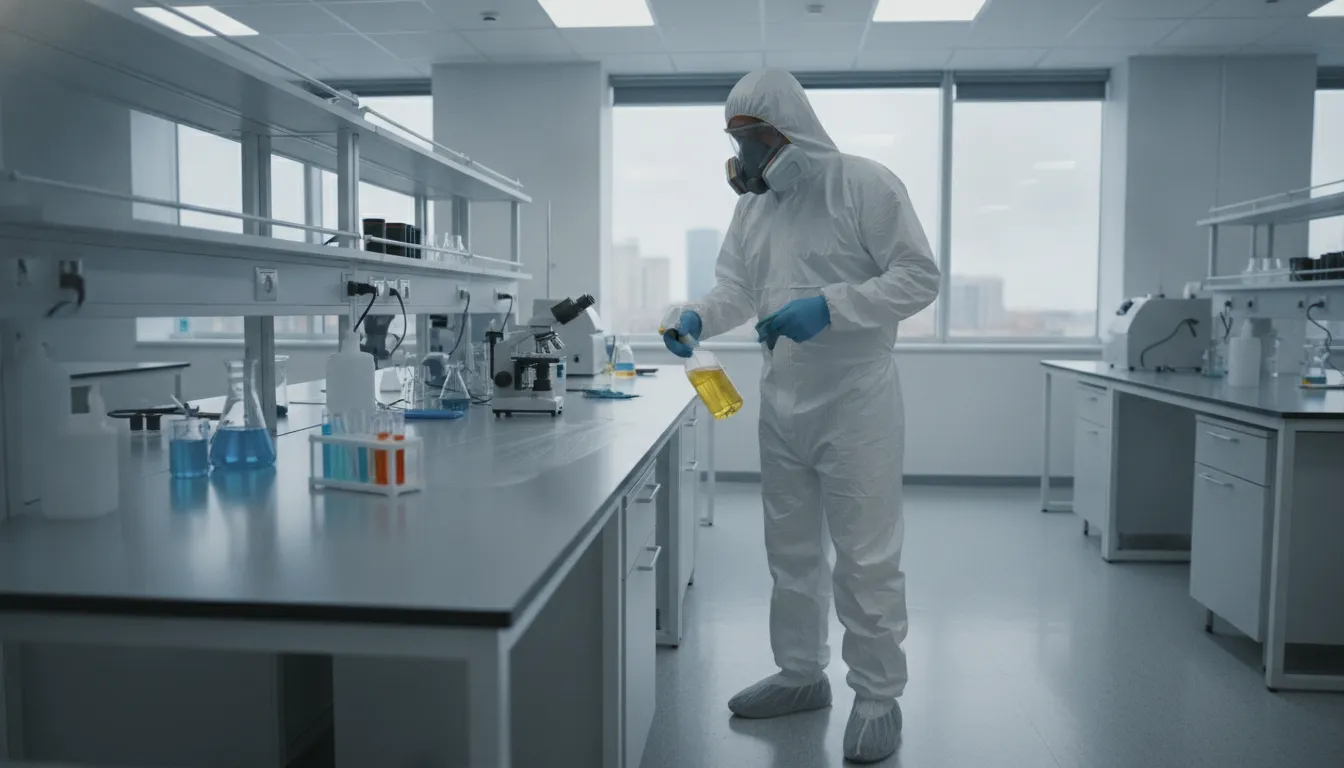
One missed surface can carry contamination from a shared bench into weeks of research. A useful laboratory cleaning checklist does more than name rooms. It defines zones, approved methods, service frequency, responsibility, and proof of completion.
Request a customized laboratory cleaning plan from Foreman Pro.
A laboratory cleaning checklist should cover routine surfaces, high-touch points, floors, sinks, shared spaces, approved products, access limits, and completion records. It must also separate cleaning-partner duties from equipment decontamination, hazardous-waste handling, spill response, and other sensitive work reserved for trained laboratory staff.
The checklist below helps research labs, biotech facilities, and university laboratories build a practical cleaning program and evaluate prospective cleaning partners. Always adapt it to your facility’s SOPs, hazard assessments, and manufacturer instructions.
Why a laboratory cleaning checklist protects research integrity
A laboratory cleaning checklist turns cleaning from an informal habit into a documented control. It names each area, task, method, owner, and required record before work begins. That structure helps teams prevent missed steps, limit cross-contamination, and keep research spaces ready for scheduled work.
The checklist should reflect the risks in each room rather than apply one method everywhere. A sample receiving area, shared workbench, and office do not present the same needs. Clear instructions help staff protect sensitive work without disrupting active tests or handling restricted materials.
Risk-based contamination control
Cleaning removes soils that can interfere with the next control step. The CDC describes cleaning as the necessary first step before disinfection or sterilization. A useful checklist therefore sets the right sequence, approved method, and limits for each surface.
Risk also guides how often teams clean and who may complete the task. High-touch surfaces and shared zones may need closer attention than low-contact areas. A documented plan can group work by room, surface type, research activity, and contamination concern.
- Define the surface, zone, and cleaning method.
- State approved products and required contact time.
- Assign each task to trained lab staff or cleaning staff.
- Record completion, exceptions, spills, and needed follow-up.
Routine work versus specialized responsibilities
Routine cleaning covers approved housekeeping surfaces, such as floors, walls, and tabletops. These tasks still require site rules, safe products, and careful movement between zones. They do not automatically include equipment cleaning, spill response, or decontamination after hazardous work.
Specialized tasks require separate instructions and clear ownership. Lab personnel may need to prepare equipment, remove samples, or confirm that an area is safe to enter. Trained providers of specialized lab cleaning support can then complete the approved scope without crossing defined limits.
Research continuity and clear records
A checklist supports continuity because teams can see what was cleaned, when it was done, and what remains open. If a task cannot be completed, the record gives lab managers a clear issue to review. This reduces guesswork before the room returns to use.
The record also helps managers review recurring gaps and adjust the plan as research activity changes. A strong laboratory cleaning checklist is specific enough to guide work but flexible enough for each zone. It connects daily cleaning decisions with contamination control and dependable lab operations.
Laboratory cleaning checklist by frequency
A useful laboratory cleaning checklist starts with the facility SOP, not a generic product list. The SOP defines approved products, required contact times, restricted surfaces, and who may clean each zone. Follow it before any routine task or spill response begins.
The CDC explains that cleaning removes organic matter, salts, and visible soil before disinfection or sterilization. This order matters because soil can affect how a germicide works. Keep routine housekeeping separate from equipment decontamination and spill response.
Daily and weekly cleaning tasks
Daily work targets surfaces that collect soil or receive frequent contact. Clean approved work surfaces, door handles, light switches, sinks, and shared touchpoints according to the SOP. Remove permitted waste, restock supplies, and inspect floors without entering restricted equipment zones.
Weekly tasks address areas that need regular care but may not require daily service. Clean accessible shelving, cabinet fronts, interior glass, and low-touch fixtures when the SOP allows it. Review completed logs and report damage, leaks, residue, or recurring soil to the lab manager.
| Frequency | Checklist focus | Required control |
|---|---|---|
| Daily | Approved work surfaces, high-touch points, sinks, waste, and visible floor soil | Check product, contact time, PPE, and restricted zones |
| Weekly | Accessible shelves, cabinet fronts, glass, fixtures, and detailed floor edges | Confirm access and document defects or residue |
| Monthly | Walls, vents, storage areas, baseboards, and scheduled floor care | Coordinate shutdowns and protect sensitive equipment |
| Periodic | Deep cleaning, floor refinishing, and approved decontamination support | Use a written scope, trained staff, and lab approval |
The table is a planning guide, not a replacement for the lab’s written procedures. A higher-risk room may need more frequent service than a general work area. Tasks should also change after spills, maintenance work, heavy use, or a change in research activity.
Monthly and periodic work
Monthly work can include walls, baseboards, vents, storage areas, and detailed floor care. Schedule these tasks around lab operations so crews do not disturb active work. The SOP should state which surfaces cleaners may touch and which require trained laboratory staff.
Periodic work covers deeper tasks tied to room use, inspections, or planned shutdowns. It may include approved floor refinishing, high-level dust removal, and support for decontamination led by authorized personnel. A written scope keeps routine cleaning from crossing into restricted work.
Records, products, and responsibility
Each checklist entry should name the zone, task, product, method, frequency, and responsible role. Add fields for completion time, staff initials, exceptions, and corrective action. Clear records help the lab manager confirm that work followed the approved plan.
Product choice depends on the surface, soil, target organisms, and required contact time. Never assume one disinfectant suits every bench, instrument, or floor. Foreman Pro’s Foreman Pro lab cleaning services can support a plan that respects facility rules and sensitive research areas.
Who should clean each laboratory area?
Laboratory staff should own active benches, samples, and sensitive instruments. EHS should define safety controls, while facilities teams coordinate schedules and access. A trained cleaning contractor should complete only approved housekeeping tasks in assigned zones and report exceptions before proceeding.
Zone ownership
A laboratory cleaning checklist should assign each area to a named owner before work begins. Divide the site into clear zones based on access rules, hazards, and the work performed there. Mark each zone as routine, controlled, or restricted so cleaners know where they may enter and what approval they need.
Lab staff should own benches, active work surfaces, samples, and instruments tied to research. They understand the materials in use and can make each area safe before another team enters. Environmental health and safety (EHS) should set hazard controls, approve cleaning methods, and explain spill or exposure steps.
Routine surfaces and shared spaces
Facilities teams usually manage schedules, work orders, access, and quality checks. A trained cleaning contractor can handle approved housekeeping surfaces, floors, waste points, and common areas. The CDC separates housekeeping surfaces, such as floors, walls, and tabletops, from equipment surfaces. That distinction helps teams avoid unsafe task overlap.
High-touch points need a clear owner and a set frequency. These points may include door handles, light switches, shared touch screens, cabinet pulls, and sink controls. Common areas can include corridors, break rooms, reception areas, restrooms, and non-lab offices. List the approved product and method for each surface, since one method may not suit every material.
Floor care also belongs on the area plan. The contractor may clean open floor space, while lab staff clear obstacles and report spills or hazards. Facilities should coordinate access so floor work does not disrupt active research. For sensitive sites, critical environment cleaning services should follow the lab’s approved zone and access rules.
Restricted equipment and handoffs
Restricted equipment should never appear as a general cleaning task. Lab staff or an approved service technician should clean biosafety cabinets, analytical tools, incubators, and other sensitive equipment. EHS should define any needed decontamination step before repair, relocation, or contractor access. The checklist should name who can release each item for work.
- Lab staff: Secure samples, clear benches, clean research equipment, and report hazards.
- EHS: Set safety controls, approve products and methods, and manage exposure procedures.
- Facilities: Coordinate schedules, access, records, vendors, and quality checks.
- Cleaning contractor: Complete approved tasks in assigned zones and report any exception before proceeding.
Use a simple handoff rule: no release, no cleaning. The area owner confirms that hazards are controlled before the contractor starts. After work, the contractor records the task, product, time, and any issue found. The area owner then checks the result before the zone returns to normal use.
How should laboratory cleaning services follow a laboratory cleaning checklist?
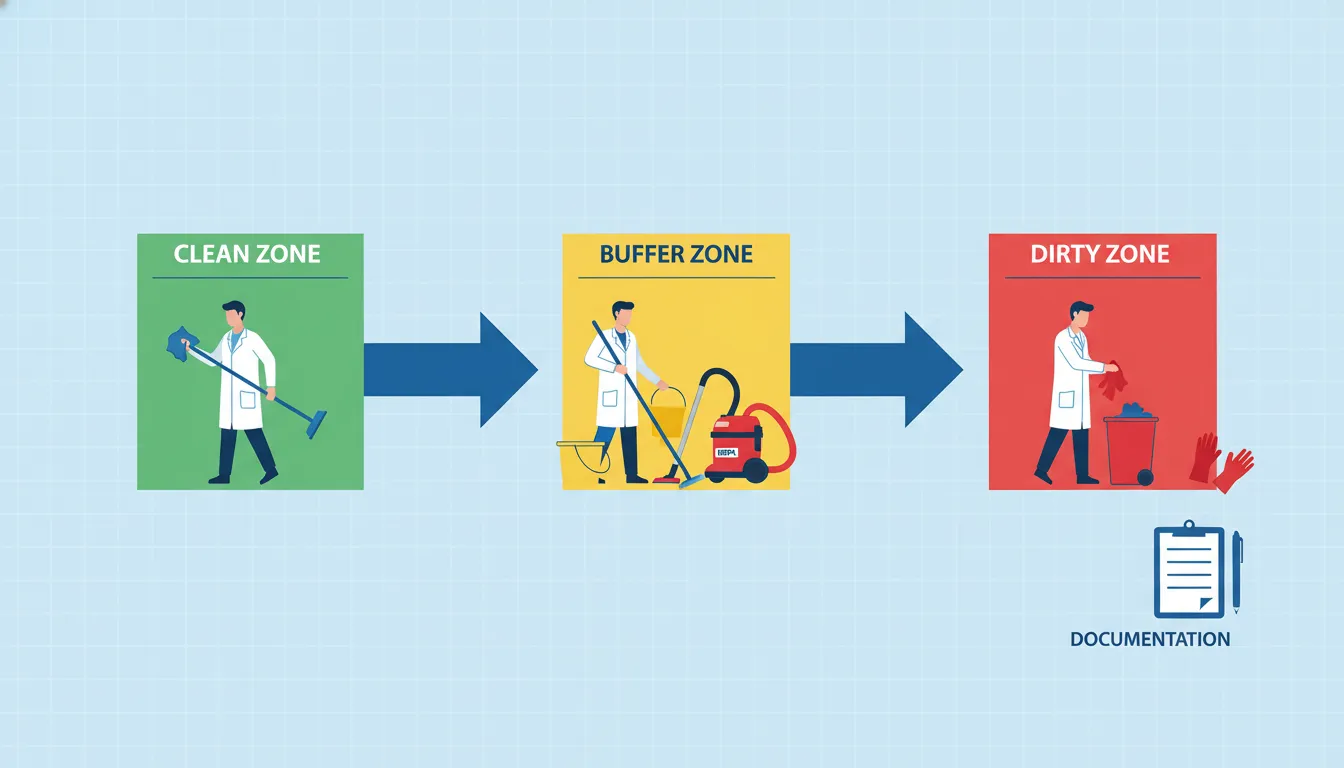
A laboratory cleaning protocol can help control the movement of people, tools, chemicals, and contamination between zones. The facility’s approved procedure should define the scope, release process, cleaning sequence, and records for each room. Laboratory cleaning services should follow those facility-specific procedures rather than apply one generic method to every room.
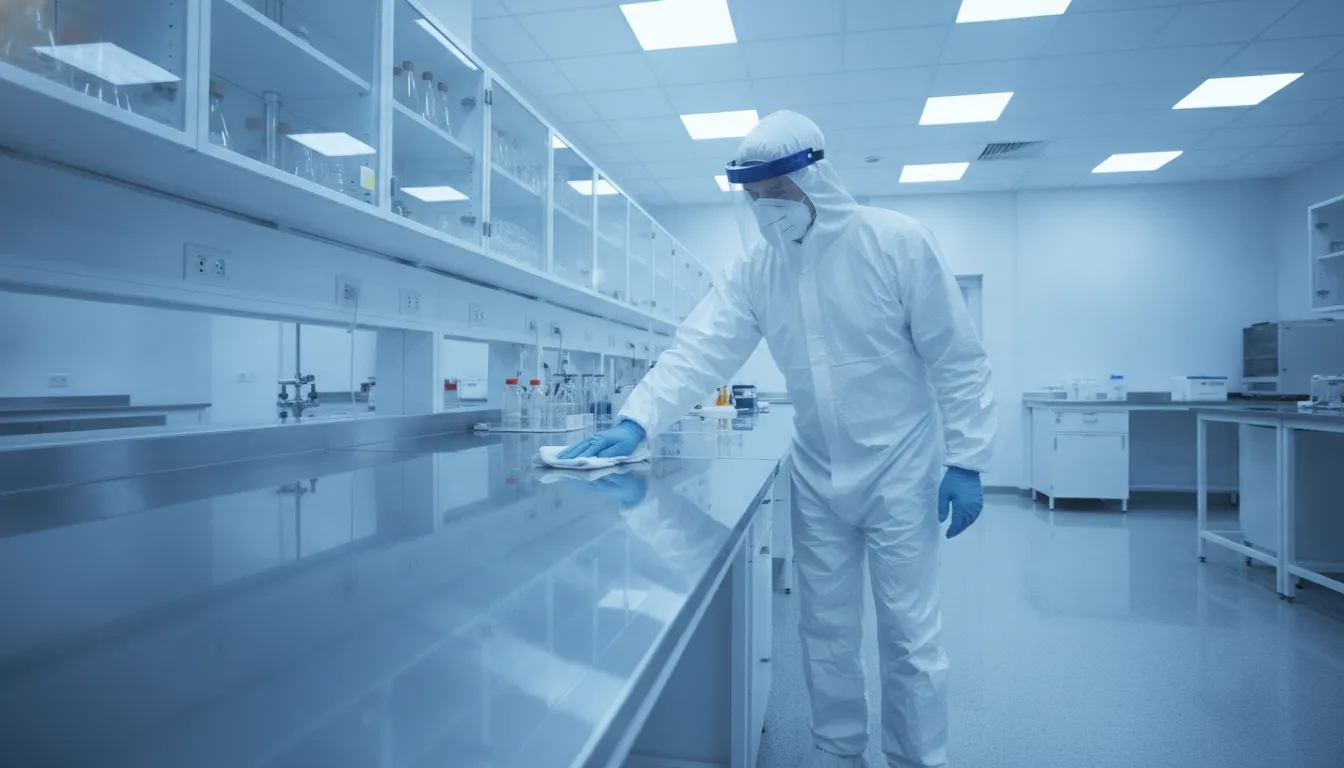
What should happen before a laboratory cleaning service enters a zone?
Begin with a pre-service handoff between the laboratory contact, the cleaning lead, and any environmental health and safety representative responsible for the area. Confirm the room or zone, active research, access limits, hazards, approved products, required personal protective equipment, waste route, and the person who can release the area for cleaning. If samples, instruments, or restricted materials have not been secured or cleared, the cleaning team should stop and report the exception.
Use a facility-defined release rule: if the area is not cleared, do not begin cleaning. The facility may label each area as routine, controlled, or restricted, and should identify the surfaces that a cleaning contractor may handle. Laboratory staff should retain responsibility for active experiments, samples, sensitive instruments, hazardous spills, and decontamination unless the facility’s approved procedure assigns that work to a specifically trained person. This boundary protects research continuity and prevents an apparently routine task from becoming an unauthorized intervention.
Which procedures should the laboratory cleaning checklist document?
The facility’s written procedure should give the worker a repeatable route and a clear stopping point. Depending on the facility SOP, it may address these steps:
- Confirm the zone and approved scope. Review the room status, access restrictions, current work, hazards, and task list before entry.
- Use the required protective equipment. Follow the facility procedure for selection, donning, removal, and disposal.
- Stage dedicated supplies. Keep tools, containers, and carts assigned to the zone. Do not move used supplies into a cleaner area.
- Follow the approved sequence where the facility SOP permits. Work from lower-contamination to higher-contamination areas and high to low, then complete floors last unless the facility SOP requires another order.
- Use approved products and methods. Match the product, surface, hazard, and required contact time to the written procedure and product label. Never mix products or substitute an unapproved chemical.
- Control handoffs. Contain reusable tools and waste before they leave the zone, replace supplies when the procedure requires it, and report any damaged surface or unexpected material.
- Close and record the task. Note completion, exceptions, corrective action, and the person responsible for follow-up before the area returns to normal use.
What should each laboratory cleaning record include?
For a facility program, a useful record can show the room or zone, surface or task, date and time, worker, method, approved product, required contact time, reviewer, and completion status. The facility’s procedure should define exception fields for denied access, an active experiment, a spill, damaged equipment, a missing product, or any task that could not be completed as written. The record should identify the owner and next action instead of leaving the issue as an informal note.
Supervisors can review the log against the written checklist and inspect selected areas for missed steps, residue, tool movement, or unclear handoffs. The facility’s approved record-control procedure determines how to store cleaning records, approved chemical lists, Safety Data Sheets, training records, and corrective-action history. The CDC environmental-services guidance supports cleaning before disinfection or sterilization, while the laboratory’s own SOP defines the products, controls, and responsibilities for its environment.
How does laboratory cleaning differ from cleanroom cleaning?
Laboratory cleaning supports research spaces with controls that depend on the work performed, hazards, equipment, and access rules in each zone. Cleanroom cleaning supports a classified controlled environment. Where applicable, the facility’s procedures may address particle classification under ISO 14644-1, along with other site-specific controls for movement, materials, gowning, airflow, and particle control. A laboratory may contain a cleanroom, but laboratory cleaning and cleanroom cleaning are not interchangeable labels.
Do not state that routine cleaning alone establishes an ISO classification or guarantees regulatory compliance. Instead, define the approved scope, identify who owns specialized procedures, and link the facility’s cleaning plan to its applicable SOPs. For a more detailed comparison of methods and service boundaries, review cleanroom cleaning versus laboratory cleaning. Foreman Pro can be evaluated against the same scope, training, documentation, and quality-control requirements. For complex or sensitive facilities, Foreman’s commercial cleaning capabilities can support a plan around site risks and operating needs.
Documentation that makes laboratory cleaning verifiable
A laboratory cleaning checklist should create evidence, not just prompt tasks. Each record should show what was cleaned, when work occurred, and who completed it. It should also capture the method, product, and required contact time. This detail lets a lab manager review work without relying on memory.
Cleaning logs and sign-offs
Use a cleaning log that matches the lab’s approved scope and room zones. Give each task a clear line for the date, time, cleaner, and sign-off. Separate routine housekeeping from work that requires lab staff or a trained specialist. This boundary helps protect sensitive equipment and research areas.
- Record the room, surface, and task completed.
- Note the product, dilution, and contact time used.
- Name the cleaner and the person who checked the work.
- Flag skipped, delayed, or changed tasks.
Product and method fields matter because disinfection choices depend on the surface, soil, microbes, and germicide contact time. The CDC’s environmental cleaning guidance explains these factors. Logs should use the terms and steps set by the lab’s approved plan.
Exceptions and supporting records
An exception report explains why planned work did not occur as written. It should state the affected area, reason, temporary control, owner, and next action. Examples include a restricted room, a spill, damaged equipment, or a missing product. Managers can then track the issue until it is closed.
Keep current chemical lists and Safety Data Sheets with the cleaning records. Training files should show which workers are cleared for each space and task. Records may include course names, completion dates, refresh needs, and supervisor approval. These details also help managers assess a provider’s laboratory cleaning expertise.
Inspection and audit readiness
Routine inspections test whether the written record matches conditions in the lab. An inspector can review selected logs, check surfaces, and confirm that exceptions were closed. Findings should name the issue, owner, due date, and follow-up result. Trend reviews can reveal repeat gaps in a room, shift, or task.
- Store logs, sign-offs, exception reports, chemical records, and training files in one controlled location.
- Use clear file names and access rules so approved staff can find records.
- Review records before an audit and correct missing or unclear entries.
- Keep inspection findings with proof of follow-up.
No single checklist guarantees compliance. Audit readiness comes from an approved plan, accurate records, trained staff, and consistent review. A related critical environment cleaning checklist shows how defined tasks and records also support control in other sensitive spaces.
How do you evaluate a laboratory cleaning partner?
Evaluate a laboratory cleaning partner by verifying critical-environment training, scope boundaries, approved products, zone controls, supervision, and reporting practices. Require a site walk and written plan, then compare sample logs and corrective-action procedures against your laboratory’s risks and operating rules.
Evaluate a cleaning partner against the risks, work zones, and operating rules of your laboratory. A low bid means little if the proposed service leaves scope gaps or disrupts research. Use your laboratory cleaning checklist as a vendor scorecard, not just a list of chores.
Training and scope boundaries
Ask each vendor to explain how workers are trained for critical environments. Their answer should cover contamination control, personal protective equipment, chemical handling, access rules, and incident reporting. Request proof of training and the process used to refresh it.
Next, define exactly where routine cleaning ends and lab-led work begins. Floors, walls, and tabletops are housekeeping surfaces, while sensitive equipment may need separate procedures. The CDC environmental cleaning guidance also states that cleaning comes before disinfection or sterilization.
A strong proposal names included areas, excluded tasks, approved products, required contact times, and who handles spills or unknown materials. It should also state which rooms need an escort or clearance. Compare this detail with the vendor’s a specialized laboratory cleaning program before choosing a partner.
Custom plans and quality controls
Require a site walk before accepting the final scope. During the walk, review traffic flow, clean-to-dirty work order, high-touch points, waste routes, restricted zones, and floor care needs. The vendor should turn those findings into a plan tied to your facility’s risks.
Ask how supervisors confirm that work was completed correctly. Useful controls include shift checks, periodic audits, issue logs, and clear steps for correcting missed work. Supervisors should know the approved scope well enough to stop unsafe or out-of-scope requests.
- Who approves products, tools, and procedure changes?
- How are workers assigned, trained, and supervised?
- What happens after a missed task or access problem?
- How does the team prevent tools from moving between zones?
- Who reviews the plan when lab operations change?
Documentation and communication
Review sample records before signing an agreement. Logs should show the area, task, date, completion status, and person responsible. Documentation must be easy for facility leaders to review and detailed enough to support follow-up when a concern appears.
Test the communication plan with realistic cases. Ask who receives notice after a spill, denied access, damaged item, supply shortage, or repeated missed task. The answer should name contacts, response steps, escalation paths, and expected reporting methods.
Finally, score every bidder using the same criteria and evidence. Include training, scope clarity, supervision, records, communication, and fit with your site’s rules. A related critical environment cleaning checklist can help leaders assess similar controls for sensitive facilities.
Adapting the checklist to your laboratory
A useful laboratory cleaning checklist reflects the work performed in each room. It should not apply one schedule to every research lab, biotech facility, or university lab. Start with the facility SOPs, then adjust each task for room use, occupancy, hazards, and access limits.
Set frequency by activity and risk
Map the lab by work zone before assigning cleaning frequency. A busy shared bench may need attention after each work period. A low-use storage room may follow a less frequent schedule. Increase attention where staff handle samples, move between zones, or often touch shared surfaces.
Match the cleaning method to the actual hazard. The CDC notes that disinfection choices depend on several factors. These include the surface, microbial load, organic soil, organism resistance, and germicide contact time. Facility SOPs must still define approved products, dwell times, PPE, and response steps.
- Research labs: Plan around active studies, sample movement, and sensitive instruments.
- Biotech facilities: Separate controlled zones and set strict rules for tools, supplies, and waste paths.
- University labs: Account for changing class schedules, rotating users, and periods of heavy occupancy.
Define scope and ownership
Separate routine housekeeping from work that trained lab staff must perform. Cleaning teams may handle approved floors, walls, tabletops, touchpoints, and common areas. Lab staff should retain tasks involving active experiments, hazardous spills, samples, or sensitive equipment unless the SOP states otherwise.
Write clear limits beside each checklist task. Name the approved product, tools, PPE, cleaning route, and person responsible. Mark restricted surfaces and rooms so cleaners do not need to guess. For complex sites, Foreman Pro’s lab cleaning approach can help align routine work with site controls.
Build a practical handoff
Before each shift, the lab contact should report active work, new hazards, restricted rooms, and schedule changes. The cleaning lead should confirm staffing, approved supplies, and any tasks that cannot be completed safely. Both parties need a simple way to record exceptions.
Use a sign-off log with the room, task, date, time, cleaner, and lab contact. Add a field for damaged surfaces, supply shortages, spills, or access issues. Review the log on a set schedule, and update the checklist when lab activities or SOPs change.
Frequently Asked Questions
How often should laboratory work surfaces be disinfected?
Set the frequency through a risk-based schedule tied to laboratory activities, contamination risks, and the products used. Disinfect work surfaces after spills, after contamination, and at the intervals required by the facility’s written procedures. High-touch surfaces may need more frequent attention. The CDC notes that disinfectant selection depends on factors such as microbial load, organic soil, and required contact time.
What is the difference between lab cleaning and decontamination?
Cleaning removes visible soil, organic matter, and residues from a surface. Decontamination uses cleaning, disinfection, sterilization, or another approved process to make an item safe for its intended handling or use. According to the CDC, cleaning is the necessary first step before disinfection or sterilization. A laboratory cleaning checklist should clearly assign each process and its responsible team.
What are the best practices for cleaning laboratory equipment?
Follow the equipment manufacturer’s instructions and the laboratory’s approved procedure before cleaning any instrument. Identify who may clean each component, which products are compatible, and whether shutdown or decontamination is required first. Routine cleaning staff should not move, open, or treat sensitive equipment without authorization. Document completed work, report damage or residue, and keep equipment cleaning separate from general housekeeping tasks.
What safety protocols apply to laboratory cleaning?
Laboratory cleaning protocols should define access restrictions, required training, personal protective equipment, approved products, waste handling, spill response, and incident reporting. They should also identify restricted equipment and surfaces that only laboratory personnel may handle. Cleaning teams need site-specific orientation before entering controlled areas. Managers should review safety data sheets, exposure controls, and emergency procedures with the cleaning partner before work begins.
Why is a professional laboratory cleaning service necessary?
A trained laboratory cleaning service can manage routine housekeeping without interfering with research equipment, controlled zones, or facility protocols. The service should understand contamination control, access restrictions, documentation, and the difference between housekeeping and specialized decontamination. When evaluating a partner, verify relevant training, supervision, insurance, quality checks, and the ability to follow site-specific procedures. Responsibilities should be documented before service starts.
Ready to Build a Safer Laboratory Cleaning Plan?
Delaying a review of your laboratory cleaning program can leave unclear responsibilities, missed tasks, and avoidable gaps in contamination control. Starting now gives your team time to define cleaning zones, approve methods, and align schedules before small process gaps disrupt daily work. A tailored plan also helps your staff and cleaning partner set clear expectations from the first service visit.
Do not wait until an overlooked task creates an urgent cleanup or puts important work at risk. Contact our team today so planning can begin while your staff still has time to review each requirement carefully. Ready to strengthen your cleaning program? Request a customized laboratory cleaning plan to establish practical steps, responsibilities, and a timeline for your facility.
