
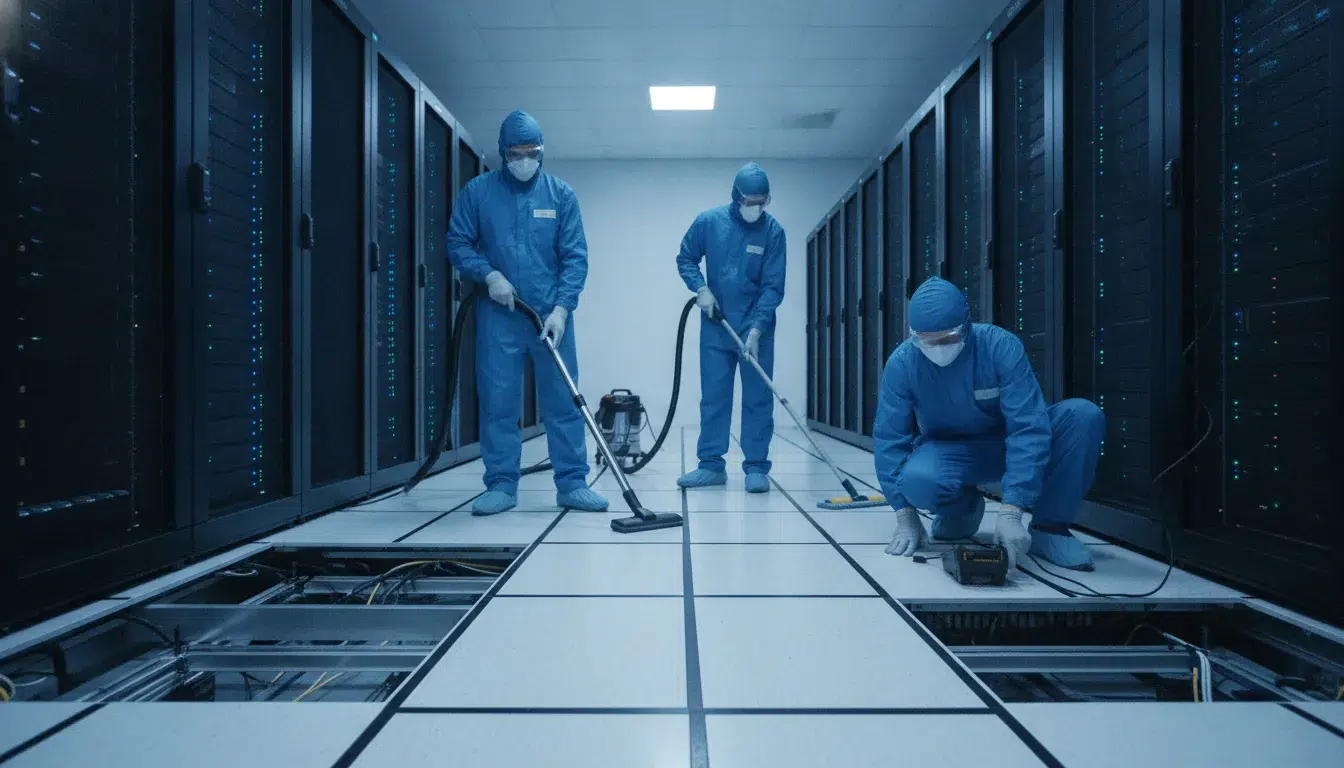
Static spikes in a data center can damage server components in a split second. Contaminated surfaces can interfere with a floor’s static-control function, so specialized ESD floor cleaning protects both the surface and the sensitive equipment nearby.
Request a data center facility assessment to build a controlled cleaning plan around your flooring, operations, and contamination risks.
ESD floor cleaning is a controlled process for removing dust, oils, and residue without compromising a static-control floor. The correct cleaner, dilution, equipment, and method depend on the floor manufacturer’s instructions and the facility’s electrical performance requirements. Teams should coordinate work with data center operations, control moisture, use appropriate particulate-capture equipment, and document each service. Cleaning supports the floor’s intended performance. Qualified facility personnel or a testing provider should verify electrical properties when required.
Managing these floors needs a good grasp of both chemicals and IT standards. You cannot clean a static-control floor like a normal office tile without risking your hardware and uptime. The first step is to learn why ESD floor cleaning is different in a data center. Here is how it works.
Why ESD floor cleaning is different in a data center
Data centers use custom floors to keep servers and networking gear safe. These surfaces are called Electrostatic Discharge (ESD) floors. They are not like the tile you see in a normal office or home. In a data center, a small spark of static electricity can cause huge problems. It can crash a server or ruin parts that cost a lot of money to replace. Without the right floor, even walking across the room could put your data at risk. This is why data center managers focus so much on floor care.
How static control flooring works
ESD floors give static electricity a safe place to go so it does not build up. The floor has a low-resistance path to ground. This path lets charges from people and gear flow away quickly and safely. By moving these charges to the ground, the floor protects sensitive gear from sudden shocks. This keeps your data safe and your hardware running without any sudden stops. It also protects the people working in the room from shocks.
There are two main types of static control floors used in tech rooms:
- Conductive floors move charges to the ground very fast to stop sparks before they happen.
- Dissipative floors move charges at a slower, controlled rate to keep the room balanced.
Each type needs expert ESD floor cleaning to work the right way. If you use the wrong method, the floor may stop doing its job. This leads to gear failure and lost time. Expert cleaners know which floor you have and how to treat it.
The risk of dirt and residue
Ordinary cleaning products can ruin an ESD floor very fast. Many soaps and waxes leave a thin film or residue on the surface. This film acts like a blanket that blocks the flow of electricity to the ground. Dirt and dust can also build up and stop the floor from working. When a layer of dirt sits on the floor, it acts as an insulator. This blocks static flow and puts your gear at risk. Good ESD floor cleaning removes this dirt without leaving any new film behind. It keeps the surface clear so electricity can always find its way out of the room. This process requires technical skill and the right tools.
Protecting critical uptime
Dirt and dust are big threats in mission-critical rooms. Dust can get into server racks and cause them to get too hot or fail. It can also lead to short circuits that damage your parts. Clean floors help stop this dust from moving through the air and into your gear. You need a cleaning plan that focuses on both static safety and air quality for the best results. Regular data center cleaning keeps the floor clear of grit that could scratch the surface. Keeping the floor in good shape is key to long-term safety and uptime. It ensures your facility stays in top form for years to come.
What contamination puts an ESD floor at risk?
Contamination on an ESD floor is more than a visual problem. In a cleanroom or data center, dust and debris do more than just look messy. They can form a layer that blocks the path to the ground. This layer can act as an insulator, which stops static from leaving the floor. When static cannot move, it builds up and puts your sensitive equipment at risk of damage.
The danger of invisible insulators
A floor can look clean but still fail its electrical tests. This happens when small particles or the wrong cleaning agents build up on the surface. For example, some common waxes can coat the floor and stop it from working. Regular ESD floor cleaning is needed to prevent this dirt buildup. Without it, the floor might not meet safety rules like those from the NIH or other groups.
Common sources of floor debris
Debris comes from many places. People walking across the floor bring in outside dirt and skin cells. Equipment like carts or chairs can leave behind small bits of material. In spaces like a raised floor environment, dust can even come up from the sub-floor. If this dust stays on the floor, it creates a high-resistance path. This path stops the quick flow of electricity to the ground. Keeping a low-resistance path is the main goal of any static control system.
Visual cleanliness versus electrical performance
You cannot judge an ESD floor by how it shines. A glossy floor may look great but could be covered in a film that makes static. Truly clean floors are both free of visible trash and work well to move charges. This is why expert care is vital for high-tech spaces in Maryland, Virginia, and D.C. Using the right tools, like HEPA-filtered vacuums, helps keep dust from floating in the air. This protects both the floor and the server equipment from harm.
A safe ESD floor cleaning process
Expert ESD floor cleaning is not a simple task. It is a key way to keep a data center safe. Over time, dirt and dust can build up on the floor surface. This thin layer can act as an insulator. It may stop the floor from moving static to the ground. This creates big risks for your hardware. Following a clear plan helps your floor work well for a long time. It also helps you save money on repairs.
Task prep
Before you start, you must check the room. Talk to the IT team about the work hours and goals. This helps keep everyone safe and avoids stops in service. You should also gather the right tools and gear. Only use items made for a static control floor to get the best results. These tools help protect your gear from sudden shocks that can break parts.
The cleaning steps
A controlled workflow keeps technicians, equipment, and the floor system in mind. Set the scope and timing with the facility team before work starts. Confirm the flooring manufacturer’s approved products and methods. Use tools selected for critical environments and control moisture throughout the process.
- Use a HEPA vacuum to pick up loose dirt and debris. This step is vital to keep dust out of the air. It protects the servers and the sub-floor area from harm.
- Prepare a compatible ESD floor cleaner exactly as its label and the flooring manufacturer direct. Use clean, dedicated tools to avoid cross-contamination.
- Mop the floor in small sections to keep control. Do not let the water sit for too long on the tiles. This helps prevent damage to the floor tiles and the glue.
- Rinse the mop often in a second bucket of clean water. This keeps you from spreading dirt back onto the floor. It also keeps the floor from getting sticky.
- Allow the floor to dry on its own after you mop. Do not walk on the floor until it is fully dry. This prevents slips and new dirt marks from shoes.
- Check the floor for any spots or streaks that stayed behind. If you see dirt, clean that spot again with a damp cloth. A clean floor is a safe floor for your tech.
Checking the work
Once the work is done, you must look at the results. Look for spots or dirt that stayed behind. You should also write down the work in a log or book. This helps you track when the next clean is due for the site. Good notes prove that you follow ESD floor cleaning rules. This is key for audits and safety rules. It shows you care about your gear and your team.
Be careful with the type of floor you have in the room. Some floors need a special wax to work right. If you use the wrong soap, you might lose your warranty. Always read the floor guide before you pick a soap or a tool. If you are not sure, ask a pro for help. This keeps your site safe and your floor in top shape. It is better to be safe than to have a broken server.
Choosing products and equipment for ESD floors
Selecting the right tools is the first step in a safe specialized ESD floor cleaning plan. Standard floor soaps often leave a thin film behind as they dry. This film acts as an insulator that blocks the path to the ground. When static cannot flow through the floor, it builds up and can shock your servers. You must use neutral-pH cleaners that are made specifically for static control.
Safe cleaning solutions
Compatible products are designed to clean without leaving a residue that interferes with the floor’s intended static-control properties. Many are concentrates, but dilution and application directions vary by product and flooring system. Review the label, Safety Data Sheet, and flooring manufacturer’s guidance before approving any chemical. Do not substitute a general-purpose cleaner simply because it is neutral pH.
Comparing ESD-safe and standard tools
Using the wrong equipment can ruin an ESD floor and void its warranty. For example, factory coatings on vinyl floors can act as static generators if they are not maintained with the right polish. Professional maintenance for ESD-rated flooring requires HEPA vacuums. These vacuums trap tiny dust particles so they do not drift into the air and land on your electronics. The following table shows how safe tools differ from standard options.
| Tool Category | ESD-Safe Option | Standard Option |
|---|---|---|
| Cleaning Agent | Neutral pH dissipative soap | Generic soap or wax |
| Vacuum Type | Certified HEPA filtered | Standard shop vacuum |
| Mop Head | Static-safe microfiber | Cotton or poly-blend |
| Mopping Water | Warm with precise dilution | Cold or tap water |
| Surface Finish | Antistatic floor polish | Standard high-gloss wax |
Working with manufacturers
Every floor brand has its own set of rules for upkeep. If you use the wrong wax on vinyl tiles, the floor may stop protecting your equipment from shocks. Some floors need a wet mop while others just need a damp wipe to stay conductive. It is best to check the guide from the maker of your floor before you start. This helps ensure your ESD floor cleaning requirements meet both safety and warranty needs.
Static control flooring creates a low-resistance path for electricity. This path lets charges from people and tools flow safely into the ground. Following the rules from the NIH technical guidelines helps labs and data centers avoid costly equipment damage. Always check that your staff knows how to use these tools to keep your facility safe.
How often should data center ESD floors be cleaned?
There is no single rule for how often to clean an ESD floor. Every data center is unique. The amount of foot traffic and the age of your site play big roles in your schedule. But keeping a set plan is the best way to stop static risks. If you wait too long, dirt can build up and block the floor’s ability to ground charges. This can lead to gear failure or data loss.
Daily needs for static control
Dust and dirt can build up fast on floor tiles. Even a thin layer of grime can act as a shield. This shield stops static from moving safely from the surface to the ground. You should use a dry mop or HEPA-filtered vacuum on the floor every day. This daily task removes loose soil before it can get ground into the floor. It also keeps dust from getting back into the air. If dust gets into the air, it can land on server racks and cause heat problems.
Daily care also helps you find spills or sticky spots. Sticky spots can attract more dirt and mess up the specialized ESD floor cleaning balance. Clean spills right away with a damp mop. Use only approved cleaners that do not leave a film behind. A film can act as an insulator and stop the floor from working.
The quarterly deep clean
Periodic detailed cleaning addresses soil that routine care can miss. Its frequency should be based on the floor manufacturer’s guidance, traffic, room use, contamination trends, and facility requirements. During this service, teams should cover the approved scope rather than only the main aisles. They should inspect corners and accessible areas near equipment, then document any condition that needs follow-up.
During a quarterly clean, it is also a good time to check the subfloor. Cleaning the subfloor plenum helps with airflow. It stops old debris from being sucked into your gear by cooling fans. A clean subfloor works with your ESD floor to keep the whole room safe. Since static electricity can damage sensitive electronics, this full-room approach is the best way to protect your uptime.
When to clean more often
Some factors may force you to clean more than once every three months. You should watch for these signs in your site:
- Heavy foot traffic in main halls or near doors.
- New gear being moved in or out of the room.
- Work or repairs happening nearby.
- Very low humidity levels that increase static risks.
- Spills or leaks from cooling systems.
New projects or moves are the biggest reason to change your plan. When people move heavy crates and gear, they bring in more dust. They may also leave scuff marks that need extra care. If your room is busy, you might need a deep clean every month. If the air is very dry, static builds up faster. In those dry months, extra cleaning can help keep the floor’s static control high. Adjust your plan based on room use.
Questions to ask an ESD floor cleaning vendor
Choosing a partner for your site is a big step. You need a team that knows how to handle sensitive tech and keep your space safe. A bad choice can lead to high costs or even gear failure. Before you sign a contract, you must ask the right things to ensure they can do the job well. Expert specialized ESD floor cleaning needs more than just a mop and bucket. It needs a deep grasp of how static works and how to stop it from building up.
Technical training and safety protocols
Start by asking about their training. Do their staff know how to work around live servers? You should check if they use HEPA-filtered vacuums to trap small dust. This is vital to keep air clean in a data center. Ask if they have a clear set of rules for how they work. These rules help keep things safe and steady. A good vendor will show you their plans for training and safety before they start any work.
You also want to understand the vendor’s safety record and operating controls. Ask how technicians work around live equipment, manage cords and trip hazards, restrict access, and respond to an incident. A qualified vendor should be able to explain its change-control process and how it coordinates with the data center team before work begins.
Safe soaps and records
Next, ask which products they propose for your specific floor. Not all cleaners are compatible with static-control surfaces, and the wrong product may leave a problematic film. Request the product label and Safety Data Sheet. Confirm that the proposed method follows the flooring manufacturer’s instructions. Cleaning personnel should not promise an electrical performance range without appropriate testing.
Ask how they track their work. You need a full log of when they clean and what they use. This helps you show that you care for your site. Static control floors help protect sensitive tech from damage. Without a paper trail, you cannot prove the floor is still safe. A pro team will give you these notes after every visit.
Quality checks and quick response
Ask how they check if the floor is clean and safe. Visual checks are not enough. Do they test the floor’s resistance after they finish? This is the only way to know if the floor still works as it should. They should also check if the floor coating meets modern rules. Some old coatings might pass a basic test but still allow static to build up when people walk on them. Proper maintenance for ESD-rated flooring is a technical task that needs the right tools.
Last, ask about their plan for when things go wrong. What if a spill happens? How fast can they get a team to your site? A good partner has a clear path for quick fixes. They should also have insurance to cover any mishaps. Knowing they can react fast gives you peace of mind. A strong plan for help ensures your site stays up and running no matter what occurs.
Building a documented ESD floor maintenance program
A full maintenance plan helps you track how your ESD floors work over time. Static control floors work by creating a low resistance path that lets electrical charges flow safely to the ground. If you do not have a written record, it is hard to prove that your floors still protect your fragile IT gear. A clear record of care shows your facility team and reviewers that you are taking the right steps to prevent static damage.
Tracking floor performance data
Facility teams should verify floor performance according to the system’s specifications and their risk-management program. Dirt and residue can affect the surface, but a visual inspection alone cannot confirm electrical performance. Recording test results can help reveal trends that deserve investigation. If results move outside the facility’s accepted range, coordinate the response with qualified personnel and the flooring manufacturer. A detailed raised floor cleaning may be one part of the corrective plan.
Keeping precise cleaning logs
A good program records when and how each approved area was cleaned. For critical spaces such as data centers, set the frequency from actual site conditions and governing requirements. Logs should identify the date, scope, products, dilution, equipment, technicians, and exceptions. Working closely with the facility team helps everyone follow the same controlled process each time.
Managing product safety records
The products used on ESD floors matter just as much as the cleaning technique. Many compatible floor cleaners are concentrates that require careful dilution. Your program should record each approved product and the exact dilution used. Follow the product label and flooring manufacturer’s instructions rather than relying on a generic mixing ratio.
You should also keep Safety Data Sheets (SDS) for all chemicals used in the facility. These records help ensure that your team only uses low VOC and non-abrasive cleaners. Using the wrong product can strip the conductive properties from the floor and lead to big repair costs. Keeping these files on hand makes it easy to train new staff and maintain high standards across your entire site.
Frequently Asked Questions
How to clean ESD flooring?
Start by confirming the flooring type and manufacturer’s care instructions. Coordinate with data center operations, remove loose soil using approved particulate-control equipment, and apply only a compatible cleaner at its labeled dilution. Control moisture, allow the surface to dry, inspect the work, and document the service. Facility personnel should arrange electrical testing when their program requires it.
What is ESD cleaning?
ESD cleaning is a controlled process that removes soil from static-control surfaces without using incompatible products or methods. Some general-purpose cleaners and finishes can leave residue that affects the surface. The work goes beyond appearance: teams confirm compatibility, control particles and moisture, follow the approved scope, and document what was done.
How often should data center ESD floors be cleaned?
There is no universal schedule. Set routine and detailed-cleaning frequencies using the flooring manufacturer’s guidance, traffic, room use, construction activity, contamination trends, and facility requirements. High-traffic areas may need more frequent attention. Review the plan when conditions change and use documented inspections to decide whether service frequency should increase.
Can regular floor wax be used on ESD floors?
No, you should never use standard floor wax or polish on ESD surfaces. Regular wax acts as an insulator and will stop the floor from dissipating static electricity. Some vinyl floors may need special anti-static polish to keep their warranty and performance, but these are unique products. Using the wrong wax can cause static to build up on people and carts. This poses a major risk to the sensitive electronics stored in your server room.
Ready to set up an ESD floor maintenance plan?
Static buildup on your data center floor is a major risk to your gear uptime. If you wait too long to clean these technical floors, dust and dirt will block how they ground static. This buildup can lead to a costly breakdown, data loss, and failed hardware. You should act now to keep your site safe and your gear running well. Waiting to start a plan only grows the risk of a static event in your space. Our team of experts knows how to care for technical spaces the right way. We use the right tools and steps to protect your fragile gear from harm. We help you stay ahead of risks before they cause real downtime for your shop. Taking this step today makes sure your data center stays safe for the long term.
Ready to protect your data center? Contact us today to request a facility assessment.
