

When cleaning quality slips, changing vendors can feel risky. Facility managers worry about missed service, access problems, confused staff, and a rough first week. The safer approach is to treat the change as an operations project, not a simple contract swap.
Request a custom cleaning transition plan from Foreman Pro Cleaning
To switch commercial cleaning companies without disrupting operations, document the current scope, vet the new provider on site, build a clear handoff schedule, control access, and inspect results often during the first month. A written plan gives each party clear owners, dates, and standards before the new crew begins.
This guide walks through that process so you can protect daily operations while improving service.
How to switch commercial cleaning companies step by step
A smooth transition begins before you request proposals. Assign one internal project owner who can answer questions, approve the new scope, and coordinate with security, operations, and building occupants.
1. Review the current agreement
Confirm notice requirements, renewal dates, cancellation terms, final service dates, and any equipment or supplies owned by the current provider. Document the reason for the change in practical terms, such as missed tasks, poor communication, or a scope that no longer fits the building.
2. Write the scope the site needs now
List every area, task, service frequency, restricted zone, and quality standard. Include seasonal needs, floor care, restrooms, shared spaces, and any special cleaning rules. This prevents bidders from pricing different versions of the job.
3. Vet providers through an on-site walk
Give qualified providers the same site information and ask each one to walk the building. Discuss staffing, supervision, training, issue response, quality checks, and how they will handle the first month.
4. Select the provider and confirm the plan
Choose the team that best fits your operating needs, not only the lowest price. Approve the final scope, service schedule, escalation path, access list, and launch date in writing.
5. Coordinate the handoff
Plan key and badge return, alarm codes, supply removal, employee notices, and the final service by the outgoing vendor. Keep both vendors’ responsibilities clear to avoid gaps or duplicated work.
6. Inspect and adjust
Inspect priority areas after the first service and review results often during the first month. Log issues, assign corrections, and adjust the plan when the building’s real needs differ from assumptions.
Start with a complete scope and performance review
Before you switch commercial cleaning companies, you must know what is working and what is not. A full audit of your current service is the first step. You should look at your daily, weekly, and monthly tasks to see if they meet your needs. Many managers find that their current scope is too thin or has tasks they no longer need.
Audit your current cleaning schedule
Start by looking at the specific tasks your team performs each day. You should track how often they clean high-traffic areas versus quiet zones. The National Custodial Specification suggests that checking these task rates can help find ways to boost worker output. By seeing where time is wasted, you can build a better plan for your next partner.
Note any areas that seem missed or ignored. If your staff spends too much time on empty floors, you might need to change your scope. A clear list of how often tasks are done helps new vendors give you a fair bid. This data prevents service gaps during the switch and keeps your building in top shape.
Find pain points and service gaps
Review your log of recent complaints or missed tasks. This list shows the “pain points” that drive the need for evaluating professional cleaning companies. Common issues often include:
- Full trash bins in the morning or mid-day
- Dull floors in lobbies and main halls
- Dusty vents and poor air quality
- Missed cleanings in break rooms or kitchens
You should also talk to your staff about their needs. They often see small issues that a manager might miss. For example, dirty vents can affect how people feel at work. Finding these gaps now ensures that your next contract covers every corner of your building. It also helps you see if your vendor needs better training or if it is time to move on.
Prepare for a custom cleaning plan
Each building has its own set of needs based on who uses it and what happens inside. A data center needs a different touch than a retail store or a school. You should list any site-specific needs, such as green cleaning or high-security access. Following a building-specific green cleaning plan can help protect the health of your workers while keeping the site clean.
A good partner will use a choosing a new cleaning partner guide to help build a custom plan. They will often start with a walkthrough to see your space in person. This phase is key to making sure they know exactly what you expect. By sharing your audit results, you help them create a plan that fits your budget and your goals well.
How should you vet a new commercial cleaning provider?
A proposal can look complete while leaving major operating questions unanswered. Use an on-site walk and a consistent scorecard to compare each provider on the same requirements.
Ask how the work will be managed
Confirm who supervises the crew, who serves as your day-to-day contact, and how fast concerns are acknowledged. Ask how absences are covered and how the provider keeps the assigned team trained on your building’s scope.
Review training and site fit
Ask how team members are trained before they enter the site. For sensitive spaces, confirm that the provider understands restricted access, contamination controls, and the need to protect operational integrity. Organizations with data centers, server rooms, laboratories, studios, or command centers should discuss critical environment cleaning needs separately from routine office work.
Verify the quality process
Request a clear description of inspections, issue tracking, corrective action, and reporting. A strong provider can explain who inspects, what is checked, how findings are shared, and who confirms that a correction is complete.
Check the proposed scope line by line
Compare tasks, frequency, staffing assumptions, supplies, floor care, and special requests. Look for vague exclusions or areas that were discussed during the walk but omitted from the proposal. Foreman Pro’s commercial cleaning services use customized plans to align service with each facility’s needs.
Build a transition timeline around your operations
A smooth move to a new cleaning partner starts with a clear plan. Most contracts for reliable commercial cleaning services need a notice period of 30 to 60 days before you can end the deal. You should check your current agreement to find your specific lead time. This gap gives you the space to set up your new team without any pause in service.
Map out your notice and discovery
The first step is to pick your new partner before you tell your current one. This helps you avoid gaps in site care. Once you have a new team, start with a site walk and discovery phase. This part of the choosing a new cleaning partner process lets the team see your space. They will use this time to build a custom plan that fits your needs.
During the walk, you can look for ways to boost work speed. This is a good time to check how often tasks get done based on your building type and who uses it. Following a standard custodial specification helps you set clear goals. It also ensures the new team knows exactly what you expect from day one.
Set up staff and supply chains
Once the plan is set, the new vendor will start hiring and training staff. If you have a critical space like a lab or data center, this step is vital. Staff must learn your specific rules to keep your gear safe. The vendor will also bring in tools and supplies to your site. They should set up a green cleaning plan to keep your air clean and your staff safe.
You must also plan for building safety. Building owners are responsible for re-keying locks or changing alarm codes when you switch commercial cleaning companies. Make sure to add this to your budget and schedule. Doing this right at the start of the new contract keeps your site secure. It also prevents any confusion with old keys or codes.
Kickoff and quality checks
The final stage is the official kickoff. Your new partner should use a ticketing system to track work from the very first night. They should also run regular checks to make sure the work meets your standards. This structure helps you spot any small issues before they grow. With a 98% customer retention rate, a strong partner will focus on these details to win your long term trust.
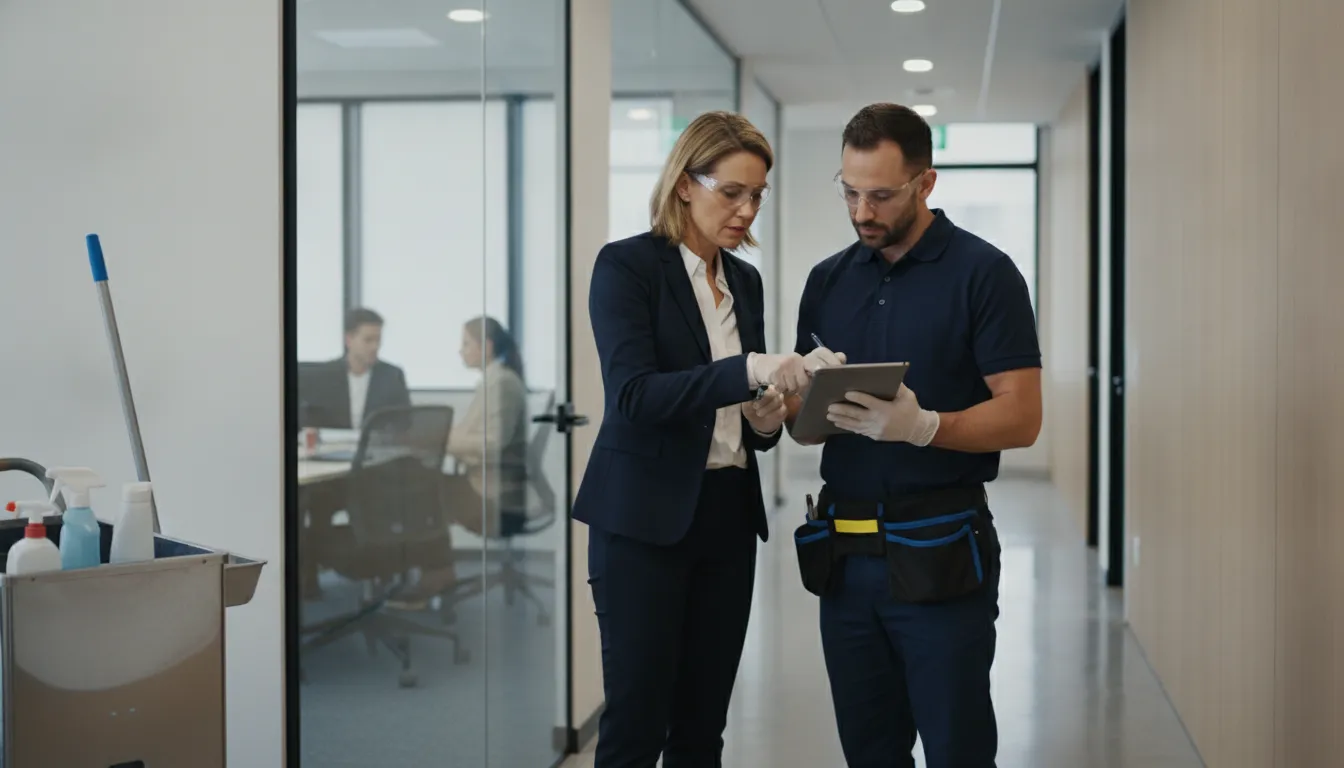
Protect access, security, and communication during handoff
Safety is a big concern as you switch commercial cleaning companies. A smooth handoff keeps your building safe and your data private. You must plan for how the new team will enter your site. You also need to set up a clear way to talk with them each day. This starts with choosing a new cleaning partner that values site safety.
Update entry codes and keys
When you start with a new crew, you must get back all keys and badges from the old team. It is wise to change your alarm codes and key card access right away. This step stops old workers from entering your site once the deal ends. You should budget for the cost of re-keying locks if you do not get all keys back.
The new team needs their own entry codes before they start. Work with your building manager to set these up early. This avoids a slow start on the first night of work. Make sure the new crew knows how to set the alarm when they leave so the site stays safe and sound.
Set rules for closed off areas
Every building has spots that need extra care. Tell the new firm which rooms are off-limits or need an escort. Rooms with private data or costly gear must have clear rules. Set custodial specifications often help managers set these rules for all building types. This keeps the crew focused on the right areas.
You should also share your rules for handling tech and trash. For instance, data center cleaners need to know what they can touch. Clear maps and signs help the new team learn these zones fast. This reduces the risk of errors or lost data during the first few weeks of service.
Pick a main point of contact
Clear talk is the best way to handle the switch. Pick one person to lead the talk with the new cleaning team. This person should be the one to report issues or ask for changes. Having one voice prevents mix-ups. It also makes sure the job gets done right every night.
You also need to tell your own staff about the change. Let them know when the new team will start. Tell them how the new crew will be known or what they will wear. This helps your staff feel safe when they see new faces. A good plan with your current vendor can help make this time easy for all.
Also, set up a way to report small slips. Small problems can grow if no one talks about them. Use a simple log or a web tool to track daily tasks. This keeps the new team on track. It also ensures they meet your high standards for reliable commercial cleaning services.
What should you check during the first month?
The first month is a key time when you switch commercial cleaning companies. This time shows how well your new partner follows their word. You must have a clear plan to check their work from day one. By tracking tasks early, you can find small issues before they become big problems. A strong start makes sure that your building stays clean and safe for all.
First day walk-throughs
On the first day, you should walk through your building with the new team lead. This is the time to make sure that they know your own needs. Use your written scope of work to check key areas. You should look at busy zones first, such as:
- Front halls and main desks
- Staff break rooms and kitchens
- Shared restrooms and sinks
- Busy spots like door handles
Make sure the team knows how to get into each room. They also need to know where to find your cleaning tools. Check that the crew follows the plan you set during the bid phase. You should see if they have the right tools for each task. For example, check if they use the right mops for different floor types to avoid damage. This first check builds trust and shows the team that you value quality. If you spot a miss, point it out right away so they can fix it fast.
Weekly quality reports
During the first few weeks, you should meet with the cleaning lead once a week. These meetings help you review the work done and plan for the next week. You should ask for a report that shows which tasks the team has done. Many top firms use a formal inspection process to track their own quality. This data gives you a clear view of how the team is working over time.
You can also use these reports to check for safety and health rules. The D.C. cleaning guidance shows that regular checks help keep a healthy office. By looking at the logs, you can see if the team is hitting every mark on your list. If you see a pattern of missed spots, you can change the plan before the month ends. This keeps the service level high and your staff happy.
The 30-day work review
At the end of the first month, hold a full review of the service. This is the time to look at your issue logs and see how fast the team fixed any misses. You should review your custom cleaning plan to see if it needs any changes. Sometimes, a task may need to happen more or less often than you first thought. A good partner will be ready to make these tweaks to fit your needs better.
This review is also a good time to talk about long-term goals. You might want to add deep cleaning tasks or floor care to the schedule. If the first month went well, you can feel confident in your choice to contact Foreman Pro Cleaning for your next project. A good first month is the base for a strong work bond. By staying active in the process, you make sure that your building gets the care it deserves.
Compare providers on transition readiness, not price alone
When you decide to switch commercial cleaning companies, price is often the first thing you see. But a low price can hide a lack of prep work. A smooth start needs more than just a low cost. It needs a team that is ready to take over your space with no break in work. The way a firm starts shows how well they can handle the first month of work.
| Criteria | Risky Plan | Ready Vendor |
|---|---|---|
| Handoff Plan | Vague or missing timeline | Full written scope and timeline |
| Cleaning Plan | Generic approach for all sites | Custom cleaning plans for each site |
| Quality Checks | Reactive based on complaints | Formal site checks and reports |
| Staff Training | General labor only | Site-specific training for all crew |
| Updates | Slow response to emails | Clear points of contact and fast talk |
Check the handoff plan
A good firm will provide top commercial cleaning work by using a written scope of work. This list shows every task and how often it must be done. Without this, the new team might miss key spots in your space. A clear plan helps the new crew learn your needs fast. It also stops small errors during the first week. A solid plan makes the switch easy for all. Keeping a clean site is vital for health, as noted by the CDC.
Ask for a custom plan
Each building is unique and needs a clear touch. A basic plan often fails to meet the needs of a busy site. You should look for a custom cleaning plan that matches your site. This means the team knows which areas need extra care. They will use the right tools for your floors and surfaces. This focus leads to a better clean and a happy staff. It also shows the firm cares about the details of your building. A custom plan saves time and money by focusing on what matters most.
Use checks to track quality
Launch day is just the first step in a long bond. To keep standards high, your new partner must check their own work. Site checks help teams find and fix issues fast. These checks should happen often during the first few weeks. They give you a way to see that the job is being done right. This also helps build trust between you and the cleaning crew. You will know that the team is doing what they said they would do. Steady reports keep you in the loop and ensure the site stays in top shape.
Frequently asked questions
How do you switch commercial cleaning companies?
Review your current contract, document the required scope, vet replacement providers on site, approve a handoff plan, control access, and inspect results during the first month.
How long does a cleaning vendor transition take?
The right timeline depends on contract notice terms, facility size, access needs, staffing, and special services. Work backward from the target launch date and confirm every milestone with the new provider.
What should you ask a new commercial cleaning company?
Ask about training, supervision, backup staffing, inspections, issue response, access controls, and how the provider will tailor the scope to your building.
How do you measure cleaning quality during the first month?
Inspect priority spaces after launch, keep one issue log, review results weekly, track corrections, and complete a formal 30-day review against the approved scope.
Plan a smooth cleaning provider transition
A successful change starts with a provider that understands your building, your standards, and the need to protect daily operations. Foreman Pro Cleaning develops customized commercial cleaning plans and uses a formal inspection process to support consistent results across Maryland, Washington D.C., and Virginia.
Request a customized commercial cleaning plan and discuss a transition built around your facility.
