
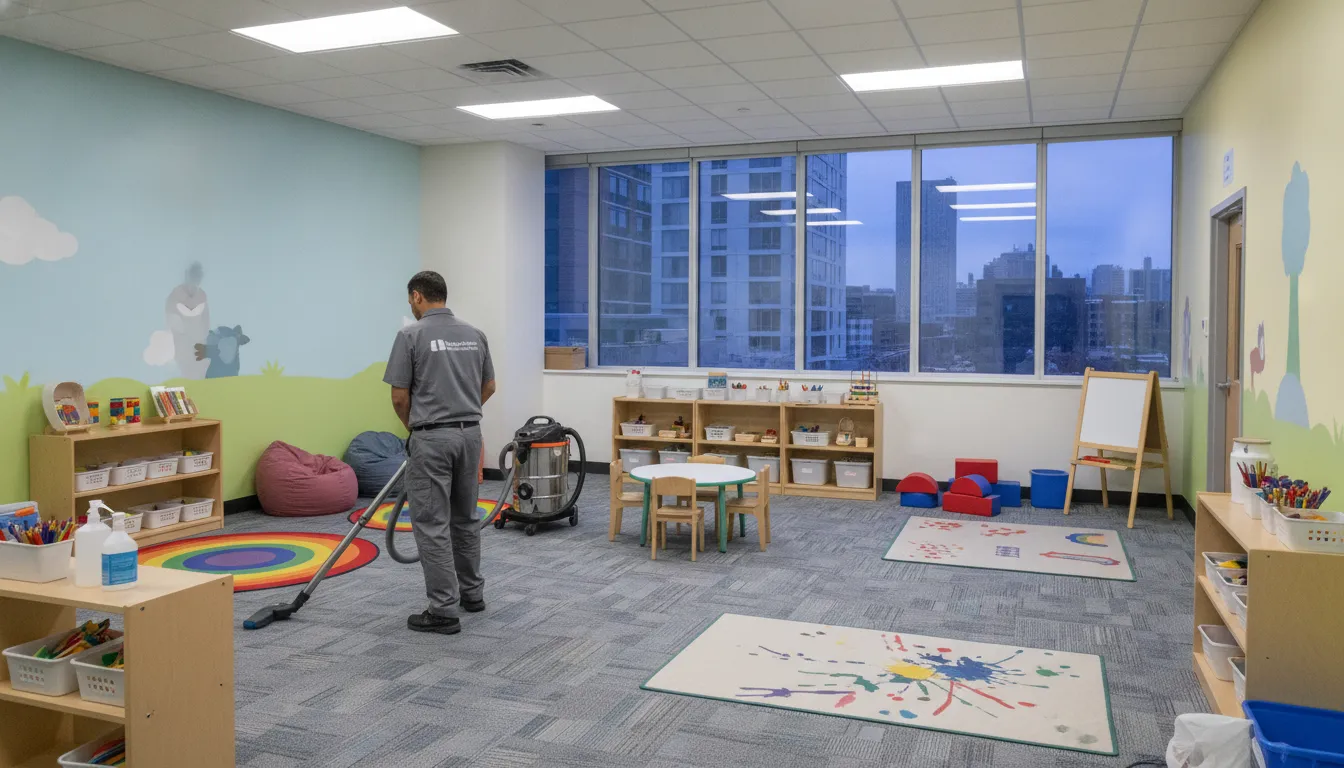
A well-organized daycare cleaning checklist helps facility managers assign daily, weekly, and monthly tasks, document completed work, and maintain a cleaner learning environment while reducing contamination risk across classrooms, restrooms, food areas, and shared spaces.
Request a customized daycare cleaning plan from Foreman Pro Cleaning, LLC.
A daycare cleaning checklist gives directors a consistent way to organize tasks and follow applicable local requirements. It should list daily, weekly, and monthly work so nothing is missed in busy learning spaces. High-touch areas such as toys and door handles often require frequent attention. As the CDC explains, cleaning removes dirt with soap and water, while sanitizing reduces germs to specified levels. Written steps also make it easier to train staff, track completed work, and identify gaps.
How do you use a daycare cleaning checklist?
Use a daycare cleaning checklist by tailoring tasks to each room, assigning every task to a named team member, setting an appropriate frequency, and recording completion. Review the checklist regularly against applicable requirements and observed needs so high-touch surfaces, shared items, and overlooked areas receive consistent attention.
Find your high-touch spots
Start by looking at each room in your center. Some surfaces get more use than others. Doorknobs, light switches, and shared toys are key spots for germs. The CDC notes that high-touch surfaces like handles and tables often need extra care. Schedule these spots for frequent attention to keep a daycare center clean and reduce contamination risk.
Set a clear timing
Good cleaning relies on a steady rhythm. You should split your tasks into daily, weekly, and monthly groups. For instance, you should clean lunch tables after every meal. But you may only need to deep clean rugs once a week. Setting a clear time for each task helps your team stay on track. This way makes sure no spot is missed, from the front desk to the nap room.
If your team is busy, you can also look into professional daycare cleaning services for help. Experts can handle the deep work while your staff focuses on the kids. This balance can help your team follow applicable requirements without becoming overloaded.
Steps to set up your list
- Make it your own. Print the list and add exact tasks for each room. Every daycare has its own layout and needs.
- Give out tasks. Assign each part of the list to an exact staff member. Clear roles help avoid mix-ups.
- Mark items off. Have staff check off tasks as they finish them. This creates a record you can show to health visits.
- Check the work. A lead staff member should walk through the rooms each day. They should make sure every task on the list meets your rules.
- Update the plan. Review your list once a month. If a new toy or piece of gear is added, make sure it has a spot on the schedule.
Track and record your work
Keeping a record of your cleaning is helpful. It shows parents that you value a consistent, well-documented process. It also helps you find gaps in your routine. When inspections or staff observations reveal a recurring concern, you can check your logs and determine whether some areas need more attention or a different process. A good record supports accountability and a cleaner center.
What is the difference between cleaning, sanitizing, and disinfecting?
Cleaning removes dirt and impurities from a surface, sanitizing lowers germ counts to levels specified by public health requirements, and disinfecting uses an appropriate product to kill targeted germs. A daycare cleaning checklist should distinguish these steps and direct staff to follow each product label, including its required contact time.
How cleaning works
Cleaning is the first step in any task. It uses soap, water, and scrubbing to remove dirt and germs. This path lifts grime off a surface. While cleaning does not kill germs, it lowers their counts. It is a core part of daily care for high-touch items like toys and tables.
You must clean a surface before you sanitize or disinfect it. Dirt and oil can block sprays from reaching the germs. By cleaning first, you make sure the next steps work well. Our teams follow these steps for every job. We use trained staff to help your daycare meet high standards.
The role of sanitizing
Sanitizing goes one step past basic cleaning. This path lowers germ levels to reach safe public health codes. It often uses weak bleach mixes or sprays. You should sanitize things that touch food or mouths, like high chairs. This step is a key part of your safety plan.
To sanitize well, you must follow the label. Most sprays need to sit on the surface for a set time. This is called contact time. If you wipe the spray off too fast, the germs may stay. Following these daycare cleaning tips helps staff use products as directed and reduce contamination risk.
When to use disinfecting
Disinfecting is the strongest way to control germs. It uses chemicals to kill germs after you clean a surface. You should disinfect when a child is sick or if there is a spill. It is best for things like diaper bins and doorknobs. This step is not for every surface, but it is needed for high-risk spots.
Always check if a product is safe for the surface. Some strong sprays can damage certain items. Expert teams know how to pick the right tools for your space. Professional help can support a consistent cleaning process throughout the year.
| Step | Goal | Common Tools | Best For |
|---|---|---|---|
| Cleaning | Remove dirt | Soap and water | Floors, walls, toys |
| Sanitizing | Lower germ counts | Weak bleach spray | Food areas, high chairs |
| Disinfecting | Kill remaining germs | Strong chemicals | Diaper bins, sick areas |
Classroom and play area checklist
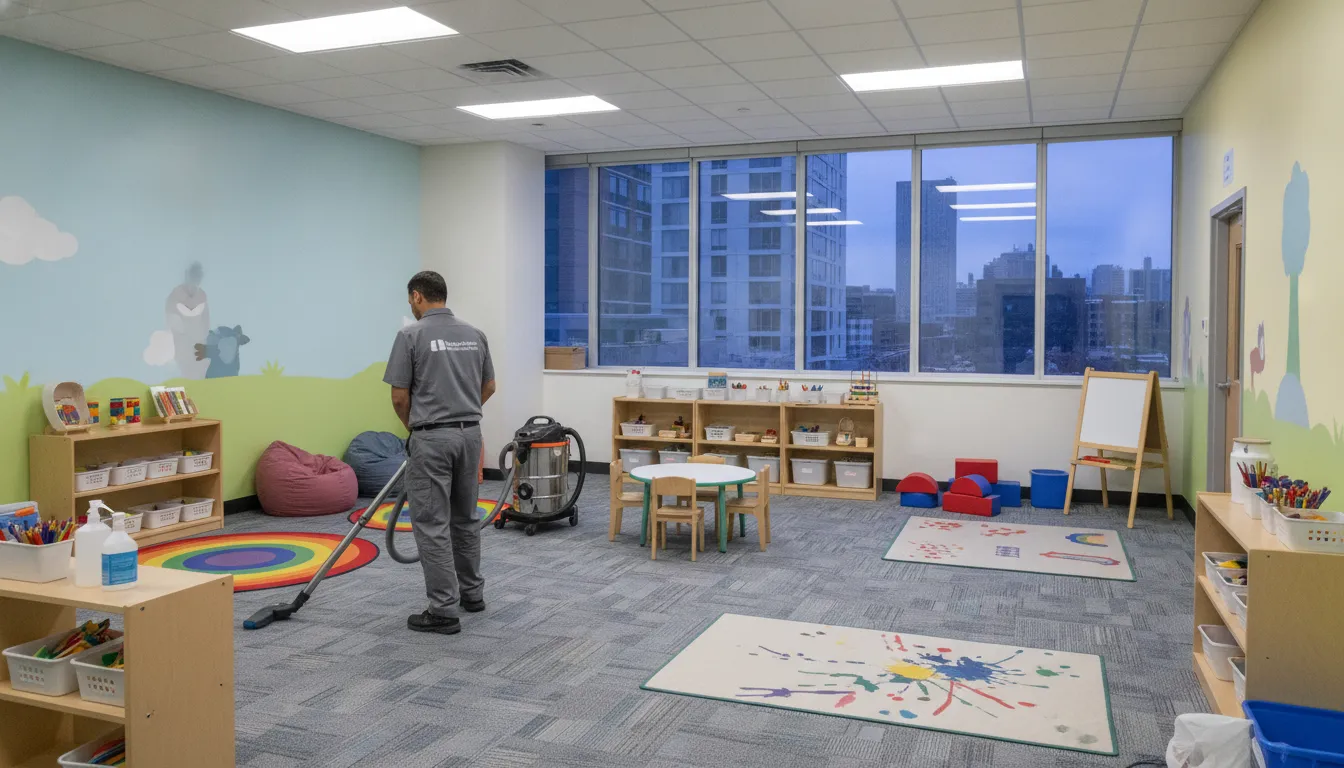
A good daycare cleaning checklist helps staff follow a consistent process in classrooms and play areas. By splitting tasks into daily and weekly groups, teams can reduce missed work, support a cleaner environment, and follow applicable requirements.
Daily cleaning for high-touch areas
Staff should clean high-touch spots at the frequency required by the center’s plan and applicable guidance. These spots include table tops, doorknobs, and light switches. The CDC says you must clean with soap and water before you sanitize. This step removes dirt so that sprays can work well.
You also need to wipe down lunch tables and craft areas after each use. Keeping these spots clear of crumbs keeps the room neat. If your team needs help, you can hire professional daycare cleaning services for a deep scrub. This service can help maintain a cleaner classroom and support the center’s routine.
Scheduled tasks for deep cleaning
Some tasks only need to be done once or twice a week. These include mopping floors and cleaning rugs. It is also good to dust high shelves and clear out cubbies. A weekly check of the whole room helps you find spots that need extra care. This path makes your monthly deep cleans much faster and easier.
Clean floors are key for kids who crawl or play on the ground. You should sweep up mess after every meal to keep pests away. If your floors look dull, a quick mop with a safe cleaner will bring back the shine. This work shows parents that you value a clean, well-maintained classroom.
Handling toys and soft surfaces
Toys are often the main source of germs in a room. You should set aside any toy that a child puts in their mouth. These toys must be cleaned and sanitized before the next child uses them. Plastic toys can be washed in a sink with warm soap and water. Be sure to rinse them well and let them air dry.
Soft items like rugs and cloth toys need special care too. You should wash these in a machine with the warmest water the maker suggests. It is vital to dry them fully to stop mold. Using the right daycare cleaning tips can help your staff manage these items fast. Keeping toys clean supports a more consistent classroom cleaning process.
Restroom and diaper-changing area checklist
Daycare restrooms and diaper stations are high-traffic areas that need constant care. These spots present a higher contamination risk, so a clear routine is important. Using a firm daycare cleaning checklist helps staff stay on track and follow applicable requirements. Set task frequencies according to local guidance, the center’s needs, and product labels.
Daily bathroom cleaning steps
Start your cleaning at the top and work your way down. This helps prevent dirt from falling onto areas you just cleaned. Use one set of tools for toilets and a different set for sinks to reduce cross-contamination risk. Sinks and faucets are high-touch spots that need extra focus through the day.
- Scrub all toilets and urinals with a safe cleaner and a toilet brush.
- Wipe down sinks, faucets, and soap pumps until they are clear of grime.
- Mop the floors with a mix that kills germs.
- Empty all trash cans and put in new bags.
- Refill soap, paper towels, and toilet paper so they never run out.
Staff should check these areas many times each day. If a mess is seen, clean it up right away to keep the space fresh. Following daycare cleaning tips like these supports a cleaner space for children and teachers. Good air flow also helps keep the bathroom smelling clean and reduces dampness.
Safe diaper changing area protocol
The diaper station must be cleaned and sanitized after every single use. It is key to know the difference between cleaning and sanitizing to do this right. Cleaning removes dirt with soap and water. Sanitizing lowers germ counts using an appropriate product according to its label.
Keep the changing pad in good shape with no cracks or tears. Germs can hide in small gaps, making it hard to keep the surface safe. Always wear gloves when you clean this area and wash your hands well after you finish. This simple step helps reduce cross-contamination risk.
If a child is sick, you should switch from sanitizing to disinfecting. Disinfecting uses stronger sprays to destroy germs on surfaces. This is a key part of any professional daycare cleaning services plan. It helps address higher-risk situations within the center’s documented process.
Supply checks and logging
A good checklist only works if your team uses it. Keep a log sheet on the back of the door to track when each task is done. This helps leads see that the routine is being met. It also shows proof of care for parents and health teams who visit your center.
Check your stock levels every week to make sure you have enough soap and paper goods. Running out of these items can break your cleaning flow and lead to poor hygiene. Store all cleaning sprays in a locked spot that children cannot reach. Safety must always come first when you handle tools and products in a daycare.
Train your staff on the right way to use each product. They should know which spray is for cleaning and which is for killing germs. Clear training supports a more consistent cleaning process throughout the center. It also gives your team the trust to do their jobs well every day.
Food preparation and eating area checklist
A clean kitchen and snack zone are important parts of a well-maintained daycare. Your daycare cleaning checklist should focus on areas where children eat and play. Keeping these spaces tidy helps reduce contamination risk. It also supports compliance with applicable requirements. You should set a clear plan for your staff to follow every day. This helps create a safe space for kids to enjoy their meals.
Daily tasks for food spots
Staff must clean all dirty surfaces after each meal or snack. This includes lunch tables, high chairs, and trays. The CDC states that soap and water remove most dirt and germs from surfaces. You should also sweep floors and empty trash bins after lunch. This basic routine helps keep a daycare center clean and ready for the next day. Do not forget to wipe down sink handles and fridge doors too.
Rules for sanitizing and disinfecting
It is key to know the difference between cleaning, sanitizing, and disinfecting. Sanitizing reduces germs to a safe level after cleaning is done. You should use a safe spray on any surface that touches food. Disinfecting uses stronger tools to kill germs, mostly when a child is sick. This three-step path is a key part of a good daycare cleaning checklist. It helps reduce contamination risk on high-touch spots such as counters and faucet knobs. Always let these spots air dry before you use them again.
Kitchen gear and storage
Your team needs to check the kitchen gear every day. Wipe out the microwave to remove food bits and smells. Check the fridge temps to make sure it stays cold. Proper food storage is a must to prevent germs from growing. You should also clean cabinets and pantry shelves once a week. This supports a cleaner and more organized food area. If you need help with these tasks, you can hire professional daycare cleaning services for your center. They have the tools to handle tough jobs in the kitchen.
Safety and health rules
Always follow the labels on your cleaning sprays. Some products need to sit for a few minutes to work well. Store all soaps and sprays in a locked cabinet. This keeps them out of the reach of curious children. Following these steps helps you meet state health rules. It also shows parents that you value a clean, well-managed facility. A good daycare cleaning checklist makes it easy for your staff to stay on track. This helps create a bright, cleaner place for children to learn and grow.
High-touch surfaces and shared spaces checklist
Shared spaces in a daycare get the most foot traffic every day. These areas connect other rooms and serve as the main spots where people gather. Because so many people use them, these spots can quickly collect dirt and germs. A good daycare cleaning checklist must focus on these areas to support a cleaner center. Steady care for shared rooms helps reduce contamination risk.
Managing entryways and hallways
The entry is the first place where germs come into the building. Handles, plates, and light switches are all high-touch surfaces that need daily care. You should also check halls for mess that can trap dust or cause trips. Keeping these paths clear makes it better for your team to clean the floors well during their shifts.
- Wipe down all door handles and door glass every morning.
- Clean and sanitize light switches in every hall.
- Clear cubbies of old papers or stray items to allow for deep cleaning.
- Mop hard floors in the lobby twice a day to remove dirt and mud.
- Vacuum rug runners or mats to trap outdoor dirt.
Cleaning offices and staff rooms
While kids spend most of their time in play areas, staff rooms also need a firm plan. Shared desks, phones, and break room tables can hold many germs. Staff should have the tools they need to clean their own spaces quickly between tasks. This supports a cleaner center and shows parents that you value a well-maintained work space. It is also wise to check fridge handles and sink taps in the staff room often.
- Sanitize shared keys and mice at the end of the day.
- Clean staff room tables after every lunch or snack time.
- Empty all trash bins in the office area before they get full.
- Wipe down the outsides of bins and drawers in the break room.
- Sanitize phones and headsets used by more than one person.
Nap areas and floor care
Nap areas need extra care because kids are in close touch with mats and cots. These items should be cleaned and sanitized according to applicable guidance and the center’s documented schedule. Floors in these rooms should stay free of dust and small items that might hurt young children. For cloth items, use the warmest appropriate water setting allowed by the manufacturer and applicable guidance. Steady floor care is a key part of how you keep a daycare center clean all week.
- Wipe nap mats with a safe cleaner after each child wakes up.
- Store cots in a way that keeps them from touching each other.
- Wash sheets and blankets every day using hot water when you can.
- Sweep and mop the whole nap room floor once the kids leave.
- Look in corners for dust or small toys that may be hidden.
How do you build a cleaning schedule your team can maintain?
Build a maintainable cleaning schedule by grouping work by frequency, assigning clear owners, allowing enough time and supplies, and using simple completion logs. Review the plan with staff, inspect results, and adjust workloads when tasks are missed. A practical schedule supports consistent work without overwhelming the team.
Split tasks by daily and weekly needs
Much of your work will happen every day. You must clean surfaces that look dirty, like craft tables or lunch spots. This should happen after each meal or task. You should also wipe down high-touch spots like doorknobs and toys to reduce contamination risk. These small steps keep dirt from building up over time.
Weekly tasks allow for a deeper look at your space. This is the time to wash rugs or clean out cubbies. You should also check soft items like cloth toys. These need a wash in the warmest water allowed and must dry all the way. A weekly check of the whole center ensures no spot is missed for too long. By splitting these tasks, you keep the workload fair for your staff.
Use logs and checks to track work
It is hard to know if a job is done right without a way to track it. Use a simple log to show when tasks are complete. This log should be easy for your staff to fill out each day. When you have clear records, you can show health inspectors that you follow a set plan. It also helps you find areas that may need more care or better tools.
Regular checks are just as vital. Walk through the center once a day to look for missed spots. If you see an issue, use it as a chance to train your team. Clear training helps everyone know how to keep a daycare center clean. When your team has the right info, they can do their best work. Good records and checks build a culture of safety and pride in your center.
Work with an expert cleaning team
Even with a great staff, some jobs need a pro touch. Experts have the tools to deep clean carpets, floors, and vents. Foreman Pro Cleaning, LLC can help you build a custom plan for your center. Our trained staff follow documented procedures and applicable requirements. We also stay up to date on cleaning practices for education facilities.
Working with pros gives you peace of mind. We have a high rate of repeat customers because we do the job right. Foreman Pro Cleaning, LLC is fully licensed, bonded, and insured. This means you can focus on the kids while we handle the hard tasks. Pairing daily staff tasks with professional daycare cleaning services can support a consistent cleaning plan.
Frequently Asked Questions
What should be on a daily daycare cleaning checklist?
A daily checklist for your center must focus on high-touch surfaces. This includes things like lunch tables, craft areas, and shared toys. You should clean and sanitize these items after each meal or task. Visible dirt or spills need prompt attention. Following a steady routine helps maintain a cleaner learning space and keeps the center’s cleaning program on track.
What is the difference between cleaning and sanitizing in a daycare?
Cleaning uses soap and water to physically remove dirt and germs. Sanitizing lowers the number of germs to safe levels as set by public health codes. The CDC says you must clean surfaces before you sanitize them. Sanitizing usually involves weaker bleach solutions or special sprays. Both steps are important parts of a well-defined child care cleaning process.
Are there state rules for daycare cleaning schedules?
Yes, most states have specific health rules for daycare cleaning. These rules establish cleaning and operational requirements for child care centers. You should check with your local health office to find the exact rules for your area. Using a professional service such as Foreman Pro Cleaning can help you implement a documented routine. Confirm the exact requirements for your center with the appropriate state and local authorities.
What cleaning supplies are safe for daycare centers?
Select supplies approved for their intended use and follow every product label. The EPA provides information about products for early care settings. Consider ventilation, required contact time, surface compatibility, and secure storage when choosing and using each solution. It is also wise to work with a crew that knows how to use these tools the right way. At Foreman Pro Cleaning, our trained team follows documented processes and product instructions.
Ready to set up a consistent cleaning plan for your daycare?
A documented cleaning plan helps your team reduce contamination risk, maintain cleaner rooms, and organize work around daily operations. Foreman Pro Cleaning, LLC can help you develop a customized routine for classrooms, restrooms, food areas, and shared spaces.
Request a customized daycare cleaning plan from Foreman Pro Cleaning, LLC.
