
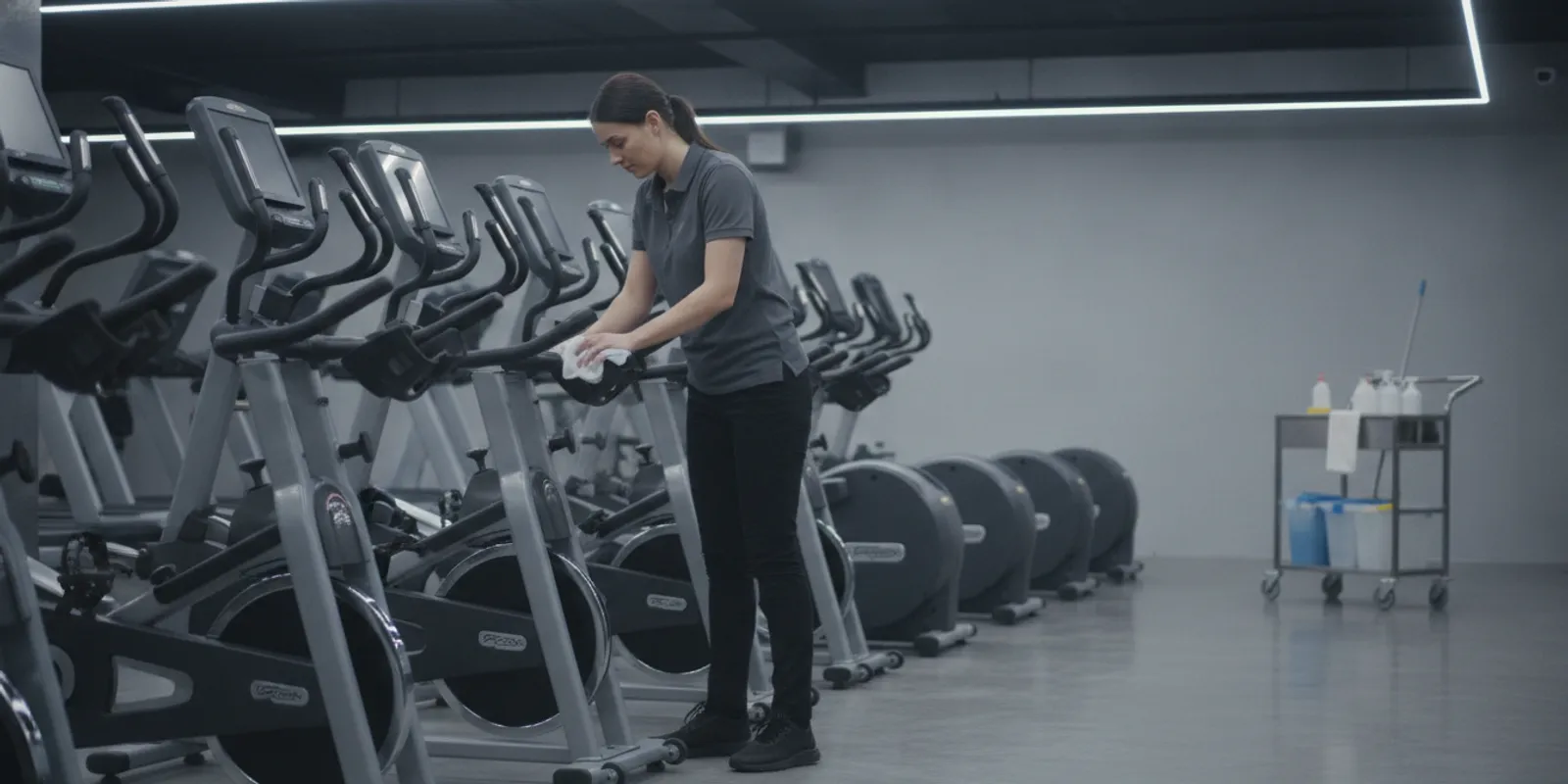
When you hire a cleaner for a small gym, the right plan should protect equipment, address restrooms and floors, and fit around member traffic—not simply promise a quick visit. Start by listing what needs attention, when each space is available, and which tasks your staff can reliably handle. That gives you a practical basis for comparing service proposals.
Request a tailored gym cleaning plan
How do you hire a cleaner for a small gym without missing key needs?
Begin with a walkthrough during a normal operating period. Small facilities still have distinct cleaning demands: cardio consoles and grips, strength equipment, stretching areas, locker or restroom spaces, entry flooring, and any front desk or staff area. A walkthrough helps identify where members gather, what surfaces are handled frequently, and which tasks may interrupt activity if scheduled at the wrong time.
Map the facility in zones rather than treating it as one open room. For each zone, note its surface types, use patterns, access restrictions, and the outcome you expect. For example, a rubber training area may need a different floor-care approach than a carpeted reception space. A restroom needs a defined sequence and restocking expectations. Equipment should be addressed using methods and products compatible with its manufacturer guidance.
Foreman Pro Cleaning serves commercial facilities in Maryland, Washington, D.C., and Virginia, and can discuss a plan based on your site and operating schedule. Its commercial cleaning work includes fitness centers, while its broader experience includes facilities management and specialized cleaning environments. Ask how a proposed scope will be documented, who will confirm priorities, and how adjustments can be made as your gym changes.
For a starting point on service types and coverage, review commercial cleaning services for facilities and the company’s janitorial service overview. These pages can help frame your questions before a site discussion.
What should a small-gym cleaning scope cover?
Make the scope specific enough that a manager and cleaning team can tell whether the work was completed. Avoid relying on broad phrases such as “general cleaning.” Define the areas, surfaces, task frequency, timing, supplies or equipment responsibilities, and any inspection or reporting process. Agree on who handles member-facing spills or urgent restroom needs during staffed hours.
| Area or concern | What to define in the scope | Questions to resolve |
|---|---|---|
| Fitness equipment | Which exterior touchpoints are included, what method is compatible with each surface, and what is excluded | Does the gym provide manufacturer instructions? How will electronics and upholstery be protected? |
| Restrooms and changing areas | Fixtures, counters, mirrors, floors, waste, and any agreed replenishment tasks | How are access, privacy, and supply ownership handled? |
| Floors and entry | Floor type, routine soil removal, spot response, mats, and periodic care needs | Which areas need attention most often, and when can floors be serviced safely? |
| High-touch shared points | Front desk surfaces, door hardware, and other agreed shared touchpoints | Which points matter most to your operation, and how will completion be checked? |
| Odor concerns | Likely source areas, routine tasks, waste handling, and escalation when an odor persists | Could the issue involve drains, damp materials, or ventilation that needs another specialist? |
| Opening or closing coverage | Arrival window, access procedure, task sequence, and areas that must be ready before opening | Can the planned visit avoid peak activity and allow time for floors to dry? |
This is a planning comparison, not a universal service specification. A gym’s floor material, equipment instructions, amenities, traffic, and staffing model determine which details belong in the final agreement. For more on adapting service frequency to gym use, see this gym cleaning frequency guide and the overview of cleaning priorities for fitness centers.
How should equipment, touchpoints, and floors be handled?
Ask the vendor to describe a repeatable method for equipment exteriors. Gym machines can combine metal, coated surfaces, screens, upholstery, and electrical components. A method suited to one material may be unsuitable for another. Provide equipment manuals or manufacturer care instructions where available, and agree that the team will not apply a product or method to a surface unless it is approved for that use. Clarify that staff should not open, move, or service equipment unless that task is explicitly authorized.
Define which shared touchpoints are included and how workers distinguish one surface from another during a visit. A written task list can identify grips, seat adjustments, shared counters, door hardware, and other priorities specific to your layout. It should also state how used cleaning materials are managed between areas. Ask what is recorded when a task cannot be completed because a member is using the equipment or the space is inaccessible.
Floor care calls for its own plan. Identify whether the gym has rubber flooring, resilient tile, carpet, sealed concrete, or a combination. Discuss routine maintenance separately from periodic work such as deeper carpet cleaning or hard-floor treatment. Confirm access times and drying expectations, since a freshly serviced floor should not create a slip concern when members arrive. Foreman Pro’s commercial floor-care information and guidance on rubber floor maintenance may help you prepare questions about your surfaces.
For gym-specific frequency considerations, compare your needs with this guide to preparing a gym for a busy season. It is still important to have a cleaner assess your actual facility rather than copy a schedule designed for a different site.
Which schedule works around opening and closing hours?
Choose service windows after observing real member patterns, not only the hours on your door. A small gym may be busiest before work, during lunch, or in the evening. Cleaning during a quiet interval can reduce disruption, but some spaces may need attention while the facility is open. Decide which tasks can occur around members and which should wait until equipment or rooms are unoccupied.
Prepare a schedule by task and zone. For instance, distinguish routine restroom attention from periodic floor care, and separate an opening-readiness check from work that can happen later. The schedule should allow adequate time for the scope. If you operate long hours, ask whether service can be organized around a dependable access window and what happens when the facility hosts a class, event, or maintenance visit.
Clarify access and security before service begins: keys or access credentials, alarm procedures, restricted rooms, emergency contacts, and how the cleaner confirms arrival or completion. Document who can approve a schedule change. If you need daytime coverage for visible upkeep or member requests, consider whether a day porter service is a better fit for some tasks than relying only on a visit before opening or after closing. A sample commercial cleaning schedule can also help you list tasks by timing before a walkthrough.
How can a cleaner help address odors responsibly?
Odor control starts with finding and addressing the source, not covering it with fragrance. In a gym, possible sources may include waste containers, damp towels, floor drains, locker areas, or materials that remain wet. Ask how the cleaner reports a recurring odor and what routine tasks are included. If the cause appears connected to plumbing, ventilation, a leak, or building materials, the cleaning provider should flag it rather than imply that routine cleaning alone will resolve it.
Agree on product use and communication. Ask for product information, directions for use, and any relevant safety documentation before work starts. Follow product labels and applicable facility procedures, and communicate any material sensitivities or restrictions. CDC’s public-health resources are a useful starting point for current information on cleaning and disinfection: Centers for Disease Control and Prevention. For a particular product or surface, rely on its label and the equipment or flooring manufacturer’s instructions rather than assuming one approach fits every gym.
Some businesses need periodic floor treatment or other project work in addition to regular service. Discuss the distinction in advance so that any specialty task, access requirement, and timing is clear. Learn about commercial carpet deep cleaning considerations or the company’s deep-cleaning overview as background for a conversation about your facility; your provider should confirm whether the information applies to your gym’s materials and scope.
What questions should you ask before choosing a provider?
Use a consistent set of questions with every candidate. The answers should help you compare the actual service, not just a proposal’s headline description.
- Will you walk through the facility and provide a written, zone-by-zone scope?
- Which equipment, surfaces, rooms, and touchpoints are included, and what is specifically excluded?
- How will your team follow manufacturer directions for equipment, flooring, and other specialty surfaces?
- What is the proposed visit window, and how will the schedule avoid member activity or unsafe access?
- Who supplies products and equipment, and how are product directions and site restrictions handled?
- How will you document completed tasks, missed access, supply needs, or an unresolved concern?
- Who is the day-to-day contact, and how are service changes or feedback addressed?
- Can you explain how the plan can change if our hours, class schedule, or facility layout changes?
Ask for examples of how the company translates a walkthrough into a service plan, but do not accept general promises as a substitute for written responsibilities. Check that the proposal reflects the same spaces and frequency discussed during the walkthrough. Foreman Pro Cleaning can tailor a commercial cleaning plan for facilities across Maryland, D.C., and Virginia; the service-area information and company background provide additional context. You can also read about business floor-mat care and how service needs vary by facility when considering shared entry or customer areas.
Talk with Foreman Pro about your facility
What should you compare when you hire a cleaner for a small gym?
Compare proposals against the same checklist: scope detail, schedule fit, equipment and floor-care approach, communication, and the process for reviewing service. The lowest or shortest proposal may leave key responsibilities unclear. A useful comparison makes omissions visible and gives both sides a shared reference after work starts.
Consider a simple evaluation sheet with a row for each zone and columns for agreed tasks, timing, responsible party, and verification. Mark open questions rather than filling gaps with assumptions. Before signing, confirm who provides restroom supplies, who handles member-reported issues, whether specialty floor care is included or separate, and how you request a change. If the gym has multiple operating areas or a changing class schedule, include those realities in the service plan.
For businesses that need to compare general janitorial scopes, the company’s guide to evaluating janitorial service providers can offer further questions. If some needs are outside routine gym cleaning, ask whether a tailored combination of routine service and periodic floor work is appropriate rather than adding tasks that do not match your site.
Request a walkthrough and discuss service coverage
What questions do gym owners ask about hiring a cleaner?
How often should a small gym be cleaned?
There is no single schedule that suits every gym. Consider operating hours, member volume, facility layout, amenities, and how quickly each area is used. Ask a provider to recommend task frequency after a walkthrough, then review the plan as usage or hours change.
Should cleaning happen before opening or after closing?
Either window may work if it gives the team access to the necessary areas and enough time to complete the scope. Compare member traffic, security arrangements, floor drying time, and any tasks that need a room or machine to be unoccupied before selecting a window.
Can cleaners wipe down gym equipment?
They can address agreed exterior surfaces when the task and method are compatible with the equipment manufacturer’s instructions. Provide care guidance where possible, identify sensitive components, and specify what workers must not open, move, or service.
What should I do about a persistent gym odor?
Ask the cleaning provider to document where and when it is noticed, what routine task may be relevant, and whether the issue appears to require another building professional. Persistent odors can have causes beyond routine surface cleaning, so avoid relying on fragrance as a substitute for identifying the source.
How do I start comparing cleaning plans?
List your zones, priorities, operating windows, surface types, and current concerns. Then request a walkthrough and written scope that identifies tasks, frequency, exclusions, access, and communication. A clear plan gives you a practical basis for review and adjustment.
A small gym deserves a service plan built around its equipment, surfaces, schedule, and members. With a clear scope and open communication, you can compare providers more confidently and set expectations that suit your facility.
