
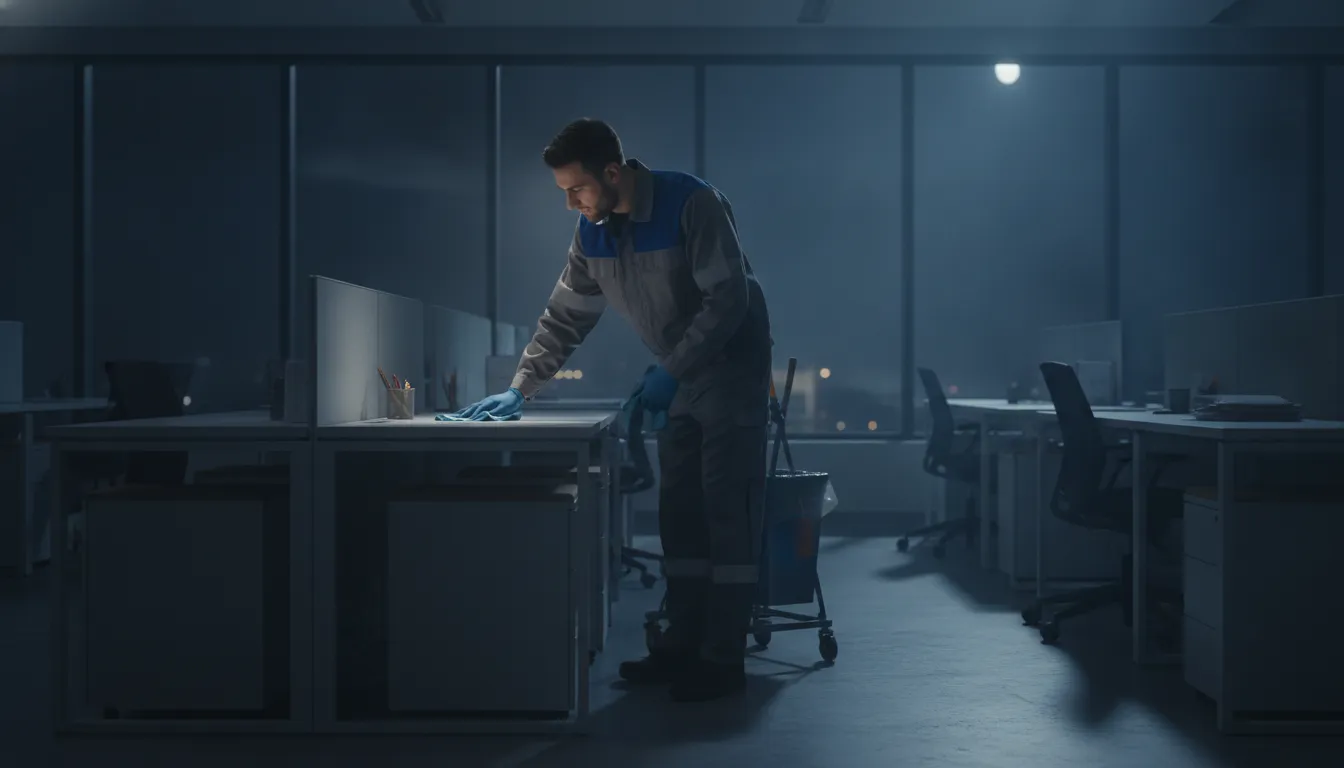
Heavy dust and surface contaminants in busy offices often build up during daytime hours. Neglecting these microscopic particulates can harm indoor air quality and damage expensive equipment. A growing number of facility managers are moving custodial work to the evening so teams can clean thoroughly without interrupting the workday.
Choosing to hire evening janitorial service for your facility keeps your office clean and compliant without disrupting daily business operations. This night service focuses on deep cleaning, waste removal, and the careful application of EPA-registered disinfectants after employees leave. According to research in the National Institutes of Health archive, well-trained and conscientious cleaners are critical for effective disinfection. Shifting cleaning to the evening stops daytime distractions, protects sensitive business systems, and leaves high-touch surfaces ready for the next workday. Vetting a professional partner like Foreman Pro Cleaning in Maryland, Washington D.C., or Virginia involves checking their quality control systems and employee training. Choosing the right provider keeps your facility running smoothly and safely.
Schedule a consultation with Foreman Pro Cleaning to build your evening janitorial plan.
How do you know if it is time to hire evening janitorial service for your building? Start by understanding when evening cleaning makes sense, what to vet in a provider, and how a structured plan protects your facility.
When Should You Hire an Evening Janitorial Service for Your Facility?
Choosing the right schedule for your building cleaning is a key choice for any business. In Maryland, Washington D.C., and Virginia, office managers face a simple choice. They must decide if it is better to clean during the day or at night. Day porter services have their place. But busy offices run much smoother when cleaning occurs after hours. If your daily work needs quiet focus and clear pathways, a night crew is the best fit.
High traffic during business hours
For sites with high traffic, daytime cleaning can get in the way of work. In shared buildings, staff and guests fill the halls, lobbies, and restrooms for eight to ten hours a day. If cleaning teams try to vacuum carpets or mop floors during these times, they can get in the way of your team. This constant contact can slow down work and even cause slip hazards on wet tile.
To keep your office running well, hiring an evening janitorial service for offices from a trusted team like Foreman Pro is the smart path. A night crew can complete their tasks when the building is empty. This timing allows for deep cleaning of desks, halls, and common rooms without any daily bother. Choosing this approach ensures your staff can focus fully on their jobs during the day.
Sensitive work areas and safety protocols
Some workspaces handle secret or private projects that need full privacy. In these settings, having outside cleaners walk through offices during the day is not an option. For instance, tech firms, law offices, and banks often work with private data on open screens. Staff cannot easily lock up files every time a daytime cleaner walks in. An evening crew can clean these areas after your staff goes home.
Safety rules also play a key role in when you schedule your cleaning. Expert cleaning requires the use of chemical soaps and special tools to control particulates. The Centers for Disease Control and Prevention notes that handling these chemicals requires proper safety training and protective equipment. Using these products when the building is empty protects your staff from any exposure to fumes or wet floors.
Uninterrupted time for deep cleaning
Many building managers find that daytime cleaners simply do not have the time to perform a thorough job. When crews must work around people, they often have to rush or skip certain areas. This can lead to a build-up of dust, soils, and other contaminants over time. On the other hand, evening and night cleaning teams have the time and space to do deep cleaning tasks. This evening service allows for thorough cleaning without getting in the way of your daily work.
What to Look for When You Hire an Evening Janitorial Service
Choosing a night cleaning firm is more than choosing a crew to sweep floors. You need a team that knows how to protect your workspace from microscopic particulates. To maintain professional standards when you hire an evening janitorial service, you must check their training plans.
Well-trained crews know how to handle delicate office hardware and infrastructure. They also understand how to use EPA-registered disinfectants safely. When cleaners have proper training, they can maintain a clean and healthy workspace.
Staff Training and Proper Technique
Many office managers think that a poor clean is due to bad equipment. But studies show that constant contamination reflects personnel technique rather than product failures in professional facilities. This is why Foreman Pro Cleaning uses strict training programs. If the staff does not use correct methods, particulates and soils will remain in your building.
Schedule a customized evening janitorial review with Foreman Pro Cleaning today.
Documented Audits and Quality Systems
You cannot manage what you do not measure. A quality evening cleaning service must use clear checks. They should run regular audits to verify that the work meets high standards.
Using clear audit tools helps check how well the systems work over time. These checks ensure that no corner is missed. They also give you written proof of clean premises. These reports help you track progress and maintain trust with your cleaning crew.
When you hire a team, ask how they track their work. A professional service should have a digital system to log each task. This system lets you see when the crew starts and finishes. It helps you hold the provider to your agreed plan.
Regular quality checks help prevent a drop in service standards over time. Many clients face a big gap between what they expect and what they get. An active quality control system bridges this gap.
Managers should check the building weekly. They must log their findings and share the reports with you. These clear updates keep everyone on the same page from day one.
Worker Safety and Insurance Protocols
Safety is a big concern for night cleaning shifts. The crew often works with strong chemicals and complex systems. You must make sure that the staff is trained in safe practices.
Custodial workers must have access to Safety Data Sheets (SDS) for all products used on-site. This training prevents accidents and chemical contact. It also keeps your building safe and meets local health laws.
Before signing a contract, check these safety points:
- Full liability and worker compensation insurance.
- Thorough background checks for all night staff.
- Documented OSHA compliance training.
- Correct personal protective equipment (PPE) for every task.
How Do Evening and Night Cleaning Compare with Day Porter Service?
Choosing the right commercial cleaning model is a major choice for any facility manager. You must choose between a day porter service and an evening or night janitorial crew. Both options keep your space clean, but they serve different goals. If you want to change your cleaning plan, hiring a new evening janitorial service can help. Comparing these structures lets you align your budget with your needs.
Timing and operational disruption
Evening and night cleaning crews work after close. This evening service allows deep cleaning without stopping daily work. Staff can sanitize offices and clear contaminants when the building is empty. In contrast, day porters work during active hours. They focus on quick spot cleaning of soils and debris in high-traffic zones. While a day porter handles quick spills well, they cannot do heavy work while staff are at their desks.
Comparing depth of clean and disinfection
An evening janitorial crew has full access to the building. This lets them use microfiber technology and HEPA-filtered vacuums on floors and rugs. They can apply EPA-registered disinfectants to desks and tables without bothering anyone. Since no one is in the building, they have the time to do deep, detailed work. On the other hand, day porters must navigate around active staff. They can only handle light duties, like emptying trash bins or wiping entry glass.
Sourcing and management costs
Outsourcing commercial cleaning needs a clear plan. If you fail to plan well, your service quality will drop. Researched data shows that setting a minimum standard is key to finding the break-even point between quality and cost. This concept is shown in a report on custodial service outsourcing.
An evening crew is often more cost-effective because their workflow is highly structured. They can move from room to room with no downtime. A day porter is often paid an hourly rate to stay on-site, which can lead to higher labor costs per task. These idle hours can waste budget that could go toward deep cleaning. For the best value, Foreman Pro Cleaning can help you set up a custom plan that balances both services.
| Feature | Evening and Night Cleaning | Day Porter Service |
|---|---|---|
| Timing | Done off-hours with zero disruption to daily tasks. | Done during work hours, causing minor daily disruption. |
| Depth of Clean | Allows full floor access and deep surface disinfection. | Restricted to spot cleaning and basic debris pickup. |
| Cost Factors | Highly cost-effective due to structured task routing. | Higher hourly labor costs because of frequent idle times. |
| Supervision | Managed off-site with structured supervisor audits. | Requires direct, on-site contact and frequent daily feedback. |
| Critical Environments | Highly suited for strict particulate control and cleanroom standards. | Poorly suited because daytime foot traffic spreads contaminants. |
What Should an Evening Janitorial Scope of Work Cover?
A successful night cleaning program starts with clear rules. When you decide to hire evening janitorial service with a clear scope of work, you set up your team for success. This agreement defines what tasks the crew will do and when they will do them. It keeps both you and the provider on the same page from day one.
Detailed tasks and frequencies
The core of your cleaning plan is the task list. Each task should have a set time, such as daily, weekly, or monthly. For example, trash removal is a daily task, while deep floor care may happen once a month. Setting these times helps you avoid disputes about what is clean. It also gives the cleaning crew clear goals to meet. Research shows that defining minimum quality standards is key when you outsource custodial tasks. It helps you find the right balance between cost and performance. This ensures your building stays safe and welcoming.
- Daily chores like empty trash bins and sweeping floors.
- Weekly jobs like dusting vents and washing glass.
- Monthly work like deep floor care and window washing.
These lists should be very clear. They cover everything from dusting office desks to vacuuming carpets and cleaning restrooms. When each worker knows their exact job, the entire facility gets a deeper clean.
High-touch surface disinfection
Your scope must also focus on health. Crews must prioritize high-touch surface disinfection to stop the spread of germs. These surfaces include door handles, light switches, shared desks, and breakroom counters. Workers should use safe, EPA-registered products for these tasks.
To protect everyone, your plan should state that crews must have access to Safety Data Sheets for all cleaning chemicals used. This practice keeps staff safe and ensures they use each product the right way. It also helps you meet safety rules in your workplace.
Performance audits and service metrics
A great cleaning plan needs a way to track results. A good scope of work uses objective audit tools to test how well the cleaning is done. These audits should happen on a set schedule. They show you if the crew is meeting your goals or falling short.
If you find a gap, you can fix it before it becomes a major issue. Having clear metrics in your scope is one of the best ways to ensure steady quality. It gives you clear facts to review with your provider.
These are key questions to ask before you hire an evening janitorial service to make sure they can meet your standards. A clear scope of work protects your building, keeps your staff healthy, and ensures you get what you pay for.
How Does a Structured Cleaning Plan from Foreman Pro Work?
Designing a Tailored Cleaning Plan
When you decide to hire evening janitorial service teams, a basic plan will not keep your space safe. Every office or data center has unique needs, safety rules, and high-traffic spots. A poor cleaning job can lead to dust buildup that risks your equipment.
Foreman Pro Cleaning builds custom plans that fit your exact schedule and safety rules. Our background in IT operations and facilities management helps us protect your key systems and hardware.
The Five Phases of Our Night Cleaning Program
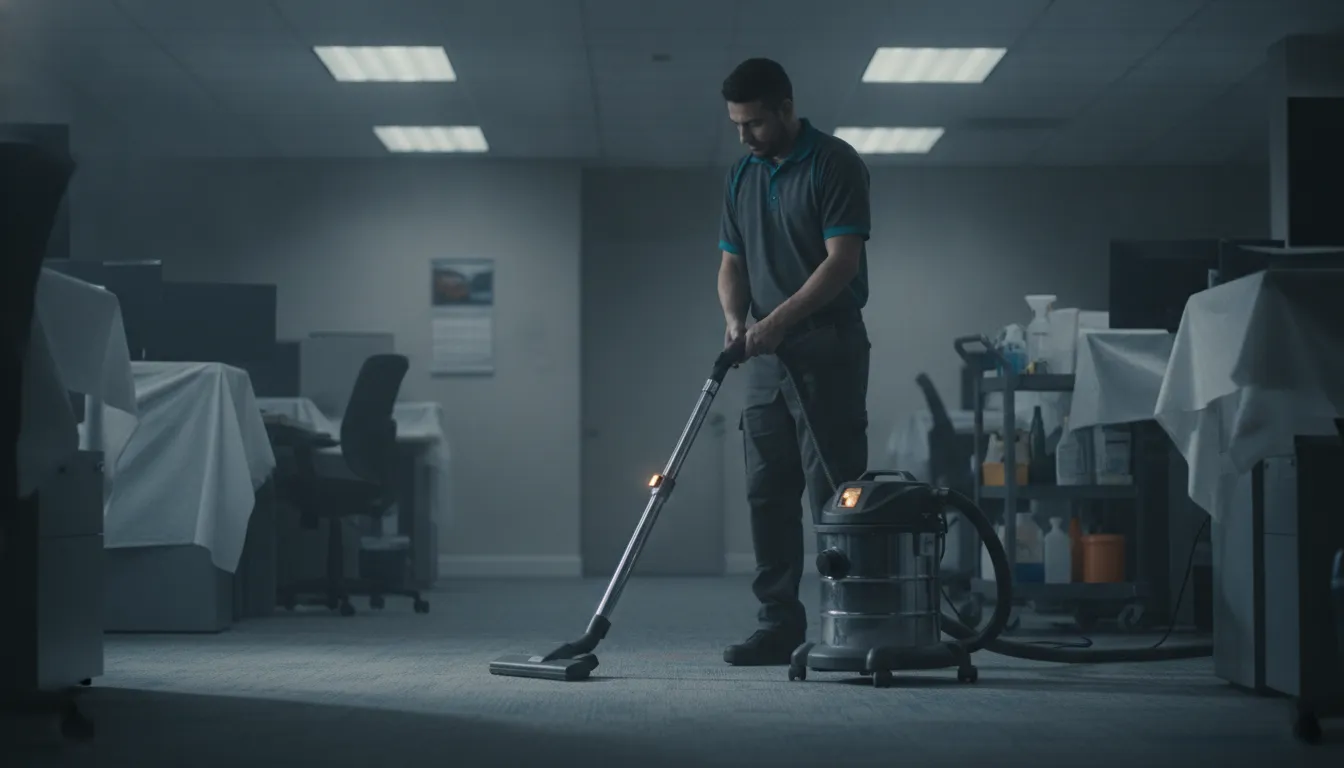
Our structured night service runs on a clear, five-step path. This process keeps our teams focused and makes sure your facility gets a deep clean every night. By setting up clear stages, we can control contaminants and prevent issues before they start.
- Facility assessment and needs survey: We walk through your office or critical environment to find high-traffic zones and key touchpoints. This step helps us locate where dust and microscopic particulates build up during the day. We use these findings to plan our cleaning paths.
- Customized service level agreement (SLA): We write a clear SLA that defines our daily, weekly, and monthly cleaning tasks. This contract sets the minimum quality standards for your space so both teams agree on expectations. It also lists the specific rooms and systems we will clean.
- Trained cleaning staff: We assign workers who complete our Critical Environment Training (CET) and Critical Visual Inspection (CVI) programs. A trained cleaning staff is needed because persistent contamination often stems from poor human technique rather than product failure. Our workers know how to handle sensitive areas safely.
- Consistent cleaning work: Our teams use microfiber technology and HEPA-filtered vacuums to trap microscopic particulates. Instead of a casual cleanup, we use continuous particulate management protocols. This approach stops dust and soils from settling on your sensitive equipment. Our teams follow strict contamination control protocols on every shift.
- Quality control and regular audits: We use advanced cleaning audit tools to measure our work and verify that our team meets the SLA standards. Regular inspections ensure that our cleaning methods remain highly effective over time. These checks give you peace of mind.
Verifying Efficacy and Performance
Our structured approach ensures that your facility maintains a high level of cleanliness and safety. When you partner with us for commercial cleaning, you do not just hire a team to sweep the floors.
You get a professional partner in Maryland, Washington D.C., and Virginia that understands facility management and keeps your operations running smoothly. Our regular reports and active updates keep you informed of our progress and audit scores. We work hard to protect your workplace health and keep your business safe.
What Training and Safety Standards Should Evening Janitorial Staff Meet?
When you hire evening janitorial service, crews often work with less direct oversight than day teams. This means safety and quality standards must be built into their core training from day one. To maintain these professional standards when you hire an evening janitorial service, a vendor must verify that its staff meets strict safety rules. Foreman Pro Cleaning ensures that all team members undergo detailed safety training before they ever enter your building.
Compliance with health guidelines
Evening janitorial work is hard on the body. Routine tasks on the night shift carry real risk. Workers face daily safety challenges. Guidelines from the National Institute for Occupational Safety and Health (NIOSH) show that these risks include muscle strain, shift work, and chemical hazards. Employers must teach crews how to avoid these risks. Good training ensures that workers protect themselves while keeping your building clean.
Chemical safety and SDS protocols
Crews handle different cleaning solutions each night. Even mild or green items require proper care to prevent injury. Employers must set up safe work practices. Guidelines from federal safety agencies show that even green products need specific training. Cleaners must know how to use personal protective equipment (PPE). They must wear gloves and eye protection to prevent skin harm and other illnesses.
To protect workers and your facility, crews must know the details of every product. This requires easy access to Safety Data Sheets (SDS). These sheets list the hazards and safety steps for each solution. Cleaners must read and understand the SDS for every chemical on the property. Proper handling prevents spills and keeps the indoor air safe for your daytime staff.
Physical safety and strain prevention
Cleaning involves constant movement like lifting, reaching, and bending. These daily tasks can lead to muscle strain and joint injuries over time. To prevent these physical risks, companies must provide training on safe manual handling. Study data in the National Institutes of Health (NIH) archive shows that proper training on lifting reduces physical risks. Crews learn how to lift heavy trash bags and move large systems safely.
Working evening hours also brings shift-work challenges. Late-night workers must stay alert to avoid slips and trips in low light. Employers must teach crews how to secure the building as they work. This includes locking doors, checking access points, and knowing how to exit in an emergency. A trained evening team protects your property while protecting themselves.
How Much Does It Cost to Hire an Evening Janitorial Service?
When you look to hire evening janitorial service with a clear scope of work, pricing is not a single flat rate. Facility managers must see how rates align with the safety and cleanliness of their site. A low price can lead to poor results that put your building at risk. It is best to look at cost as a balance of labor, training, and supervision.
Primary drivers of evening janitorial rates
Several factors drive the total rate when you hire evening janitorial service. The size of your facility and the frequency of service are the main drivers. A site that needs daily cleaning will cost more than one cleaned twice a week. The scope of tasks also shapes your costs.
Basic trash pickup is cheaper than deep dust removal and sanitizing. High-traffic offices need more hours and labor to keep clean. Restrooms and kitchens need deep disinfection that takes more work. Specialized facilities also need extra time for deep decontamination.
The cost of quality and risk management
Cheap rates often come from providers that cut corners on training. When outsourcing, research shows a 48% gap can emerge between expected standards and observed work. This gap usually comes from poor training, lack of safety compliance, and weak supervision. If a provider does not budget for safety and proper tools, your facility pays the price.
Janitorial staff face risks like shift-work fatigue and heavy lifting. Providers must budget for worker safety and follow strict chemical safety protocols. When you hire an evening janitorial service, check if they give workers proper safety tools. Trusted teams like Foreman Pro Cleaning make sure their staff is safe, trained, and well-equipped.
Balancing budget constraints and operational standards
To find the right price, you must find the break-even point between quality and cost. Defining a minimum quality standard is critical to keep your facility safe and clean. Cutting your budget too far leads to missed tasks and poor hygiene. A professional service will help you build a plan that fits your exact needs.
Investing in a vetted team prevents the high costs of poor service and failed audits. You can use questions to ask before you hire an evening janitorial service to find the best fit. A good vendor will offer a clear pricing structure that covers all needs. This ensures your site stays clean and compliant without hidden fees.
Get a custom evening janitorial estimate for your facility from Foreman Pro Cleaning.
Frequently Asked Questions
What training should evening janitorial staff receive?
Professional evening crews must have training in safety and cleaning standards. According to the CDC, workers need training on how to handle chemical products safely. This includes reading safety data sheets to prevent skin and lung issues. Staff must also learn proper use of specialized equipment like HEPA-filtered vacuums and microfiber systems. These tools help control microscopic particulates. Leading companies like Foreman Pro Cleaning train staff to prevent cross-contamination in offices.
What should a janitorial service do during an evening shift?
An evening shift focuses on deep cleaning and high-touch disinfection when offices are empty. Crews empty trash and recycling bins. They sweep, mop, and vacuum floors to remove soils and debris. Staff must use the CDC guidelines to perform targeted disinfection of high-touch surfaces. These surfaces include door handles, desks, and light switches. Night crews also clean restrooms and kitchens to ensure a clean work space for the next business day.
How do you hire a reliable evening janitorial service?
To find a reliable provider, you must review their training programs and quality control systems. A good company performs regular quality checks. A study on PubMed shows that audit tools are vital to evaluate how well a system works. Ask potential partners if they use these tools. You should also verify their business insurance, worker background checks, and safety records. This ensures they have the skills to handle your facility after hours.
What should be included in an evening janitorial cleaning contract?
A good contract must clearly define the tasks, schedules, and quality standards for your facility. Research on PubMed stresses the importance of setting clear minimum standards when you outsource work. Your contract should include a detailed scope of work for each cleaning shift. It should also state how often the provider will audit their work. Finally, the contract must list safety rules, insurance details, and plans for open communication.
Ready to Hire an Evening Janitorial Service That Meets Your Standards?
A well-managed night cleaning program protects your office from contaminants, keeps high-touch surfaces disinfected, and safeguards your equipment without interrupting the workday. Foreman Pro Cleaning designs structured evening cleaning plans across Maryland, Washington D.C., and Virginia. Pairing trained staff, documented quality control, and continuous particulate management so your facility is ready every morning.
Talk to Foreman Pro Cleaning about the right evening janitorial plan for your offices and facility.
Schedule a consultation for an evening janitorial service with Foreman Pro Cleaning today.
